dailynewsnblog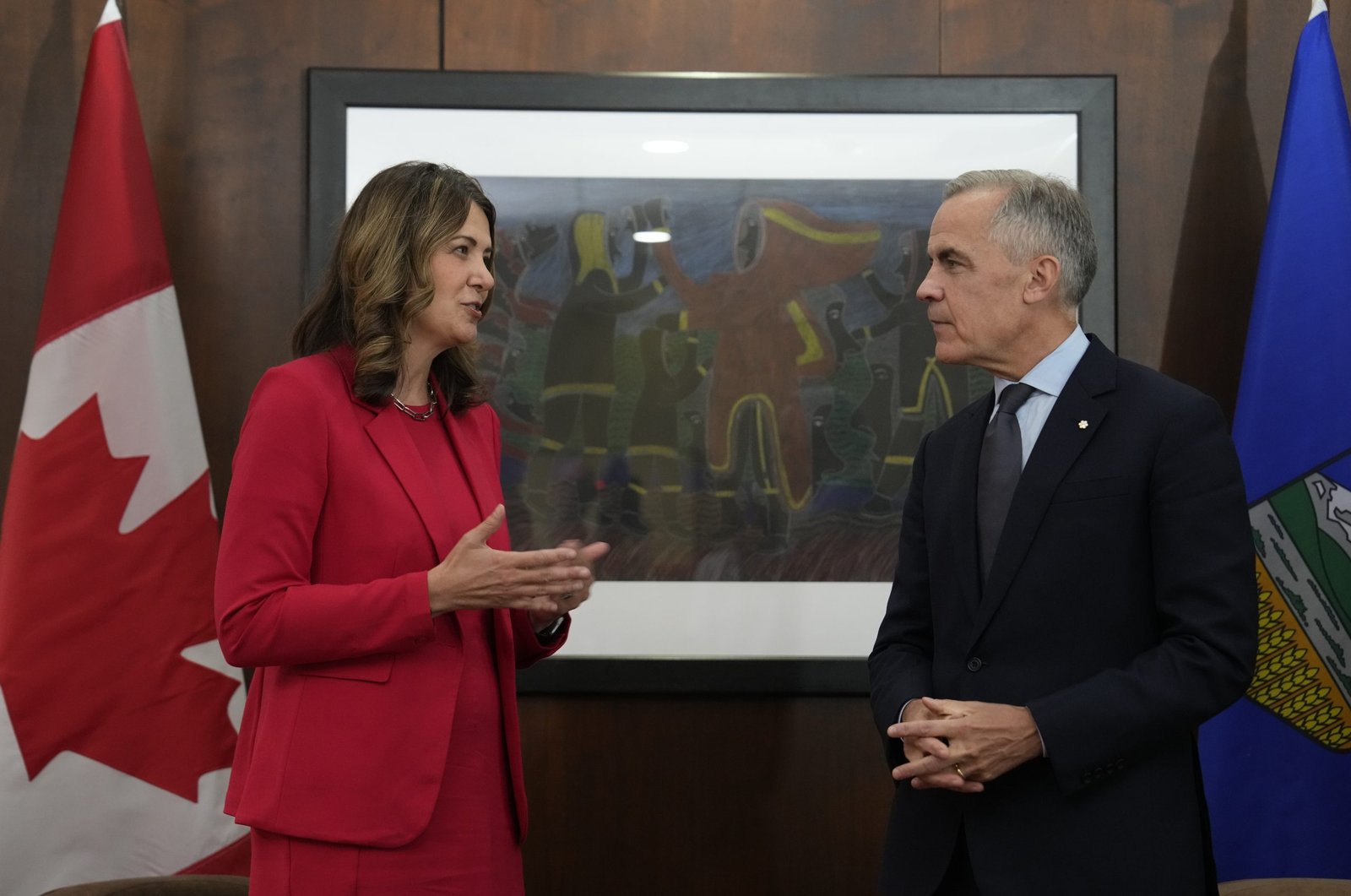
Welcome to Economic Insights, your twice-weekly deep dive into the major projects and policy shifts shaping the Canadian economy.
Stories we are following:
- LNG Canada says the market is not paying a premium for low-carbon energy at this time, although that could change in the future. The comments come as Ottawa and Alberta struggle to find a path forward on carbon pricing.
- A delegation of First Nations leaders from British Columbia are in Calgary to meet with pipeline executives and warn them a new bitumen pipeline to the northwest coast risks a prolonged legal fight.

Awaiting the next phase
The CARNEY government hopes LNG Canada will greenlight its $33B Phase 2 expansion, which would double the output of the country’s flagship export facility.
- The wait: A final investment decision (FID) is expected this year or next, but global market volatility remains a wildcard.
- Internal processes: CEO CHRIS COOPER tells a House committee that the investors in the joint venture are working through the different steps required to make such an investment.
- Competitive global landscape: Cooper spoke positively about Ottawa’s capital cost allowances, but said Canada has some of the most stringent regulations in the world, which can drive investment towards other jurisdictions.
- Future resilience: He suggested the government could review some of its policies, and commented that the market does not give a premium for low carbon energy at this time, although that could change eventually.
- Stalled negotiations: The comments come amid a broader sector-wide push against federal methane and carbon pricing regulations.

Coastal B.C. First Nation leaders go to Calgary to dissuade pipeline investors
A delegation of First Nations leaders from British Columbia have come to Calgary to relay a message to pipeline executives face-to-face — steer clear of investing in a new bitumen pipeline to the northwest coast or risk a prolonged legal fight, reports CP.
- The risk: Haida President JASON ALSOP (Gaagwiis) characterized any northern bitumen pipeline as a “significant legal and financial risk,” citing the responsibility to protect food security and the ocean.
- David and Goliath: Leaders reminded executives of the defeat of Enbridge’s Northern Gateway a decade ago, suggesting the opposition today is even more unified.
- Some meetings: The delegation met with senior leaders from Pembina and Trans Mountain, but was unable to schedule anything with Enbridge and South Bow Corp.
By the numbers
$35.50: The latest estimated price per credit in Alberta’s TIER market.
5,800: Jobs expected to be supported by the new Red Lake transmission project.
$2.45 million: Joint funding for geoscience research in Baffin Island to unlock critical mineral potential.
Major projects watch
— Prime Minister MARK CARNEY remains vague on the timeline for hitting the minimum effective carbon price of $130/tonne in the MOU. “Everything is connected,” Carney said regarding talks with Alberta as he took questions from reporters Thursday.
— Ontario Minister STEPHEN LECCE has declared the Red Lake transmission line a priority project. The 162-km line will connect Dryden to Red Lake to meet a forecasted 525% increase in electricity demand driven by up to 41 potential new mines by 2033.
— The IAAC is inviting public comment on the 107-km all-season Webequie Supply Road, a critical link for the Ring of Fire mineral region.
— New Ontario legislation aims to restrict foreign ownership of farmland and boost production in the Clay Belt. Renewable energy developers are watching closely to see how this affects land-use permits for wind and solar.
— New modelling by the Canadian Climate Institute shows that different versions of the MOU policy package could vary by more than 80 million tonnes of emissions in 2050, depending on the design of the carbon market.
Headlines