dailynewsnblog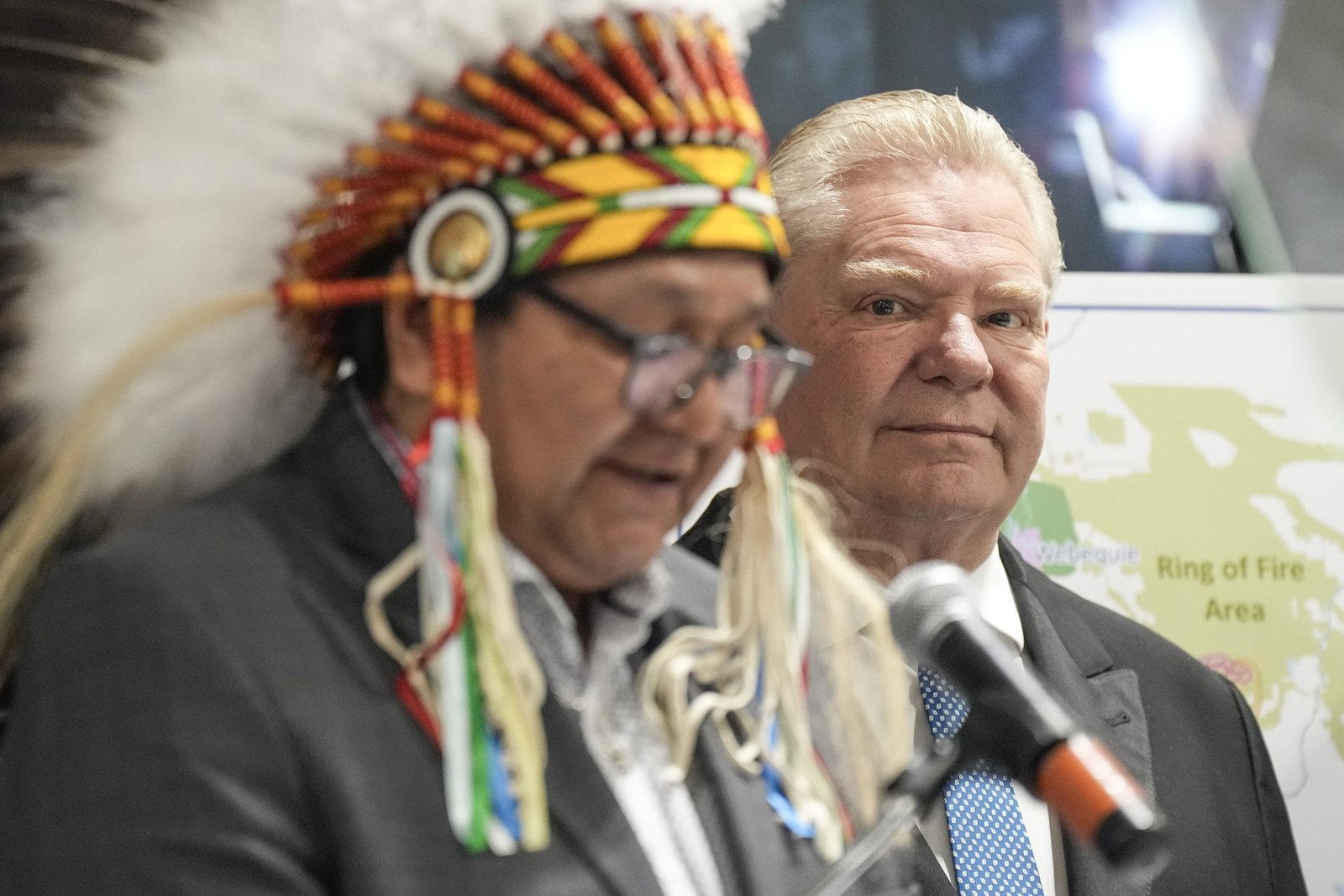
Welcome back to Economic Insights, your twice-weekly deep dive into the major projects and policy shifts shaping the Canadian economy.
Stories we are following:

– Ottawa approves Ring of Fire road, ruling adverse effects are significant but justified.
The federal government has signed off on the 230-kilometre Marten Falls Community Access Road, which would help link Ontario’s provincial road network to the promising Ring of Fire mineral deposit.
The road, which runs north from Nakina to Marten Falls First Nation, is the longest stretch of a network Ontario has spent years trying to build. The province broke ground in June on the other community access road, this one serving Webequie First Nation.
Minister Dabrusin’s decision released Monday states the project is set to have mixed effects on First Nations, with increased employment opportunities and connectivity to the provincial road network, but potential strains on social infrastructure and the transmission of Indigenous knowledge.
But she writes that the project is an opportunity for economic reconciliation and self-determination for Marten Falls First Nation, which is the proponent behind the road.
More on that here.

– Ontario’s rules pushed solar power north into a township that is pushing back.
A 141-megawatt solar project near Massey in Ontario has federal ambition behind it and a provincial contract in hand, but faces increasingly organized local opposition.
On the back roads northeast of the village, where Hydro One transmission lines cut across fields of bush and farmland, developer Potentia Renewables found landowners willing to lease about 800 acres for a massive solar project that ticks all of the grid operator’s boxes.
It would offer enough non-emitting power for more than 27,000 homes at a competitive price, on land the township hasn’t designated prime agricultural and that is currently used to grow hay.
None of that has stopped local residents from campaigning to stall or kill it, or from trying to elect a council this fall that will do it for them.
Here’s how three levels of government pulling in different directions could sink a project that has everything going for it.
By the numbers:
13: The number of days until the first Canada Investment Summit opens in Toronto, where Ottawa, CPP Investments and PSP Investments will pitch roughly 100 global investment organizations on $1 trillion in Canadian investment over five years.
Oct. 28: Ottawa’s target date for deciding on Roberts Bank Terminal 2’s last outstanding permit, a decision that could be overtaken by the Building Canada Act, which lets cabinet list the project as one of national interest 30 days after the Gazette notice published last week, granting federal approvals up front.
$7.5 billion: Ottawa’s tariff support package, rolling out as Southwestern Ontario braces for fallout and Quebec faces a projected $2-billion hit.
Major projects watch:
– Ottawa published notices in the Canada Gazette for the Mackenzie Valley Highway and Roberts Bank Terminal 2 projects, the next step in considering whether to list them under Schedule 1 of the Building Canada Act as projects of national interest. The timing matters for Roberts Bank, which is still waiting on its last outstanding permit, a Species at Risk Act-compliant Fisheries Act Authorization that Ottawa is targeting a decision on by Oct. 28. The Wilderness Committee says the designation is a way around a requirement the project can’t meet.
– A new report from the Institute for Energy Economics and Financial Analysis, a group that advocates for a shift away from fossil fuels, says Alberta’s proposed $35.2-billion to $43.7-billion West Coast Oil Pipeline isn’t needed and would lose the industry money. Cheaper expansions of existing pipelines can handle projected production under all but the most bullish forecast, the authors argue, while tolls on the new line — an estimated $18.70 to $23.72 a barrel — would leave shippers US$5 to US$8 worse off per barrel than sending crude to the U.S.
– An internal presentation obtained by Radio-Canada shows that the Kino Aski LNG project has grown by 50% in a matter of months, from a planned 10 million tonnes of liquefied natural gas per year in the document to 15 million on the company’s new website. The project, announced in mid-August, would build a liquefaction plant and marine export terminal at the Port of Baie-Comeau on Quebec’s North Shore, fed by roughly 1,000 kilometres of new and existing pipeline carrying Alberta gas east, and powered by Quebec hydroelectricity. Construction is estimated at $30 billion at no regulatory process has yet begun. Previous LNG proposals in Québec have failed, including Energy East in 2017 and GNL Québec in 2021.
– LNG Canada’s Kitimat terminal drew less feedgas in July than in any month since January, with export volumes falling over the same period as crews worked through mechanical repairs, according to regulatory and Kpler data.
Headlines: