dailynewsnblog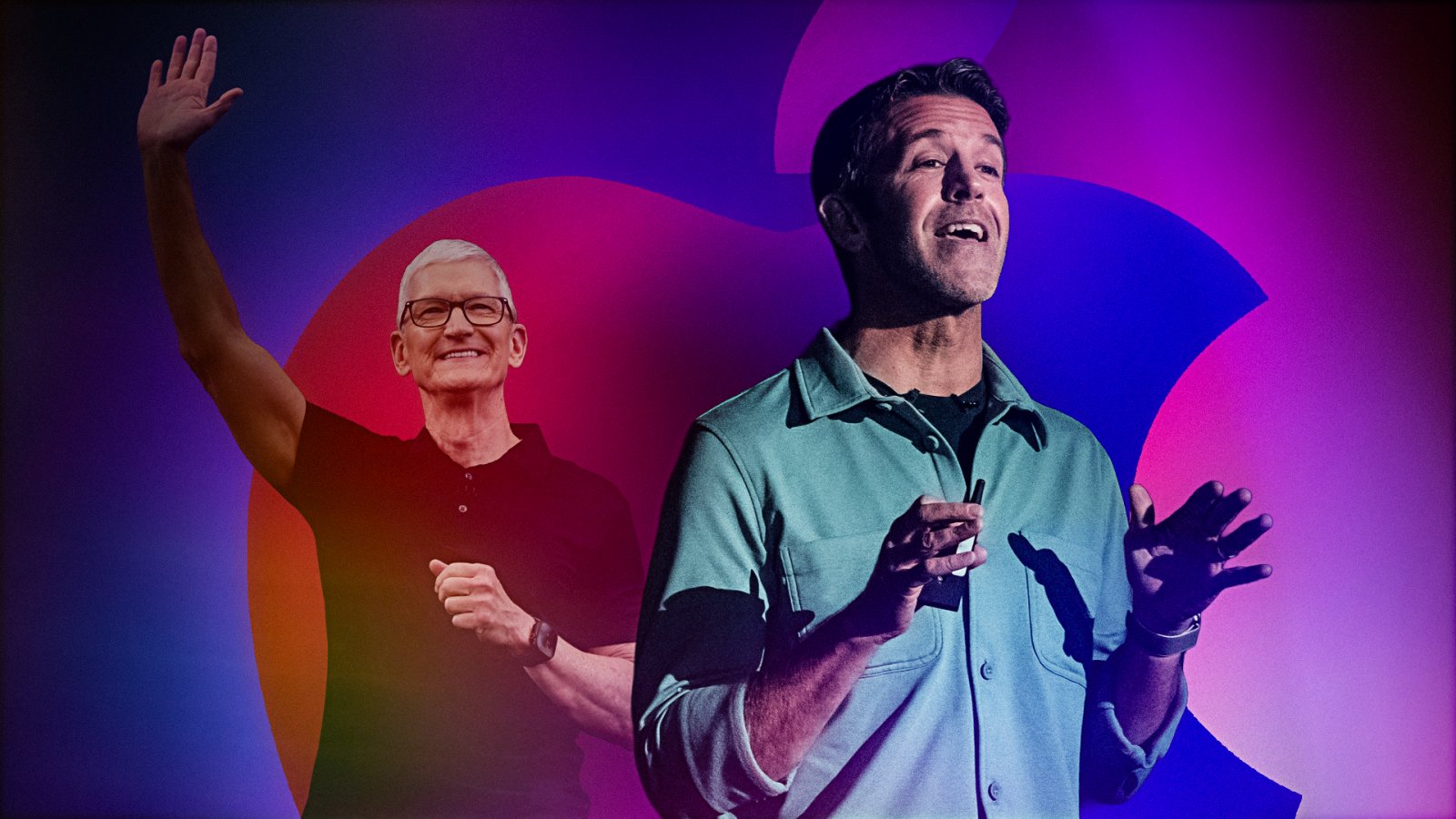
John Ternus took over as Apple CEO on Tuesday, succeeding Tim Cook after serving as the company’s senior vice president of hardware engineering. His first day comes just over a week before the annual iPhone launch event on Sept. 9.
Under Cook, Apple became a $4 trillion company with an impressive, world-changing lineup of tech products, including every iPhone from 2012’s iPhone 5 onward, the Apple Watch, the AirPods, the Vision Pro and the HomePod, and services including Apple Music, Apple TV Plus and Apple Fitness Plus.
But what exactly is Ternus walking into? There are major challenges ahead, driven by the global RAM shortage, increasing smartphone competition and Apple’s struggles to keep up with the artificial intelligence race.
Farewell to Tim Cook
Cook, who took over as CEO two months before Apple co-founder Steve Jobs passed away in 2011, reportedly held a farewell party at Apple Park last weekend to cap off his 15 years at the helm of the company. Around 200 people — mostly Apple employees, but also Cook’s partner and the band OneRepublic — attended the party, according to The Information, citing unnamed sources.
Ternus reportedly spoke at the event, along with Steve Jobs’ widow, Laurene Powell Jobs; Apple’s former COO, Jeff Williams; and head of Apple Services and Health, Eddy Cue.
According to that report, anonymous sources have said the transition from Cook to Ternus should be one of continuity rather than upheaval, with many things expected to stay the same.
During his final earnings call as CEO in July, Cook praised Ternus, saying, “There is no better person to take the helm of the company.” He also called Ternus “brilliant and wonderful and capable” in his farewell note as Apple CEO on Monday.
“Few people understand what it takes to build products that change the world the way John does, and I could not be more excited for his leadership,” Cook wrote this week.
With Ternus as CEO, Cook now serves as executive chair of Apple. Keeping him on in a senior role means Cook will still have influence over where Ternus decides to take Apple, and he could continue to be particularly influential with the current presidential administration, with which he’s fostered a good working relationship.
The Ternus takeover: Who is the new Apple CEO?
Ternus joined the tech giant back in 2001 as part of the product design team, having earned a bachelor’s degree in mechanical engineering from the University of Pennsylvania and working as a mechanical engineer at Virtual Research Systems.
Rising through the ranks at Apple over 25 years, he became a VP of hardware engineering in 2013 and SVP in 2021. Ternus worked across many flagship devices, including the iPad, AirPods, iPhone, Apple Watch and, most recently, the MacBook Neo. Apple also credits Ternus with improving device durability by incorporting 3D-printed titanium in the Apple Watch Ultra 3 and creating a recycled aluminum compound.
Ternus was last year tipped to be the frontrunner in the race to succeed Cook, and at 51, he’s around the same age Cook was when he took over as Apple CEO.
In Apple’s April announcement, Cook said Ternus “has the mind of an engineer, the soul of an innovator and the heart to lead with integrity and with honor.”
“Having spent almost my entire career at Apple, I have been lucky to have worked under Steve Jobs and to have had Tim Cook as my mentor,” Ternus said at the time.
IDC Worldwide Device Trackers senior research director Nabila Popal told CNET that she is “genuinely excited for Apple to go full circle and bring a products guy to lead Apple in this next phase, with an innovative lineup of interesting devices rumored to launch in the first few years of his leadership.”
The first two CEOs of Apple were likewise “products guys” — Michael Scott ran a semiconductor company, and Mike Markkula was an electrical engineer — so the choice of Ternus is a return to Apple’s roots.
The state of Apple in 2026: What is Ternus inheriting?
 Bloomberg/Getty Images
His takeover comes just over a week before Apple unveils its next set of products, likely including the long-rumored foldable iPhone and the iPhone 18 lineup — but there are challenges ahead, even with a highly anticipated product launch.
One major test for Ternus will be the prices for the next iPhone, which are likely to have a higher price tag due to the ongoing global RAM shortage caused by the rapid expansion of AI tools. In June, Apple raised prices on over a dozen products across iPads, Macs and home devices.
“The September launch will be an important first test for John Ternus as CEO,” Counterpoint Research principal analyst Yang Wang told CNET. “A premium-focused lineup could strengthen Apple’s product mix, but it also increases the risk if pricing moves too far ahead of consumer demand.”
Most phones released this year have seen $100 bumps, including the Samsung Galaxy S26 line, while a few higher-end models have gone up $200 over their predecessors. Counterpoint projects the iPhone 18 lineup to see a price increase of $200-$250 per phone compared to the iPhone 17 lineup, “with high-spec models potentially seeing price hikes even beyond the range.”
Rumors suggest a standard iPhone 18 won’t be part of the lineup next week, instead launching in the spring alongside a potential iPhone 18E. This could extend the shelf life of the current iPhone 17, which is still seeing “strong demand” in 2026, according to Counterpoint Research. Typically, Apple discounts its previous model by $100 when a new iPhone is announced; if there’s no new base model, Apple can keep the iPhone 17 at its full price.
“Ternus knows the hardware organization very well, but the challenge will be balancing product ambition with affordability and launch execution,” Wang said, adding that he expects Samsung to overtake Apple for the global smartphone lead by the end of 2026.
The chip shortage across DRAM and NAND flash, which are needed for phones but are being gobbled up by AI data centers, is real. But there has been some criticism that tech giants are not shielding customers from chipflation despite seeing record sales; Apple, for instance, raked in roughly $109 billion in net sales and reported almost $30 billion in net income during the previous quarter.
At the end of August, analyst firm IDC said smartphone shipments are set for a record 17% drop this year due to the memory crisis, with NAND and DRAM costs up 300% compared to last year.
“The components that make AI possible are the same ones in short supply, and their cost is being passed straight through to the shelf,” IDC vice president for worldwide client devices Francisco Jeronimo wrote on Aug. 26. “Average selling prices are up 27.6% this year and will keep rising well into 2027. The era of the cheap smartphone has ended.”
According to IDC, “foldables remain the only silver lining.”
Could a foldable revitalize the iPhone?
 Jeffrey Hazelwood/CNET
Apple is late to the foldable phone game, assuming it finally launches one next week. Samsung is now on its eighth generation of foldable phones, with the recent launch of the Galaxy Z Fold 8 and Galaxy Z Flip 8, which follow the company’s first foldable phone in 2019. There are also competitor folding phones such as Google’s Pixel 11 Pro Fold, Motorola’s Razr Fold and other Chinese options from Oppo, OnePlus and Huawei.
IDC is predicting “rapid growth” in the foldable phones market thanks to Apple’s expected entry into the sector. It forecasts Apple will ship more than 17 million foldable iPhones by next year, snatching 40% of the folding phone market share, potentially making it the dominant force over Samsung, Google and Huawei.
Counterpoint Research has a little less glaze on its folding iPhone predictions, saying that with an expected price tag of $2,200 — IDC predicts $2,550 — its customer base will be limited and shipments will account for just 3% of all iPhones.
“The device is likely to target affluent early adopters and existing Pro Max users looking for something between an iPhone and an iPad,” Wang told CNET. “This is less about competing directly with Samsung or Google and more about creating a new top tier within Apple’s own portfolio.”
Wang said Apple’s late entry into the foldable market is unlikely to be a disadvantage, though, given the supply chain is now more mature and there have been technological improvements in hinge design, display creases and durability.
It’s important to remember that a foldable isn’t guaranteed success, however. CNET’s survey of more than 2,600 adults last month found that 75% were not interested in a foldable iPhone, and that most would only want to spend around $781 on an Apple foldable phone — which is $48 less than a base-model iPhone 17.
Under Cook, Apple expanded from two iPhone models a year to five; the addition of a foldable phone would bring the total to six iPhone models just a week into Ternus’ new role. It wouldn’t necessarily matter whether the iPhone Fold is a hit if it does the job of expanding the iPhone price range well beyond $2,000 to appeal to higher-end buyers.
Regardless of how much work was put into the folding iPhone before he took over, Ternus will own the success or failure of Apple’s purported foldable. But it’s not the only area he’s tasked with bringing Apple back into the lead.
Where does AI fit into Apple’s future?
Apple is also behind on AI, even settling a lawsuit over the lack of AI features in its previous iPhones after overpromising and underdelivering. While Siri AI remained under development, Apple inked deals with OpenAI to use ChatGPT on iPhones and with Google to leverage Gemini to expand Siri.
After years of delays, Apple finally unveiled Siri AI and improved Apple Intelligence during its annual software conference, WWDC, in June. It now has its own app, a fresh design, customized voice options, more accurate dictation, better context for improved suggestions, integrated writing tools, the ability to pull info from your messages, emails and other apps and what Apple calls “broad world knowledge.”
Visual Intelligence has been rolled into a new Siri mode in the camera app, including the ability to identify family and friends in photos by name and to search screenshots for products online.
Siri AI is expected to launch later this year in beta, possibly timed with the release of the new iPhones, so for now, it remains to be seen whether Apple can truly compete with AI giants such as Google and OpenAI.
One of the biggest industry pressures facing Ternus will be remedying this and ensuring a smooth rollout of AI features in Apple’s phones and Macs to match its competitors. However, a CNET survey found that AI isn’t a major motivator for people to upgrade their phones, and there are also rising concerns from consumers about how much water and power AI data centers are sucking up and what kind of privacy implications there are when AI is integrated into everything.
By choosing a hardware-focused CEO, however, Apple may be signaling that it wants to focus on devices over AI — unless a move into physical AI is imminent for the tech giant.
“The biggest challenge for Apple as Ternus takes over is how to keep the company relevant in the age of AI,” Popal told CNET. “But what will be crucial is whether the level of innovation can keep up with consumer expectations as the world is rapidly shifting into an unknown AI era, where how we interact with our devices is changing, and for the moment, it is increasingly looking like we are moving towards a more voice-powered interface than touch.”
While a smart glasses announcement next week is unlikely, we’re expecting a refresh of Apple’s AirPods, and rumors are swirling around AirPods with AI-powered cameras that can use Visual Intelligence to improve Siri’s context about your surroundings and give better suggestions and answers. It’s part of a slate of unreleased products that are powered by Siri AI.
But there are privacy implications in being tracked and monitored by tiny, hidden cameras embedded in earbuds, too.
“It’s hard not to see this upcoming product launch as Apple simply chasing the AI arms race rather than genuinely listening to customer needs,” said Lee Elliott, chief product officer at Compare and Recycle, a tech recycling comparison site, in a statement last week. “Camera-equipped earphones will certainly be storing far more personal data, including images, locations and environmental data.”
Announcing new products always comes with an air of excitement, but in the age of AI everywhere and RAM shortages driving global price hikes, the main challenge for Ternus as he steps into the CEO role will likely be balancing privacy, AI hesitancy and pricing against launching one more thing.

See full bio