dailynewsnblog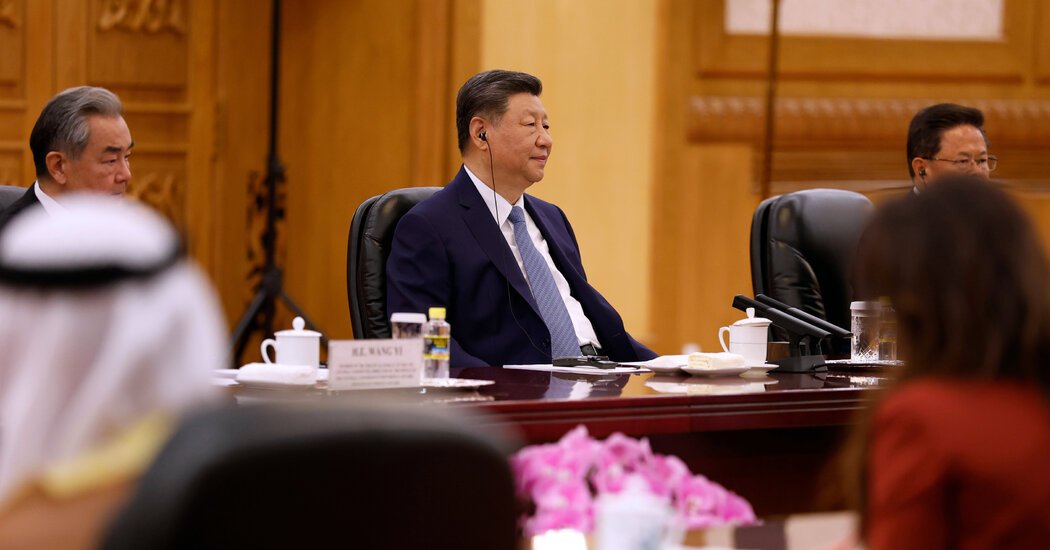
China’s top leader, Xi Jinping, called this week for the Strait of Hormuz to reopen, his first such comments since Iran effectively closed the strategic waterway last month in response to U.S.-Israeli attacks on its territory.
Mr. Xi made the comments in a call with Crown Prince Mohammed bin Salman of Saudi Arabia on Monday, according to China’s state-run Xinhua news agency.
“The Strait of Hormuz should remain open to normal navigation, which is in the common interest of regional countries and the international community,” Mr. Xi told Prince Mohammed, according to Xinhua.
Mr. Xi’s comments reflect his difficult balancing act. Iran may be Beijing’s closest strategic partner in the Middle East, but China also has economic ties with Persian Gulf states targeted by Iranian strikes, which it has not condemned.
“This is a symbolic step that reflects the Kingdom’s importance in Beijing’s eyes as the leading Gulf state and partly offsets China’s lack of condemnation or meaningful support for Riyadh,” which has faced missile and drone attacks from Iran, said Tuvia Gering, a nonresident fellow at the Atlantic Council’s Global China Hub.
Brian Wong Yue-Shun, a foreign relations expert at the University of Hong Kong, said the message was also directed at Iran.
“Beijing is definitely signaling subtly, yet importantly, to the hawks within Tehran that further unbridled escalation will not be tolerated,” he said.
Mr. Xi’s call with Prince Mohammed follows a meeting in Beijing last week with Sheikh Khaled bin Mohamed bin Zayed Al Nahyan, Crown Prince of Abu Dhabi, in which Mr. Xi warned of the world returning to the “law of the jungle.” He did not directly mention the Strait of Hormuz in that meeting, as he did in his call with Prince Mohammed, Saudi Arabia’s de facto leader.
In his conversation with Prince Mohammed, Mr. Xi said China supported regional states in building “a shared home of good neighborliness” so that they could take “their future and destiny into their own hands,” according to Xinhua.
Manoj Kewalramani, the head of Indo-Pacific studies at the Takshashila Institution in Bangalore, India, said that Mr. Xi’s message was consistent with earlier Chinese calls for all parties to de-escalate.
“Essentially, Beijing wants the United States to lift its blockade and for Iran to also permit ships to navigate through,” he said.
Both Saudi Arabia and Iran have called for China to play a bigger role as a mediator in the crisis. Almost three years ago, Beijing helped the two sides restore diplomatic relations. But it is unclear if Mr. Xi is willing to deepen China’s involvement and risk getting entangled in a crisis it did not create.
Beijing’s primary concerns over the war are economic, analysts say. China imports as much as 40 percent of its oil through the Strait of Hormuz. A prolonged closure of the strategic waterway could trigger a global economic downturn that could threaten trade, the chief driver of China’s economy.