dailynewsnblog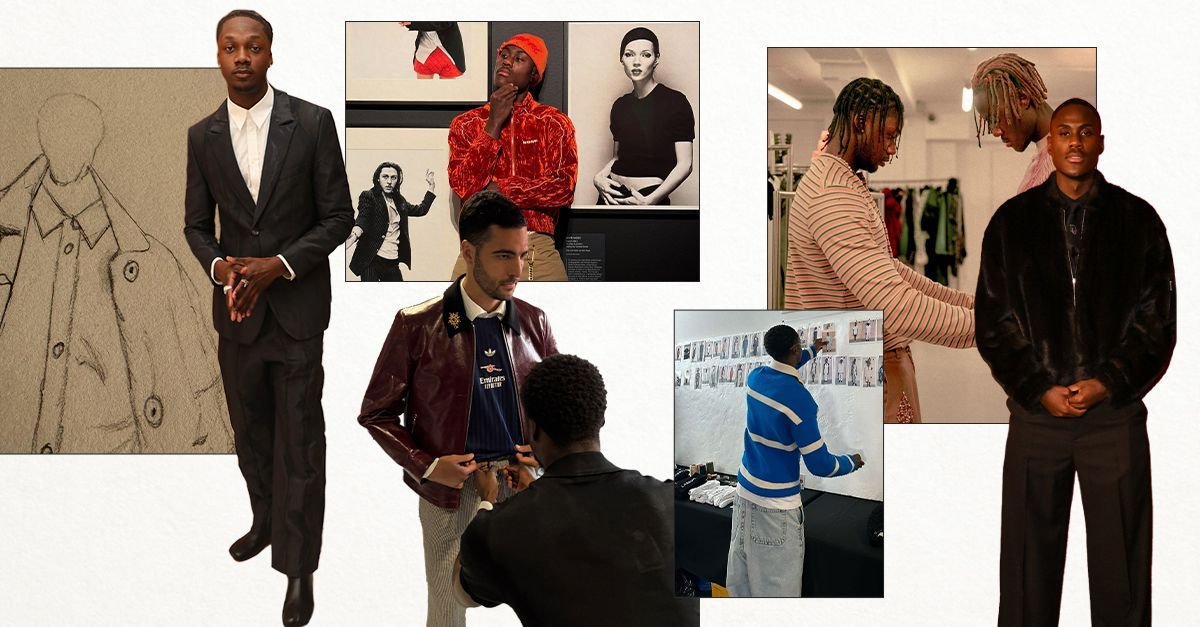
Some people have to go searching for a career path that clicks—one that challenges and excites them enough to get up every day and go to work, even when it’s hard. That wasn’t exactly the case for Algen Hamilton. Styling some of the best young players in football found him.
Hamilton grew up in London playing all kinds of sports, from hockey to diving and even horseback riding, but football always came first. In primary school, he met Reiss Nelson, now a winger in the Premier League playing for Brentford. Around the same time, he became friends with Joe Willock, now a midfielder for Newcastle United. They all connected over football, not knowing that fashion would become an equally bond-strengthening agent. “I grew up with them, so I was doing their looks,” the stylist tells me over Zoom a few short weeks before the World Cup. When his own sports career came to its natural end, Hamilton leaned into styling his two friends. “This was during a time in football when the space hadn’t evolved yet into fashion,” he says. “Everything that players were doing was predominantly sports-related, and everything they posted was about football. They weren’t showing their personalities or anything off the pitch.” Willock and Nelson felt like changing that and started posting their outfits on Instagram, wanting to show fans who they were away from the beautiful game. “They were very authentic about it,” Hamilton says. Their genuine interest—combined with Hamilton’s understanding of football and fashion’s overall rising interest in sports—acted as catalysts, kick-starting a shift toward the football landscape welcoming self-expression off the pitch, not warning against it.
According to Hamilton, football is a bubble, especially in London, so it didn’t take long for other players on Arsenal—the club Willock and Reiss played for at the time—to take notice and start asking questions about the stylist behind their looks. “Once you work with one person, people will be like, ‘I really love your outfit,’ and they’d introduce me to them,” he explains. It’s all word-of-mouth in the league, which is how his work changed from just helping a few friends develop their wardrobes to collaborating with various players. Soon, he started working on editorials and partnering with brands and clubs, like Arsenal, on commercial campaigns. “It just grew year over year like that,” says Hamilton. A career combining the two things he’d always been most passionate about naturally took shape.


It wasn’t as easy as it sounds looking back. When Hamilton started working at the intersection of fashion and football, it wasn’t just that players weren’t posting their outfits on Instagram. The sport itself was very serious, Hamilton tells me. Fans wouldn’t always react well to players posting their outfits or attending non-football events. Some bosses advised their players against it. “I’d work with players, and we’d have shot something, and it was time to post it, but then the agent or club is saying, ‘Don’t do this,'” he says. “There was a lot of restraint.” It was up to the player, but they were surrounded by influential voices who counseled against it.
This phenomenon isn’t new to sport, despite fashion’s stronghold in culture and history in sports and the fact that it’s one of the key value-creating industries for the world economy. Style is often met with resistance, only to be welcomed later, when the pros outweigh the cons or athletes prove that outside interests won’t, in fact, negatively impact their play but instead improve it. Case in point: the NBA. After the controversial 2005–2006 dress code that sparked many opposing players to dress against the guidelines, their refusal to play by the rules paved the way for the tunnel-fashion phenomenon we now know and love. The same can be said for Formula One, with Lewis Hamilton facing backlash for his interest in fashion, only to transform F1 into one of the most style-centered sports of all, bringing in major partners for drivers, teams, and the series itself. (I don’t know if you saw, but LVMH signed a decade-long partnership with F1 in 2025, and Gucci was just named a title partner of Alpine starting in 2027.) It’s a tale as old as time, but one that, in the Premier League, is being rewritten thanks to stylists like Hamilton and his footballer friends, who weren’t afraid to go for it, even when not everyone agreed with their decisions.
That’s the biggest difference Hamilton notes between today’s football-fashion landscape and the one he entered at the start of his styling career. “Over time, as more players [began] being vocal and [showing their] authentic selves, I believe the sport [started to] see a difference in a positive way,” he says. “The mentality and morale in the changing room became a lot more fun—the conversations a lot more interesting.” According to Hamilton, a friend told him that before football players started being more open and expressive on social media, posting their outfits and other more personal aspects of their everyday lives off the field in photo dumps, the locker room was quieter. There were players he didn’t talk to as much, but suddenly, they were able to find similarities in each other that they hadn’t known about before. They connected over a fashion brand they both liked or a cool outfit. Maybe it was a restaurant they saw on their feed or a concert they went to. “That’s great for a team sport,” says Hamilton. “It’s exactly what they need.”

Once clubs like Arsenal and Chelsea in the Premier League saw the impact it was having, they leaned in too, trying new things with sponsorship and campaigns, and kicking off tunnel ‘fits for training sessions. A big difference between the league and many American sports leagues? They don’t wear outfits to actual games, something that’s still met with resistance. “The next step is for the Premier League to step in and push this forward,” says Hamilton. If the league can eliminate barriers for players—particularly the prevailing view that interests outside of football are frowned upon—they can freely express themselves, growing the sport in the process and boosting team morale.
Hamilton is aware of all these barriers, and he considers them when dressing his clients. For example, since many football fans aren’t overtly interested in fashion, he and the players he works with have to think about what they post, particularly in campaigns. “You’ll notice that the engagement is a lot lower [on a campaign or paid shoot] than a simple training picture,” he tells me. “So when I’m styling them, whether it’s a wardrobe or event or anything commercial, I always take into consideration their audience so they get the engagement they want from their posts.” He also does image consulting, so he and his clients first align on goals, and then they produce content that matches that. “I’m going to make the outfit in a way where not only will you love it and it will represent you, but your fans who are looking at it will resonate with it as well,” he says.
According to Hamilton, he could dress all his players like Harry Styles, but it would come as a shock and feel inauthentic to who they are and how they dress. “It’s like a costume,” he says. Instead, he considers each client’s fan base, their audience, their social media pages, and more when he dresses them for both everyday life and events. “But the most important thing is the person themselves,” he assures me. “Who they are, what they represent, what it is they want to portray to the world as an athlete and as a person.” Those are the key elements of his partnerships with any new client. “What are their goals? What’s the next step from here to keep up their momentum?” According to Hamilton, any time players release something commercially or editorially, at least a handful of magazines or publications will publish it. People will see it, so it has to be consistent with who they are and what they want to achieve. That, Hamilton says, is how you build a brand that lasts.
The most important thing is the person themselves.
Algen Hamilton
It might not seem important. If you play well on the pitch, why do you need a brand outside of football? But that’s not the reality we live in anymore. You have to do more to be and stay relevant in sport. That’s not to say every athlete should pursue fashion or dress in a way that’s not natural to them. The key is to diversify your interests so that when a player’s football career comes to an end, there’s more to do. “I always say to [my clients], ‘When you finish your career, are you good? Do you want to have any regrets? Because these opportunities are coming now—they’re more frequent now that you’re playing—but they’re going to be less frequent when you stop.'” It might sound harsh, but it’s the truth. And if there are things they want to explore off the pitch, the time to do it is when they have eyes on them. Hamilton pushes them to push past their apprehension and shyness and put themselves out there, resulting in a generation of professional football players who are willing to go for it. “Don’t be shy; just be yourself,” he tells them. “The whole world is embracing themselves, their culture, and who they are individually—just because you’re a big name doesn’t mean that you shouldn’t do that as well.”
In sport—any sport—retirement is always looming. It can be decades away or seconds, so having a backup plan is something Hamilton often encourages his clients to consider and prepare for. It’s a methodology with proven success. Think about it. Post-retirement, Michael Jordan has made a majority of his wealth from the sale of his shoes. According to WWD, he has generated over $3.3 billion (or $4.5 billion adjusted for inflation) in earnings from Jordan Brand, his namesake shoe brand under the Nike umbrella. In 2025 alone, Jordan earned an estimated $250 million. Outside of sneakers, fashion has a way of keeping retired athletes in the zeitgeist. It wasn’t too long ago that Tom Brady walked in Gucci’s cruise 2027 show in Times Square. In 2024, David Beckham signed a multiyear strategic partnership with Hugo Boss. Serena Williams has remained present in fashion circles since she retired in 2022, showing up in campaigns, sitting front row during fashion week, and cochairing the 2019 Met Gala. All of the above were prepared for retirement, having created names for themselves outside of their sport during their careers. Sure, these are all some of the biggest names in their respective sporting categories, but why shouldn’t every player be just as primed for long-term success?
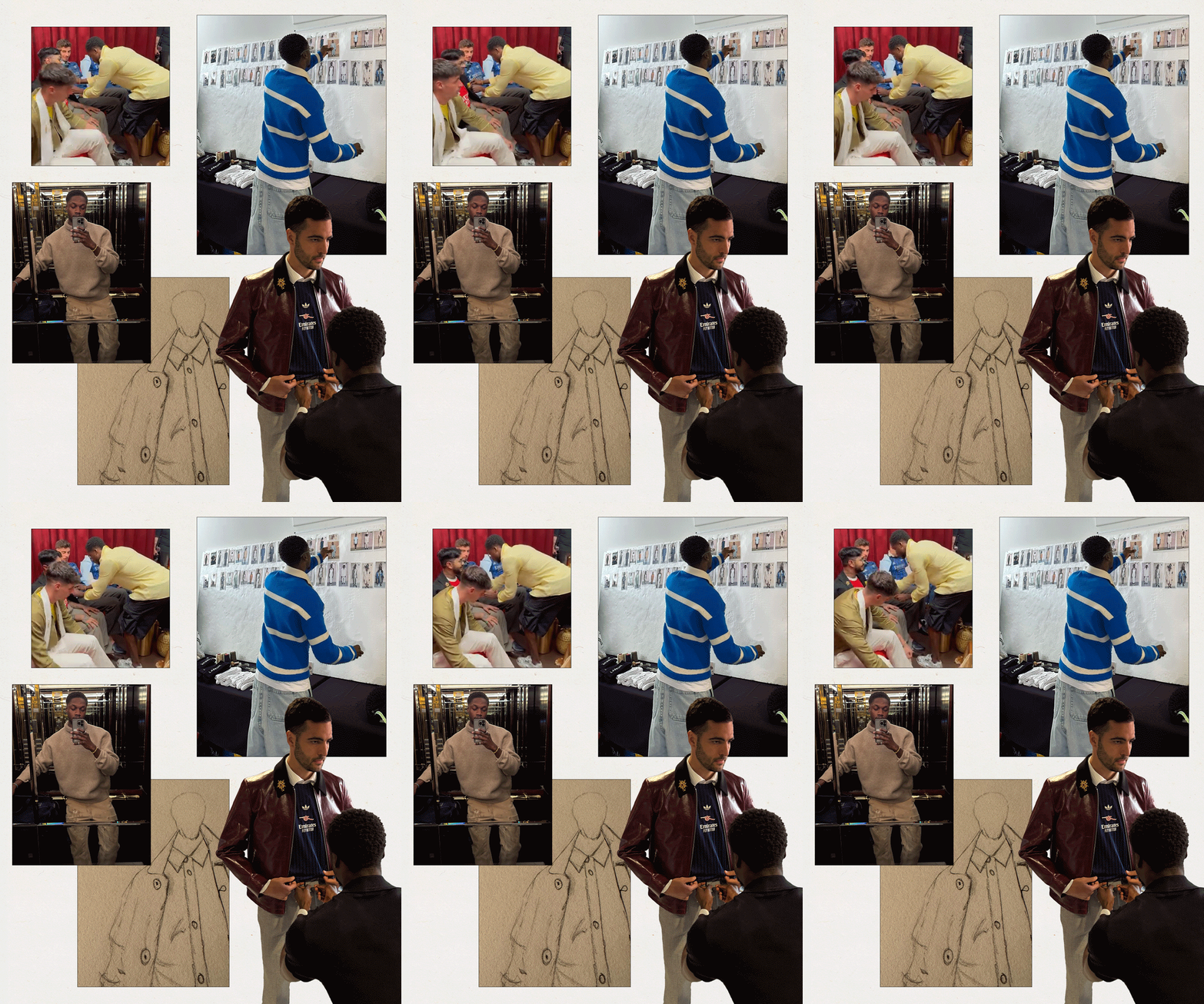
All that said, if fashion doesn’t feel like an authentic avenue for a player to take—if it isn’t an area that’s in line with a player’s genuine interests—Hamilton will never push them. The most important factor for him is helping his clients maintain a reputation of authenticity and realness. And the same goes for the flip side. He’s seen brands select athletes to walk in runway shows or star in campaigns who have never shown interest in fashion and the lack of impact those marketing efforts end up having on culture. “You ask yourself, how are they in line with fashion? Is it because they are big names in their sport?” he questions. “It does make sense why fashion executives will naturally go toward them, but when fashion and football really go hand in hand, they’re going to look for those [players] who are organic and naturally [interested in style].” The resulting content will always be more effective and stick with more people when it feels genuine, instead of forced.
He pushed his clients to be more open and show off their personalities rather than rely on their skills on the pitch to do the talking. Not only will it make fans feel more connected to them, but it’ll also help them find authentic partnerships with lasting impact, growing their presence on and off the field. Hamilton’s steadfastness when it comes to authenticity helped Willock make his way onto the runway at 424’s Paris Fashion Week show this past summer. The Newcastle United player has been building authority in the fashion space for years now with Hamilton’s help, so it made sense for him to have a presence at the show, and Willock had worked with the brand before. According to Hamilton, it all came about in the span of two or three days, but you’d never know that by how seamless a partnership it was.
Hamilton’s work behind the scenes, both creating a vision for his clients and their careers and then connecting them with brands and sponsorship opportunities, is what has allowed him to become the powerhouse he is today in the worlds of fashion and football. He’s not just sticking an outfit on a player and calling it a day. He’s building them a career off the pitch, strengthening their relationships with fans by emphasizing authenticity and genuine expression, and even helping players to get to know one another on a new level, which has proven to be beneficial in-game. He, like so many in the styling world, hustles behind the scenes, and often doesn’t get the credit he deserves, but watching the goals he sets every time he begins working with a new client come true is the best kind of reward. It’s one of many reasons he loves what he does—why he was drawn to it.
I’m just gonna go all in.
Algen Hamilton
“After I finished playing football, my mom was like, ‘You need to have a plan B,'” Hamilton tells me. As one does, he took an apprenticeship in IT. “I absolutely hated it,” he says. “I had to finish it, so I finished it, and as soon as it was done, they offered me the job. I said, ‘Nah, I don’t want this.'” He didn’t have any money or any real, concrete career prospects, but he knew that what he really wanted to do was pursue styling. “I’m just gonna go all in,” he says. Styling was what felt natural and authentic to him, and following that gut feeling—skipping the safe option in the process—has allowed his career to be bigger than anything he would have accomplished in IT. His clients walk in runway shows, star in editorials, and work with some of the biggest brands in sports and fashion. He does too.
Today, Hamilton is shaping what modern football fashion looks like, and he has no plans of stopping. He knows what needs to be done to take football to the next level, rivaling American leagues like the NBA and NFL, which have become synonymous with style in the cultural sphere. And he’ll use everything in his arsenal to make it happen.