dailynewsnblog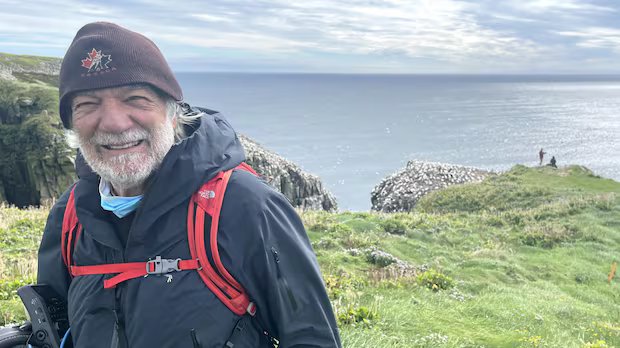

Listen to this article
Estimated 4 minutes
The audio version of this article is generated by AI-based technology. Mispronunciations can occur. We are working with our partners to continually review and improve the results.
Seabird biologist and Memorial University professor emeritus Bill Montevecchi died early Saturday morning. He was 80 years old.
Montevecchi spent decades researching seabird behaviour and population health, marking environmental changes and responses to that change. His work highlighted populations frequenting Newfoundland and Labrador and drew international acclaim.

Newfoundland and Labrador has lost one of its most passionate advocates for nature and conservation. Seabird biologist Bill Montevecchi died Saturday morning at age 80. Those who knew him are remembering him as a humble man whose influence was far reaching.
He became well-known as a scientist who didn’t hesitate to speak publicly on sensitive topics related to environmental conservation, particularly in N.L. He regularly challenged the oil and gas industry, for example, pushing for independent environmental observers offshore, greater sharing of information and flagging risks inherent in industrial activity at sea.
Montevecchi often spoke to CBC News regarding concerns for wildlife, from the threat of oil spills to advising people not to feed birds for the risk of spreading avian flu amongst birds gathered at feeders.
“I think he would really want to be remembered as someone who cared deeply about nature in Newfoundland [and Labrador] and who tried his best to try and save preserve nature, see conservation happen here so there will be a legacy of these beautiful natural resources into the future,” said ornithologist Darroch Whitaker, who works as an ecosystem scientist with Parks Canada.
Whitaker grew up with Montevecchi, living on the same street and following him around during Christmas community bird counts. Like many other people, he went on to study under Montevecchi at MUN during Montevecchi’s more than 40-year career at the university.
“You can’t understate the importance of creating a generation of conservationists and well-educated scientists, some of whom are still here in Newfoundland… and others who’ve moved away and are sharing those lessons elsewhere,” Whitaker said.
Nigel Markham worked with his friend Montevecchi to create a website about the Newfoundland and Labrador Ecological Seabird Reserve at Funk Island.
“Bill would also say he wasn’t special. He was part of a continuum of scientists,” said Markham, describing Montevecchi as humble despite his professional acclaim.
He was a scientist who was also a skilled communicator.
“You couldn’t be around him and not kind of start to look at the world in the way that he looked at it,” Markham said.
Speaking with Land & Sea in the summer of 2024, Montevecchi said he was still keeping busy with his lab and being in the field with his team of students. He also spoke about how much he loved his work and that he wanted to continue this work for as long as he could.
“It’s just really enriching so I just feel happy to do it,” he told Land & Sea. “I’ll keep doing it ’til I can’t do it. We might be getting close,” Montevecchi said at the time, laughing.
“So far, I’m hobbling along.”
In 2020, Montevecchi was ranked in the top one per cent of the world’s marine biologists and ranked in the top two per cent of the world’s top scientists by Stanford University.
An American, several decades ago Montevecchi left Massachusetts behind and relocated to Newfoundland, where he taught at Memorial University.
He received his bachelor from Boston’s Northeastern University before heading to Tulane University for his master’s of science and then earning his PhD from Rutgers University Newark.
He told CBC Radio’s On the Go in October 2025 that as a graduate student he briefly worked with chimpanzees and considered going to Africa to study with the late Jane Goodall.
Montevecchi’s obituary said there are plans to establish a scholarship in his name.
“Bill’s work lives on through his ongoing research programs at the university, the protected seabird colonies he led to establishment, and in the countless people who now see the ocean with a deeper appreciation,” it reads.
Download our free CBC News app to sign up for push alerts for CBC Newfoundland and Labrador. Sign up for our daily headlines newsletter here. Click here to visit our landing page.