dailynewsnblog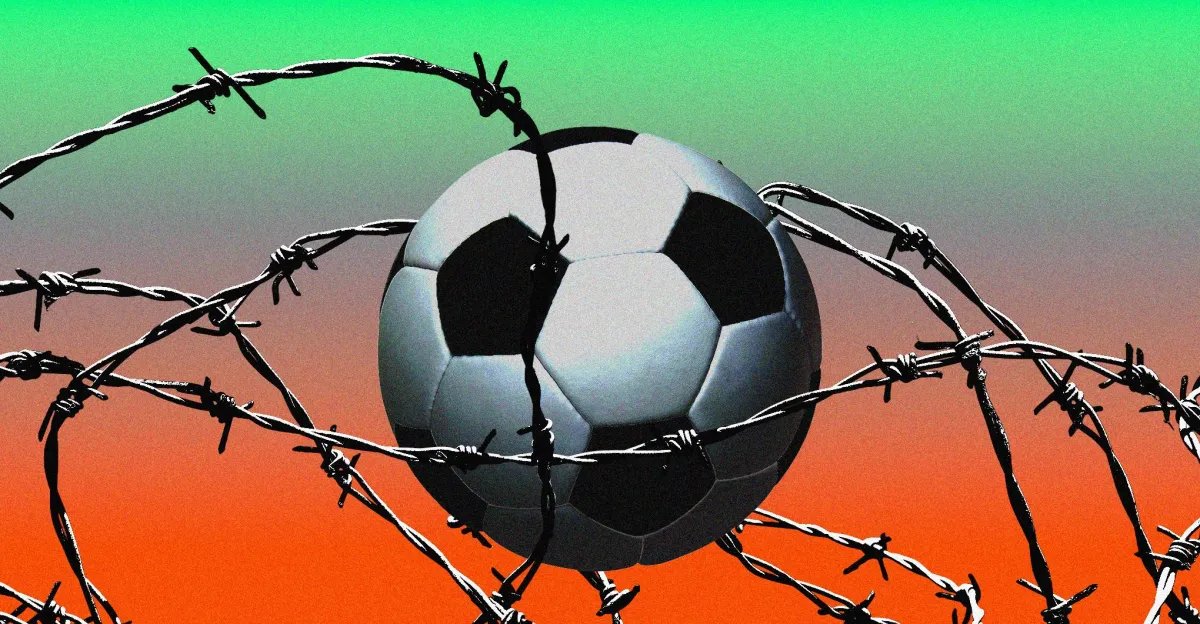
While European tourists marvel at ranch dressing, Buc-ee’s, and other wonders of Middle America, would-be World Cup attendees from Africa, Asia, and the Middle East have experienced a different American pastime: exclusion. President Donald Trump’s nakedly racist immigration policies have prevented scores of people from traveling to the United States for the event — even, in some cases, the players themselves.
Swiss forward Breel Embolo wasn’t allowed to board the team’s flight to the US because of a criminal conviction from 2018 and had to apply for an emergency visa. In the wake of the US’s attack on Iran, the Iranian team moved its training base from Tucson, Arizona, to Tijuana, Mexico, after the State Department denied visas to several players. Customs and Border Protection agents detained Iraqi striker Aymen Hussein at Chicago’s O’Hare Airport, where he was questioned for seven hours and had his phone searched. The team’s photographer was also detained and was denied entry into the US. CBP denied entry to Omar Abdulkadir Artan, who would have been the first Somali referee in World Cup history, because of “vetting concerns,” even though he had already been issued a visa.
Fans, too, have been turned away. One Scottish visitor had his travel authorization revoked an hour before his flight took off. The Trump administration has justified these actions, emphasizing that traveling to the United States is a privilege, not a right — and suggesting that some of the athletes it has turned away are threats to America, despite being some of the world’s most gifted soccer players.
DHS Secretary Markwayne Mullin — who also threatened to pull CBP from airports in so-called “sanctuary cities” ahead of the World Cup — defended the visa denials, as did Andrew Giuliani, executive director of the White House task force for the World Cup. “The players, in particular, if it wasn’t for the World Cup, they may not necessarily be allowed to enter the United States,” Giuliani, the son of Rudy Giuliani, told CBS News. Providing few details, Giuliani claimed that Artan, the Somali referee, was denied entry because officials discovered that he had been talking to “some very bad people.” Meanwhile, CBP officials have claimed that Artan was associated “with suspected members of terrorist organizations.”
Jules Boykoff, author of Red Card: The 2026 World Cup, Sportswashing, and the FIFA Greed Machine, described the Trump administration’s stance toward international travelers as an unusual break from World Cup practice. “When you bought a ticket to the Russia men’s World Cup in 2018 or the Qatar 2022 men’s World Cup, that was tantamount to getting a visa,” Boykoff said. “Your ticket was your visa. That is definitely not happening with the United States.”
Boykoff, a professor of political science at Pacific University, said the 2017 joint bid between Mexico, the US, and Canada for the World Cup promised that international travel would be smooth. In addition to claiming that fans would get free transportation to stadiums, the three countries promised that traveling across their borders would be easy for players and attendees alike.
Even FIFA president Gianni Infantino, who awarded Trump the first FIFA Peace Prize, claimed that traveling to the US would be smooth despite the president’s immigration policies. “Everyone will be welcome in Canada, Mexico and the United States for the FIFA World Cup next year,” he said in 2025. “This process will be smooth, and it will ensure that those that qualify will be able to come with their fans.”
“There were a lot of promises made that this was going to be smooth,” Boykoff said. “FIFA has this phrase that they overuse: ‘Football united the world.’ Well, Trump’s policy here for the World Cup in regards to immigration and visas very much divides the world.”
Last December, the Trump administration issued stringent travel restrictions for nationals of 39 countries. Some — including Haiti and Iran, both of which are playing in the World Cup — have had visas banned entirely, while others, like Cote d’Ivoire and Senegal, are subject to a “partial suspension” on visa processing, including for tourists and business travelers. The ACLU issued a travel advisory in April, warning travelers that the “deteriorating human rights conditions in the United States” could lead to arbitrary denials of entry, arrests, detention, and deportation of travelers. A federal judge temporarily blocked the travel ban in early June, but by that point it was too late for most fans to plan travel to the US, much less secure visas.
Days before the World Cup began, Iran’s federation had fan tickets revoked for its three US games, preventing thousands of fans from attending matches in Los Angeles and Seattle. Compounding the problem, Iranian player Mehdi Torabi received a single-entry visa to the US, meaning he wouldn’t be able to return to the country after leaving. Giuliani, of the White House World Cup task force, told The Associated Press that US officials worked with FIFA to ensure Iranian players can enter the country ahead of its matches. He added that some Iranian officials will be denied entry, saying, “as you can imagine, there are some people that claim that they are coaches that may not be coaches,” and implying that some people associated with the Iranian team have ties to the Islamic Revolutionary Guard Corps. The US has since eased restrictions on the Iranian team, allowing players to enter the country two days before its Friday match in Seattle.
Even fans from countries not on the travel ban list have had trouble securing visas. Abu Kass, head of the Jordanian fan association, told the BBC that he took more than 42 documents to his visa appointment in Amman, only to have his application denied. “If the head of the fan association was refused,” he asked, “who will be accepted?” Kass said he only knows of one Jordanian fan who was issued a visa for the World Cup. Dozens of Moroccan fans — including members of the country’s supporter associations — were reportedly denied visas even though they had tickets to matches in the US. In light of these denials, a member of Morocco’s parliament asked the country’s foreign minister to ask the US to provide transparent justifications for visa rejections.
Infantino has effectively responded to all of this by telling everyone to calm down, and emphasizing that FIFA can’t control any country’s border policies. “It is unfortunate what happened to Omar, the referee from Somalia, but again we don’t control everything,” Infantino said at a pre-World Cup press conference in Mexico City. “We try, we’ll discuss, we’ll see. Maybe sometimes it’s good as well to chill, relax. We work on everything, we try to resolve everything.”
But DHS has doubled down. Though the administration didn’t make good on Mullin’s threats to pull CBP from airports in sanctuary cities, border czar Tom Homan continues to hint that ICE will descend on New York, and federal officials have said that ICE may be deployed to World Cup host cities to help out local law enforcement.
Todd Schulte, president of the immigration reform group FWD.us, said mass raids at stadiums are unlikely, but acknowledged that an increased ICE presence in host cities is likely to put immigrant communities on edge.
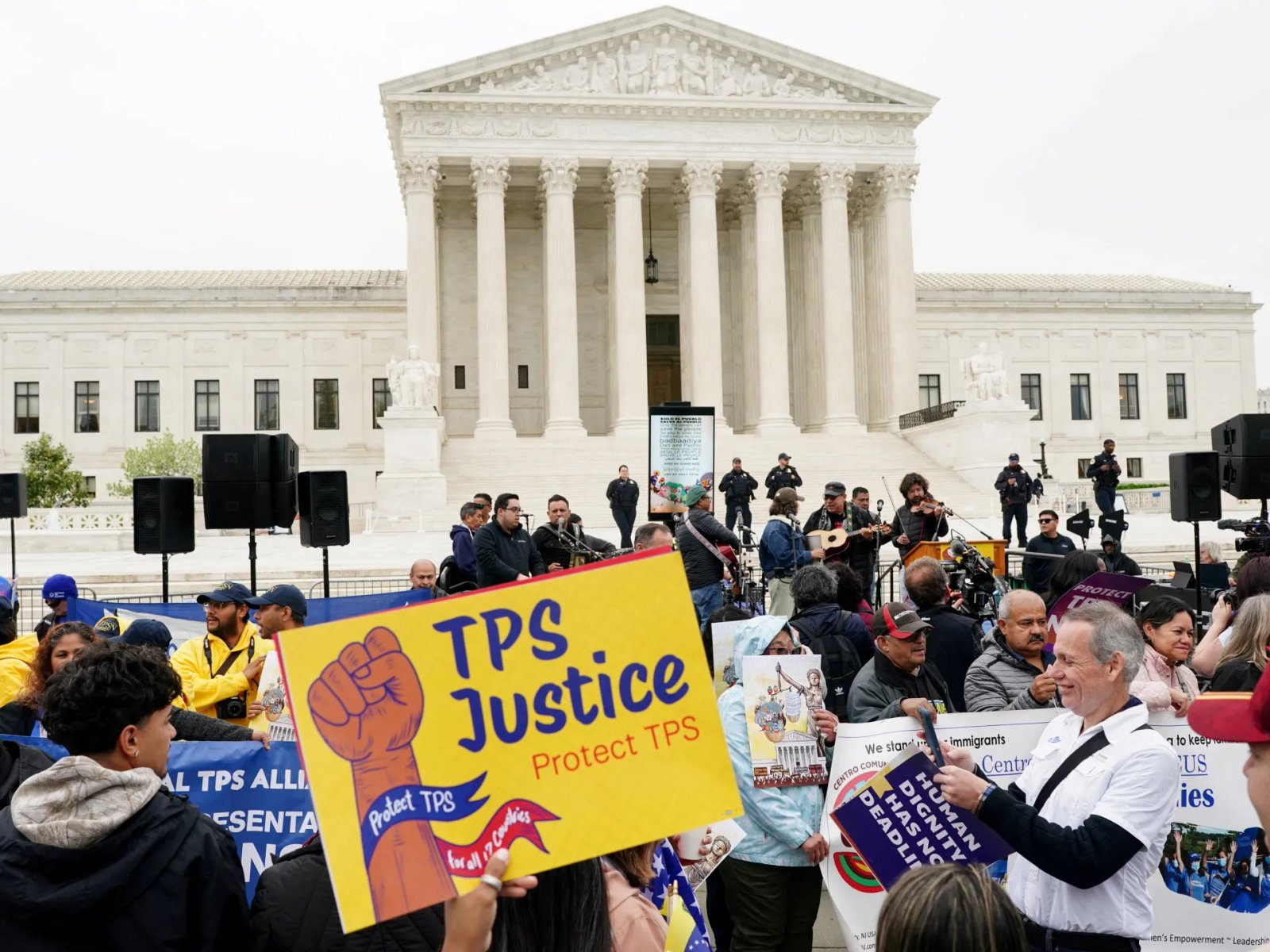
“They’re taking an all-of-government approach to going after immigrants, but less the Greg Bovino Call of Duty kill squad approach,” Schulte said. Instead, the administration is targeting people through the legal immigration system by allowing ICE to engage in racial profiling, and by stripping people of legal status. Schulte pointed to the Supreme Court’s recent decision allowing Trump to rescind Temporary Protected Status for nationals of Syria and Haiti, which will make hundreds of thousands of people deportable with the stroke of a pen. Trump’s approach to enforcement, Schulte said, is now more “pervasive and bureaucratic” than it was before. “They’re trying to make it less visible.”
Communities in host cities are preparing for crackdowns. In Houston, volunteers with Organized Power in Numbers (OPIN) dressed as referees and handed out “red cards” to fans outside Shell Energy Stadium. These flyers informed people of their rights when interacting with ICE and other federal law enforcement — even if they’re noncitizens. Volunteers also helped local business owners put up “employees only” signs to ensure that parts of their businesses are inaccessible to law enforcement, and showed them how to recognize the difference between administrative and judicial warrants, the latter of which ICE rarely obtains.
Mauricio Escobar, an organizer with OPIN, said ICE has ramped up its presence in Houston over the past year and said the group has been preparing for even more agents to flood the city during the World Cup. “We know that ICE and DHS will be here to act as overflow police, but that’s not to say that they won’t be doing other things,” Escobar said, adding that OPIN is aware of racial profiling incidents involving ICE.
Like the Olympics, hosting the biggest event for the most popular global sport is supposed to be a boon for national pride. But Trump’s stance on immigration has only become more aggressive since his return to office, and his second term has been characterized by an unprecedented crackdown on legal immigration, especially from countries he considers inferior. Given that the US, Canada, and Mexico started campaigning to host the World Cup in 2017, it’s possible that no one — not even Trump himself — thought Trump would still be in office nearly a decade later, when the country would be actively inviting thousands of foreign nationals to its shores. Bringing people of all nationalities together in a single place is the whole point of the World Cup, but for the US president, the more important message seems to be that even at a celebratory global event, some people don’t belong.