dailynewsnblog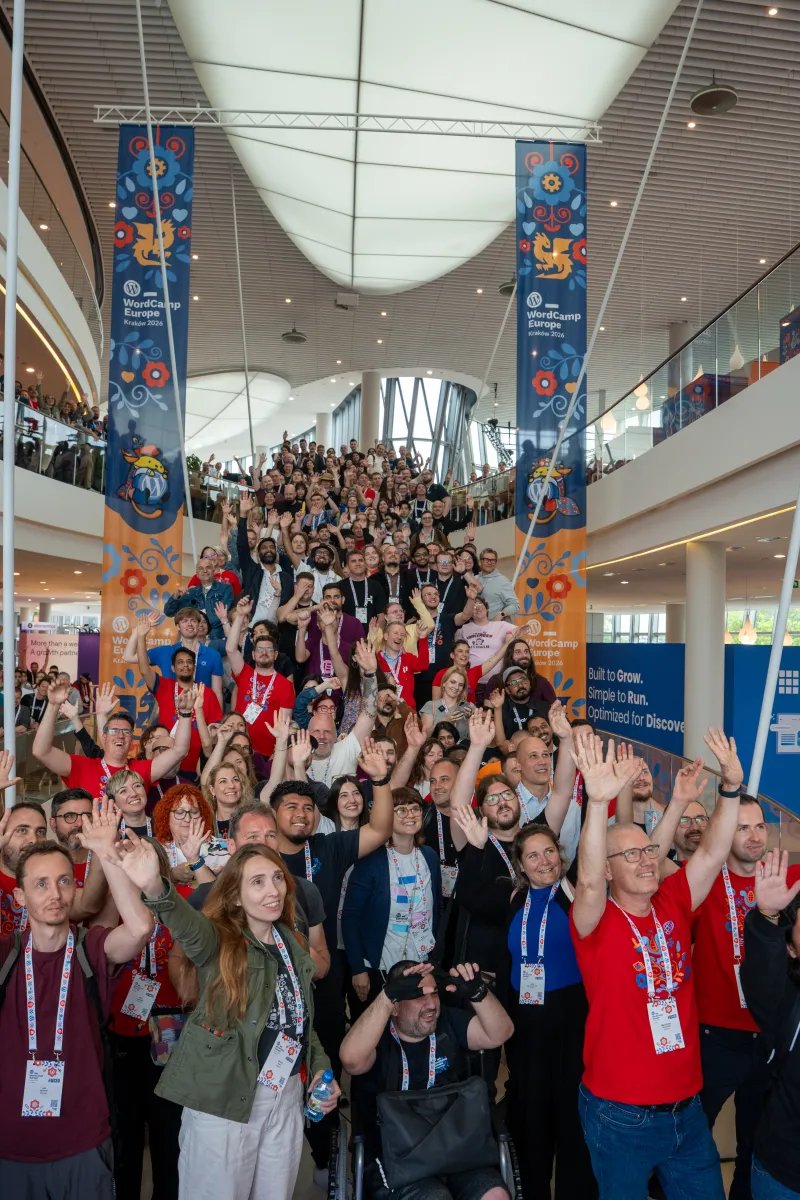
I’ve been building sites on WordPress since 2010. These days I work in marketing at WordPress.com. And somehow, until Kraków, I’d never been to a WordCamp.
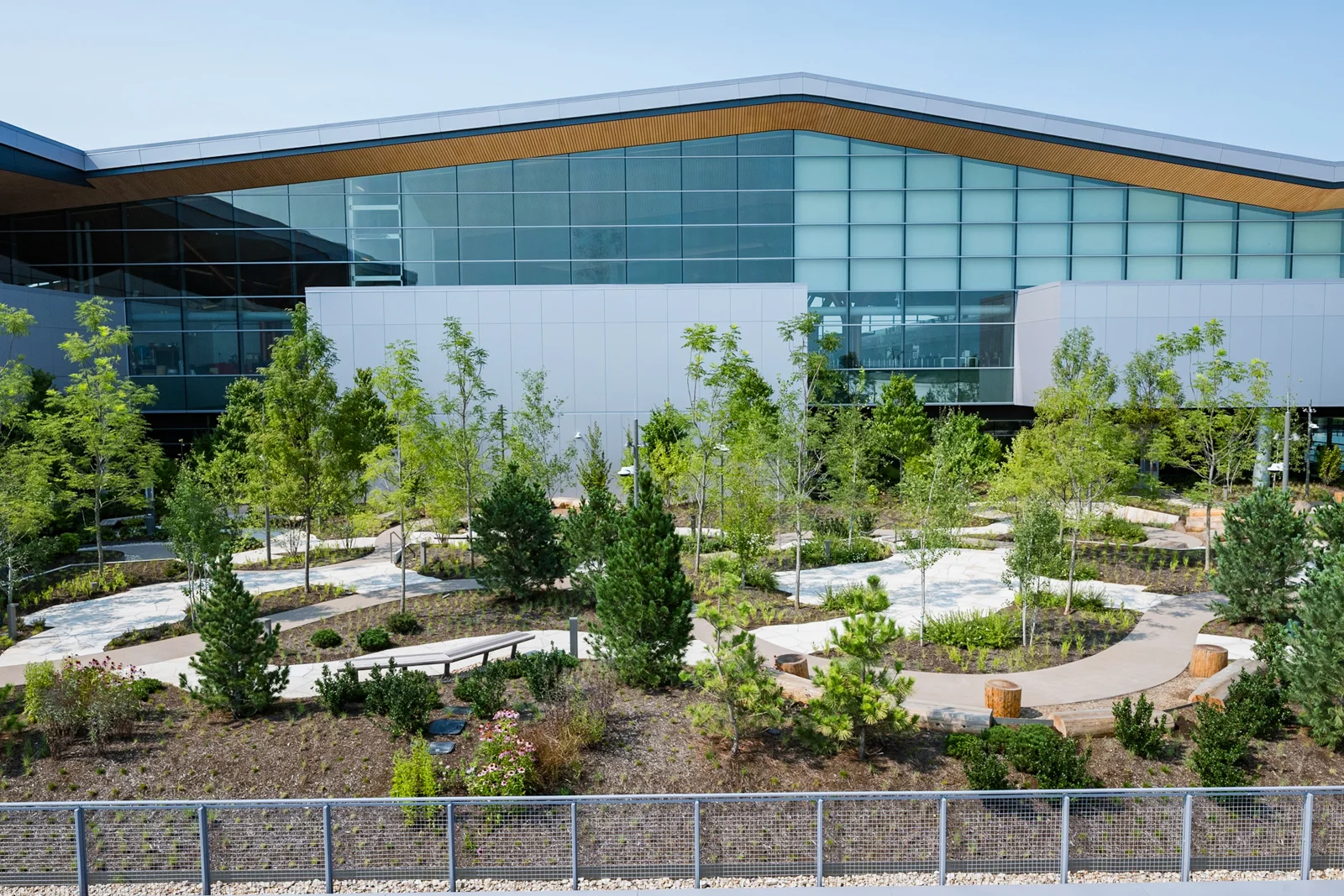
WordCamp Europe 2026 drew 2,458 attendees from 81 countries to the ICE Kraków Congress Centre — a stunning modern venue sitting at the edge of one of Europe’s most historically rich cities. Nearly a quarter of us were first-timers. I was in good company.
The city told the story
What struck me immediately about Kraków: it’s the kind of place where history is visible, tangible, and layered. Contrast that with the ICE Congress Centre — glass, light, sharp angles, forward momentum — and something clicks.
This is WordPress.
A platform that started as a blogging tool in 2003 and now powers 43% of the internet. Ancient roots in the online publishing era, yet somehow relentlessly modern. Still building. That metaphor was immediately obvious.

Before the sessions: The people, the pins, the Wapuus
I arrived on Contributor Day, the pre-conference session where the WordPress community gathers to contribute — code, documentation, community planning. Meanwhile, members of the WordPress.com team were in a nearby hotel room unpacking boxes of custom pins, matching t-shirts, and carefully curated swag to hand out at our booth. That’s the texture of this community: people who show up early, do the behind-the-scenes work, and genuinely want to be here, together.
Across the floor, our team was deep in demo prep — walking through the latest features, pressure-testing the flow, making sure every talking point was sharp before the doors opened. The pride our team takes in their work, and in the people using our products, spoke for itself.
The Wapuus were everywhere. If you’re new to WordCamp and new to Wapuu — the round, cheerful “official unofficial” WordPress mascot that each WordCamp reimagines in local style — I hope you were as delighted to meet the Kraków edition as I was.

I started with toast
My first session was called How to Make Toast, led by Stacy L. Carlson.
I sat next to Uffe Christiansen, a partner in the Automattic for Agencies program, and we worked through the exercise together. The premise: map out how to make toast. Every step. Don’t skip anything.
Sounds simple. It isn’t. Groups within the session came up with wildly different process maps — anywhere from 3 steps to 20. Use pre-sliced bread or cut from a whole loaf? Plug in the toaster first or load the bread? How dark is dark enough — and who decides?
That’s the exercise. Not toast. Assumptions. The steps we skip because we think they’re obvious. The judgment calls we make automatically that someone else makes completely differently.
If you can’t map your own process, you can’t hand it off — to a team member, to a tool, to an AI. Toast first. Everything else second.
The search conversation continues IRL
I lead a content team that has spent the last year working to meet customers where they are as their search behavior shifts — from SEO to AIO and beyond. So I was grateful to see this topic represented across nearly every session block. Here’s what I heard, across multiple sessions, from multiple speakers:
The old rules still hold — they just have higher stakes. Great content, real perspective, genuine expertise. These have always mattered. Now they’re table stakes for being cited at all. The tools change; the fundamentals don’t.
Brand is the new backlink. The brands winning in AI-driven search have something in common: consistent opinions, real customer data, a distinct voice, presence across multiple platforms, and the discipline to show up the same way everywhere. Simple in theory. Hard in practice. When you get it right, it starts to reinforce itself.
We’re not chasing clicks anymore. We’re chasing citations. Multiple 2026 studies on AI citation patterns found that 85% of brand mentions in AI responses come from third-party pages — not your own domain. Content strategies built entirely around Google rank are already working from an incomplete map.
AI traffic converts at a higher rate — because AI pre-qualified your brand. If an LLM cites you, the person clicking already trusts you. That changes the math on what “less traffic” actually means.
It’s not “is this good.” It’s “is this different.” Commodity content — content that sounds like everyone else’s content — doesn’t get cited. Original research, real data, genuine point of view: those are citation magnets.
AI won’t save your marketing. That was the title of one session. The tools change. The fundamentals don’t. Know your customers, read your report tickets and your reviews. Solve those problems, and write about it.
And underneath all of it, a direction that felt significant: SEO is no longer an isolated discipline. It’s merging with AIO, brand strategy, PR, and content — a more holistic practice where all the signals work together more than ever before.
Accessibility isn’t a feature. It’s core to the conference.
One thing I didn’t expect: how intentional this community is about inclusion — not as a talking point, but as an operational standard.
Free childcare was available onsite. Sessions addressed neurodivergence. One talk made the case that optimizing for accessibility isn’t just the right thing to do — it’s better for the business. Industry research backs it up — 75% of organizations report accessibility directly contributes to improved revenue, and 62% of business leaders say customers have abandoned transactions because of inaccessible experiences. The open web is most valuable when it’s accessible to everyone. Customers benefit. Businesses benefit. It’s not charity; it’s smart design.
Some things don’t change
I didn’t expect a conference about the future of the web to keep coming back to the same old truth. But it did. No shortcuts. Hard work, authenticity, consistency — they cut through the noise now the same way they always have.
The technology changes. AIO, SEO, vibe coding, AI agents — the landscape looks nothing like it did five years ago and will look nothing like this in five more. But the core principles haven’t moved. Know your customer. Serve their needs in a way only you can. Be consistent. Be real. Do the work.
That’s not just advice for your content strategy. It’s how this community operates. It’s why people fly to Kraków from 81 countries to sit in workshops about toast, debate the future of search, and unpack boxes of pins in hotel rooms before the doors open.
If you’ve never been to a WordCamp, go. If not just for the sessions, then for the reminder that the fundamentals still hold, that the people building the open web are worth knowing, and that there is no algorithm, no AI, no shortcut that replaces doing something genuinely worth your audience’s time.
WordPress.com has been part of this community since the beginning. If you’re ready to build something on the open web, we’d love to have you.
First WordCamp in the books. Find one near you — or mark your calendar for a flagship:
- WordCamp US — Phoenix, Arizona, August 16–19, 2026
- WordCamp Asia 2027 — Penang, Malaysia, April 9–11, 2027
- WordCamp Europe 2027 — Málaga, Spain, May 27–29, 2027
- WordCamp India — TBD, 2027
And please, keep the Wapuus coming.