dailynewsnblog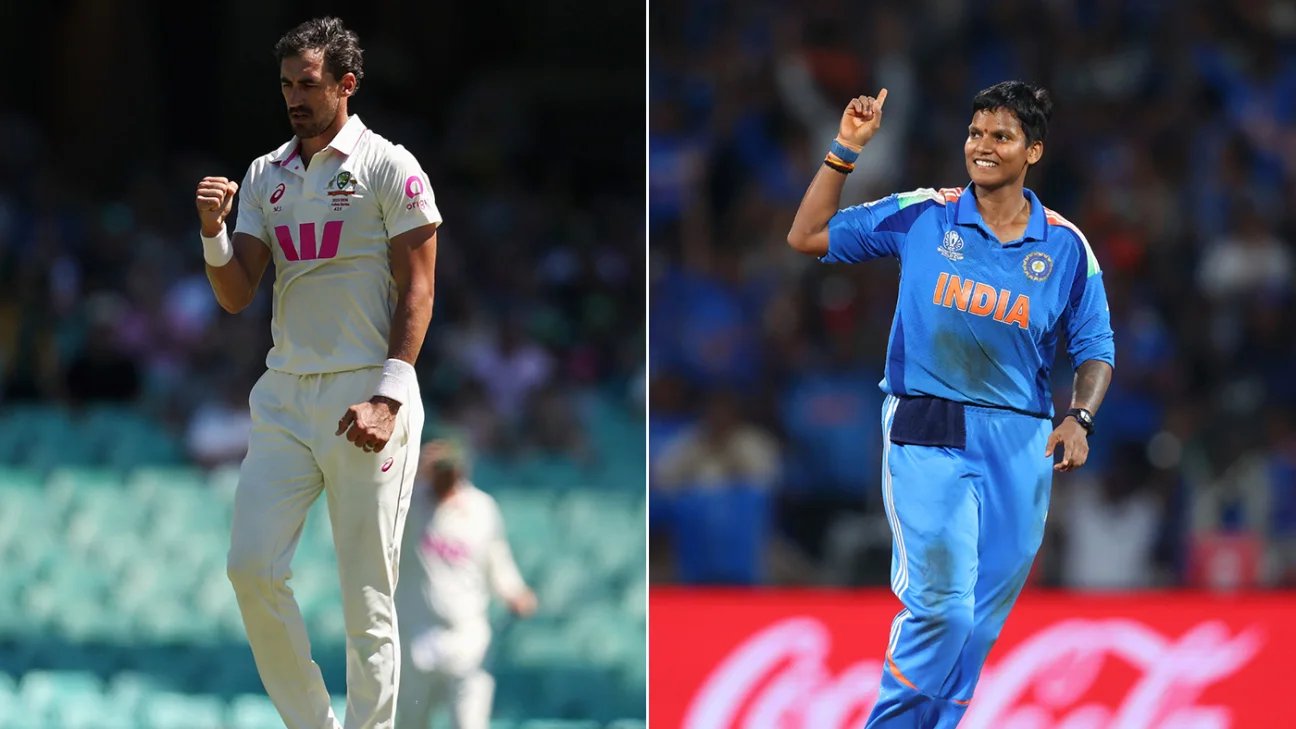
The accolades were announced ahead of Wednesday’s publication of the 163rd edition of the Almanack. Starc, 36, claimed 55 Test wickets at 17.32 in 11 Tests in the calendar year, including a career-best haul of 6 for 9 against West Indies. He then backed that up with 18 wickets in the first two Tests of the 2025-26 Ashes, en route to a series-winning haul of 31 at 19.93.
Gill, India’s captain, is also the fourth winner of the Wisden Trophy – awarded for the year’s outstanding individual performance – following his match-winning tally of 430 runs in the second Test at Edgbaston, while Abhishek Sharma is the Leading T20 Player in the world, having scored at more than two runs per ball in passing 1000 T20 runs in the calendar year.
Elsewhere in this year’s Wisden, editor Lawrence Booth reflects on England’s 4-1 Ashes defeat in Australia, and the ensuing fall-out, including the revelation that the team’s vice-captain Harry Brook had been involved in an altercation with a nightclub bouncer in New Zealand before the series began.
In his Notes from the Editor, Booth laments England’s missed opportunity in the series, and the blithe manner in which their challenge unravelled: “In the game’s long history, it is hard to think of a privilege so carelessly squandered, a chance so blithely spurned,” he writes. “England arrived for the Ashes hell-bent on making history, and ended up being laughed out of town.”
England’s management, including the coach-captain combination of Brendon McCullum and Ben Stokes, have since been backed to take the Test team forward from the Ashes. However, after the initial excitement, and intermittent success, of their partnership, Booth accuses the regime of growing “predictable… dogmatic… and deaf to reason”, adding that England “ran out of ideas – and friends” in Australia.
England’s revival, he adds, will require them to “restore the links with a county game that remains imperfect but is the only finishing school they have. That is not just pragmatism: it is vital to the sense that any of this matters, that runs and wickets in domestic cricket are the surest route to international recognition, that the structure is working.”
This need to reconnect chimes with James Coyne’s examination of state-school cricket in the UK, and the extent to which the sport is dominated by privately educated players. “When many 11-year-olds enter secondary school today, it’s a lottery whether they come across the game,” he writes. “It has needed people with deep pockets, or volunteers with time and determination, to help keep it going.
“An independent school’s greater access to time, money and facilities is unlikely to disappear. But at least the English cricket authorities have realised they needed to step in … until cricket once again becomes a truly national sport, England will never be the best in the world for long.”
“Spectators loved his antics, and almost willed some unforeseen problem his way just to see what he’d do,” Pringle writes. “His physical presence [was] as commanding and funny as Jacques Tati, the great mime artist. Yet Dickie’s umpiring style would not be tolerated by today’s ICC, who measure the accuracy of decisions, and prize undemonstrative efficiency above personality.”