dailynewsnblog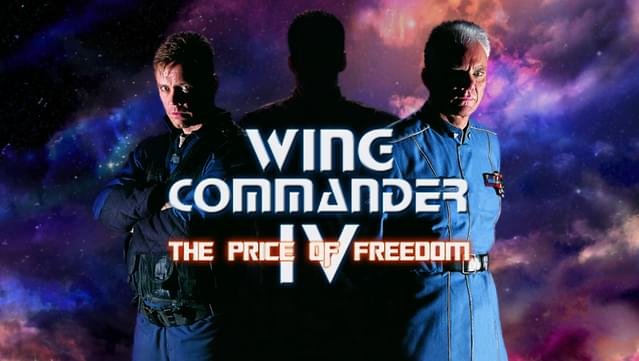
And woe betide you if you still had a 486…or slower.
(A single-disc DVD re-release of the game with better-looking video eventually happened, but not for a couple of years—in 1995, DVD was still a ways off.)
Ambition, or indulgence?
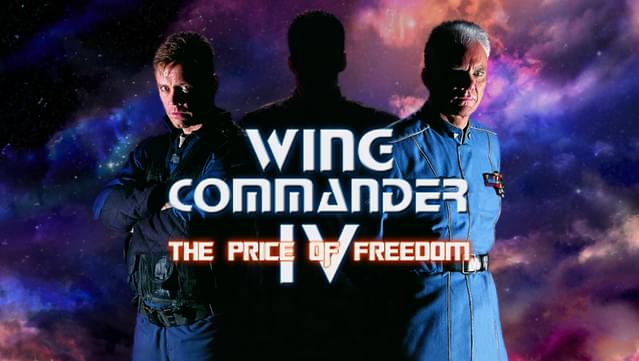
Wing Commander 4’s narrative is best described as “sprawling.” The short version is that after defeating the Kilrathi at the climax of Wing Commander 3, Mark Hamill’s Christopher Blair retires to a backwater world to live out a life in peace and obscurity. This is interrupted—because of course it is—by a surge of pirate activity near the “border worlds,” a splinter group of independent colonies at the edge of the Terran Confederation. Blair is called back up to active duty to help quell the pirate attacks—but, of course, there’s more going on than simple pirates. The midpoint of the game sees the player having to make a huge choice with huge repercussions, and the game comes to a thundering narrative conclusion not in the cockpit with a planetary trench run, but in a rhetorical slap-fight on the floor of the Terran Confederation’s Grand Assembly chamber. (It’s been many years since I last sat down and played it, but that’s my recollection from memory, at least.)
In short, there’s a lot of movie-watching involved with this game—hours and hours of it. The shooting script stretches to a genuinely ludicrous 652 pages when accounting for all the different plot paths (a movie script even about a third of that length would get you tossed out of any Hollywood production office unless your name is “James Cameron” or “Francis Ford Coppola,” and even Coppola might still get the heave-ho).
In terms of overall quality, the movie the player assembles out of that 652-page framework isn’t bad! It’s…it’s pretty okay! Fine, even! Everyone is clearly doing their damndest—John Rhys-Davies is at his stentorian best and Malcolm McDowell chews more scenery than a Bagger 288 bucket-wheel excavator—but in spite of being made of mostly polished parts, the whole thing never manages to outpace a feeling of amateur cheapness, even given the significant budget. The awe one was supposed to feel at watching a “real” movie on one’s computer had to do a whole lot of heavy lifting—which worked great in 1996, but not so much in 2026.