dailynewsnblog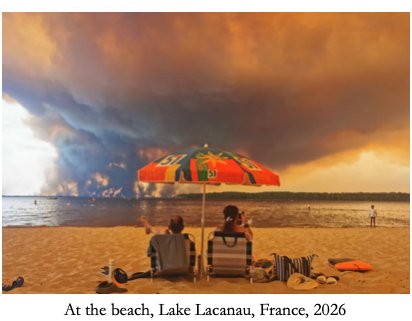

Global warming has its idiosyncrasies. For example, it could send Western Europe into an ice age. That story begins with the Atlantic Meridional Overturning Circulation (AMOC), ocean currents that play a crucial role in regulating climate by redistributing heat through the ocean.
The normal temperatures of Western Europe are well above what should be expected at that latitude. The reason is AMOC. A powerful current (the Gulf Stream) flows north from the Gulf of Mexico, veers east (the North Atlantic Drift), flowing toward northwest Europe. These currents carry massive quantities of heat from the tropics, allowing palms to grow in Southern England at about the same latitude as Winnipeg.
As rising temperatures melt the Greenland ice cap, massive volumes of fresh water flow into the North Atlantic and, along with other warming effects, tend to slow the currents. Ultimately, they could stall.
This would drop temperatures 5°C to 15°C across Western Europe. Southern England would get a taste of winter in Winnipeg. The French might have to trade in their wine grapes for turnips. The continent would slip into an ice age.
In the meantime, Western Europe is already suffering effects from melting mischief. Greenland meltwater also alters ocean temperatures and shifts the jet stream, intensifying Europe’s heatwaves.
And unprecedented heat waves and droughts are global warming’s current summer gift to Europe. The wildfire season is on track to be Europe’s worst ever and much of the continent is in the middle of a severe drought.
The great rivers are drying up from the heat. Low water levels on the Rhine and Danube, key cargo arteries, have halted barge traffic, reducing industrial output and disrupting supply chains. They have also curbed the energy output from nuclear and thermal power plants which depend on the rivers for cooling. Europe has long relied on its rivers as sources of power and supply routes for its trade. That reliability may be coming to an end.
Drought has cut agricultural production while the heat has reduced the output of outdoor workers and indoor workers without air-conditioning. Southern Europe in particular is suffering from a decline of tourist revenue.
Frequent climate emergencies inflate borrowing and insurance costs for both government and industry while the costs of fighting fires stretches government budgets, already tight from the need to invest more on defence.
Economists and academics estimate the hit to the region’s economy can already be measured in the hundreds of billions of euros, and they expect costs to rise faster than temperatures.
In other words, all this is going to get worse. Global warming continues to increase exponentially and climate is changing more rapidly in Europe than on any other continent.
According to University of Mannheim economist Sehrish Usman, “You’d expect the damage to be largest in the year an extreme event happens and then to fade but we find the opposite. The economic impact grows over the following years because the extreme weather sets off a chain of slow economic consequences.”
So what is Europe’s climate future, the oven or the deep freeze? Global warming is currently dictating the former, but could also impose the latter. Either will be catastrophic. The only hope, as with the rest of us, is to put the brakes on global warming.
Yet Europe is walking back its environmental regulations. The European Union has proposed relaxing its landmark carbon-pricing system and allowing automakers to sell gasoline-burning cars for longer. Its emission-cutting goals still go beyond most other major countries’, nonetheless they fall short of those recommended by their own climate science advisers. The UK may allow new oil production in the North Sea after previously banning it.
For a part of the world where temperatures are rising at twice the world average, slacking off climate goals would hardly seem prudent. How much heat, one wonders (or how much cold?), can the continent deal with before its economy, and much else, simply crashes.