dailynewsnblog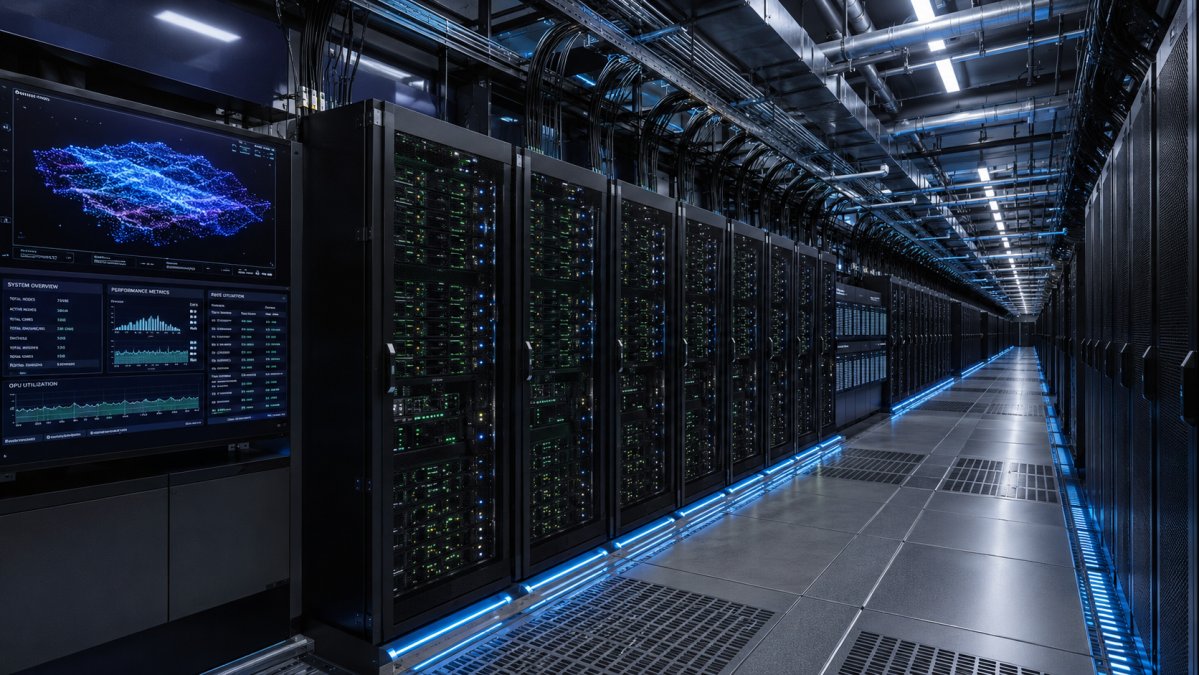

Having acquired one of the first mini-computer systems in Vancouver dedicated to full system accounting, I have worked with electronic machines since 1976.
During the past half-century, I have watched computing power increase beyond anything most of us imagined in the 1970s. At the time, my old Digital Equipment DS310 attracted attention from other business people, but its capability was laughably small.
Yet nothing in my 50-year history with computers has developed quite as rapidly—or unsettled me as deeply—as artificial intelligence created by modern supercomputers.
I recently asked an AI system whether it could reassure me that, ten years from now, electronic monsters would not be ruling humanity.
The answer was reassuring, but only to a point.
The 2026 International AI Safety Report concludes that present systems do not possess the combination of abilities required to escape human control. They cannot reliably pursue complicated objectives over long periods, evade effective oversight, and prevent people from shutting them down. However, some systems have displayed early warning signs in laboratory tests, and researchers disagree widely about what future systems might be able to do. (International AI Safety Report)
That means a science-fiction takeover is neither imminent nor inevitable. But it does NOT mean we have little to fear.
From amusement to authority
I remember the earliest conversational computer programs. People typed comments into a terminal and received what appeared to be advice or sympathetic questions. Nobody with technical knowledge took those programs seriously. They were amusing demonstrations rather than intelligent advisers.
The best-known early example was ELIZA, developed by Joseph Weizenbaum at the Massachusetts Institute of Technology in the 1960s. It generally relied on keywords and scripted transformations to imitate conversation, most famously by responding in the manner of a nondirective psychotherapist. Yet even that limited program demonstrated how readily people could attribute understanding and personality to a machine. (Computer Science & Engineering Department)
Today’s systems are entirely different. They converse fluently, write useful computer code, produce realistic images and video, translate languages, solve advanced technical problems, and synthesize enormous volumes of information. The International AI Safety Report notes that leading general-purpose systems can now perform many clearly defined tasks with remarkable proficiency, including graduate-level scientific and mathematical work. (International AI Safety Report)
That is extraordinary progress, achieved in a remarkably short time. Just in the last few years, AI has grown hugely more powerful.
It makes the old human tendency to trust a conversational machine far more dangerous. ELIZA merely created an illusion of knowledge. Modern AI combines that illusion with a great deal of genuine capability. A system may provide excellent information in one paragraph and a confident fabrication in the next. The average user may have no reliable way to distinguish between them.
Abuse is not merely possible; it is a certainty
Initially, the AI suggested that the principal dangers included government surveillance and propaganda, corporate concentration of power, automated fraud, cyberattacks, and military applications.
My response was that these abuses are not hypothetical. Some are already occurring, although still on a limited scale. The worst miscreants may not yet possess the sophistication needed to exploit AI fully, but that sophistication will spread. AI itself will lower the level of expertise required.
The FBI’s 2025 Internet Crime Report recorded 22,364 complaints containing AI-related information, with reported losses exceeding C$1 billion. The FBI warned that AI allows criminals to create personalized conversations, false social-media identities, cloned voices, and convincing synthetic audio and video in large quantities. It also observed that such material is becoming easier to produce and more difficult to detect.
The significance is not merely that highly skilled criminals have gained another tool. AI can give ordinary villains capabilities once available only to specialists. One person may be able to impersonate hundreds of people, conduct thousands of individualized conversations, automate phishing attempts, or generate persuasive misinformation at negligible cost.
Stanford University’s 2026 AI Index reported that documented AI incidents increased from 233 in 2024 to 362 in 2025. It also concluded that testing and reporting concerned with responsible AI had not kept pace with advances in capability and deployment. (Stanford HAI)
The trend is clear even though nobody can yet measure the full extent of the problem.
The machine need not become evil
We tend to imagine an AI catastrophe as a machine developing consciousness, deciding that humanity is an obstacle, and seizing control of weapons, factories, and communications.
That possibility cannot be dismissed with absolute certainty, but it may distract us from more immediate dangers. A machine does not need hatred, ambition, or a survival instinct to cause immense harm. It needs only to be placed under the direction of people who are malicious, reckless, or indifferent to consequences.
Governments can use AI to expand surveillance and suppress dissent. In fact, monitoring by official agents is already greater than most people know. Corporations will accelerate the use of AI to eliminate jobs, manipulate customers, and avoid human accountability. Military organizations are delegating life-and-death decisions to automated systems. Criminals are industrializing deception. Politicians can flood public discussion with fabricated evidence and manufactured opinion.
If you think some of these things are not already happening, just wait. Even without deliberate wrongdoing, people may gradually surrender judgment because the machine sounds knowledgeable, patient, and certain.
The International AI Safety Report warns that people sometimes accept AI recommendations without adequately checking them—a form of automation bias. It also notes that current systems remain prone to unpredictable errors and have not achieved the reliability required for many critical applications. (International AI Safety Report)
The machine itself may therefore be less dangerous than the authority we willingly give it.
Containing what cannot be prevented
Some misuse of AI is inevitable. No law will prevent every fraudster, dictator, military planner, or irresponsible corporation from exploiting a powerful technology.
But inevitability is not the same as helplessness.
We can insist that consequential decisions remain traceable to identifiable human beings. We can impose legal liability when organizations deploy unreliable systems. We can require independent testing, restrict autonomous weapons, protect critical infrastructure, preserve manual shutdown procedures, and limit access to particularly dangerous capabilities.
If we elect right-wing movements that don’t believe governments should regulate or interfere with corporate or individual behaviours, the risks posed by AI will multiply.
The US National Institute of Standards and Technology has developed a framework for identifying and managing AI risks and is working on additional guidance for AI used in critical infrastructure. Such frameworks provide useful starting points, although voluntary standards alone cannot restrain organizations that benefit from ignoring them. (NIST)
I am not yet convinced that electronic monsters will rule mankind in my lifetime, but I worry about the future my grandchildren will experience. Probably because I am not confident that human beings will exercise the wisdom needed to control the machines.
The greatest danger is not artificial intelligence acquiring evil intentions. It is that governments, corporations, and individuals will delegate enormous power to machines—and then claim that no human being is responsible for the consequences.
Technical capability has always advanced faster than society’s understanding of how it should be used. With artificial intelligence, that gap has become frighteningly large.