dailynewsnblog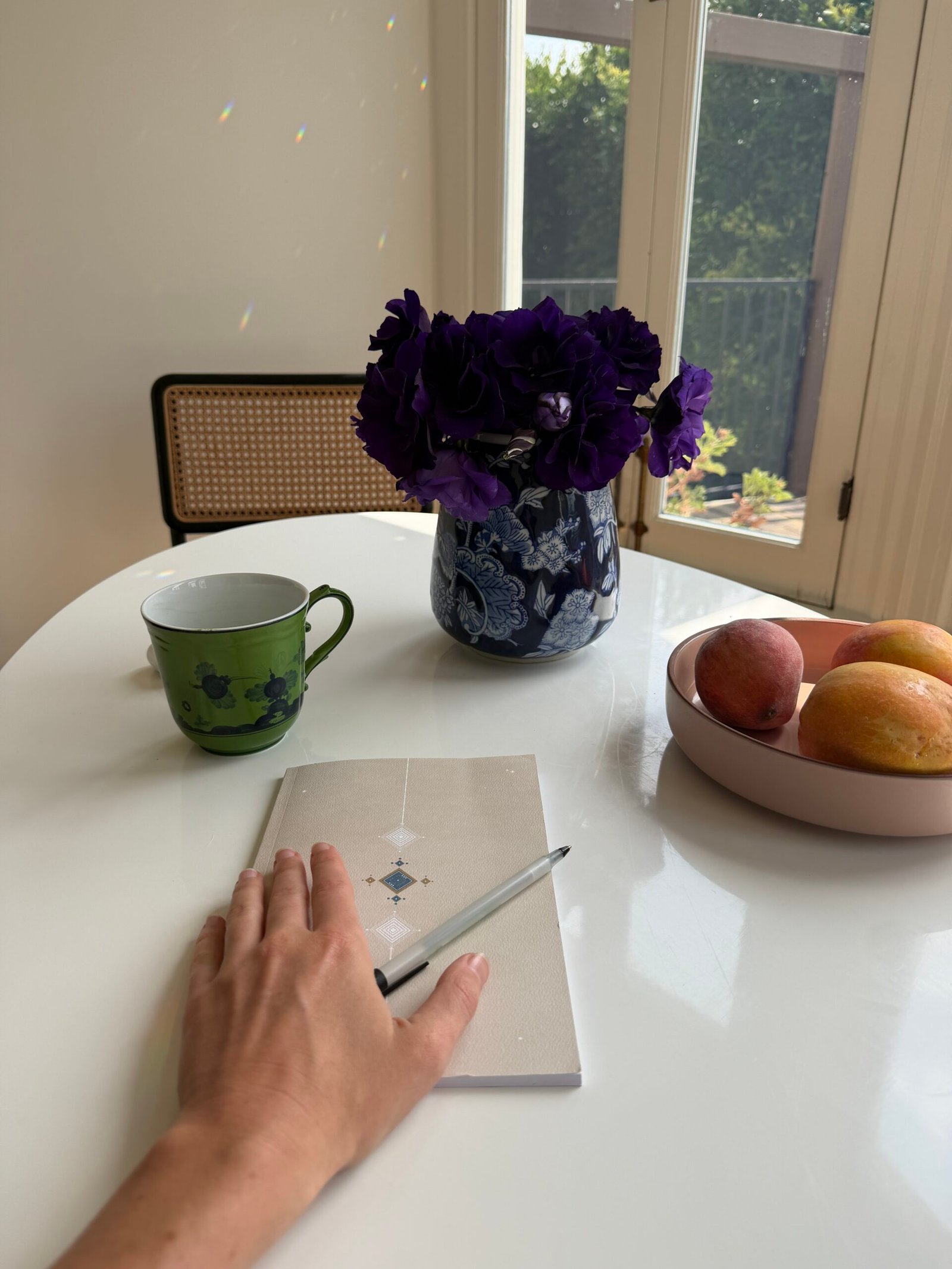
I’ve never been someone who is good at routines. My energy is more free and spontaneous. Despite my resistance to consistency, I still manage to get everything done. I’m a high achiever at work, I eat healthy, work out a few times a week, nurture my relationships and spiritual side — but I don’t do any of it at the same time or in the same way each day. Calendar blocking and overscheduling make me feel stifled. I just don’t find comfort in the reliability of a normal schedule like a lot of people do…instead, it makes life feel monotonous to me.
“There’s still this little voice inside of me — or maybe it’s a voice I’ve heard in productivity books — that thinks ‘…but what would happen if you were more consistent?’”
I know I’m this way — and so do my friends and family. Nobody takes issue with it, and it doesn’t hold me back from accomplishing my goals. But there’s still this little voice inside of me — or maybe it’s a voice I’ve heard in productivity books — that thinks “…but what would happen if you were more consistent?” I still have a deeply held belief that something is a little bit wrong with the way I operate.
When I came up with the story idea “Will Doing Morning Pages for 30 Days Make Me More Creative?” I have to admit it was fueled by this same seed of self-doubt. It was driven by a desire to “fix” my personal flow — one that already works well — but that I keep thinking could be better. What I learned in the past 30 days was a lot less about how amazing morning pages are, and a lot more about accepting my unique operating system. And my hope for this essay is that it encourages you to drop the self-improvement “shoulds” and learn to tune into your perfect-for-you, divinely appointed energy style.
What are “morning pages”?
If you’re not familiar with morning pages, they are a recommendation from Julia Cameron’s book “The Artist’s Way.” Cameron was coaching blocked creatives and came up with a few processes to help them unlock their creativity, one of which was writing three stream-of-consciousness pages a day to help dump out whatever was on their mind: feelings, to-dos, any thought that could be given to the page instead of taking up space in your brain.
“Pages clarify our yearnings. They keep an eye on our goals,” she writes in the section titled “The Miracle of Morning Pages.” “They may provoke us, coax us, comfort us, even cajole us, as well as prioritize and synchronize the day at hand. If we are drifting, the pages will point that out.”
“They may provoke us, coax us, comfort us, even cajole us, as well as prioritize and synchronize the day at hand. If we are drifting, the pages will point that out.”
–Julia Cameron, “The Artist’s Way”
Morning pages help you get honest with yourself — what’s coming up over and over that needs to be looked at? What secret desires keep arising on the pages that you need to honor in your life? If you’re feeling lost, the pages can point your compass in the right direction. As Cameron says, “They will point the way True North. Each morning, as we face the page, we meet ourselves. The pages give us a place to vent and a place to dream. They are intended for no eyes but our own.”
Reconsidering the “morning” routine
I’ve done this exercise a bunch in the past, and it is super helpful. I do feel more clear afterward. But I had never done it consistently…and I was curious to see what would happen for me creatively and spiritually if I actually did. How might it open me up in a totally new way?
But when I kicked off the challenge, the first thing I got stuck on was the “morning” part.
“When I kicked off the challenge, the first thing I got stuck on was the ‘morning’ part.”
One of the chief guiding principles of all productive people seems to be “have a morning routine” — something along the lines of:
- Journaling and meditating (morning pages!)
- Drinking a ton of water
- Doing a workout or going on a walk
- Cooking yourself a balanced breakfast
- And extras like sauna, cold plunge, red light, celery juice, etc.
Everyone who claims to do these things before they start their day seems to have a better day. But every time I decide to prioritize a morning routine, it feels like I’m using my most productive morning hours to get through a self-care laundry list instead. Come 9 or 10 a.m., I’m more exhausted than energized and don’t feel like getting to work.
I operate backward. Mornings are my most productive and flowing work times. I can find time to do all those “morning routine” things later in the day… and then I can go to Pilates without the stress of checking my inbox. Still, I thought, I can at LEAST do morning pages first thing for this 30-day experiment.
But guess what happened! I felt crazy resistance to doing them each morning. I kept forgetting and I missed days at a time. What I realized was that there wasn’t any problem with the stream-of-consciousness writing process. I liked that part! But I was forcing myself to do it at the same time each day, thinking I was failing if I didn’t. It kept me feeling more guilty than creative.
“What if I rename them ‘daily pages’ instead, and allow myself to do them whenever I feel like it?”
Every day, I started off by feeling like I was doing something wrong. Why can’t I just sit down and write those three pages? I’d rather do anything else.
So after a week of this inner wrestling match between my intentions and my energy, I decided: What if I rename them “daily pages” instead, and allow myself to do them whenever I feel like it?
And that’s when everything shifted.
Meeting myself where I am
Once I dropped the “morning” requirement, I actually wanted to do them. Some days I wrote at 11 a.m. after I’d cleared my inbox. Sometimes it was at 3 p.m. before a creative project. For a few days, it was at night when I had a lot on my mind. The time didn’t matter — what mattered is that I showed up for it when it felt right, and because of that, I actually showed up.
“The time didn’t matter — what mattered is that I showed up for it when it felt right, and because of that, I actually showed up.”
This got me thinking a lot about how these spiritual tools and modalities should not be rigid or restrictive. They should feel like medicine when you need them. And for so long I’ve been critical that I can’t be consistent with any one thing — but maybe that’s not the point. Maybe the point is that I have an amazing bank of tools to pull from when the time is right.
If you’re having trouble sticking with something, it may not be the thing that’s the problem. Maybe it’s the self-imposed rules that keep making you feel like you’re failing every time you miss a day — but what if the rules aren’t the important part?
“Maybe it’s the self-imposed rules that keep making you feel like you’re failing every time you miss a day — but what if the rules aren’t the important part?”
Morning pages are genuinely incredible for clearing your head — Julia Cameron was onto something. But somewhere along the way, my wellness brain took her idea and wrapped it up into an identity: the person who rises at 6 a.m., journals before the sun comes up, and has it all figured out before their first meeting. And if that’s not you (it’s not me!), it feels like you’re doing life all wrong — like you’ve already failed before you’ve really started.
My desire to be a person who is “more productive by having a routine” isn’t coming from authenticity. It’s coming from ego. And if that’s the case, it’s certainly not going to make me more creative to honor my ego instead of my natural instincts.
But what if we just let that idea go altogether?
What I learned after 30 days of daily pages
The 30 days I spent fighting morning pages taught me more about self-trust than anything. My creativity shows up when I’ve given it spaciousness to come forward — instead of expecting it to arise on a schedule.
“My creativity shows up when I’ve given it spaciousness to come forward — instead of expecting it to arise on a schedule.”
Ironically, when I stopped trying to fix myself and started working with myself, I felt less resistance to the assignment. As I made this brain-dump-style journaling more of a part of my everyday life, my mind does feel noticeably less cluttered. After all, it’s making space that allows creativity to come through.
So will doing morning pages for 30 days make you more creative? Maybe. If you love routines, definitely go for them. But I’d ask this question first: How does your energy work? And when does your creativity actually show up? What time of day do you feel most open, most clear, most like yourself? Start there. And call your pages whatever you want!
“No matter what your age or your life path, whether making art is your career or your hobby or your dream, it is not too late or too egotistical or too selfish or too silly to work on your creativity,” Cameron writes.
The best routine is the one you’ll actually do — on your own terms, in your own time, in your own way — morning pages are no exception! So instead of trying to fix your operating system, try honoring it instead. Creativity blossoms when you honor your truth.
Grace Abbott is a LA-based freelance Brand & Marketing Strategist and a Contributing Editor at The Good Trade. She has a degree in Graphic Design from Parsons School of Design and is the founder of How To Go Freelance — a brand dedicated to empowering creatives to monetize their skills and build personal brands. Beyond work, she’s always studying a new spiritual modality, painting her bedroom a new color, practicing Pilates, hosting friends, or going on a nature walk with her chihuahua, Donnie. Find her on Substack or Instagram.