dailynewsnblog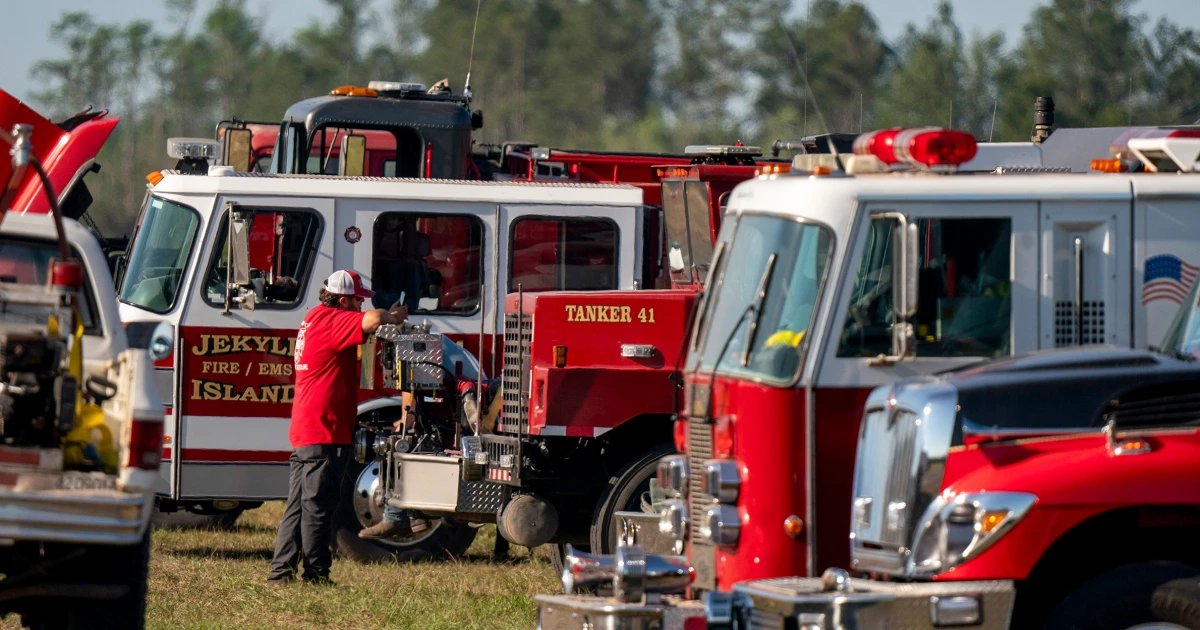
At least eight wildfires continued to tear through parts of southern Georgia and northern Florida on Thursday amid severe drought conditions in the region.
Subscribe to read this story ad-free
Get unlimited access to ad-free articles and exclusive content.

As a result, parts of the Southeast are contending with hazardous air quality resulting from the smoke, with the worst conditions reported near Savannah, Georgia, and Columbia, South Carolina.
A major wildfire in Brantley County, Georgia, was approximately 15% contained as of Thursday morning after having burnt roughly 5,000 acres. The fire destroyed 54 structures and had threatened about 1,000 homes a day earlier, officials said.
Nearly 94% of the Southeast region is experiencing severe to exceptional drought, with the most extreme conditions centered in southern Georgia and northern Florida, where most of the wildfires are.
Georgia Gov. Brian Kemp on Wednesday declared a state of emergency for 91 counties, which amounts to more than half the state.
“With much of Georgia remaining in extreme drought conditions, wildfires have already surpassed the state’s five-year average and continue to spread,” Kemp said.
“The emergency declaration allows the Georgia Department of Defense to mobilize the state’s National Guard troops for response and recovery efforts,” the governor’s office said in the Wednesday release.
State officials have issued a sweeping burn ban — the first in the Georgia Forestry Commission’s history — to prohibit yard debris burning, agricultural burning and prescribed fires for at least 30 days.
The Federal Emergency Management Agency (FEMA) has approved Fire Management Assistance Grant declarations for counties affected in Georgia.
In a Facebook video posted Wednesday, Georgia Forestry Commission director Johnny Sabo said the state is facing “extreme drought conditions” and that the wildfires have already surpassed the state’s five-year average.
“Right now, Georgia Forestry Commission teams are fully mobilized, working alongside local, state, and federal partners to protect lives, property, and Georgia’s forests. This is an all-hands-on-deck effort,” Sabo said. “Air resources, heavy equipment, and firefighters are actively engaged in suppression and protection efforts.”
On Wednesday alone, the Georgia Forestry Commission reported that it had responded to 34 new wildfires that burned approximately 75 acres. That total does not include the Pineland Road Fire, which is estimated to have burned more than 29,600 acres and is 10% contained, or another fire in Brantley County, now estimated at 4,438 acres with 15% containment.
Three key ingredients typically raise the risk of wildfires: vegetation, an ignition source and hot, dry, windy weather.
Studies have shown that rising temperatures due to climate change are fueling longer wildfire seasons, and making blazes both more frequent and more destructive.