dailynewsnblog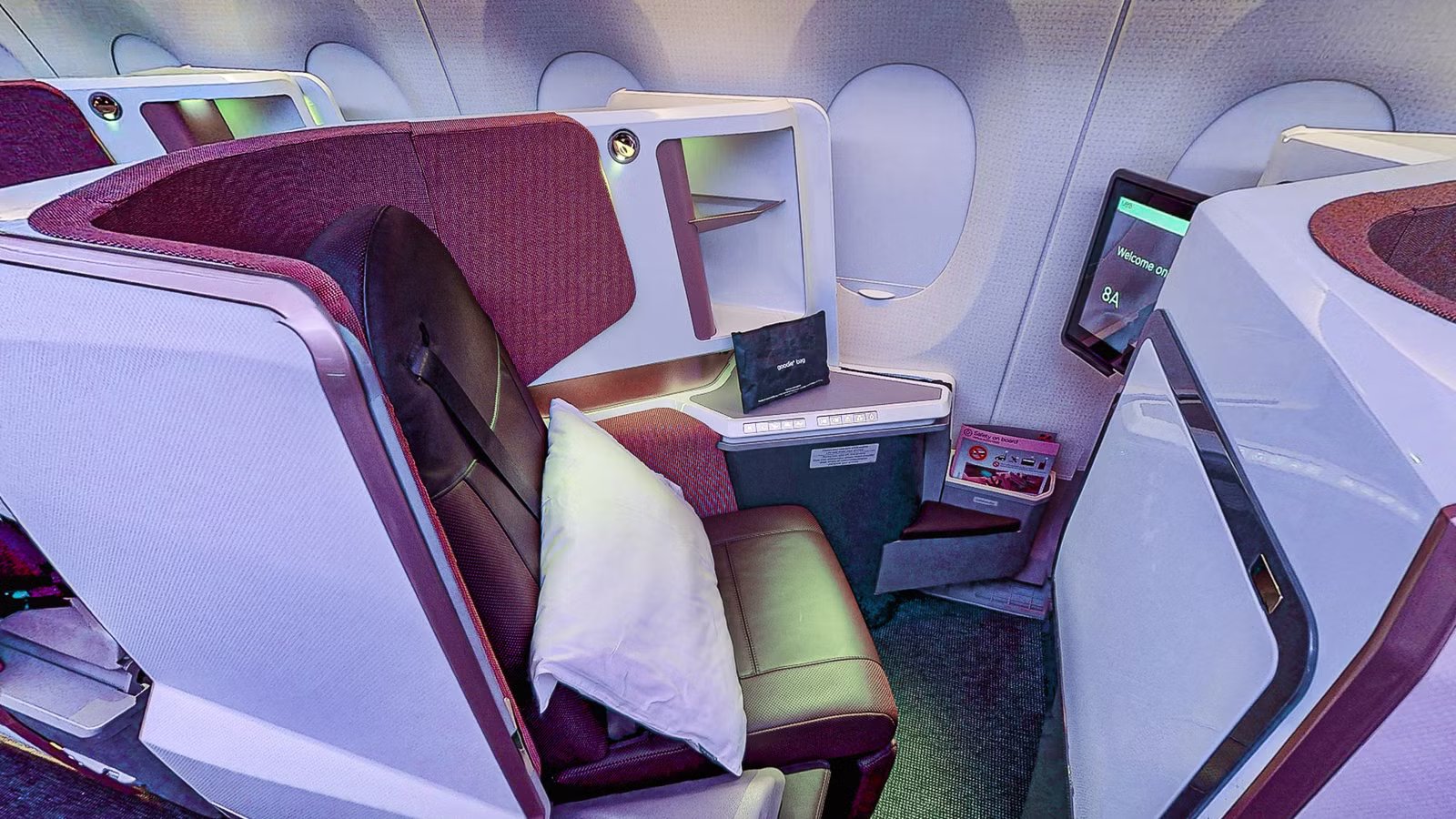
Business Class in 2026 is a real competition that has moved into more subjective territory: how private is your space, how long is your bed, and whether the airline prioritizes enclosure or comfort when the two conflict. Virgin Atlantic sits in the middle of that debate with a decision that seems almost contradictory at first glance, given two plane types with different interiors available.
On its Airbus A350-1000, Upper Class delivers one of the longest business class beds in the sky, stretching up to 82 inches. But it does so without the feature many passengers now expect from a flagship product: a fully closing suite door. Instead, Virgin Atlantic chose a partially extending privacy panel and a digital “Do Not Disturb” system. At the same time, its newer Airbus A330neo cabins go in the opposite direction entirely, introducing fully enclosed suites with doors that shut completely. The result is a rare inconsistency in modern premium aviation: one airline, one cabin name, two fundamentally different philosophies of what “premium” should feel like.
The question is whether the airline is deliberately asking passengers to choose between two competing luxuries: more space to sleep, or more privacy to disappear? What would you choose? Make your choice after reading our analysis, which contains some authentic photos our editor took during his trip on this aircraft.
The Trade-Off Defining Virgin Atlantic’s A350 Upper Class

Channing Reid | Simple Flying
Virgin Atlantic’s Airbus A350-1000 Upper Class was introduced as a statement of renewal, and not an incremental improvement. The cabin replaced older-generation layouts with a fresh 1-2-1 configuration across 44 seats, ensuring every passenger has direct aisle access. The overall impression is bright, open, and intentionally social, which is closer in spirit to a modern lounge than a sealed-off sleeping pod.
Within that design philosophy sits the aircraft’s most notable feature: its bed length. At up to 82 inches (208 cm), the lie-flat surface places the A350 among the longest business class beds flying today, according to industry comparisons of premium long-haul products, such as that of Aviospace. For taller passengers in particular, this is a meaningful difference in sleep quality on overnight transatlantic flights.
Virgin Atlantic’s positioning of Upper Class has long leaned into comfort as a holistic experience rather than a purely private one. The airline’s own product description frames the cabin as a space for eating, working, and relaxing rather than as a space for isolation. That philosophy helps explain why the A350 cabin feels less like a series of closed rooms and more like a unified premium environment.
However, this openness comes with a noticeable contrast when compared with rival business class products. As other airlines move toward fully enclosed suites, Virgin’s A350 feels like a deliberate refusal to fully follow that trend. The cabin does not try to mimic first class. Instead, it refines business class as a shared premium space that is structured and private enough, but never fully closed off.
The result is a product that feels almost philosophical in its design intent. It prioritizes physical comfort over psychological isolation.
Why An 8-inch Privacy Panel Replaced A Sliding Door

Channing Reid | Simple Flying
The most controversial element of the A350 Upper Class cabin is not what it includes, but what it omits. There is no sliding door, no full-height enclosure, and no attempt to replicate a hotel room in the sky. Instead, Virgin Atlantic installs an extendable privacy panel that, when deployed, measures roughly 8 inches and is designed to shield passengers from aisle traffic without fully closing them in.
This design choice has been noted in multiple independent reviews of the aircraft. While the panel does improve seclusion during rest or work, it does not eliminate visibility or the presence of the cabin in the way a full door would. Cabin crew can still see into the suite, and passengers remain visually connected to the wider cabin environment even when the divider is raised.
The airline compensates for this openness with digital privacy cues. A “Do Not Disturb” function signals to the crew when a passenger prefers uninterrupted rest, reducing unnecessary interaction. It is a subtle shift in how privacy is managed—less physical separation, more behavioral communication.
What makes this approach particularly interesting is that it runs counter to a wider industry trend. Many airlines have moved aggressively toward fully enclosed suites, responding to passenger demand for maximum personal space on long-haul flights. Virgin Atlantic’s decision suggests a different reading of customer priorities on their A350s: that openness, cabin atmosphere, and perceived spaciousness still matter as much as isolation, just like a popular on-board socializing space, called The Loft, akin to a bar, where passengers can stretch up, order some drinks, and talk to other people, as noted by The Points Guy.
So, rather than being an omission, the absence of doors becomes a deliberate architectural choice, ideal for extroverts, the one that places Virgin Atlantic slightly outside the current arms race of enclosed business class suites.
The A330neo Quietly Changed Everything

If the A350 represents Virgin Atlantic’s open-plan interpretation of Upper Class, the Airbus A330neo represents its correction and a more “introverted” approach. Introduced later, the A330neo cabins mark a clear departure from the A350 philosophy by embracing fully enclosed suites with doors that close completely.
This shift aligns Virgin Atlantic more closely with broader industry expectations, where privacy has become one of the most heavily marketed features in premium cabins. On the A330neo, the experience is noticeably more contained, with passengers able to fully shut themselves off from the aisle and surrounding cabin activity. The atmosphere becomes quieter, more personal, and more aligned with the “mini-suite” concept now common across long-haul business class.
What makes this particularly notable is that both aircraft operate under the same Upper Class branding. But the experience onboard can feel meaningfully different depending on which aircraft is assigned. The A330neo delivers enclosure and privacy, while the A350 prioritizes space and openness.
That divergence has been highlighted in multiple airline analyses, which note that Virgin Atlantic has effectively created two parallel interpretations of its flagship cabin. The result is not an inconsistency in a negative sense, but rather a broadening of the product strategy, though this is not always clearly communicated to passengers at the point of booking unless you check the aircraft type for your selected route and date.
Catch what other flight trackers miss
Emergency squawks, holds, NOTAMs — live signals, no signup.
Open tracker
Catch what other flight trackers miss
Emergency squawks, holds, NOTAMs — live signals, no signup.
Open tracker
For frequent flyers, this creates an additional layer of awareness. Upper Class is not a single standardized product experience but a spectrum defined by aircraft type. And in practice, that means the aircraft type is almost as important as the airline.
Why Bed Length Still Matters More Than Many Travelers Realize

In discussions about privacy doors and suite design, it is easy to overlook the more fundamental aspect of long-haul comfort: actual sleeping space. Virgin Atlantic’s decision to prioritize an 82-inch bed on the A350 is not a minor design detail. It directly influences how passengers experience overnight flights.
For taller travelers in particular, business class seats can often feel restrictive even when fully flat. A bed that measures closer to 74 or 75 inches can force subtle adjustments in sleeping posture, especially when combined with bulkhead structure or seat curvature. An 82-inch surface reduces those compromises, allowing a more natural sleeping position.
This is where Virgin Atlantic’s design philosophy becomes clearer. Instead of building a fully enclosed suite with slightly reduced bed dimensions, the airline appears to have prioritized length and comfort geometry over enclosure. The result is a seat that feels less like a private room and more like a properly engineered sleep surface within a shared space.
That distinction matters more on routes such as London–New York or London–Los Angeles, where the quality of overnight rest can define the entire journey experience. A few extra inches of bed length can translate into noticeably better sleep continuity, especially on red-eye flights where rest opportunities are limited.
At the same time, the absence of doors means the cabin retains a sense of openness that some passengers may find less restful. Light, movement, and ambient activity remain perceptible even when privacy features are deployed.
The Difference Between Upper Class Cabins In Detail

Virgin Atlantic’s fleet strategy has effectively created a decision point that goes beyond typical seat selection. Choosing Upper Class now requires an understanding of the specific aircraft operating the route. The A350-1000 prioritizes physical comfort and sleeping space, while the A330neo prioritizes enclosure and privacy. Both represent premium experiences, but they appeal to different interpretations of what “luxury in the sky” should feel like. One is open and spacious; the other is enclosed and private.
For many travelers, the decision becomes surprisingly practical rather than aspirational. A passenger on an overnight flight to New York might value maximum bed length over enclosure, while someone on a daytime transatlantic sector may prefer a private workspace they can fully shut off from the cabin. Virgin Atlantic’s split product effectively forces passengers to prioritize what matters more: sleep geometry or personal isolation.
Virgin Atlantic Upper Class comparison (A350-1000 vs A330neo)
Feature | Airbus A350-1000 Upper Class | Airbus A330neo Upper Class |
Cabin layout | 1-2-1 (44 seats) | 1-2-1 (48 seats) |
Bed length | Up to 82 inches (208 cm) | ~78–79 inches (198 cm) |
Privacy design | 8-inch extendable privacy panel | Fully closing suite door |
Cabin philosophy | Open, airy premium cabin | Enclosed suite-style cabin |
Passenger experience | Connected, spacious feel | Private, room-like feel |
Do Not Disturb system | Yes | Yes |
This table makes clear that Virgin Atlantic is effectively running two parallel design languages within the same brand. One prioritizes stretch-out comfort and cabin openness, while the other prioritizes enclosure and psychological privacy. This divergence is unusual in modern premium aviation, where airlines typically standardize their flagship product across long-haul fleets. Virgin Atlantic, by contrast, has created a situation where aircraft type selection can materially alter the passenger experience even before boarding.
Which Upper Class Cabin Should You Choose?

Virgin Atlantic’s A350-1000 shows that modern premium cabins are no longer defined by a single formula. Instead of following the industry-wide shift toward fully enclosed suites, it leans into space, length, and openness, treating comfort as something that extends beyond privacy alone. The result is a cabin that feels less boxed-in, prioritizing sleep quality and physical freedom over full isolation.
At the same time, the contrast with the A330neo makes one point unavoidable: Upper Class is no longer a uniform product across the fleet. For passengers, that turns aircraft type into a meaningful part of the booking decision, not just a technical detail. In Virgin Atlantic’s case, the real luxury question is no longer simply what cabin you book, but which version of Upper Class you actually end up flying.