dailynewsnblog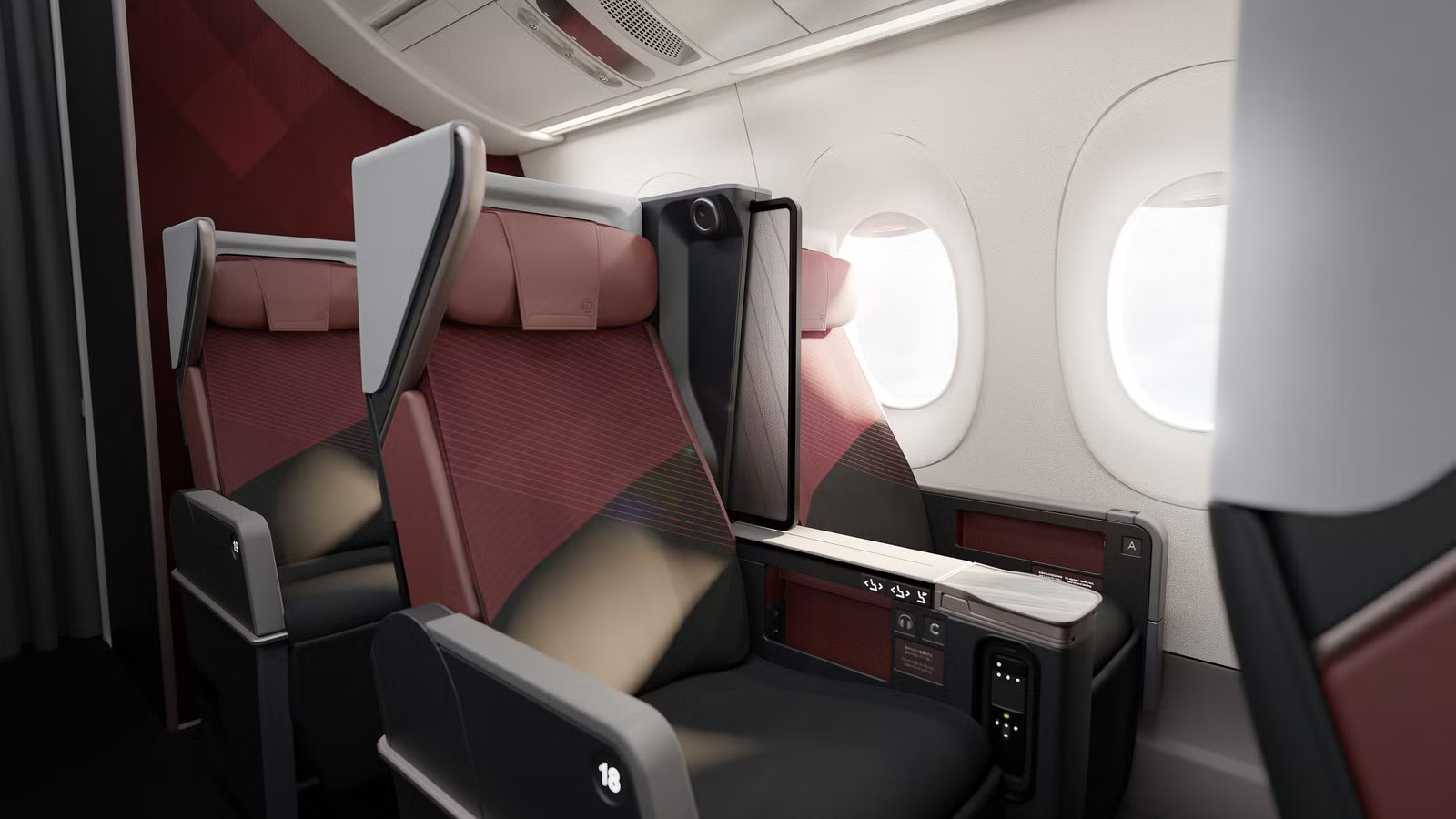
Japan Airlines (JAL) has used its Airbus A350-1000 fleet to introduce a premium economy product that, in many ways, gives a string of peers’ rival offerings a run for their money. Where carriers have historically used the cabin to bridge the ever-widening gap between economy and business class, Japan Airlines’ cabin has increasingly come to resemble something closer to a business-lite experience.
New seats and improved entertainment systems are among the improvements brought with the new aircraft deliveries. But it is not just the hard product that makes Japan Airlines’ premium economy stand out. Beyond the upgraded seat, these customers often get airport options that would otherwise be available only to business or even first-class passengers.
Japan Airlines & The Airbus A350

Run exclusively on the Japanese flag carrier’s A350-1000 fleet, the new premium economy is a relatively recent addition. Japan Airlines took delivery of its first A350-1000 in December 2023, before debuting the aircraft on its Tokyo International Airport (HND) to John F. Kennedy International Airport (JFK) route the following January.
Cut forward to today, and Japan Airlines has received 11 of a total of 13 A350-1000s ordered from Airbus. These have come from a wider string of deals also encompassing the smaller Airbus A350-900, of which Japan Airlines has ordered 38 altogether, with 17 in service today. Each serves a different purpose, with the A350-900 tending to feature on high-demand domestic routes and the A350-1000 representing the flagship of Japan Airlines’ international, long-haul fleet.
Japan Airlines Airbus A350-1000 specifications, from carrier’s website:
Specification | Value |
Length | 242 feet, 1 inch (73.79 meters) |
Wingspan | 212 feet, 5 inches (64.75 meters) |
Height | 56 feet (17.08 meters) |
Seating capacity | 239 passengers |
Maximum takeoff weight | 679,023 lb (308,000 kg) |
Range | 8,700 nautical miles / 10,012 miles (16,112 km) |
Engine thrust | 97,003 lbf (44.0 tonnes-force) |
Cruising speed | 561 mph (903 km/h) |
Its A350-1000s are configured to carry 239 passengers—six first, 54 business, 24 premium, and 155 economy— compared with the 369- or 391-seat, three-class A350-900s. While a fair disparity, the reduced capacity of its A350-1000s reflects Japan Airlines offering a larger share of onboard seats to higher-paying premium passengers for what will more often than not be far longer journeys. That includes entirely separate business and, notably, premium economy cabins on the A350-1000.
Japan Airlines’ A350-1000 Premium Economy

In all, passengers can expect to find premium economy options across Japan Airlines’ international, long-haul fleet, including the Boeing 787-9 and Boeing 777-300ER, as well as the A350-1000. The product onboard its A350-1000s marks a step up from those on older models, though the aircraft themselves were introduced much more recently.
Seat pitch and width remain standardized at a maximum of 42 inches (107 centimeters) and 19 inches (48 centimeters), respectively, across premium economy cabins on all three models. They also use a hard-shell design, meaning the reclining process pushes the whole structure forward rather than moving the backrest backward into the space of the passenger behind.
Japan Airlines fleet, from carrier’s website:
Model | Total in fleet |
Airbus A350-900 | 17 |
Airbus A350-1000 | 11 |
Boeing 787-9 | 22 |
Boeing 787-8 | 31 |
Boeing 777-300ER | 9 |
Boeing 767-300ER | 27 |
Boeing 737-800 | 62 |
Airbus A321ceo | 3 |
Embraer 170 | 18 |
Embraer 190 | 14 |
De Havilland DHC-8-400 Cargo Combi | 5 |
ATR42-600 | 13 |
ATR72-600 | 2 |
Total | 234 |
The newer seats on the A350-1000 have introduced motorized controls, however, compared to a manual system on the 787-9 and 777-300ER, so they can be controlled electronically using buttons. Larger partitions between neighboring seats have also been added in a bid to enhance privacy. Alongside that, another notable change is the entertainment system, with A350-1000 premium economy passengers getting a 16-inch (40.6 centimeters) 4K screen. Japan Airlines says this is 1.3 times larger than the system on the other aircraft in its long-haul fleet. Combined with an already-strong soft product, these improvements help move Japan Airlines’ premium economy closer to a business-like product.
Japan Airlines’ Already-Strong Soft Premium Economy Product

From the point of check-in, premium economy passengers flying with Japan Airlines receive perks that in many cases are otherwise only reserved for business passengers and above. At Tokyo’s Haneda Airport (HND) and Narita International Airport (NRT), as well as Osaka’s Kansai International Airport (KIX) and Nagoya’s Chubu Centrair International Airport (NGO), this means a dedicated premium economy class check-in counter. Elsewhere, the carrier says such customers can use business class areas instead.
Each customer gets two pieces of checked luggage — up to 50.7 lb (23 kg) apiece — included in the price of their ticket, alongside priority boarding and then priority baggage claim at the other end, both following business class. In some cases, priority security screening is also available.
But the most notable inclusion for Japan Airlines premium economy fliers is arguably lounge access. Elsewhere, such a perk is typically reserved for higher-paying travelers and is often available only for a fee, if at all. In Japan Airlines’ case, premium economy flyers get complimentary access to its Sakura Lounges, along with specific partner products like the Lounge Ryurin at Naha Airport (OKA) in Okinawa and the China Airlines Mei Yuan Lounge at Taiwan Taoyuan International Airport (TPE). Importantly, this is regardless of specific fare type.
Lounge Access Regardless Of Japan Airlines Premium Economy Fare Type

Indeed, one of the glaring differences in Japan Airlines’ and other airlines’ premium economy offerings is the restrictions around particular fare types. Where a string of US carriers, for instance, market unbundled fares to attract more price-sensitive customers to higher classes, Japan Airlines’ premium economy passengers get a flat-rate service for the price of their ticket.
That is not to say Japan Airlines does not distinguish between its most economical and flexible fares. Rather, whichever a customer opts for, they can still expect the same perks inside and outside of the aircraft as those who paid more for a ticket in the same class, even if they hold a cheaper ticket with more restrictions on changes or refunds, say.
In any case, lounge access, fast-tracked check-in, boarding, baggage collection, and so on, remain standard. Depending on the airline, flying premium economy between Japan Airlines and the US can vary widely in what you get for the price. That is, in terms of the seat itself, but also within airports.
Japan Airlines’ Premium Economy Versus The Competition

The transpacific market is highly competitive, served by major carriers on both sides of the ocean. On the Asian side, Japan Airlines is joined by the likes of All Nippon Airways,  Singapore Airlines, and EVA Air in vying for similar routes. In the US, each of the Big Three legacy carriers —
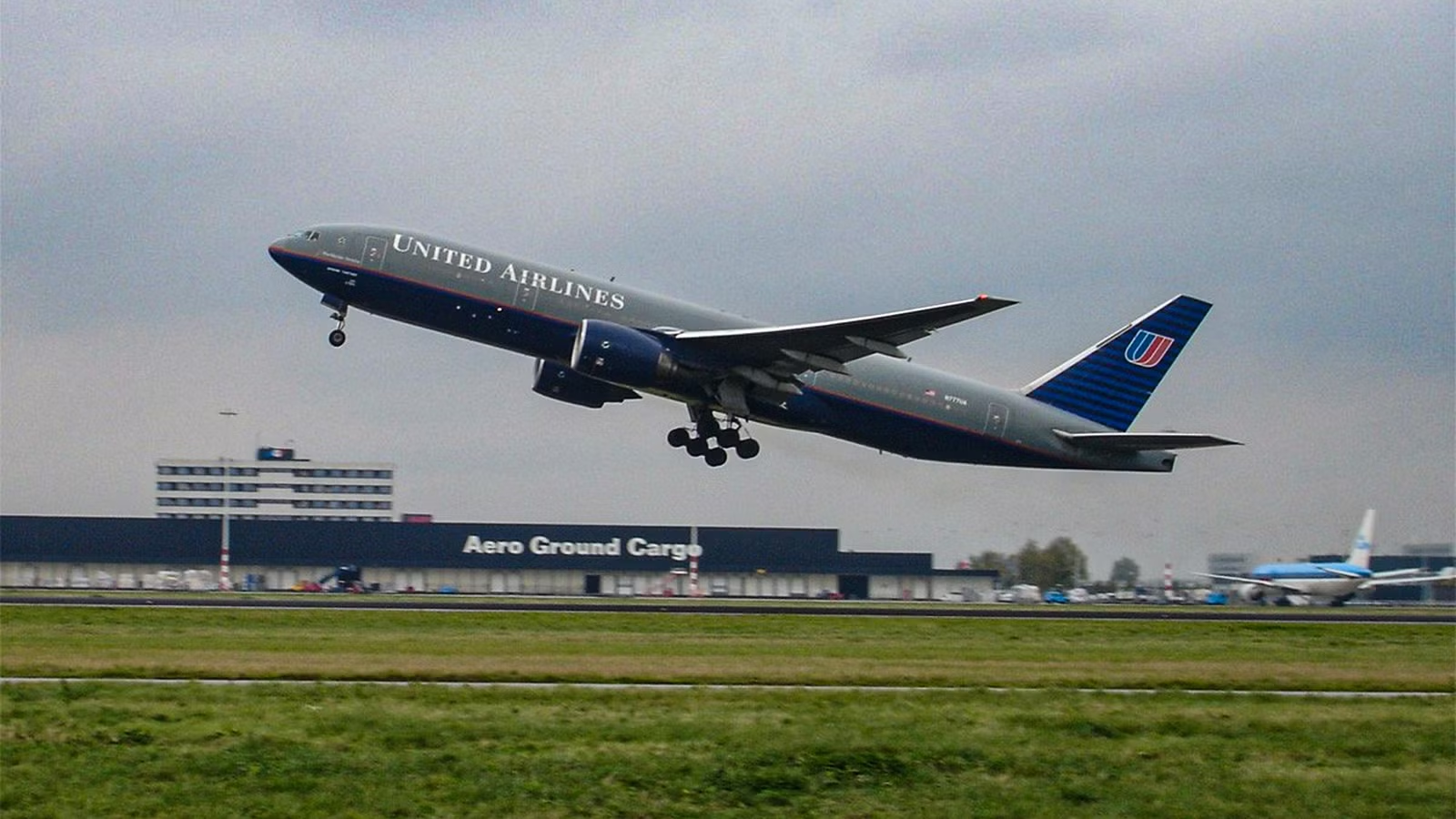
  United Airlines,
  Delta Air Lines, and
  American Airlines — are among those that serve the market.
With its latest premium economy offering, Japan Airlines has, in part, sought to position itself ahead in this transpacific premium leisure segment. That means competing with EVA, which also offers a hard-shell seat with a 42-inch (107 cm) pitch aboard its 787-9 fleet, considered among the best in the world. Similarly, peer All Nippon Airways is also among the few to extend lounge access to its premium economy clientele.
Where such characteristics seem to push premium economy closer to a business-lite experience, offerings among US carriers leave it closer to an intermediate between business and coach class, as originally intended. Seat pitch across Delta, United, and American’s long-haul premium economy cabins hovers closer to 38 inches (96.5 cm), for instance. Lounge access is also absent from the list of perks that come with the tickets in each case. That said, the caveat in regard to Japan’s offering is availability.
Just A Handful Of Japan Airlines A350-1000 Routes, Though

With just 11 A350-1000s encompassing the newest premium economy cabins on its books, Japan Airlines is somewhat limited in the routes it can serve using the aircraft. As it stands, these aircraft fly to just five flagship destinations, all from its Tokyo Haneda (HND) hub.
Japan Airlines Airbus A350-1000 routes, from carrier’s website:
Route | Frequency |
Tokyo (HND) – New York (JFK) | Twice daily each way |
Tokyo (HND) – Dallas Fort Worth International Airport (DFW) | Once daily each way |
Tokyo (HND) – Los Angeles International Airport (LAX) | Once daily each way |
Tokyo (HND) – London Heathrow Airport (LHR) | Twice daily each way* |
Tokyo (HND) – Paris Charles de Gaulle Airport (CDG) | Once daily each way |
*As of 2026 winter season
These cover three cities across the US and two in Europe: New York (JFK); Dallas Fort Worth International Airport (DFW); Los Angeles International Airport (LAX); London Heathrow Airport (LHR); and Paris Charles de Gaulle Airport (CDG). In contrast, United has 13 daily flights between the continental US and four Japanese airports — Sapporo’s New Chitose Airport (CTS), Tokyo Narita (NRT), Tokyo Haneda (HND), and Osaka (KIX) — scheduled for this winter season. Of course, Japan Airlines uses other models to serve the market as well, but relatively few A350-1000 operations mean securing a seat in its newest premium economy is no doubt easier said than done.