dailynewsnblog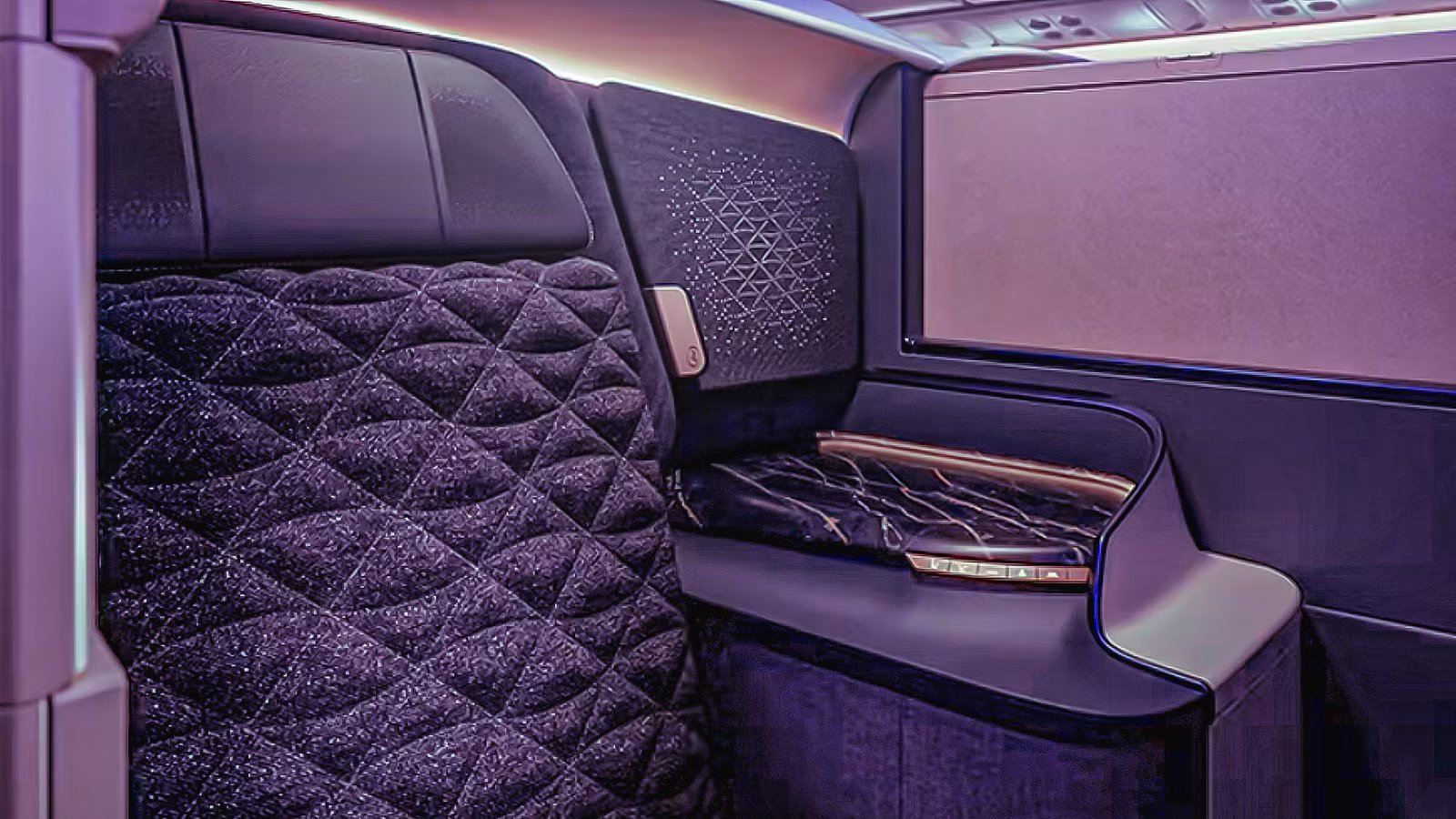
Saudi Arabia’s newest airline could have chosen almost any strategy to establish itself in one of the world’s most competitive long-haul markets. It could have competed on fares, built a larger network first, or developed an entirely luxurious premium cabin. Instead,  Riyadh Air has taken a different path. Rather than inventing new products from scratch, it has selected the newest generation of commercially available cabin technology and integrated it into a carefully designed Boeing 787-9 operation. That decision may prove just as significant as its ambitious route network because it allows the airline to compete with the Gulf giants from day one while avoiding years of costly product development.
The question is whether this procurement strategy can genuinely disrupt a market dominated by  Emirates,
  Qatar Airways, and
  Etihad Airways. Riyadh Air CEO Tony Douglas believes it can. With early Boeing deliveries bringing the airline’s launch forward to June 10, 2026, instead of July 1, and with a goal of serving 100 destinations by 2030, every aircraft delivered represents another opportunity to prove that buying the latest proven technology may be smarter than designing everything in-house. Understanding why Riyadh Air chose this approach begins with examining why the Dreamliners became the foundation of the airline’s business model.
Why Was The Boeing 787-9 The Ideal Starting Point?

Launching an airline with widebody aircraft is always a high-risk decision, but Riyadh Air deliberately selected the Boeing 787-9 because it offers a balance both within the Dreamliner family and against competitors. The 787-9 combines long-range capability with relatively low operating costs, allowing airlines to profitably open new long-haul routes before passenger demand reaches the levels required for larger aircraft such as the Boeing 777X or Airbus A350-1000.
That flexibility has already reshaped Riyadh Air’s launch timeline. Following the early delivery of its first three Dreamliners, the airline accelerated its first commercial service, beginning international operations with flights between Riyadh and London Heathrow. According to Boeing, the airline has ordered 39 Boeing 787-9s with options for another 33 aircraft, providing a substantial platform for future expansion while maintaining fleet commonality from the outset. The combination of a single aircraft type, advanced fuel efficiency, and long-range capability allows Riyadh Air to connect Saudi Arabia with destinations across Europe, Asia, and eventually North America without introducing multiple fleet types during its formative years.
The network strategy reflects that flexibility. After launching the London Heathrow service, Riyadh Air quickly announced additional services across the Middle East to Jeddah, Dubai, and Cairo, as well as to selected European and Asian destinations, all while Tony Douglas reiterated his ambition to reach 22 destinations by March 2027 and approximately 100 destinations by 2030, as noted by MigFlug. But aircraft alone rarely convince premium travelers to abandon established airlines, raising an even more important question: if the Boeing 787-9 is so far only the platform, what makes the onboard product different enough to attract passengers away from the Gulf’s established leaders?
Why Did Riyadh Air Choose Off-The-Shelf Premium Hardware Instead Of Designing Its Own?

The answer lies in a procurement philosophy that turns conventional airline thinking upside down. Rather than spending years developing proprietary seats and in-flight entertainment systems, Riyadh Air selected the latest generation of products already proven by leading aerospace suppliers. In effect, the airline outsourced research and development while still delivering one of the most technologically advanced cabins currently flying.
The clearest example is the Business Elite cabin. Instead of commissioning a unique seat design, Riyadh Air selected Safran’s new Unity suite in a 1-2-1 configuration. Every suite includes a sliding privacy door, direct aisle access, a fully flat 78-inch bed, and a seat width of approximately 22.5 inches. For couples traveling together, the center suites can convert to double beds; this is a unique feature typically found in premium cabins but still unavailable across much of the global airline industry. Each passenger also receives a 32-inch ultra-high-definition monitor, creating one of the largest business-class entertainment displays available on any Boeing 787 today.
This approach significantly reduces development risk. Several major airlines have experienced years of delays introducing custom-designed premium cabins because every component requires extensive testing and regulatory approval. By selecting mature products from Safran and Panasonic Avionics, Riyadh Air gains immediate access to cutting-edge passenger amenities while allowing its suppliers to bear much of the engineering burden.
Riyadh Air focused on integrating the best available technologies into a cohesive passenger experience. That strategy extends well beyond the seats themselves, because today’s modern premium travelers judge an airline by its digital experience as much as by its physical cabin.
How Does Panasonic’s Digital System Strengthen Riyadh Air’s Competitive Position?

The most ambitious element of Riyadh Air’s cabin may not be visible when passengers first board. While the Safran Unity suites attract immediate attention, the airline’s partnership with Panasonic Avionics arguably represents the more significant long-term investment, as it transforms the cabin into an updated digital platform that many travelers enjoy on long flights.
Every seat throughout the aircraft is equipped with Panasonic’s Astrova inflight entertainment system, featuring 4K OLED HDR10+ displays, Bluetooth audio pairing, and USB-C charging capable of delivering up to 100 watts of power, which is enough to fast-charge many modern laptops, and not only phones. Unlike older IFE systems that often require major software revisions during scheduled maintenance checks, Astrova has been designed to receive continuous improvements throughout its service life.
The partnership goes even further because Riyadh Air is also the launch customer for Panasonic’s Modular Interactive (MI) platform. Instead of waiting months for traditional software updates, the airline can modify entertainment interfaces, introduce personalized offers, refresh branding, and adjust digital content through a cloud-based architecture. In practical terms, the aircraft cabin becomes more like a smartphone operating system than a conventional in-flight entertainment package, allowing Riyadh Air to continuously evolve the passenger experience.
That digital-first philosophy also extends beyond Business Elite. Economy passengers receive individual 4K displays despite flying in a standard 3-3-3 configuration with a 31-inch seat pitch, although early passenger reviews, such as that by Non Stop Dan, have noted the absence of personal air vents above each seat. Even this illustrates Riyadh Air’s priorities: investment has been directed toward technology and connectivity rather than legacy cabin features that many airlines still consider essential.
The result is an airline that has deliberately concentrated its resources on scalable technologies instead of proprietary hardware. Whether that strategy proves sufficient to challenge Emirates, Qatar Airways, and Etihad will ultimately depend not only on the onboard experience but also on how rapidly Riyadh Air expands its network and deploys these aircraft across global markets. This question becomes even more important as deliveries continue over the rest of the decade.
Can A Technology-First Strategy Compete With Decades Of Brand Loyalty?

Having selected the Boeing 787-9, Safran Unity suites, and Panasonic’s latest digital ecosystem, Riyadh Air still faces the most difficult challenge of all: convincing passengers to abandon airlines that have spent decades building reputations for premium service. Emirates, Qatar Airways, and Etihad Airways did not become global brands solely because of their comfortable aircraft. They built customer loyalty through consistent onboard products, expansive route networks, frequent flyer programs, and, of course, years of marketing campaigns.
Tony Douglas appears to recognize that reality. Rather than attempting to outspend the “ME3” on bespoke innovation, Riyadh Air is betting that passengers care less about who invented a premium seat than about whether the seat is among the best available. That distinction matters. Airlines once invested enormous sums in developing exclusive cabin products that often took years to certify and occasionally suffered lengthy delays before entering service. Riyadh Air has instead assembled proven technologies already available from industry-leading suppliers, reducing both development time and certification risk while still delivering a next-generation cabin experience.
The same philosophy extends to fleet planning. Operating a single long-haul aircraft type simplifies pilot training, maintenance, spare parts inventories, and scheduling flexibility. As additional Boeing 787-9s arrive, each aircraft joins the fleet with an identical passenger experience, avoiding the inconsistencies that often arise when airlines operate multiple cabin generations simultaneously. That operational simplicity could become an important competitive advantage as Riyadh Air scales toward its ambitious network targets.
The procurement strategy, therefore, solves more than one problem: it accelerates growth while limiting technical risk. But its success ultimately depends on whether Riyadh Air can place enough aircraft into service quickly enough to make those premium cabins available across a meaningful global network.
Will Network Growth Determine Whether The Strategy Actually Works?

For all the attention given to cabins and onboard technology, an airline ultimately succeeds by connecting cities. Even the most advanced Business Class suite has limited commercial value if passengers cannot easily reach their destinations. This is why Riyadh Air’s fleet expansion plan deserves as much attention as its cabin design.
The airline has outlined a roadmap to launch service to 22 destinations by 2027, then expand to 100 by 2030. Those numbers are supported by an order book of 39 firm Boeing 787-9s, along with 33 purchase options, providing significant flexibility as market demand evolves. Rather than flooding markets with excessive capacity, the airline can grow steadily while maintaining fleet commonality and operational efficiency.
The first wave of destinations illustrates this balanced strategy. According to Aerotime, alongside flagship services to London Heathrow, Riyadh Air has expanded into both regional and long-haul markets, with flights to Jeddah, Dubai, Cairo, Madrid, Manchester, Málaga, Kuala Lumpur, and Dhaka. These routes combine business demand, leisure traffic, religious travel, and growing tourism flows to Saudi Arabia, supporting the country’s broader Vision 2030 objectives while gradually building an international hub in Riyadh, akin to those in the neighboring Gulf States.
The network ambitions are certainly bold, but they also reveal another layer of Riyadh Air’s strategy. Every new destination expands the airline’s opportunity to expose travelers to its product, making fleet deliveries just as important as marketing campaigns. The next question, therefore, is whether today’s technological advantage will still look modern five or even ten years from now.
The Real Test Will Be Whether Riyadh Air’s Procurement Strategy Delivers A Lasting Advantage

Riyadh Air’s biggest competitive advantage may not be its seats or even its aircraft, but the flexibility built into both. Traditionally, airlines refresh premium cabins only every seven to ten years because replacing seats and in-flight entertainment systems is enormously expensive and operationally disruptive. By combining Safran’s latest Unity suites with Panasonic Avionics’ cloud-enabled Modular Interactive platform from day one, Riyadh Air has created a cabin that can evolve long after the aircraft enters service. Software interfaces, branding, entertainment content, and personalized digital services can all be updated far more quickly than with conventional IFE systems, allowing the passenger experience to improve continuously rather than waiting for the next major cabin overhaul.
That approach reflects a broader shift in passenger expectations. Modern travelers increasingly expect aircraft cabins to behave more like consumer electronics, with intuitive interfaces, Bluetooth connectivity, fast USB-C charging, and digital experiences that improve over time. Because Riyadh Air adopted these technologies at launch, its Boeing 787-9 fleet begins life with an infrastructure designed to remain relevant for at least a decade, if not throughout much of the Dreamliner’s operational lifespan. At the same time, the airline is steadily expanding its network to expose more passengers to that product, with each additional 787 delivery supporting CEO Tony Douglas’ target of 100 destinations by 2030 and increasing competitive pressure on the established Gulf carriers.
However, none of these guarantees instant success against Emirates, Qatar Airways, or Etihad Airways. Those airlines still possess far larger fleets, mature loyalty programs, extensive global partnerships, and decades of brand recognition that cannot be replicated overnight. The real question is whether Riyadh Air’s procurement-first strategy can narrow that competitive gap more quickly than traditional product development ever could. If the airline successfully combines rapid fleet growth with continuous digital innovation, it could demonstrate that buying the industry’s newest proven technologies is a more effective strategy than spending years developing proprietary hardware. That would make Riyadh Air’s launch significant not only for Saudi Arabia but also for airlines worldwide as they consider how to design the next generation of premium cabins.