dailynewsnblog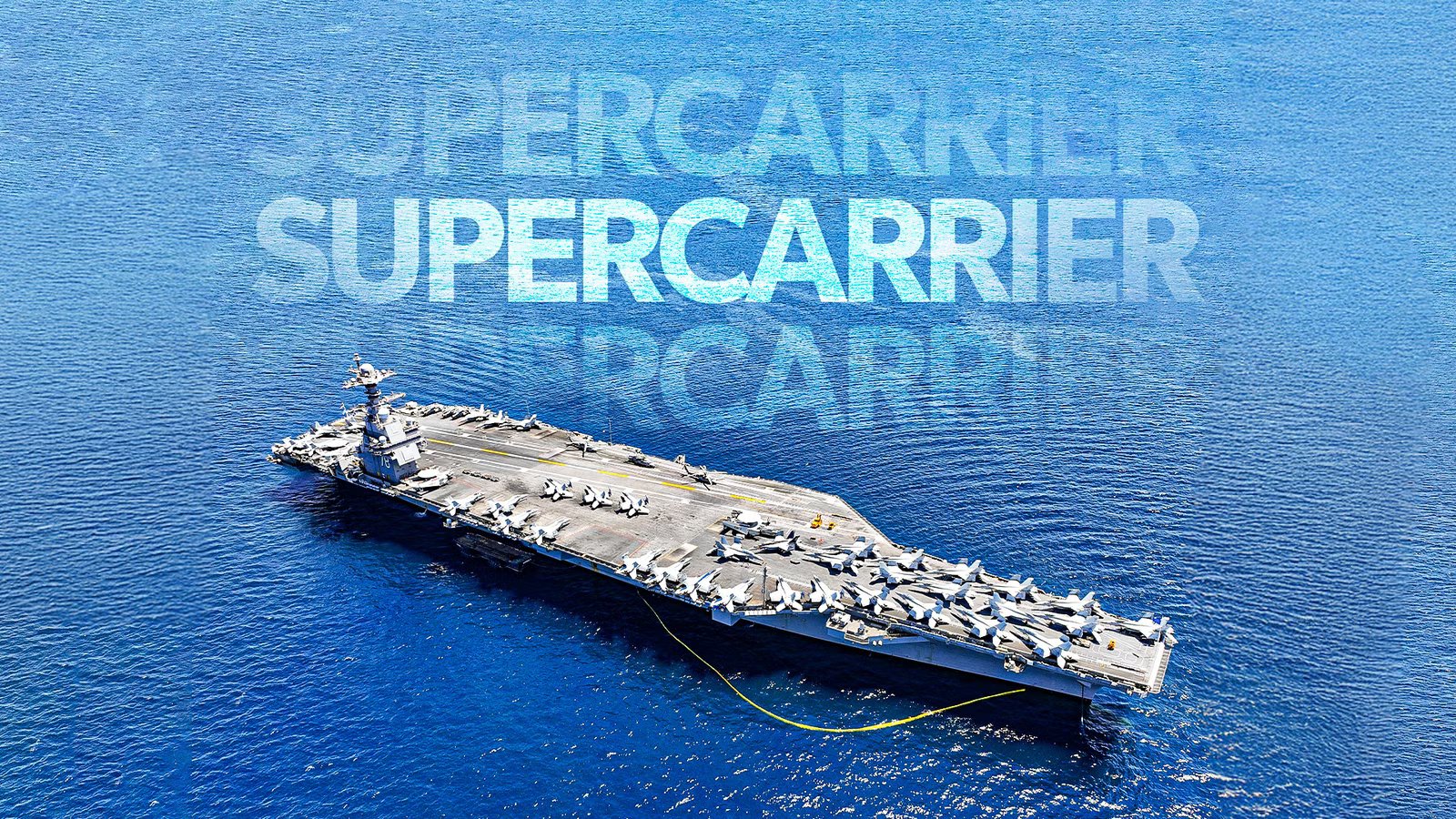
The single greatest piece of a combat arsenal has to be an aircraft carrier. Allowing aircraft to be positioned right on the frontline, deployable to any zone within only a couple of minutes’ notice, it is no wonder the US Navy is pouring $120 billion into a new supercarrier project. This project is not expected to be ready until 2043, prompting many to voice concerns over whether that is far too late.
Committing to a procurement timeline that stretches nearly two decades into the future creates an immediate strategic tension. The Pentagon is wagering billions that, in the mid-forties, global sea-lane control will still rely on the exact same style of mobile airfield dominance that defined previous eras. Yet, pouring such an immense concentration of wealth into hulls that will not deploy until long after current geopolitical flashpoints have shifted strikes critics as an incredibly risky gamble, opening up a fierce debate over whether these ships are future-proofing the fleet or simply creating massive, floating targets.
Too Long Of A Wait?

The scale of the Gerald R. Ford-class acquisition program is difficult to grasp unless you look at it through the lens of generational military planning. Summarized, these are procurement contracts signed today for hulls that will not experience blue water until the mid-2040s. Such a massive timeline is actually not an accidental administrative delay, but rather reflects a deliberate modernization strategy outlined by the Congressional Research Service to gradually phase out the aging Nimitz-class inventory.
When observers question whether 2043 is too distant a target, the discussion often overlooks the industrial momentum required to build hulls of this scale. The $120 billion overarching program baseline allocates funding across multiple concurrent vessels, including the future USS Doris Miller (CVN-81), now delayed until 2034, and subsequent hulls currently designated as CVN-82 and CVN-83. Locking these multi-thousand-ton platforms into long-term block-buy strategies, the Pentagon deliberately protects the shipbuilding pipeline from annual political spending fights, maintaining steady employment for specialized maritime builders over a span of 20 years.
Critics naturally wonder if a platform designed around today’s strategic parameters can remain viable on a battlefield two decades away. The long build cycle means that even if the core engineering architecture of CVN-83 is fixed, its internal framework must remain adaptable enough to integrate technologies that have not yet been developed. Congressional Budget Office reports emphasize that sustaining these massive outlays over such an extended horizon is all about fiscal control, consuming a significant slice of total naval surface construction budgets at the expense of smaller, distributed surface combatants.
Packed With Improvements

Moving from the Nimitz design to the Ford platform is one of the most radical technical overhauls the surface fleet has undergone in 50 years. Leading the way, a completely reimagined layout across a flight deck spanning over 1,092 feet (333 meters) in length, specifically optimized to maximize the daily sortie generation rate of modern carrier air wings while relying on a significantly smaller crew footprint.
Instead of utilizing the traditional high-pressure steam catapults that launched naval aircraft for generations, these newer hulls rely entirely on the Electromagnetic Aircraft Launch System. This system utilizes a linear induction motor to precisely manage the acceleration curve for individual airframes, allowing the ship to launch everything from heavy, fully fueled F-35 fighters down to lightweight, delicate unmanned aerial vehicles. When paired with the Advanced Arresting Gear, which replaces legacy hydraulic recovery systems with water turbines and electric motors, the ship can manage aircraft recoveries with less structural stress on the airframes themselves.
Powering these energy-intensive electromagnetic launch systems means including a massive upgrade to internal electricity generation, which is handled by twin Bechtel A1B nuclear reactors. These power plants deliver three times the electrical distribution capacity of older carrier models, so the variants arriving closer to 2043 possess the electrical margins necessary to integrate directed-energy weapons, high-powered electronic warfare suites, and advanced radar arrays without requiring a destructive, multi-billion-dollar structural redesign later in life.
New US Navy Aircraft Carriers Face Further Delays
The next ships in the Ford-class are facing stalled delivery times.
Only Natural To Incur Early Costs

Taking these highly complex engineering systems from the drawing board to operational carrier decks has been anything but smooth. The initial phase of the Ford-class rollout has been characterized by persistent technical bottlenecks, unexpected component failures, and public oversight hearings that have drawn sharp criticism from defense watchdogs. Now, questions are being asked over whether the military has anchored its long-term strategy to an excessively complex and costly platform vulnerability.
Early deployments of the electromagnetic catapult infrastructure and the advanced weapons elevators suffered from frequent reliability shortfalls, repeatedly missing the mean time between failure benchmarks established by military planners. Compounding these engineering challenges were physical production defects, including propulsion shaft manufacturing flaws and specialized weld issues that required unscheduled shipyard overhauls. When an individual vessel requires upwards of $13 billion to construct, any delayed component adds to the fire, lengthening build timelines and giving weight to arguments that the $120 billion project represents an inflexible approach to force design.
Catch what other flight trackers miss
Emergency squawks, holds, NOTAMs — live signals, no signup.
Open tracker
Catch what other flight trackers miss
Emergency squawks, holds, NOTAMs — live signals, no signup.
Open tracker
Despite these early programmatic headaches, defense planners maintain that pioneering entirely new technological ecosystems always carries steep upfront costs. Proponents argue that evaluating early operational testing hurdles against a mature, half-century-old system like the Nimitz class presents an incomplete picture of technological development. As the fundamental engineering design matures and components stabilize, the real-world operational insights gained from the initial deployment of the USS Gerald R. Ford are being directly applied to the construction lines of future ships slated for 2043, aiming to lower production risk for the subsequent hulls.
The Lone Building Site

In the US, only one shipyard possesses the physical infrastructure and specialized workforce required to build a nuclear-powered capital ship of this magnitude: Huntington Ingalls Industries’ Newport News Shipbuilding in Virginia. Due to the fixed nature of the dry docks, the construction process is an incredibly complex, slow-moving puzzle in which a new hull cannot be laid down until the preceding vessel is launched and moved to an outfitting berth.
To cope with this operational reality and drive down astronomical costs, the Navy has increasingly relied on multi-ship block-buy contracts, a procurement strategy that has been heavily analyzed in recent Congressional Budget Office reports. The dual-buy deal secured for the future USS Enterprise (CVN-80) and USS Doris Miller (CVN-81) is a perfect example of this, where the Pentagon provides long-term predictability to thousands of sub-tier suppliers across the country. It keeps specialized component factories running without costly gaps, but it locks a massive portion of the naval shipbuilding budget into a single asset class for decades, limiting the service’s fiscal agility if strategic priorities change suddenly.
Hull Designation | Ship Name | Anticipated Procurement | Expected Fleet Delivery |
CVN-80 | USS Enterprise | FY2018 | 2031 |
CVN-81 | USS Doris Miller | FY2019 | 2034 |
CVN-82 | USS William J. Clinton | FY2029 | 2039 |
CVN-83 | USS George W. Bush | FY2034 | 2043 |
Of course, this is a very rigid schedule, which introduces an acute vulnerability in the overall fleet structure as older Nimitz-class hulls hit their non-negotiable retirement dates. Reports from sources such as the National Security Journal indicate that, because the construction timeline is so stretched, the total number of operational carriers will occasionally dip below the legally mandated threshold of 11 vessels during the 2030s, creating temporary operational gaps in which only ten hulls are active globally. Therefore, the current defense leadership is initiating aggressive design and cost reviews for the upcoming CVN-82 and CVN-83 platforms to help guarantee that the final hulls arriving in the 2040s can be produced more efficiently without triggering further fleet-wide delays.

What Is The Role Of The US Air Force’s Expeditionary Security Forces Squadron Fly Away Security Teams?
Empowering aircrews in remote warzones, Fly Away Security Teams ensure unwavering defense for US Air Force operations worldwide.
An Ever-Present Necessity

In an era dominated by discussions of long-range hypersonic missiles and satellite-guided anti-ship ballistic arrays, investing $120 billion in a single class of concentrated targets strikes many contemporary military analysts as a strategic anachronism. Defense critics regularly argue that an adversary can field hundreds of precision munitions for the cost of a single Ford-class hull, potentially turning these multi-billion-dollar investments into highly fragile liabilities in a high-intensity conflict. It ultimately raises the question in modern naval doctrine of why commit to platforms that will not even arrive until the geopolitical landscape has completely transformed?
The institutional answer is that the unique strategic value of mobile, sovereign territory will never go away, especially as other nations are quickly advancing their respective naval fleets. A land-based airfield in the Western Pacific or East Asia sits at a fixed, unchangeable geographic coordinate that can be pre-targeted years in advance, whereas a carrier strike group remains constantly in motion, capable of repositioning across thousands of miles of open ocean daily. Operating at speeds exceeding 30 knots (35 mph / 56 km/h), these vessels compel opposing forces to continually solve a dynamic scouting and targeting problem, complicating an adversary’s battle plan while projecting power without requiring permission from foreign host nations.
For regions like the Indo-Pacific, this mobile baseline is viewed by Washington as an indispensable pillar of regional deterrence. The extended reach of a carrier strike group underpins security architecture involving key allies like Japan, providing a highly visible counterweight to rapid naval expansion in the region. By placing a floating airfield within striking distance of a flashpoint on short notice, the platform offers flexible escalation management options that smaller, distributed surface forces or long-range bomber flights originating from the US are incapable of.
A More Autonomous Future

A carrier hull is fundamentally an infrastructure investment, and its combat relevance is defined by its air wing rather than the ship itself. As the Navy prepares for the eventual integration of sixth-generation manned fighters, the architectural benefits of the Ford class, specifically its immense electrical generation capability, allow it to transition smoothly to a highly automated, distributed style of warfare.
Unmanned carrier aviation is fast approaching, however. Platforms like the MQ-25 Stingray aerial refueling drone are already altering the operational calculus by dramatically extending the strike radius of existing manned fighters, allowing the carrier to launch missions while remaining safely outside the envelope of shore-based anti-ship missiles. Looking further out, the integration of semi-autonomous collaborative combat aircraft will allow a single pilot to command a local squadron of robotic wingmen, expanding the mass and lethality of the air wing without requiring a corresponding increase in human personnel.
The Ford-class hull is engineered with a projected structural lifespan of 90 years, meaning the vessels under construction today are expected to remain active components of American global power projection into the next century. This long-term viewpoint explains why planners accept the jarring upfront costs and agonizingly slow production cycles, as they are not building a weapon system designed to defeat the immediate geopolitical friction of the current decade, but are instead anchoring a floating, adaptable command node intended to dominate sea lanes for the next half-century.