dailynewsnblog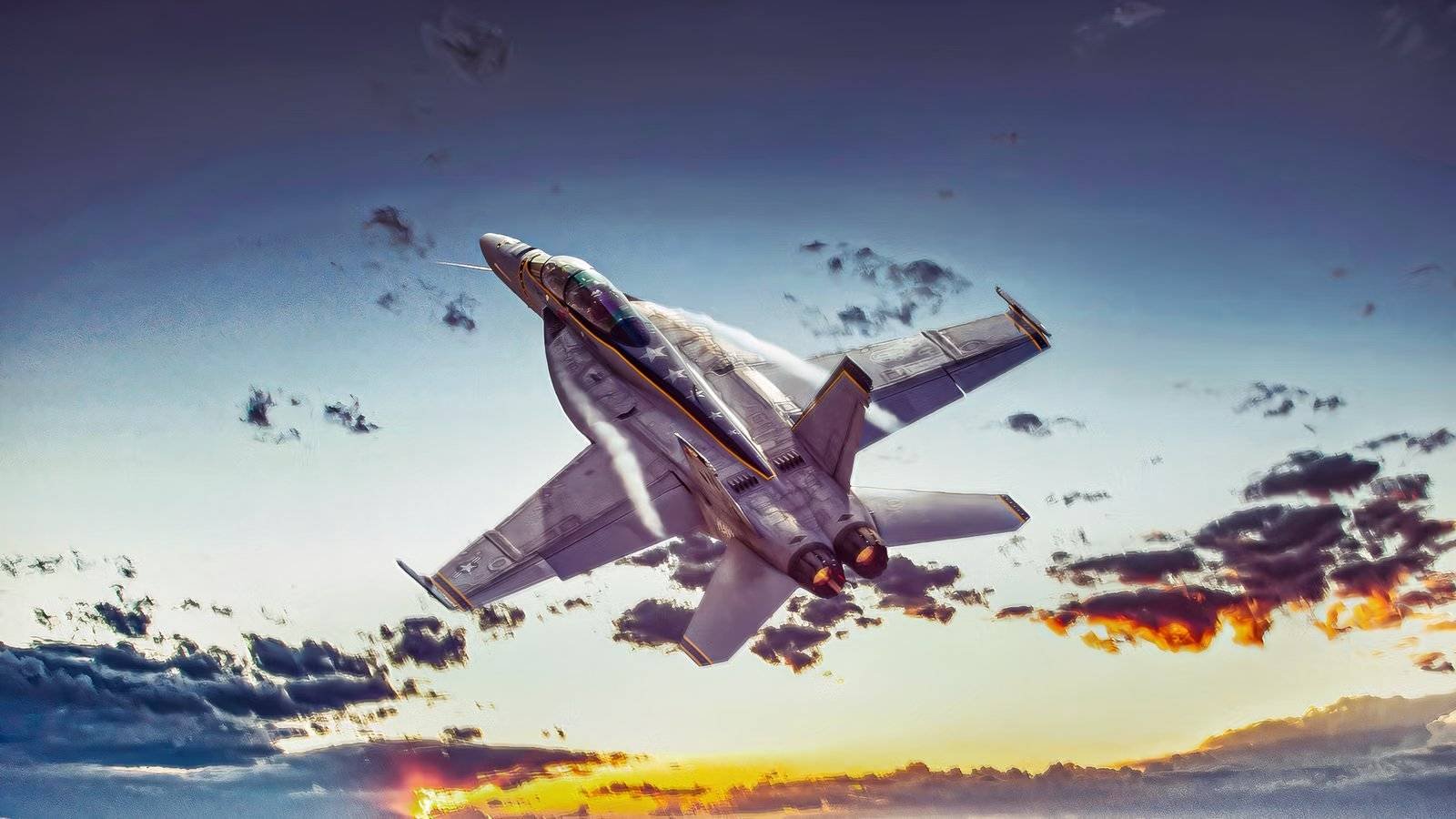
The  Boeing F/A-18 Super Hornet has been in service with the United States Navy (USN) since 1999, and since then, the aircraft has served effectively not only as a multirole fighter but also as an active combatant in numerous conflicts. While the aircraft has certainly served admirably and is still highly capable, it is an aging legacy fighter that is increasingly being displaced by a rapidly evolving threat environment.
The issue at hand is the fact that the threat landscape has changed. Missiles have greater range, fifth-generation fighters are proliferating, and America’s carrier battle groups require a fighter that not only has extended range but enhanced capabilities to compete and succeed in contested territory, particularly the South China Sea.
To fill this requirement, the USN is developing the F/A-XX. The aircraft will secure air dominance in contested regions by providing the United States (US) Military with enhanced protection for its premier power projection asset, the aircraft carrier. This is particularly needed as the US is actively preparing for a possible military confrontation with the Chinese military.
What The F/A-XX Is Expected To Bring To The Fleet

The F/A-XX will be a key component of the Navy’s Next Generation Air Dominance (NGAD) effort. The aircraft will likely conduct long-range strike missions—of particular relevance in the Indo-Pacific region—provide fleet air defense, and support multi-domain operations. To this end, its projected combat radius is expected to approach 1,000 miles, enabling it to project power and establish air superiority across the vast expanse of the Pacific while helping keep aircraft carriers beyond the effective range of Chinese anti-ship ballistic and cruise missiles.
With its advanced sensor suite and AI-enabled processing, it is projected to function as a high-end sensing and strike node within a broader distributed kill chain. In this role, the aircraft would collect, synthesize, and disseminate relevant data across the combat network, enhancing situational awareness and enabling coordinated effects across a forward-deployed, multi-domain joint force.
Further, the F/A-XX (like other proposed sixth-generation platforms) will likely operate closely with advanced unmanned “loyal wingman” drones. These systems would extend the fighter’s sensor network, support strike missions, and potentially assist with tasks such as reconnaissance, electronic warfare, and refueling support. In contested environments, they could also help draw fire or absorb hostile engagement risk that would otherwise be directed at manned aircraft.
With its advanced stealth features, increased fuel capacity, and improved efficiency, the F/A-XX is expected to enhance the survivability of the carrier strike group by enabling operations at greater ranges. This could be accomplished in coordination with airborne early warning platforms such as the E-2D Advanced Hawkeye and unmanned systems. From these extended distances, the fighter could engage and neutralize threats well before they could threaten or degrade the combat effectiveness of the carrier or its accompanying vessels.
In addition to fleet protection, the F/A-XX will likely take part in the suppression and destruction of enemy air defense networks; this would lay the groundwork for a wider range of follow-on strikes by fifth-generation aircraft. In support of ground operations, the fighter would primarily be utilized for precision strikes and time-sensitive targeting in contested or denied environments rather than conventional, dedicated close air support.
The US Navy Needed A Replacement For The F/A-18 Yesterday

As noted in the previous section, the USN requires an aircraft capable of operating at greater distances in contested environments. One challenge is that the Super Hornet has an unrefueled combat radius of only about 390–700 nautical miles (722–1,296 km). By comparison, China’s DF-17 hypersonic missile has an estimated range of approximately 1,800–2,500 km. As a result, a carrier strike group relying primarily on Super Hornets may be forced to operate within the engagement envelope of Chinese anti-access/area-denial (A2/AD) systems to conduct strike operations, increasing its vulnerability to attack.
Beyond the Chinese missile issue is the glaring fact that the Super Hornet production line will soon be shuttered because Boeing cannot find additional customers for the legacy platform. While there will be no new-build F/A-18s beyond the end of this decade, the USN did award Boeing a contract on March 19, 2024, for 17 new F/A-18E/F Super Hornets. Projections indicate that the company will begin delivering the aircraft in the winter of this year, with a final delivery no later than the spring of 2027. The life extension program for the Super Hornets will also continue into the mid-2030s.
The wind-down of fighter manufacturing began roughly two years ago with a reduction in production rates from two airframes per month to approximately 1.5 per month. The slower production tempo is intended to sustain manufacturing through the final deliveries in 2027 while allowing the company to transfer personnel to other defense programs. Speaking to the latter, Boeing will gradually pivot its St. Louis Super Hornet workforce to other key programs such as the F-15EX, T-7A trainer and the MQ-25 refueling drone, according to Boeing Fighters Vice President Mark Sears.
Detailing The Mighty Super Hornet And Its Block III Upgrade

The Super Hornet entered fleet service in 1999; it was designed as the replacement for the Northrop Grumman F-14 Tomcat. As the successor, the F/A-18 possesses full spectrum mission capabilities. As stated by Naval Air Systems Command, the aircraft is certified for “…air superiority, fighter escort, reconnaissance, aerial refueling, close air support, air defense suppression and day/night precision strike.”
Over the last 25 years, the fighter has taken part in missions over Iraq, Afghanistan, Syria, and Libya. During such missions, the Super Hornet has been assigned the moniker “Rhino” in order to distinguish it from earlier Hornets. This aids in safe flight operations and in preventing misunderstandings over radio communication.
Compared to the Hornet, the Super Hornet is widely regarded as a new aircraft. Its airframe is approximately 20% larger, with an empty weight increased by about 7,000 pounds (3,200 kg) and a maximum takeoff weight increased by about 15,000 lb (6,800 kg) relative to the legacy Hornet. Further, the Super Hornet accommodates 33% more internal fuel, which enables an increased operational range of roughly 41%.
General Specifications for the F/A-18E/F Super Hornet | Related Data |
|---|---|
Primary Function | Multirole attack and fighter aircraft |
Contractor | McDonnell Douglas (now The Boeing Company) |
Date Deployed | First flight in November 1995. Initial Operational Capability in September 2001 with VFA-115, NAS Lemoore, California. First cruise for VFA-115 was onboard the USS Abraham Lincoln. Unit Cost: $67.4 million (FY21) |
Propulsion | Two F414-GE-400 turbofan engines. 22,000 lb (9,977 kg) static thrust per engine |
Length | 60.3 feet (18.5 meters) |
Height | 16 feet (4.87 meters) |
Wingspan | 44.9 feet (13.68 meters) |
Weight | Maximum Take Off Gross Weight is 66,000 lb (29,932 kg) |
Airspeed | Mach 1.8+ |
Ceiling | 50,000+ feet (15,240 m) |
Range | Combat: 1,275 nautical miles (2,346 kilometers), clean plus two AIM-9s |
Ferry | 1,660 nautical miles (3,054 kilometers), two AIM-9s, three 480-gallon tanks retained |
Crew | A, C and E models: One B, D and F models: Two |
The F/A-18’s robust airframe was engineered with an open mission system architecture. This enhances the speed of integrating new weapons, sensors, and other associated technological enhancements. The most recent modernization package, Block III, provides for an increased service life of 10,000 flight hours and a reduced radar signature.
The latter is achieved by introducing conformal fuel tanks that integrate more smoothly with the fuselage and reduce radar-reflective discontinuities. Block III also incorporates incremental refinements such as improved radar-absorbent material maintenance and edge and panel treatments, along with a reduced reliance on externally mounted pods in some mission configurations.
Finally, the upgrade includes a new avionics suite that enables a Common Tactical Picture–like fused battlespace view in the cockpit. This provides the pilot with a real-time, network-fused picture that integrates onboard sensors (such as the APG-79 AESA radar and IRST21) and off-board data to enhance situational awareness and targeting.
The capabilities listed above are enabled by large touchscreen displays for an improved human-machine interface, along with enhanced onboard processing through the Distributed Targeting Processor–Networked and Tactical Targeting Network Technology. These enhancements improve beyond-line-of-sight targeting and tracking and enhance decision-making in contested environments.
The Hornet: A Potent But Fading Weapon System

As the US military moves into the next decade, the Super Hornet will continue to comprise a significant portion of the Navy’s carrier-based strike fighter inventory and remain an important contributor to naval aviation operations throughout the 2030s. However, its role will increasingly shift to a complementary one as it operates alongside the Lockheed Martin F-35C Lightning II, with the F-35C providing stealth and penetrating strike capabilities while the Super Hornet delivers a diverse array of air-to-air and air-to-ground mission sets.
As the F/A-XX enters service—likely during the 2030s, if current plans hold—it is expected to replace the Super Hornet incrementally rather than all at once. During this transition, the Super Hornet will continue to serve as a reliable ordnance carrier and multirole strike fighter until its eventual retirement. Ultimately, the aircraft’s legacy will be defined not only by more than three decades of effective operational service, but also by its role in bridging the transition from fourth-generation carrier aviation to the Navy’s next generation of air dominance.