dailynewsnblog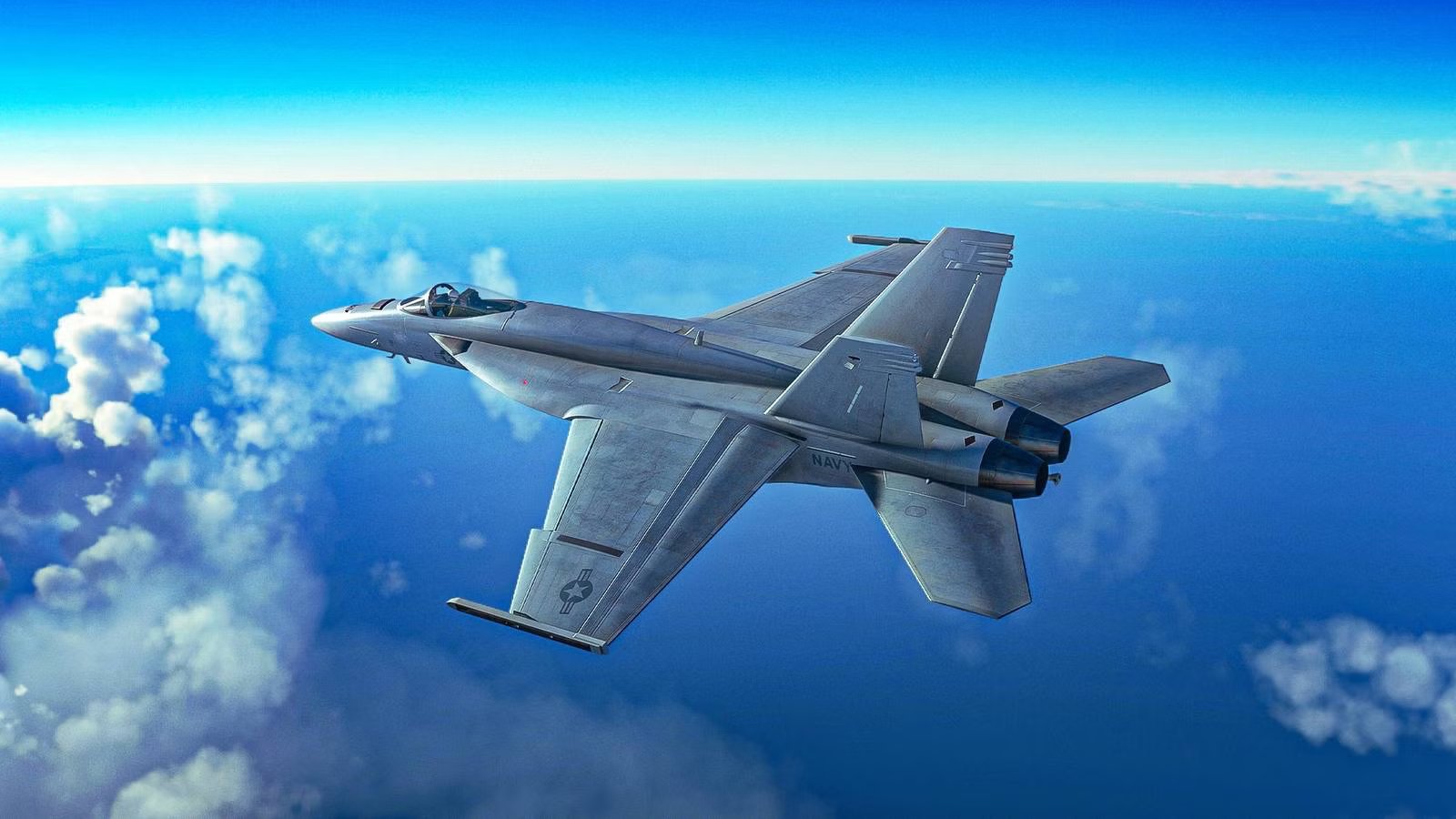
The delivery of the final batch of new Super Hornets is scheduled to begin in the winter of 2026, with final delivery no later than spring 2027. After that, production will shut down. Boeing previously warned that its F/A-18 Super Hornet line would shut down in 2025 if it didn’t receive any new orders.
In 2024, Congress awarded the Navy the funds to acquire another 17 Super Hornets to keep the line open for another two years. The US Navy didn’t request or even particularly want these aircraft. However, Congress’s concerns also include maintaining the defense industrial base and keeping skilled engineers employed in order to maintain the US’s cutting-edge ability to design and build fighter jets.
Still, it seems that no new orders will be placed, and production will cease in the coming months. To ensure a smooth shutdown and to ensure the existing Super Hornet fleet is maintained into the 2040s, the Navy has awarded Boeing a $16.7 million contract.
Navy Awarded Boeing $16.7 Million To Shut F/A-18 Down

In late September 2026, the US awarded Boeing a $16,667,607 firm-fixed-price order to assist in shutting down the production line. Shutting down the production line is not straightforward. Boeing needs to maintain the ability to maintain and upgrade the existing fleet for decades to come.
This includes retaining specialized tooling and returning some government-owned property. The contract “provides planning, analysis, engineering, and program management support for the shutdown of the F/A-18E/F Super Hornet and EA-18G Growler production lines.” The effort is to cover the inventorying and assessing of government-owned production equipment and tooling.
It also covers developing retention, storage, and disposition recommendations, and delivering a master property inventory and disposition plan. Around 60% of this work is expected to be carried out at Boeing’s facilities in St. Louis, Missouri, and 37% is to be done at El Segundo, California.
The remaining 3% of work is at Bethpage, New York. The work isn’t a quick inventory take on a clipboard, as the work is not expected to be completed until November 2030, or more than three years after the last Super Hornet has been delivered. The contracting activity is the Naval Air Systems Command, Patuxent River, Maryland.
Final Super Hornets To Be Delivered In 2027

In 2024, the US Navy placed its final order for 17 Boeing F/A-18 Super Hornets for around $1.1 billion. At the time, government documents said that “this modification procures 10 F/A-18F Lot 46 aircraft, as well as two F/A-18F and five F/A-18E Lot 47 aircraft.” Boeing had warned that without new orders, its Super Hornet production line would shut down in 2025.
This was enough to keep the production line working until 2027. The 2024 contract for the final 17 examples included a technical data package important to sustaining the aircraft after production. This is expected to be the Navy’s final order for the Super Hornet, and no other export orders are expected, with export customers moving on to other platforms.
One exception is the confusing story of Kuwait’s orders for Super Hornets: these haven’t been delivered, and it is unclear what the status of the program is. Otherwise, no air force is upgrading from legacy Hornets to Super Hornets, while several countries (Australia, Canada, Switzerland, Finland) are upgrading to the F-35A. In the second quarter of 2026, Boeing delivered three Super Hornets to the Navy.
This brought its half-year deliveries to five. In 2025, Boeing delivered a total of 14 Super Hornets. While the last aircraft are not expected to be delivered until 2027, the production chain is already in the process of shutting down. Northrop Grumman (which initially designed the aircraft) has completed and delivered its final batch of structural production parts—including the center/aft fuselage sections, twin vertical tails, and associated subsystems.
Why The Pentagon Is Letting The Super Hornet Shut Down

Keeping fighter jet production lines running is considered a matter of national security, as after they are closed, they are incredibly difficult to restart. Shutting fighter jet production down also has large adverse effects on upgrading existing fighter jets and designing new fighters as the support base dwindles and engineers move on.
However, a recent contract awarded to Boeing suggests that the Pentagon is willing to accept the production line shutting down. It appears Washington is now confident this is not an issue for Boeing’s ability to produce and design fighter jets. The US Air Force is investing in expanding Boeing’s capacity to produce F-15EX fighter jets and is doubling its planned acquisition target.
Select Boeing military programs | Status (per Boeing) |
|---|---|
F-15EX Eagle II | In production, ramping up |
F/A-18 Super Hornet | In production, winding down |
C-17 Globemaster III | Out of production, under consideration |
F-47 | Contract awarded, in development |
F/A-XX | Contract awarded, in development |
MQ-25 Stingray | Serial production pending |
Boeing T-7A Red Hawk | Serial production ramping up |
Boeing is also gearing up to put the MQ-25 Stingray carrier-based tanker drone into serial production for the US Navy. Importantly, Boeing has also swept the Pentagon’s two sixth-generation fighter jet programs. In 2025, Boeing was announced the winner of the Air Force’s F-47 air superiority fighter jet program.
Then, in September 2026, it was declared the winner of the Navy’s F/A-XX program. The F/A-XX is expected to enter service in the mid-2030s and start replacing the Super Hornets. All this means that after Boeing shuts down the Super Hornet line in 2027, it has other programs to retain its engineers on.
Moving On From Procuring Super Hornets

Boeing will begin the process of inventorying and assessing government-owned equipment and tooling that was used in the production of the Super Hornet and the related Growler. Boeing will also provide the planning, engineering analysis, and program management needed to develop that plan. The Navy expects Boeing to continue servicing its fleet of Super Hornets into the 2040s and possibly beyond.
The inventory process will be used to develop recommendations on which assets should be retained, placed in storage, or disposed of as the lines are closed. After the lines are closed, it is unlikely they will reopen, although it is possible and has precedent. But the underlying issue is that there are alternatives on the market and the Navy is developing the replacement F/A-XX and receiving F-35Cs.
A major issue for the Navy regarding the Super Hornet is the lack of range. An increased combat radius is a core requirement of its F/A-XX program. The final EA-18G Growler electronic warfare examples were delivered years ago after the US Navy and Royal Australian Air Force received their orders in the late 2010s. Australia is the only other operator of the Growler.

These contracts are normal as major military aircraft production lines are shut down. But the exact form and size can vary considerably. Typically, the government does not want all the tooling to be thrown away. Unique jigs, fixtures, tooling needed for spares, test equipment, and other useful tooling are often retained.
Common and general-purpose inventory is often returned to government inventory or reused. On the one end of the spectrum, the Boeing C-17 Globemaster III strategic airlifter is an example of where a lot of the industrial capability has been retained. A substantial amount of tooling and assets were deliberately preserved.
This has enabled Boeing to start mulling restarting the production line and for Congress to commission an investigation to restarting it in draft 2027 budget documents. One of the most extreme cases was Canada’s CF-105 Arrow. In 1959, the Canadian government ordered the destruction of the aircraft, engines, production tooling, and technical data.
The destruction was extraordinarily rapid and was officially to stop it falling into the wrong hands. However, it was also devastating for Canada’s defense aerospace sector and resulted in the dispersal of the workforce, effectively ensuring that Canada would not be able to build advanced fighters. The decision has remained controversial in Canada to this day.
The F-16 Alternative

Another way to keep production lines running and options open is to export them. Cumulative export orders are often a fraction of the massive demand of the US Air Force and Navy, but it is sometimes enough to sustain the program at a low tempo. Perhaps the best example is the F-16 Fighting Falcon.
The final new-build example was delivered to the USAF in 2005, or over 20 years ago. However, production has continued (barring the 2018-2022 transition period), albeit at a low rate, for exports. Lockheed has upgraded the Fighting Falcon to the new Block 70 standard and has attracted hundreds of export orders.
This has proven beneficial to the United States Air Force for a number of reasons. One factor is that with production ongoing, it is easier to sustain and upgrade its existing fleet. Another benefit is that the USAF has the option to purchase more. In 2026, it was reported that the USAF was considering purchasing new-build F-16Gs, which are essentially modernized ‘souped-up’ F-16s.
These would come with increased fuel capacity that would help to address the Air Force’s range concerns. It is unclear if the Air Force will purchase it, but the interesting part is that it remains an option. With the Super Hornet being closed down, this is unlikely to be a viable option for the F/A-18 down the road.