dailynewsnblog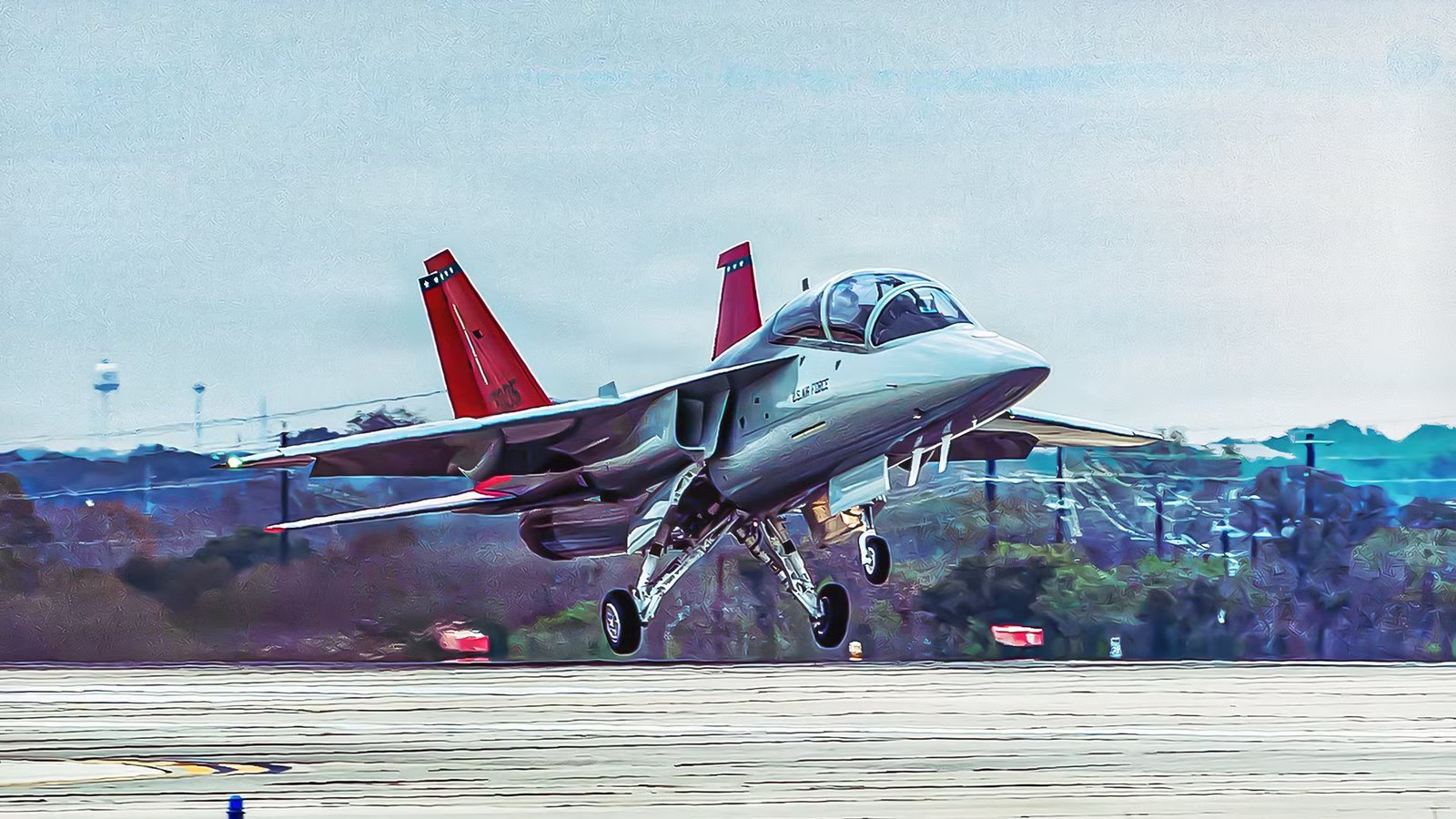
The United States Air Force (USAF) has needed a new trainer aircraft for well over a decade, as its current trainer, the Northrop T-38 Talon, has been in service for more than sixty years. While the aircraft has been repeatedly upgraded, it was originally designed to prepare pilots for aircraft such as the Republic F-105 Thunderchief and the McDonnell Douglas F-4 Phantom II. The age of the T-38, combined with its incompatibility to prepare student pilots for the new generation of aircraft, has only heightened the need for a new training aircraft.
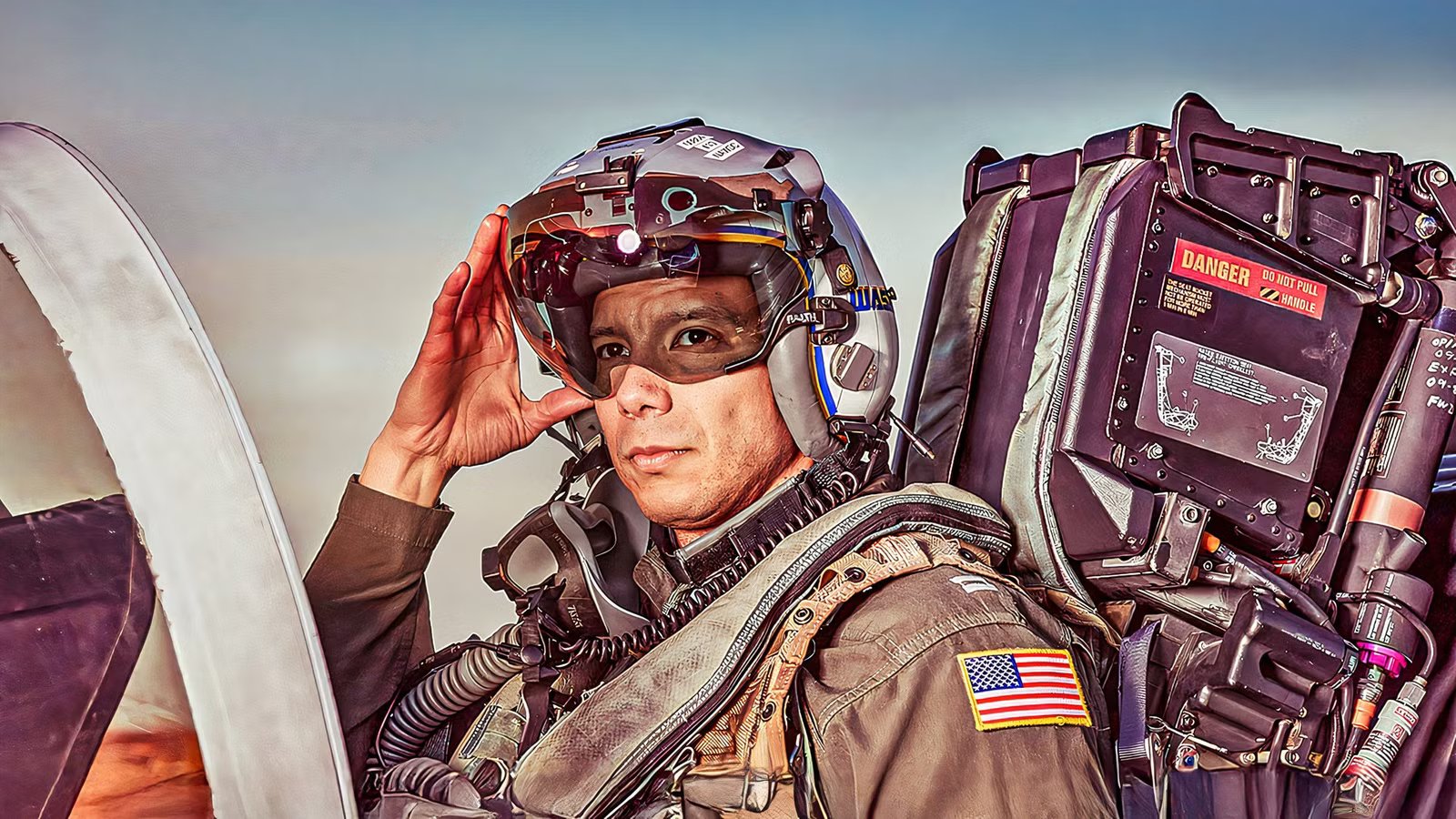
The  Boeing–Saab T-7A Red Hawk is the answer to this challenge. This modern trainer is designed to prepare pilots for fifth-generation aircraft and beyond. The aircraft is software-driven and features an open architecture, enabling rapid upgrades and modernization as technology evolves and the USAF’s requirements continue to change in response to the 21st-century threat environment.
The USAF’s Newest Trainer: Meet The Red Hawk

The Red Hawk is named to honor the legacy of the World War II Tuskegee Airmen. Its distinctive twin red-tailed paint scheme was intended to resemble the North American P-51 Mustangs flown by airmen in aerial campaigns over Europe and North Africa.
The first Air Education and Training Command (AETC) squadron to receive the T-7A is slated to be the 99th Flying Training Squadron, which traces its lineage to the 99th Pursuit Squadron (later renamed the 99th Fighter Squadron), the first unit created for the Tuskegee Airmen. In total, these airmen shot down 112 enemy aircraft across all the units in which they served.
The Red Hawk program has reached Milestone C, which entails approval for Low-Rate Initial Production. This follows the completion of over 500 flight hours and the recording of 9,000 data points. Following this approval, the USAF is now moving forward with a $219 million (£160–£165 million) contract for the first 14 T-7 trainers; Initial Operating Capability is scheduled for summer 2027. This first tranche of aircraft will include spare parts and support equipment in addition to training provided by Boeing personnel.
The entire Red Hawk program is expected to include the manufacture of 351 aircraft and 46 ground-based training simulators. According to program planning, these deliveries will be made to five AETC bases over the next decade. The air bases slated to receive the T-7As are Joint Base San Antonio–Randolph (RDN), Texas; Laughlin AFB, Texas; Sheppard AFB, Texas; Columbus AFB, Mississippi; and Vance AFB, Oklahoma.
T-7A Red Hawk General Characteristics | Related Data |
|---|---|
Primary Function | Advanced jet pilot trainer |
Contractors | A collaboration of Boeing and Saab |
Power Plant | One General Electric F404-GE-103 afterburning turbofan |
Thrust: | 12,000 lb (53.4 kN) (military power) |
Thrust (max) | 17,600–18,000 lb (78.3–80.1 kN) (afterburner) |
Length | 46 ft (14.0 m) |
Height | 13.7 ft (4.18 m) |
Wingspan | 30.6 ft (9.33 m) |
Speed | 550 KCAS (1,019 km/h; 633 mph) / Mach 0.95 |
Ceiling | 31,000 ft (9,450 m) |
Gross Weight | 21,000 lb (9,525 kg) |
Range | 990 nmi (1,833 km; 1,139 mi) |
Armament | None (weapons simulated via embedded training) |
Unit Cost | $19,000,000 (2025 USD) (£15 million) |
Crew | Two, student and instructor |
Date Deployed | December 5, 2025 |
Planned Inventory | Active force, 351; ANG, 0; Reserve, 0 |
Information Cited | Current as of December 2025 |
The Red Hawk features blended wings, a streamlined fuselage optimized for stability during high-G maneuvering, and a high-visibility canopy with a large-area digital display designed to replicate fifth-generation fighter operating conditions. In terms of thrust, the aircraft’s single GE F404 engine reportedly delivers rapid acceleration, shorter takeoff distances, and improved climb rates over legacy trainers such as the Northrop T-38C Talon currently in use.
Additionally, the aircraft is equipped with a fly-by-wire control system that provides precise, highly responsive handling and reconfigurable avionics. This advanced control system is stated to give instructors the ability to tailor the aircraft’s behavior throughout the training program. Examples include limiting G-loads in the initial phases of training and expanding the envelope as the student develops.
Finally, the Red Hawk was engineered with an open-architecture design that enables rapid software and sensor updates. This approach can simplify maintenance operations and help reduce life-cycle costs. The open architecture also facilitates future modernization efforts in areas such as avionics, mission systems, and training capabilities. More broadly, it enables the aircraft to evolve alongside the USAF’s changing mission and training requirements.

Retired US Air Force Colonel Shares His Experience Flying In WW2, Korea & Vietnam
Colonel Richard Heyman (USAF Ret.) had an incredible career as a fighter pilot. Read on and find out the details of his service.
Training Pilots For Fifth-Generation Flight (And Beyond) Requires A New Training Aircraft

The T-38 is a twin-engine, high-altitude, supersonic jet; it attained its first flight in 1959, and more than 1,000 of the aircraft were delivered to the USAF between 1961 and 1972, when production ceased. Over the course of this time, the Air Education and Training Command has been the primary operator of the Talon for its joint specialized undergraduate pilot training. According to the USAF, the T-38 has been used to “…prepare pilots for front-line fighter and bomber aircraft such as the F-15E Strike Eagle, F-15C Eagle, F-16 Fighting Falcon, B-1B Lancer, A-10 Thunderbolt and F-22 Raptor.”
While this Talon has served the USAF admirably and has no doubt trained thousands of pilots, the fleet is aging and has experienced engine issues and spare-part shortages. This is because these aircraft were designed for 7,000 flying hours, yet many have surpassed 20,000 hours. Further, many components —especially for the J85 engines, avionics, and structural parts—are no longer in active production or have limited vendors. These and other issues have been a recurring contributor to maintenance and readiness problems.
Beyond its components, the Talon has a mostly analog cockpit system, which is seen as inadequate for training pilots for the technological advancements prevalent in fifth-generation flight and combat training. To this point, the USAF states that by “…2031, more than 60 percent of the Combat Air Force will be comprised of fifth-generation aircraft, requiring an advanced, capable training platform with capabilities beyond those available with the T-38C.”
The need for a more suitable training platform has been discussed by Brigadier General Matthew Leard, Director of AETC Plans, Program, Requirements, and International Affairs. The general stated that Formal Training Units, such as Luke Air Force Base, are often required to retain graduates to operate advanced digital cockpits.
The Red Hawk will help address this issue by exposing student pilots to a fully digital cockpit environment, similar in concept to that of fifth-generation aircraft like the F-35 Lightning II. Students are required to manage multiple information streams—including flight, navigation, and mission system data—while maintaining control of the aircraft. This builds the habit of prioritizing and filtering information under workload and of interpreting a more integrated, “single picture” view of the battlespace, rather than focusing primarily on basic analog flight instruments as in legacy trainers such as the T-38 Talon.
T-38 Talon: What To Know About The US Air Force & Navy’s Supersonic Jet Trainer
The T-38 Talon is still going strong after 65 years as a trainer for the USAF and USN. We now explore the fun behind this remarkable service record.
The Red Hawk Could Be Configured As A Light Attack Aircraft

While the T-7A is entering service as an unarmed trainer, its advanced digital avionics architecture means it could potentially be configured as a light-attack or interdiction platform, or as a hypothetical F-7 variant. Such a platform would require structural reinforcement, weapons integration, and the addition of combat systems to move beyond its baseline training configuration. If armed, the Red Hawk could be optimized for low-threat air defense patrol and identification missions that do not require a more capable aircraft, such as an F-16 or F-35.
In permissive environments—characterized by limited integrated air defenses and minimal man-portable air defense systems—a hypothetical F-7 light combat variant could provide limited strike capability in support of counterinsurgency and partner-force operations. Such missions are typically conducted against non-peer adversaries, including illicit armed networks and insurgent groups operating in regions characterized by weak state control.
In this context, some partner nations may show interest in a lower-cost, combat-capable derivative of the T-7 platform. In many cases, state militaries conducting such operations face constraints in providing timely and sustained air support to ground forces. An F-7 could therefore offer increased operational reach and limited precision-strike capability, which could enhance the effectiveness of a land-based military operation in contested territory.
A Closer Look At The US Navy A-4 Skyhawk’s Historical Impact
The A-4 Skyhawk was a nimble naval attack jet that changed the shape of air warfare with and left an enduring legacy with the US Navy and Marines.
Training The Future

The Red Hawk is slated to reach initial operational capability in 2027 and enter widespread use within USAF training squadrons by the 2030s. Its introduction across the fleet is expected to help alleviate recurring bottlenecks in the pilot training pipeline, which have at times been constrained by maintenance demands and upgrades within the legacy Talon fleet.
Beyond these capacity improvements, the Red Hawk is intended to better prepare USAF pilots for fifth-generation and next-generation platforms, including the Boeing F-47 and the Northrop Grumman B-21 Raider. The program may also deliver long-term cost savings, as its modular design is intended to facilitate upgrades and potentially extend the service life of the trainer, delaying the need for a replacement aircraft.