dailynewsnblog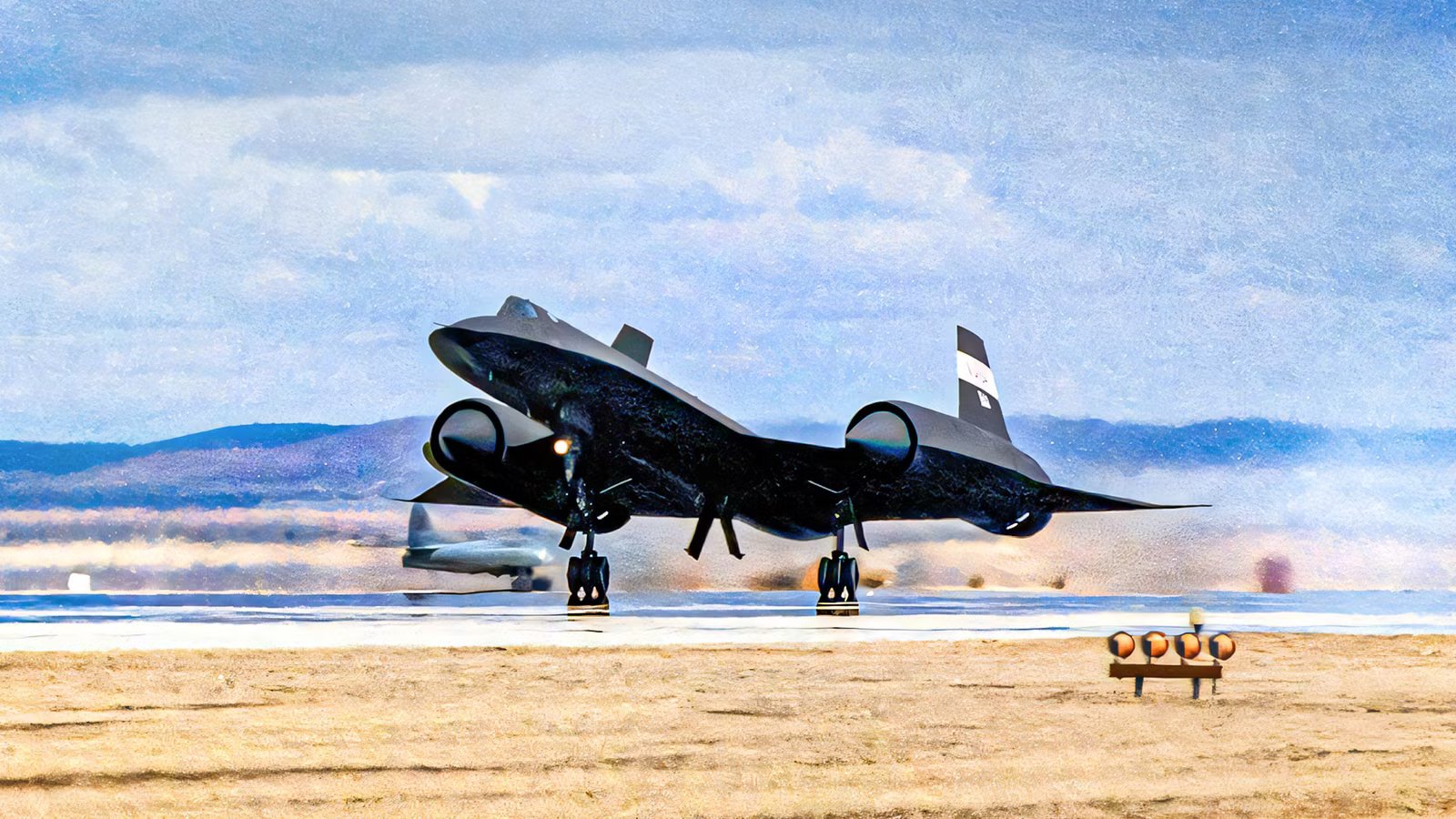
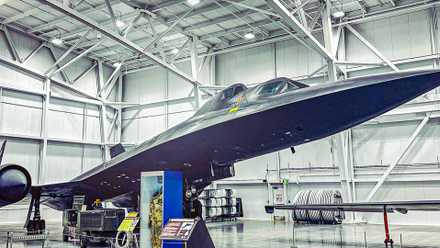
The Lockheed SR-71 Blackbird is one of the most iconic aircraft of the Cold War and a testament to Lockheed Skunk Works engineering of the era. The aircraft is one of the most famous black box projects built in secrecy, but it was also in many ways a bizarre design due to its requirements to solve extreme physical problems. Boom Supersonic says, “It purposely leaked fuel on the ground, had tires filled with nitrogen, and was made from one of the most expensive metals on earth. And, it’s still the world’s fastest plane.”
One of the more interesting aspects of the aircraft was the trade-offs the engineers made in designing the tires. They had to design tires that were able to withstand the extreme requirements of its Mach 3+ supersonic flight and landing, as well as just supporting the aircraft’s weight in normal conditions.
Why The SR-71 Blackbird Was Developed

The late 1940s saw the onset of the Cold War and the worsening of relations between the victorious former WWII allies. The USSR closed itself off by largely banning foreigners from visiting and limiting information going out of the Soviet Union and Warsaw Pact countries in what Winston Churchill famously termed an “iron curtain.” As this was an era before satellites, the US was largely in the dark about what was happening in the USSR.
In some cases, intelligence assessments still relied on wartime German maps and aerial photography of western Soviet territory. In the 1950s, the US developed the slow-flying Lockheed U-2 spy plane to fly at 70,000 feet (21,336 meters) or higher above the USSR and take photos. It was thought that at that altitude the aircraft would fly above interceptor and surface-to-air threats. However, the downing of one in 1960 and again in 1962 by Soviet SAMs proved that assumption wrong.
Lockheed had started work on the SR-71 before the downing as it was aware of Soviet SAM advances, although the interception validated the project and added urgency. Lockheed sought to overcome Soviet air defense by making the SR-71 faster (Mach 3.3), higher (up to 85,000 feet or 25,900 meters), and with a lower Radar Cross-Section (RCS). The SR-71’s primary defense was speed; it would take time for RCS to become the primary stealth defense it is today. The SR-71’s requirements were an enormous engineering challenge for the time.
The Extreme Engineering Of The SR-71’s Tires

Famously, the SR-71 came with silver tires. These were silver in color (not literally made of silver) as they were developed from a rubber compound infused with aluminum powder. This was intended to help the tires withstand the extreme temperatures associated with the aircraft’s high-speed operations. The tires were built by B. F. Goodrich and cost an impressive $2,300 each at the time. Despite their high price tag, the tires were not very durable and required replacement within 20 missions.
Catch what other flight trackers miss
Emergency squawks, holds, NOTAMs — live signals, no signup.
Open tracker
Catch what other flight trackers miss
Emergency squawks, holds, NOTAMs — live signals, no signup.
Open tracker
The tires were a feat of engineering that is still occasionally used for marketing Goodrich tires today. D&D Tyres advertises on its website, “BF Goodrich have proven their skills in making tyres tough enough to conquer any challenge, from numerous Paris-Dakar Rally and World Rally Championship wins to providing tyres for the SR-71 Blackbird stealth jet.” Note that the SR-71 is technically not a stealth jet, although it did have a reduced RCS.
These tires were also filled with 415 psi of nitrogen instead of air (car tires typically have 32 psi). Matthew Burchette of the Museum of Flight explains with Boom Supersonic, “Since the aircraft’s fuselage could reach up to 900 °F at Mach 3.2, regular oxygen in its tires would boil and expand, causing them to rupture and burst like a bomb!” The brunt of the heat was taken by the rear tires while the front tires were cooler.

The SR-71 Blackbird’s Final Flight Set 4 Speed Records In Just 64 Minutes
The final day that the legendary jet streaked through America’s skies.
Engineering Of The SR-71’s Tires

To understand why the SR-71’s tires were poorly suited to sitting still and bearing the aircraft’s weight, it is important to understand how they were constructed. Flying at Mach 3+ produced such kinetic friction that standard rubber tires would have melted or exploded in their wheel wells. The heat came from aerodynamic heating of the aircraft structure, heat transfer into the landing gear bays, and the extreme conditions associated with takeoff and landing.
In order to survive, the rubber was heavily infused with aluminum particles. These gave the tires their distinct metallic silver appearance and also helped the tires to reflect heat from the core rubber. The pure nitrogen gas inside the tires removed oxygen that could have ignited. This gave the tires a higher flash point and helped them to withstand the tremendous heat generated by the aircraft while at a high Mach.
Typical tire pressures (per NASA, etc.) | |
|---|---|
Bicycle (mountain bike) | 15-30 psi |
Car tire | 32 psi |
Cessna 172 (Skyhawk) | 29-45 psi |
Boeing 787 | 200-200 psi |
Space Shuttle | 300-340 psi |
Lockheed SR-71 | 415 psi |
The SR-71 is a fascinating story of engineering. One of the most remarkable aspects of its engineering was its titanium, which made up around 92% of the airframe. At the time, the US lacked enough domestic reserves of rutile ore needed for the titanium, while the Soviet Union was the world’s largest supplier. The result was one of the most famous tales of Cold War espionage by the CIA operating through a network of shell companies to purchase the raw material from the Soviet Union.
Ill-Suited To Sitting Around & Take-offs

The unique silver tires managed to solve the kinetic heat problem, but they posed another problem. The aluminum also severely compromised the rubber’s structural elasticity at ambient room temperatures. The aircraft weighed up to 140,000 lbs (63,502 kg), and the weight of the stationary aircraft pressing down on the tires caused permanent deformation called cold flow. Within a short period of time of sitting still on the tarmac, the tires would develop severe, permanent flat spots.
If this happened, then when the aircraft was rolled down the runway, the intense 415 psi pressure with the structural imbalance could cause the tires to violently delaminate or explode. In order to preserve the tires, maintainers had to constantly jack the aircraft up to relieve the weight from its tires. Alternatively, they would physically roll the aircraft a few feet every few hours to keep the load distributed.
Just sitting still could quickly ruin the structural integrity of the tire carcass, even without the aircraft having flown. The tires were also poorly suited to takeoffs. Colonel Ken Collins, a former A-12 and SR-71 pilot, is quoted by The Aviation Geek Club as saying, “The wear & tear was during takeoff. The extreme pressure was at that point of rotation. That the reason we took off with half fuel load and air-air refueled shortly after takeoff, that reduced the tire stress.”
Landing On The Tires

Paradoxically, landing was less detrimental to the tires. Landings did take a toll on the tires, but the wear was also uniform, predictable, and engineered into the mission profile. It was a very different stress type (frictional tread wear vs structural deformation). The Blackbird landed at around 150–160 knots and used a large drag parachute. That parachute was designed specifically to reduce stress on the tires and brakes.
As the tires were designed to withstand the intense heat of flying at high Mach, they were also able to withstand the ground friction generated by landing at high speeds. The tires were rated for 15 to 20 take-off and landing events, although in practice, it was often fewer. Collins said the tires were changed after ten takeoffs. That said, this is not so bad in and of itself. For example, carrier-based fighter jets can have their tires changed after as few as five to ten cycles.
Air force fighter jets typically have their tires changed after 15 to 20 landings on longer runways. Heavy bomber tires (e.g., B-52, B-1B) may be able to serve in the low hundreds of landings. Commercial aircraft tires (e.g., Boeing 787) are changed after around 400–450 landings for the nose wheel tires and 300-500 for main wheel tires. What was worse is that the SR-71’s tires cost around $2,300 for around ten cycles, when military aircraft tires of the period cost in the hundreds of dollars.
Why The SR-71C ‘The Bastard’ Was The Only Blackbird Never Meant To Fly
The story of the Blackbird family’s black sheep.
How The Tires Helped Doom The Blackbird

The Lockheed SR-71 and its tires arguably highlight a stark divergence between aviation enthusiasts and military planners, especially those connected with logisticians, the budget office, and maintainers. The SR-71 is a marvel of engineering. No manned air-breathing aircraft has since managed the speed (Mach 3.3), and the tale of its tires and titanium reflects the engineering brilliance of the Lockheed engineers.
At the same time, SR-71 was expensive and maintenance-heavy. How well a military system performs is about as important as the logistical and budgetary ability of the Air Force to operate it. Another aspect is that vulnerability and expense may not be as important to a weapon system’s obsolescence as the emergence of alternative systems that can take over its roles and missions. The SR-71 entered service in 1966 and was initially retired in 1989 (permanently in 1998), having spent around 23 years in service.
The Lockheed U-2 entered service in 1956 and remains in service (70 years and counting). The U-2 is comparatively affordable to operate and offers excellent loiter time over low-risk areas. Meanwhile, the SR-71 was expensive and became less imperative with the demise of the USSR and the growing capability of reconnaissance satellites, alongside other intelligence systems. It’s an exaggeration to say the tires doomed the Blackbird, but they are a reminder that long-lived, successful programs also need to be affordable unless there is no alternative.