dailynewsnblog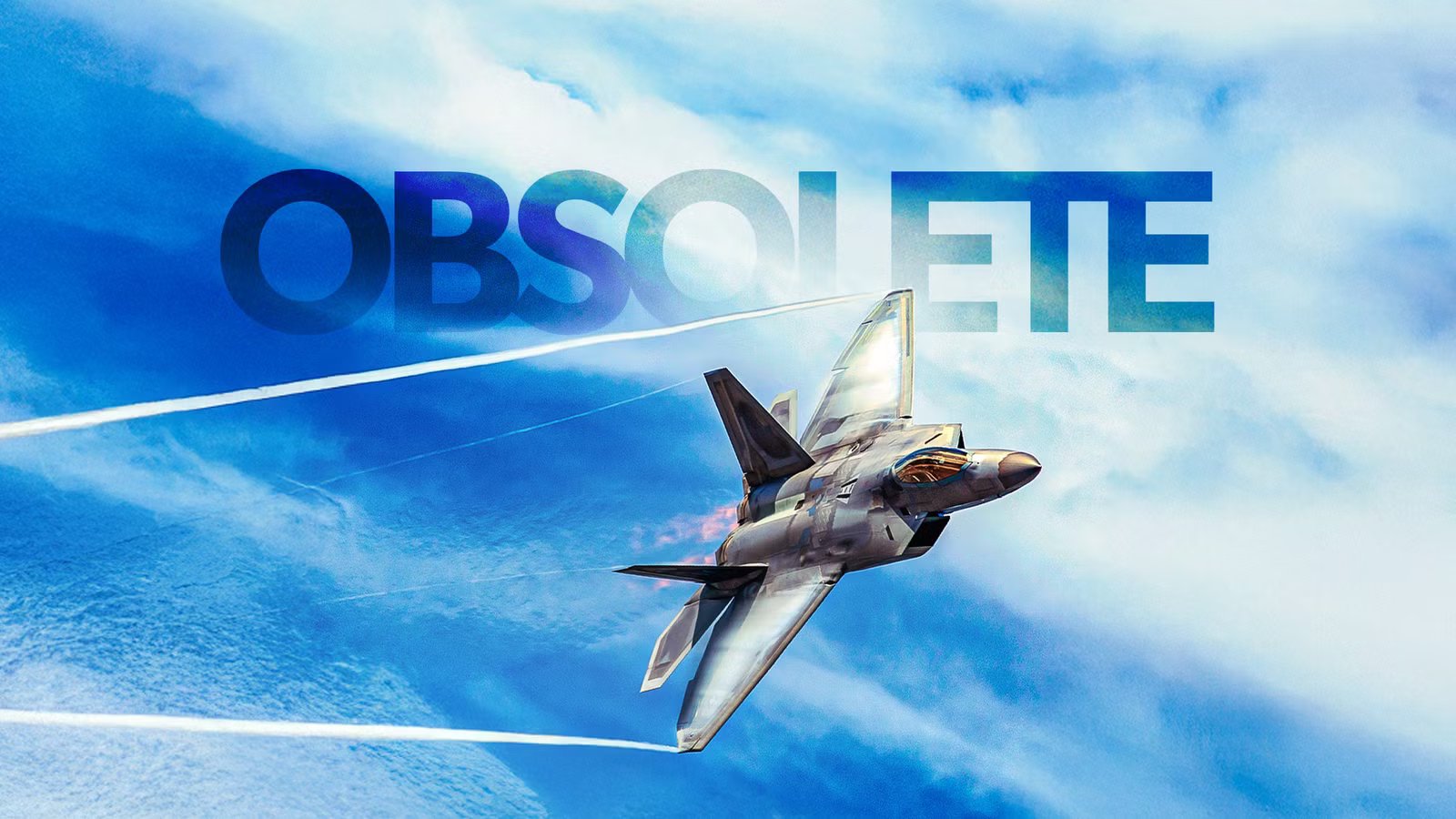
The Lockheed Martin F-22 Raptor and the Northrop B-2 Spirit are widely considered the world’s most advanced air dominance fighters and strategic bombers, respectively. They are leagues ahead of their 4th-generation fighter and early Cold War bomber counterparts. And yet, these high-end aircraft are set to become obsolete first. This may seem counterintuitive at first, but it makes sense.
It’s not only combat jets, but another example can be seen in how the ancient Lockheed U-2 spy plane outlived the SR-71 Blackbird, even though the latter was an unparalleled marvel of engineering. Here is why older, simpler, and cheaper equipment like 4th-generation fighter jets can remain relevant for longer than their more advanced 5th-generation successors.
Cutting Edge Is A Precarious Position

Equipment like the F-22 and B-2 is designed to be at the cutting edge. This is a fundamentally precarious position, as technology and tactics are dynamic. The point of spending vast sums on these no-expenses-spared aircraft is to have an unfair advantage over adversaries. Once those advantages erode, the justification for having them likewise erodes. These aircraft are expensive, and the Air Force can’t afford to have many of them; they are a luxury that comes at the expense of affordability and mass.
Critically, the F-22 was unable to fully replace the F-15, and the B-2 was unable to fully replace the B-1B/B-52 for multiple reasons. One factor is that they were expensive, and the threat environment collapsed with the end of the Cold War, meaning the justification for cutting-edge platforms diminished. But critically, neither aircraft could completely fill the roles and match the operating costs of the older platforms.
Unquestionably, the F-22 is the better air superiority fighter, but the F-15 strike fighter is more than an air superiority fighter. The Eagle also boasts a massive payload and can bring a large number of bombs/missiles to a fight. The F-22 is optimized primarily for air dominance rather than large-volume strike missions. It is not quite a ‘one-trick pony’ as it is a multirole aircraft able to carry JDAMs, etc., but other aircraft can do a better job in some of these roles. Something similar has happened with the B-2; it couldn’t match the payloads the B-52 and B-1 can carry. The Air Force needs a stealthy penetration bomber for high-value targets, but it also needs ‘dumb delivery trucks’ to haul masses of bombs.

From 76 F-22 Raptors To 200 Next-Gen Fighters: How Much Larger America’s Air Superiority Fleet Could Get
A closer look at the future of air power in the US Armed Forces.
Replacements Are A Death Knell

Much is said about the expense of maintaining the USAF’s fleet of F-22s and B-2s, but in a world where there are no alternatives, this conversation is mostly a ‘just so’ debate. The USAF requires the most advanced fighters and bombers; if these are the most advanced and there are no other aircraft on offer, then the service has no other choice but to bite the bullet and foot the bill.
However, this all changes the moment a successor is developed. Assuming the F-47 and B-21 are successful programs, their introduction essentially renders the F-22 and B-21 obsolete overnight from a procurement perspective. It doesn’t matter how the F-22 compares with the J-20 or Su-57; what is decisive is that the F-47 will comprehensively beat the F-22 at its own game. The F-22 then becomes an expensive legacy aircraft that’s limiting the Air Force’s budget and ability to purchase more advanced F-47s.
|
F-22 Raptor |
Northrop B-2 Spirit |
|
|---|---|---|
|
Role |
Air dominance |
Stealth strategic bombing |
|
Number in service |
185 (inc. 32 training Block 20s) |
19 |
|
Entered service |
2005 |
1997 |
|
Planned replacement |
Boeing F-47 |
Northrop Grumman B-21 Raider |
|
Planned retirement date |
2040s |
Mid/late 2030s/2040s |
The same is true of the B-2. In a world where the B-2 is the only stealth bomber, it looks indispensable. In a world where Northrop Grumman is offering the far more survivable, dramatically more stealthy, comprehensively more capable, and cheaper B-21, keeping the B-2 becomes a hindrance. At the end of the day, the Chinese Xi’an H-20 and new air defense systems matter, but are not decisive; it’s the B-21 maturing and becoming available in high enough numbers that’s decisive.
Replacing The F-22 & B-2

Whereas the F-22 and B-2 could only fill some of the roles of the aircraft they were designed to replace, the F-47 and B-21 are designed to fill all of their roles and more. Not only will the F-47 be an air dominance fighter, but it will have a longer range, better stealth, and be designed from the ground up as a networked command center with loyal wingman drones (CCAs). The story of the B-21 vs the B-2 is similar.
But while these new aircraft can replace the F-22 and B-2, they run into the same problems that those aircraft did when replacing previous-generation aircraft. The Air Force still needs a missile/bomb truck, and so it plans to keep the B-52 fleet flying until around 2060, alongside the B-21. Note that keeping the B-1B fleet in service for too long is not an option, as those airframes are worn out after decades of low-level flying.
Retirement for the F-22 (and B-2s) is not immediate; it is tied primarily to the maturation and production volume of the replacement aircraft. The F-22s are receiving the mid-life upgrades that will keep them relevant into the 2040s. At the same time, the Pentagon is considering doubling the number of F-15EXs it plans to purchase to 267 examples, most of which are to be delivered in the 2030s. Put another way, the Air Force foresees flying F-15s alongside its F-47s through the 2050s and 2060s, long after the expected F-22 retirement.
Why Does The US Air Force Still Rely On The B-52?
The B-52 stays relevant thanks to its low operating costs, its plentiful remaining flight hours, and the ability to use stand-off munitions.
Tale Of The U-2 & SR-71

The SR-71 spy plane was built as a generational leap over the 1950s-era Lockheed U-2. The U-2 is subsonic and proved vulnerable almost straight out of the gate, with one downed by Soviet air defense in 1960 and another in 1962. The SR-71 flew at Mach 3+ (approx. 3,700 km/h) and outran enemy air defense.
And yet, the SR-71 was initially retired in 1989 (before the collapse of the USSR), before being permanently retired in 1998. The Lockheed U-2 remained in production until 1989 and remains in service today, although it may retire in Fiscal 2027. The SR-71 may have been an engineering wonder, but it was also expensive.
The development of satellites and other ISR assets removed some of the imperative for the SR-71 to operate over contested airspace. On the other hand, the Lockheed U-2 remained comparatively cheap and boasted a very high endurance. A huge amount of ISR work is not over contested airspace, but is peacetime information-gathering over maritime regions, the southern border, and over militants with limited air defense capabilities. For these tasks, cheap + high endurance can be a winning formula.
The Issue Of Shut Production Lines

Another important aspect is the fact that the production lines for the F-22 and B-2 are cold. This is part of the negative feedback loop that can affect the cutting-edge aircraft. Because they were cutting-edge, they were only procured in minimal numbers, with the F-22’s initial planned procurement cut from 750 to 187, and the B-2 sliced from 145 to 21. This was compounded by the change in threat environment caused by the USSR’s collapse and subsequent US military budget reductions.
Also, because they were the most advanced aircraft in the world, the US wanted to keep these Aces close to its chest and banned exports of the F-22. The B-2 was never a realistic export candidate due to cost, basing, secrecy, mission role, and strategic sensitivity. This led to production lines being shut down, which in turn limited block upgrades to retrofits. As the F-35 remains in production, it is working up to its Block 4 upgrade some 10 years after entering service.
The F-35’s ongoing factory-built block upgrades are not a luxury the F-22 and B-2 ever had. As the production lines shut down, factory-built block upgrades never came. It also makes it impractical for the USAF to order more F-22s and B-2s, as, given the cost of retooling, upgrading the designs, reestablishing the supply chains, and putting them back into production, building a new aircraft makes more sense. By contrast, the F-15’s production line remained open, allowing Boeing to offer the F-15EX upgrade.
Many Missions Can Be Filled With Less Advanced Aircraft

To express in a car analogy, a racecar able to win the race last year may not be able to win the race the next year. It may be prohibitively expensive to maintain the older racecar when only the new racecar will be used to win the races. At the same time, the transport truck for carrying the racecar may be fine for many years. A weakness in this analogy is that aircraft can typically be upgraded.
Many USAF missions can still be performed by non-cutting-edge aircraft. Aircraft used for national air defense and patrols don’t need to be stealthy or particularly advanced. Tanker aircraft operating away from contested airspace don’t need to be survivable. For example, the US KC-46s are more survivable closer to contested airspace, while the proposed NGAS would be much more survivable. But the older KC-135 is fine for most refueling operations during exercises, home use, and for repositioning assets around the world.
Going back to air patrols and interceptions, half of the point is to be seen, making stealth rather redundant (depending on the type of interception). Even if a firefight were to break out during an interception, it would likely be within visual range. This would negate many of the advantages that cutting-edge fighter jets are built for, such as relying on beyond-visual-range engagements and “first look, first shoot” doctrines.