dailynewsnblog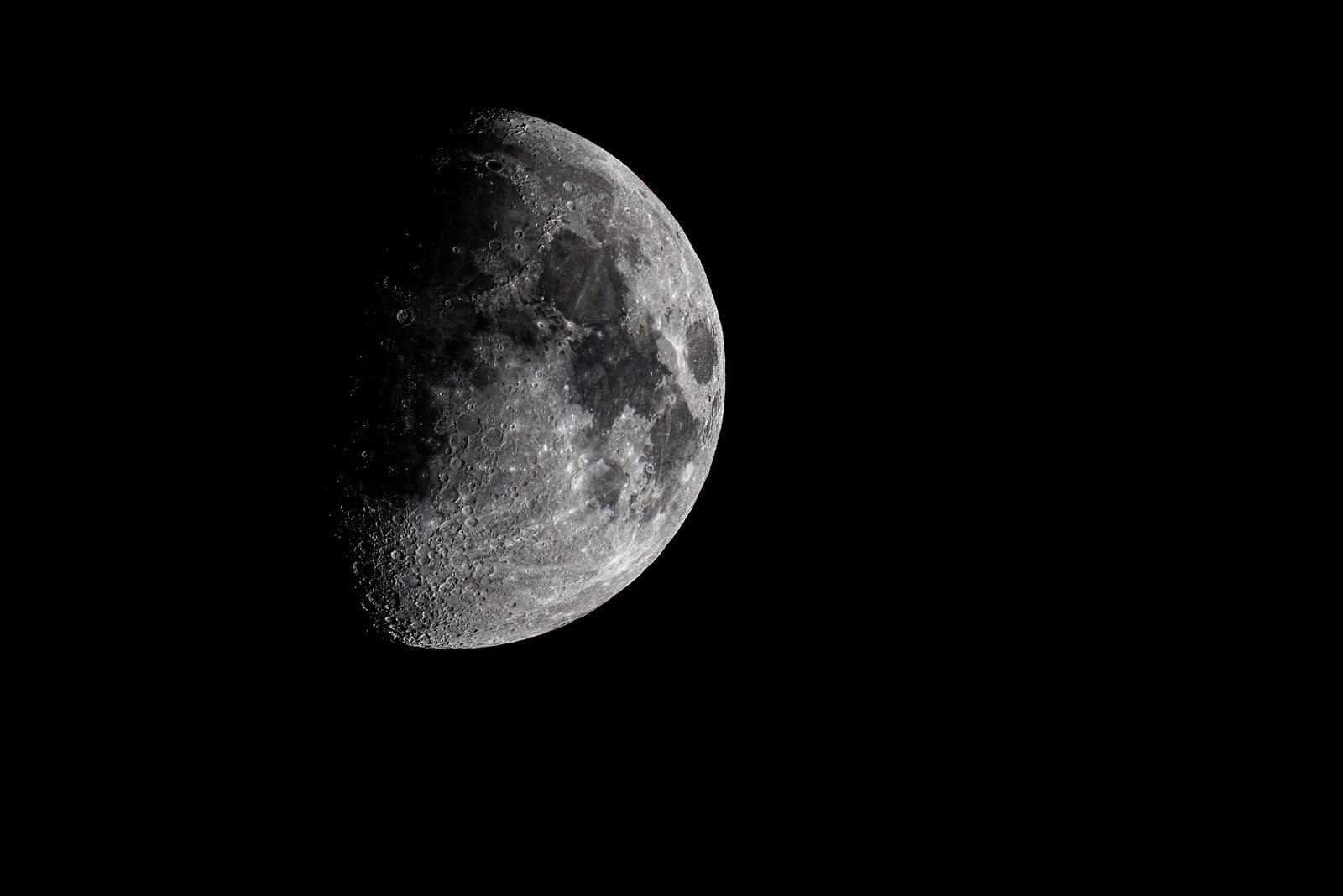
For $3,495, you can send your pet’s ashes to the moon.
Celestis calls itself “the most compelling pet memorial service on or off the planet,” allowing customers to send a “symbolic portion” of their pet’s ashes to live forever on the lunar surface. (Prices are the same for human remains, Celestis says.) It’s part of a growing wave of companies looking to capitalize on the regulatory gray area that the moon inhabits.
A Japanese beverage company sent up a payload that looked like one of its Pocari Sweat energy drinks in 2014. Artist Jeff Koons sent up 125 mini-sculptures in 2024; each one corresponded to an NFT that collectors could purchase back on Earth. One man has even raised $227,000 to put a giant cross on the moon. All told, humans have left nearly 500,000 pounds of stuff on the moon’s surface to date, most of which consists of government-sent lunar landers, surveyors and other dead spacecraft.
This explosion of commercial lunar activity is technically legal, says Steve Mirmina, a professor of space law at Georgetown University and former NASA attorney.
“I searched and searched the law, and unfortunately, there’s no law against launching race cars,” he said, referring to Elon Musk’s launching of a Tesla Roadster in 2018. “We don’t have a government agency with the legal authority to regulate what happens on the moon.”
Existing US law doesn’t sufficiently regulate what we actually send to the lunar surface, Mirmina argues in Lawful but Awful: U.S. Regulation of Commercial Activities on the Lunar Surface, published Sept. 19 in Air and Space Law. Without a more sustainable legal framework, we risk turning the moon into “Earth’s junk drawer.”
Who regulates the moon?
To date, 118 countries are parties to the Outer Space Treaty, which was originally enacted in 1967 during the height of the Cold War. It stipulates that space is free for use by all countries, and that they have a duty to avoid harmful contamination in space.
The 2020 Artemis Accords further enshrined norms of space sustainability into international law. While not legally binding, it constitutes “soft law” norms that shape best practices in space.
Countries are left to enforce compliance on the private space companies within their borders. In the US, the Federal Aviation Administration governs rocket launches, and NASA’s Commercial Lunar Payload Services program partners with American companies to deliver payloads to the moon. But Congress hasn’t given any one agency the authority to regulate what private companies are actually putting on those payloads.
“It’s not very useful that they can regulate launch if they can’t regulate what happens after the rocket’s in space,” said Mirmina. “Basically, NASA, the FAA, even the State Department – they’re all kind of pointing at each other, hoping somebody did something. And then nobody had the legal authority to do anything.”
Real-world costs of unchecked commercialization
No one wants to gaze up at the night sky and see an energy drink advertisement. None of this activity has affected our view of the moon so far, and most of it falls into the “annoying” category more than the “truly reprehensible.” But Mirmina worries that there’s no legal safeguard in place to halt some truly awful conduct.
What’s happening on the moon right now has already stirred outrage from a number of different groups. Navajo Nation President Buu Nygren wrote a letter to NASA in 2023 asking the agency to stop sending human remains to the moon.
“It is crucial to emphasize that the Moon holds a sacred position in many Indigenous cultures, including ours,” Nygren wrote. “The act of depositing human remains and other materials, which could be perceived as discards in any other location, on the moon is tantamount to desecration of this sacred space.”
There’s also the question of how to be good caretakers for future generations. Moon landings produce something called “plume–surface interactions,” in which exhaust from descending spacecraft kicks up rocks and dust at speeds faster than a bullet. When new payloads land with increasing frequency, yesterday’s pet ashes or energy drink advertisements could become tomorrow’s projectiles. Unlike on Earth, the moon has a very thin atmosphere with little erosion, so every item placed on the surface stays “forever,” as Celestis promises customers.
“They become shrapnel for future lunar missions,” Mirmina says. “It’s just a lot easier to prevent it than it’s going to ever be to try to clean it up.”
Stewardship before it’s too late
Everything is hard in space, especially agreeing on the right way to behave in a domain that seems so distant and invulnerable. But it’s also one corner of the government with rare bipartisan approval: Roughly three-quarters of Americans have a favorable opinion of NASA, and seven in 10 say it is essential that the US continue to be a world leader in space, according to the Pew Research Center. Most also support NASA’s goal of sending astronauts back to the moon in 2028.
“Before we’ve really even explored the moon, we’re already tossing up junk to live on there forever,” Mirmina says. “If you care about space or stewardship or the environment, we should preserve it for future explorers and not ruin it before they get there.”

See full bio