dailynewsnblog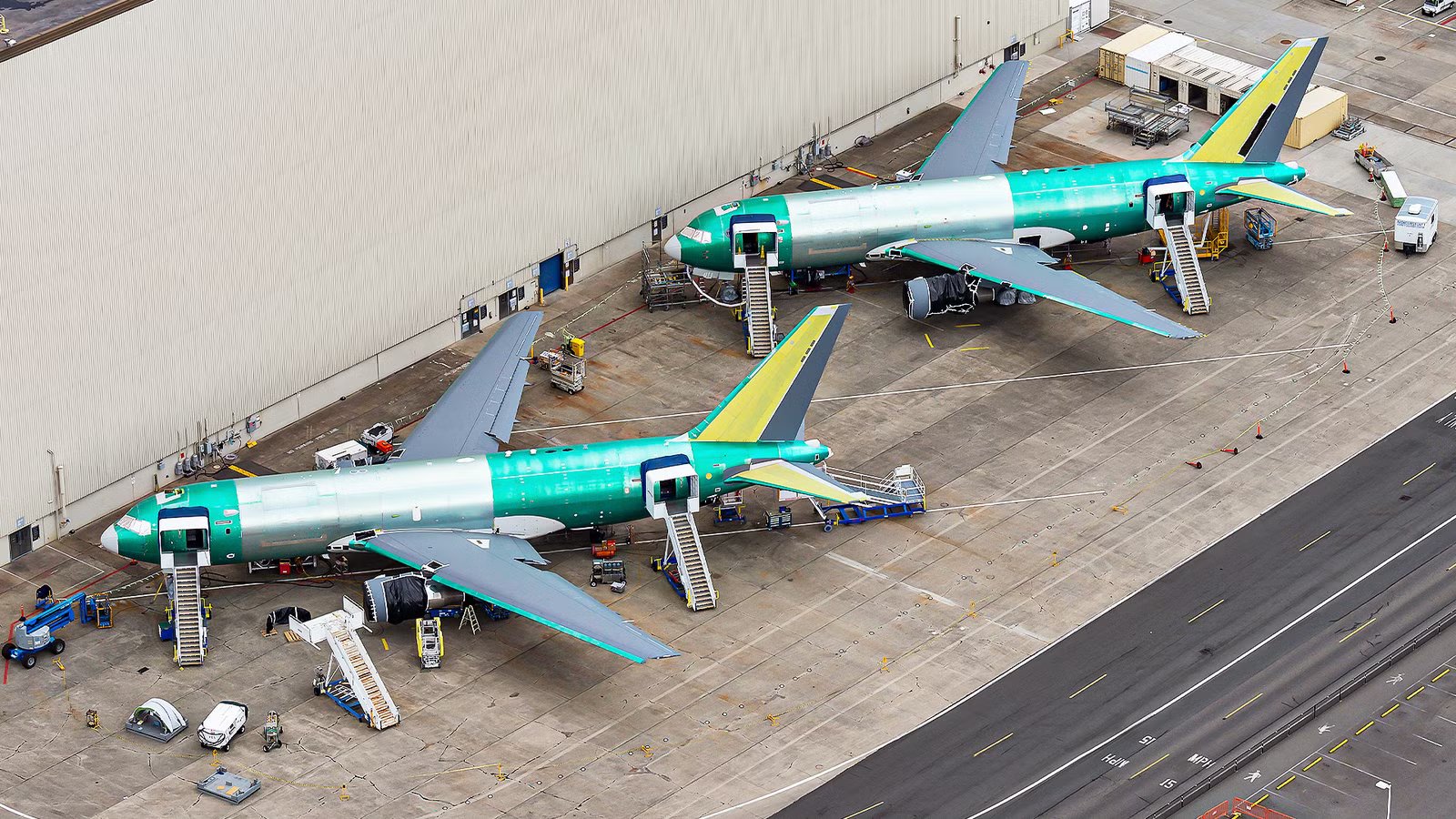
The latest and greatest airborne tanker in the US Air Force, the Boeing KC-46 Pegasus, has had a very troubled entry into service. Although the 767-based aircraft incorporates a number of major technical improvements and a superior airframe as well as power plants over its predecessor, that technology has proven to be plagued with defects. The number of category 1 deficiencies suffered by the small Pegasus fleet has troubled lawmakers and senior officials so much that they paused the retirement of the  Boeing KC-135 Stratotankers it is replacing until there is a full resolution implemented.
Among the numerous innovative features, the core upgrade is how the Pegasus uses cameras to replace the rear-facing compartment where aircraft operate the refueling boom by looking through a window. This system has suffered its own problems, but primarily, the issue is that the boom itself is too stiff for many legacy aircraft to use safely. There have been multiple occasions when a Lockheed Martin F-16 Fighting Falcon or Boeing F-15 Eagle was damaged during combat missions, as Manufacturing Dive wrote.
On top of causing dangerous mishaps for fighter jet pilots, the KC-46 remains uncertified to provide aerial refueling to many of the active aircraft in the US inventory and allied air forces. One of the notable airframes that has compatibility issues is the Republic A-10 Thunderbolt II, which still cannot accept fuel from the Pegasus at all. The Warthog’s retirement has been delayed because of its continued value as proven in the skies over Iran, and many of the other aircraft incompatible with the KC-46 are not going anywhere for decades, forcing Boeing to redesign one of the most major systems on its brand new tanker jet.
Fixing The Pegasus’ Stiff Boom Problem

At least three aircraft have been reported suffering major damage that cost tens of millions of dollars after a failed refueling rendezvous with a KC-46. In 2022, there were two incidents recorded, with a third occurring in 2024, according to NBC News. On legacy tankers like the KC-135, the boom has enough ‘give’ that even light aircraft can easily push it forward to maintain a connection. The KC-46 boom requires significantly more force to compress, which causes problems for lighter or slower aircraft, specifically the A-10 and F-16.
Investigations in 2025 found that this stiffness, combined with operator input, can cause ‘nozzle binding,’ where the boom gets physically stuck in the receiver aircraft’s receptacle. In high-profile mishaps, this binding caused the boom to ‘whip’ upward and strike the tanker’s own tail, resulting in millions of dollars in damage. Still, the Air Force accepted its 100th KC-46A in December 2025, and the fleet is on track to reach 179 total aircraft in 2026.
Boeing is currently developing a Boom Telescope Actuator Redesign. This replaces the rigid internal hardware with a more sensitive actuator that allows the boom to retract with less force, making it safe for the entire Air Force fleet, from light fighters to heavy bombers. Although the Pegasus promise is far more capable than the Stratotanker once the boom is fixed, it is currently a losing investment for both the Air Force and its maker. Boeing disclosed a $565 million loss on the KC-46 program in its fourth-quarter 2025 earnings.
Recapitalizing The Tanker Fleet: Modernizing Core Capabilities

In July 2025, the USAF opted to skip a competition for new tanker models and reduce its investment in the stealthy Next-Generation Air-refueling System in favor of buying as many as 75 more KC-46s. Air and Space Forces Magazine reported that the KC-46A Production Extension would help recapitalize the existing KC-135 fleet and improve the new KC-46s as the last three-engine KC-10 Extenders and its oldest KC-135s are retired.
Based on its unaddressed deficiencies with the Pegasus, Congress has enacted a provision limiting KC-46A acquisitions to 183 jets. The oversight committee is making additional procurement a condition of a fully developed plan of corrective actions and milestones to resolve all major deficiencies in the KC-46.
Restrictions on airframe retirements will be enforced by Congress on the USAF to maintain the mandatory fleet minimum of KC-135s if the KC-46s are not available by next year. Lawmakers may be slowing down plans for additional Pegasus tankers, but at the same time, Congress wants to boost the total tanker fleet capacity. The draft 2026 National Defense Authorization Act bill would expand the statutorily required USAF tanker fleet from 466 aircraft to 504 by 2027, according to a report by Flight Global.
“A Pretty Wide Look”: US Air Force Weighs Usage Of Business Jet Aerial Refueling Tankers
The USAF is looking at the bizjet catalog.
1950s Cold War Engineering Beats Boeing’s Latest Tech

It sounds ridiculous on the surface that a 1950s-era warplane based on the very first jet airliner to ever enter commercial service, the 707, could continue to be a superior platform to a decades-newer jet. Yet the design principles that have formed the foundation of the engineering program to develop the two planes are very different.
The KC-135 was intentionally made to be much tougher than the baseline mission required because it was intended to survive the ‘Doomsday’ scenario of a nuclear conflict and continue fighting alongside other US and Allied aircraft even as nuclear weapons detonated around the world. The KC-46, on the other hand, is designed for efficiency and flexibility more than ruggedness or survivability.
Jack Flynt, a retired USAF KC-135 pilot, was interviewed by Boeing on how the Pegasus has improved the AR mission. He showed strong support for the plane despite its troubled debut, saying:
“We’re making leaps and bounds with the KC-46A… The tanker enables so many of the other missions to do their job. There is no other airframe out there where you get to affect so many lives at once.”
The doctrinal difference between the two eras of Air Force strategy is based on the premise that tankers will be far removed from the range of enemy weapons in a 21st-century or future conflict. Instead, the Air Force wants these planes to be cheaper to operate and easier to maintain while also serving a much broader range of missions that includes expanded cargo and passenger transport.
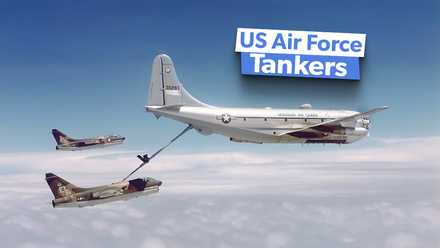
From KC-97 To KC-46: A Brief History Of US Air Force Tankers
The first tanker was propeller-driven and today they are based on airliners (the Boeing 707 and 767), but this is soon set to change.
Head-To-Head: How The Top Tankers Stack Up

While the KC-135 was primarily built to move fuel, the KC-46 was engineered as a multi-mission airframe. It has many more features, plus it is hardened for the future contested battlefield’s contested airspace with better defensive sensors, electronic warfare systems, and electromagnetic shielding. The Pegasus was designed to radically expand the Air Force’s refueling mission from a Cold War flying gas station model to a truly flexible support platform.
Starting with the core AR mission, the Pegasus offers more support, with faster delivery to different aircraft. Unlike the Stratotanker, which often requires landing to change hardware for different types of aircraft, the Pegasus can use its boom and wing-mounted hose-and-drogue pods in the same mission. The KC-46 can also receive fuel in flight from other tankers to extend its own range, a feature the KC-135 lacks.
The table below compares the core specifications of the two airborne tankers.
Specification | KC-46 | KC-135 |
|---|---|---|
Fuel Capacity | 212,299 lb (96,297 kg) | 200,000 pounds (90,719 kilograms) |
Power Plant | 2 x Pratt & Whitney 4062 | 4 x CFM International CFM-56 turbofan engines |
Thrust | 62,000 lb thrust per High-Bypass engine (sea-level standard day) | 21,634 lb each engine |
Maximum Cargo Capacity | 65,000 lb (29,484 kg), 58 passengers | 83,000 pounds (37,648 kilograms), 37 passengers |
The Pegasus nearly doubles the personnel capacity, carrying up to 114 passengers. It can carry three times more cargo pallets than the KC-135, or 18 versus 6. It can handle 30% more medical patients and be converted for aeromedical evacuation in just two hours, compared to five hours.
US Air Force May Order More KC-46s, Scrap Stealth Tanker, According To Budget
The NGAS is out and the Pegasus is in.
Remote Vision System: A 21st Century Solution

For over 60 years, KC-135 boom operators have had to lie on their stomachs and look through a small rear window to guide the refueling boom. In the KC-46, the crew sits in a modern cockpit using a Remote Vision System with 3D panoramic views. The new system uses a suite of cameras and sensors to create an immersive, digital experience for the boom operator.
Cameras on the bottom of the aircraft provide a real-time 185-degree panoramic view, allowing the operator to see multiple aircraft approaching simultaneously. Operators also wear 3D glasses and look at a large 24-inch 3D display that provides depth perception similar to looking out a real window.
Infrared sensors allow the KC-46 to refuel aircraft in pitch-black conditions as well. This offers a major tactical advantage for stealth missions. The USAF is rolling out a series of enhancements over the next year to refine the performance of RVS. With the growing fleet of 5th-Gen fighters and future 6th-Gen fighters and bombers, as well as uncrewed drones, RVS will be a critical system to keep the USAF two steps ahead of even the most advanced adversaries.
While the concept is revolutionary, the first version faced several Category 1 deficiencies that the Air Force and Boeing are currently fixing with RVS 2.0 improvements. Video quality was degraded in harsh sunlight, and depth perception was distorted in some scenarios. The 2.0 upgrade brings 4K Ultra-HD video feeds with refined geometric calculations that use LiDAR lasers to measure distance.