dailynewsnblog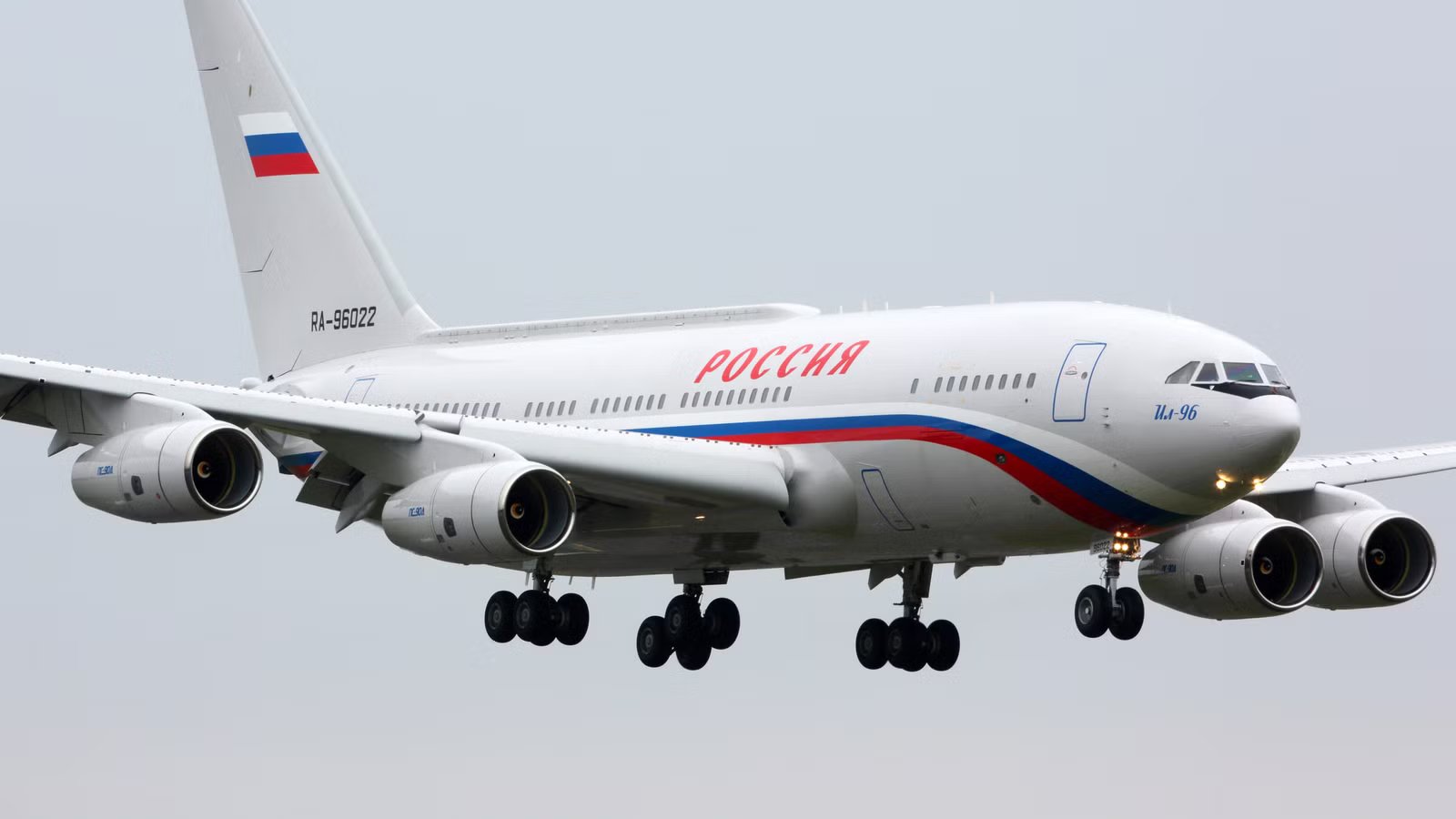
Due to international sanctions on Russia in the wake of its invasion of Ukraine in 2022, a few old Soviet/Russian airliners are currently undergoing a sort of revival. In 2022, it appeared that not only would the Ilyushin Il-96 remain in commercial passenger service with Cuba’s Cubana de Aviación, but that it would return to commercial Russian service.
Fast-forward to today, and the Il-96 upgrade program is going backwards, and no units remain operational with Cubana even after the airline refurbished one and returned it to service in 2025. In this article, we will examine the pre-2022 and post-2022 attempted revivals of Russia’s only widebody airliner, and why these programs have failed to make the airliner attractive even to airlines unable to purchase new Airbus and Boeing widebodies. The Ilyushin Il-96 is an aircraft that refuses to die.
Russia’s Predicament

Russia is now no longer able to import airliners from any country: this includes Chinese COMAC airliners and Brazilian Embraer airliners. Those airliners are full of Western components, most notably the engines, and are under export control by Western countries. However, Russia still has the remains of the legacy aerospace industry it inherited from the Soviet Union. While a large chunk of the Soviet aerospace inheritance was received by Ukraine, the lion’s share was Russia.
In 1992, as the Soviet Union collapsed, its airliners were already considerably behind those of Western designs. Countries like Vietnam stopped purchasing them, as did domestic Russian airlines. Airlines like Aeroflot quickly transitioned to Airbus and Boeing aircraft. This collapsed the Russian commercial aviation industry overnight, but did not completely end it.
Through the 1990s to the 2010s, commercial orders largely ceased, but some government orders by the Russian government for its military and VIP transportation kept a very low level of Il-96 and Tu-214/204 production alive. In the 2010s, Russia looked to revive its commercial airliner industry using imported Western components. By 2022, the regional SuperJet had been in production for years, and the narrowbody MC-21 was nearing introduction.
Dependence On Western Components

But while Russia had retained its ability to design and manufacture commercial aircraft, it had grown dependent on Western components to modernize them. The domestically produced clean-sheet SuperJets and MC-21s were produced with around 60–80% imported components, while the limited number of upgraded Soviet-origin Tu-214s also had around 13% imported Western components.
In 2022, Russia said it would produce over 1,000 commercial aircraft of various descriptions by 2030 and that it would substitute imported Western components with Russian components. This was easier said than done, and the plan has been progressively scaled back and delayed. As of mid-2026, no commercial Russian airliners have been delivered, although a domestic Tu-214 business jet was delivered in early 2026.
In some cases, there were no Russian analogues to imported Western components (such as anti-collision systems). Compounding the issue, Russian engines are less efficient, heavier, more expensive, and Russia has difficulty scaling production. The commercial sector is attempting to accomplish extremely ambitious projects on a short timeline, while competing with the military for finite resources.
Russia has made progress, and in 2026, the turboprop Il-114-400 received its type certificate. However, as an indication of the limitations Russia is working with, it can only operate in weather between 16 °F (−9 °C) and 77 °F (+25 °C) and in dry conditions (no snow or rain).
The Ilyushin Il-96 Never Fully Died

The quad-engined Il-96 is the only commercial widebody Soviet/Russian airliner in operation. The airliner survived the fall of the Soviet Union, but was mostly limited to the Russian government, where a modified version operates as Russia’s answer to the US Air Force One. There are also the grounded examples in Cuba’s Cubana de Aviación inventory.
In 2019, the Russian news outlet Kommersant reported that the upgraded Il-96-400M was about to hit the market but had risen 20% in cost. Indeed, it was “expected to feature a more powerful engine and a stretched fuselage, which should improve economics due to its increased capacity.“
Ilyushin Il-96 operators (per Planespotters.net) | Quantity |
|---|---|
Aviaprom Enterprises | 1 |
Cubana de Aviación | 2 (parked) |
FSB – Federal Security Service (former KGB) | 1 |
Ilyushin | 1 (Il-96-400M testbed) |
Rossiya – Special Flight Detachment | 12 (including Russian ‘Air Force One’) |
Russian Federation Air Force | 1 |
Sky Gates Airlines | 2 (cargo) |
The publication said that six Il-96-400Ms were planned for sale to airlines, although it was unlikely to be of interest to the commercial aviation market. It stated that “the Il-96 is an aircraft with a very poor history, partly due to poor maintenance and low engine reliability.” The first production model of the Il-96-400M was anticipated to be produced at the Voronezh plant in 2023.
However, history had other plans. The BBC noted in 2024 that “the Il-96 was abandoned back in the 1990s because it was already outdated. But now there’s no other choice – Russia has no long-haul projects.” Russia’s initial production plan for 2022 targeted 142 Superjets, 270 Yakovlev MC-21s, 70 Ilyushin Il-114-300s, 70 Tu-214s, and 12 Ilyushin Il-96s. These were to replace imported Airbus, Boeing, and ATR aircraft.
The Plan To Put An Obsolete Il-96 Variant Into Production

The 2022 announcement was partially grounded in feasibility, but was also optimistic about the duration of the conflict with Ukraine and the extent to which the Russian government would be forced to prioritize the military over the commercial sector. It also had propaganda value and messaging value to the effect of saying that Russia would be stronger in the face of Western sanctions. However, Russian engineers were often more clear-eyed. One former aeronautical engineer told the BBC in 2024 that:
“We’re taking an old Soviet design and saying, ‘Let’s start producing it.’ It’s a long-range, four-engine aircraft, but no one’s made one like that for 15 years! And those that did are being written off because they have four engines. And the engines aren’t new either; they’re neither efficient nor durable. They’re unprofitable by definition.“
Making matters worse, the modernized Il-96-400 variant features updated imported Western avionics and a two-person crew. The same components that Russia is sanctioned from purchasing. Consequently, Russia was considering putting the older, even more obsolete, Il-96-300 variant back into production as its components were easier to source within Russia. That variant has a three-person crew, including the flight engineer.
Russia Is Still Planning 14 Il-96s

Russian industry has focused on producing the Tu-214, MC-21, and Superjet (now SJ-100). The Tu-214 is easier to produce as it is an old Soviet design, even though Aeroflot has dropped all orders for it in favor of the MC-21. Russified SJ-100s will also have to replace older Superjets as Russia is struggling to maintain its engines coproduced with France’s Safran. It is not considered economical to re-engine these aircraft.
As of mid-2026, it appears Russia has not canceled its Il-96. Indeed, the program remains alive with the intention of only producing it in very small numbers and with a much less ambitious role than had been originally envisioned in 2022. Multiple official statements over the last two years have shifted its intended role away from being a mass-produced commercial airliner.
At the same time, Russian aviation analysts have consistently noted there is practically no commercial airline demand for the quad-engine PS-90-powered widebody. In April 2026, Russia’s Interfax reported that the plan is now “592 aircraft manufactured by UAC (270 MC-21, 142 SJ-100, 115 Tu-214, 51 Il-114-300, and 14 Il-96-300) and 402 aircraft manufactured by UZGA (158 Osvey, 139 Baikal, and 105 Ladoga).“
This suggests Russia retains a plan to produce 14 obsolete Il-96-300s by 2030. However, these appear earmarked for the government Rossiya Special Flight Squadron and some specialist cargo applications, but not commercial passenger transportation.
A Token Prestige Aircraft

As of mid-2026, no major Russian passenger airlines have plans to purchase new Il-96s for regular commercial passenger service. The aircraft is too old, too inefficient, and only survives as a state project to equip itself with prestigious sovereign transport aircraft. Realistically, the only export potential of such an aircraft would likely be other sanctioned countries like North Korea, Iran, Cuba, and Venezuela.
However, even then, exports may not be likely. For example, Iran has an elaborate system to bust sanctions and acquire cheap retired Western jets like 777s and A340s, while demand from North Korea and Cuba is minimal at best. Put another way, the 2022 sanctions cut Russia off from the global market and from purchasing Airbus and Boeing widebody aircraft, but were still not enough to revive commercial interest in this old aircraft.
Instead, the aircraft appears set to plod along at a very low production rate for high-profile government use. Simple Flying has previously explained why countries like the US, France, Russia, UK, China, Canada, and others seek to use domestic “made in our country” airliners for their national leaders whenever possible.
If the most recent reports are to be believed, then not only has the Il-96 not undergone an unexpected revival, but the Russian commercial aviation crisis has doomed its erstwhile upgraded Il-96-400M variant in favor of the older Il-96-300 variant. Instead of being a symbol of Russia’s power and aerospace independence, it is symbolic of its need for a prestigious government aircraft to maintain the image of great power status.