dailynewsnblog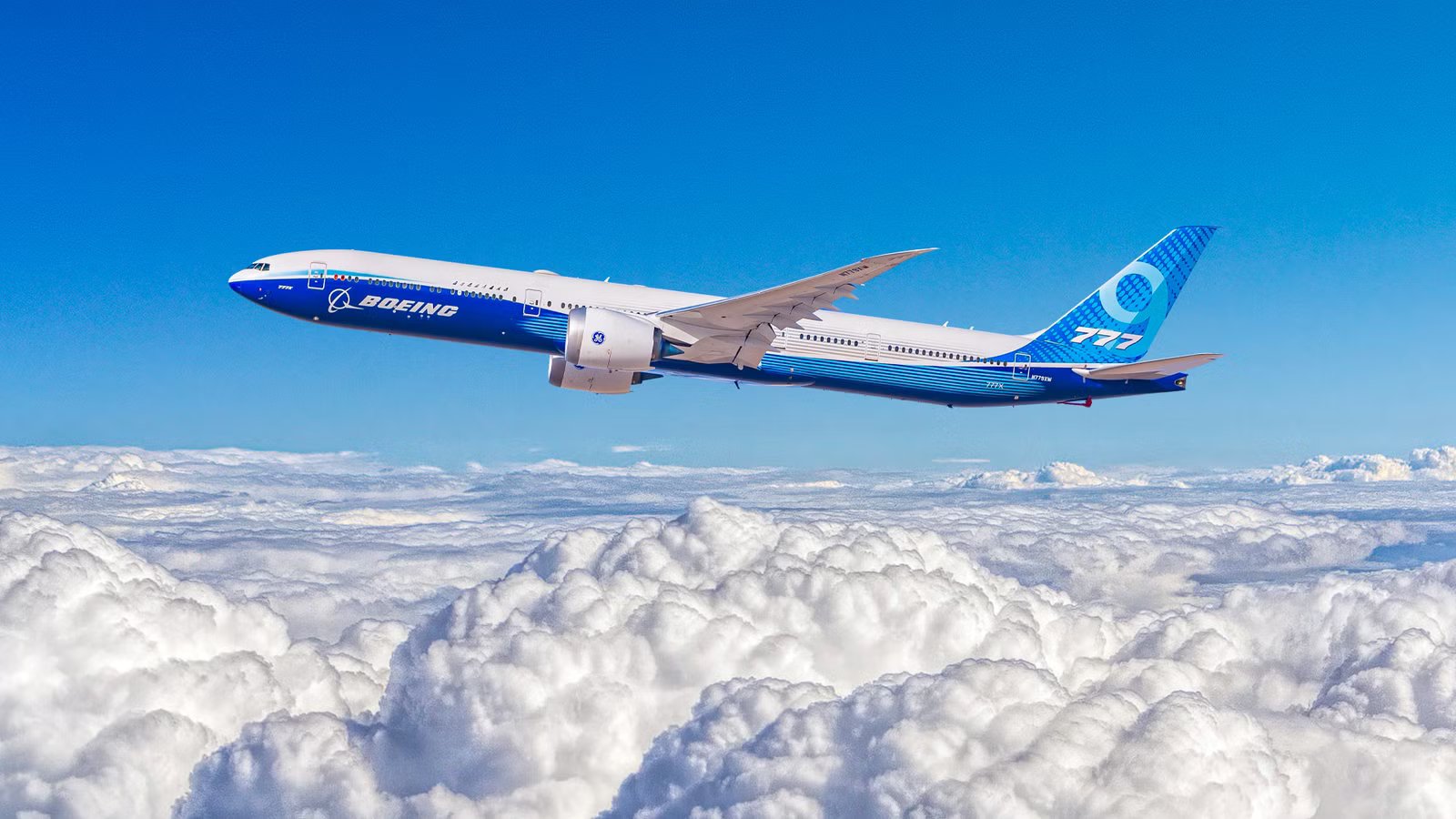
The Boeing 777X is one of the most thorough overhauls of a pre-existing aircraft type in history. With brand-new wings, brand-new engines, and a brand-new interior, the 777X shares surprisingly little with the prior-generation 777, and the plane’s three variants are also longer than the 777 variants that they’re intended to replace.
The passenger variants are mainly centered around succeeding the 777-300ER, as it remains the most popular 777 model. The 777-9 is about nine feet (two-and-a-half meters) longer, while the 777-8 is about ten feet (three meters) shorter. This is a problem, as the 777X isn’t a clear replacement for the 777-300ER.
The 777-9 is more capable and more efficient than the 777-300ER, but its size means that most airlines will install between 350 and 425 seats in the aircraft. Airlines are historically quite disciplined with managing capacity, and the 777-9 is a fundamentally larger aircraft than the 777-300ER. In addition, the 777X faces stiff competition from the Airbus A350.
The Problem With The 777-9’s Size

The 777-300ER is configured by many airlines to seat between 300 and 350 passengers, although there are many that install more seats and many that install fewer seats as well. However, with the 777-9’s added length and revised exit configuration, airlines may find themselves installing another 20 to 50 seats, which is a significant jump in capacity. This isn’t necessarily an issue on its own, but the 777-9’s operating costs are not low enough compared to the 777-300ER that the seats come for free.
Aircraft capacity is only one factor that determines an aircraft’s operating economics, which really comes down to the plane’s costs and revenue potential. This is why the Airbus A330neo and Boeing 787 have been used by many airlines to replace the much smaller Boeing 767, since they essentially burn the same amount of fuel as the 767. This was also the rationale behind why Airbus believed the A380 would sell, although the A380’s economics ended up not being compelling enough.
With the 777-9, the plane’s trip costs appear to be too close to those of the 777-300ER for airlines to easily slot the type in. The 777-9 will only work on routes where carriers are sure to fill the extra seats, and for airlines that genuinely want to add capacity. The 777-300ER received orders from roughly 45 customers, but the 777-9 has only been ordered by 12 customers. In this regard, the Airbus A350-1000, which is smaller and cheaper to operate, is a less risky proposition.
What About The 777-8?

The Boeing 777-8 is targeted to replace the Boeing 777-200LR, but at 232 feet and six inches (70.9 meters) long, it’s far closer in size to the 777-300ER. This, then, would initially appear to solve the capacity issue, since it’s slightly smaller than the 777-300ER, but the plane still has the same operating cost issue. As it’s essentially just a shrink of the 777-9, this variant retains the heavier structure of its larger sibling, and therefore burns almost the same amount of fuel while offering far less revenue potential.
With the 777-8 essentially costing the same to operate as the 777-9 while having fewer seats than the 777-300ER, it’s an unappealing option to replace the 777-300ER. Instead, it only appeals to airlines that require its excellent payload capabilities on ultra-long-haul flights. So far, only Emirates has ordered the type, and development of the 777-8 is currently on hold due to a lack of demand, as Boeing prioritizes the more popular 777-9 and 777-8F.
777 Variant | Fuselage Length | 777 Generation | Wingspan | Engines |
|---|---|---|---|---|
777-200/200LR/777F | 209 feet 1 inch (63.73 meters) | 777-200/200ER/300 | 199 feet 11 inches (60.93 meters) | General Electric GE90 Pratt & Whitney PW4000 Rolls-Royce Trent 800 |
777-8/8F | 232 feet 6 inches (70.87 meters) | 777-200LR/300ER/777F | 212 feet 7 inches (64.8 meters) | General Electric GE90 |
777-300/300ER | 242 feet 4 inches (73.86 meters) | 777X | 235 feet 5 inches (71.8 meters) | General Electric GE9X |
777-9 | 251 feet 9 inches (76.73 meters) |
The 777-8’s size, range, and payload capacity make it an attractive freighter, which is why it received 68 orders, a high figure for a large new-build freighter. To replace the 777-200LR and 777-300ER, however, the Airbus A350 has become the preferred aircraft, as both variants are far cheaper to operate than any 777 variant while having more range than any airliner in production. Against the A350-1000, meanwhile, the 777-9 only shines when airlines specifically desire more capacity.

Here’s How Much More Range The Boeing 777X Has Compared To The 777-300ER
While the 777-300ER has more range than the larger 777-9, the similarly sized 777-8 can fly 1,375 NM further, while carrying a few more passengers.
The Reality Of The 777-300ER Replacement Market

The image above depicts N2352U, a Boeing 777-300ER flown by  United Airlines. United is the world’s second-largest 777 operator, and a major Boeing customer that also operates out of heavily constrained hubs in Newark and San Francisco. However, N2352U, the carrier’s final 777-300ER was delivered in 2020, while F-GSQA, the very first 777-300ER to enter commercial service, was delivered to
  Air France in 2004.
Catch what other flight trackers miss
Emergency squawks, holds, NOTAMs — live signals, no signup.
Open tracker
Catch what other flight trackers miss
Emergency squawks, holds, NOTAMs — live signals, no signup.
Open tracker
While the oldest 777-300ER is roughly 22 years old, many 777-300ERs were delivered to airlines in the 2010s. As such, a lot are still quite young, and while some carriers tend to swap out their planes every ten to 15 years (most notably Emirates and Qatar Airways, the two largest 777X customers), most airlines may fly their widebodies for twice this amount of time. Neither the A350-1000 nor the 777-9 has sold particularly well, with the former having sold 367 units, while the latter has received 521 orders.
Catch what other flight trackers miss
Emergency squawks, holds, NOTAMs — live signals, no signup.
Open tracker
What’s more, most of the 777-9’s orders were at launch, with the type having received fewer than 300 orders over the past ten years, while there are over 700 777-300ERs in service. The A350-1000 holds slightly fewer passengers than the 777-300ER, but it’s also far more fuel efficient.
Some airlines have found a place for the type to directly replace the 777-300ER, such as Japan Airlines, while others have opted for the larger 777-9 in this role, such as All Nippon Airways. Notably, however, 11 out of 12 777-9 customers have also ordered the A350-1000, with most of them opting to use the 777-9 as a flagship plane with a first class cabin while the A350-1000 slots underneath.
Why Boeing Designed The 777X The Way It Did

The 777-300ER was the most successful variant of the 777 family because it offered excellent range, low fuel burn, and was large enough to serve as an effective replacement for the Boeing 747. However, much of the plane’s success came from the performance of the General Electric GE90-115B, which exceeded initial fuel burn expectations. Meanwhile, Airbus redesigned the A350 concept in 2006 to be larger and more capable, rendering the 777 obsolete.
The company also redesigned the A350-1000 in 2011 to add range and payload, further destroying the appeal of the 777-300ER. The first order of business with any major redesign of an aircraft is to add new engines, with the 777X receiving the General Electric GE9X. However, this wouldn’t be enough for the 777, as the 777-300ER’s Achilles’ Heel was that its wing was relatively small for the aircraft’s size and mission profile.
Boeing designed a brand-new carbon-composite wing with folding wingtips, which will significantly improve the plane’s performance at high-altitude cruising, but this still wouldn’t be enough for the 777-9. The 777X still retains a heavy metal fuselage, and Boeing therefore needed to stretch the aircraft to lower per-seat costs.
While the 777-9 is now the largest airliner on sale and may have difficulty in attracting business from new customers, the plane wouldn’t have been competitive otherwise. With Boeing unable to develop a clean-sheet program to rival the A350-1000 at the time, this was the best decision that the manufacturer could have made at the time, and the 777-9 is hardly a flop.

The Airbus A350 Is Known As The World’s Extra Widebody, But Soon It Won’t Be
The Boeing 777X is set to be the widest passenger jet in production, although the A350-1000 appears set to retain the record for maximum exit limit.
Where There’s No Rival To The 777-9

The A350-1000 is incredibly fuel efficient, but it remains slightly smaller than the 777-300ER, while the 777-9 is a significantly larger, more expensive aircraft. Some 777-300ER operators appear to have a need for a plane larger than the A350-1000, but have shied away from the 777-9 while also not committing to the A350-1000 in large numbers. Air France and KLM stand as prime examples, and therefore appear as prime targets for a stretched version of the A350-1000, but Airbus has yet to move forward.
Airbus could probably keep the A350-1000’s wings, engines, and weights while still delivering a capable aircraft, but even a simple stretch would still be expensive. Meanwhile, the market for large widebodies appears to be limited, and the 777-9 has already taken much of this market. The biggest issue with a second stretch of the A350, however, is that while it would be more economical than the 777-9, Boeing could just as easily respond with a further stretch of the 777X.
It’s long been discussed that Airbus is likely to reengine the A350 with the Rolls-Royce UltraFan in the distant future, and this would be a prime opportunity for Airbus to stretch the A350 as well. In the near future, however, such a proposition would be highly risky. As such, it’s unlikely that Airbus will stretch the A350-1000 in its current form unless the manufacturer receives repeated interest from a large number of its customers.