dailynewsnblog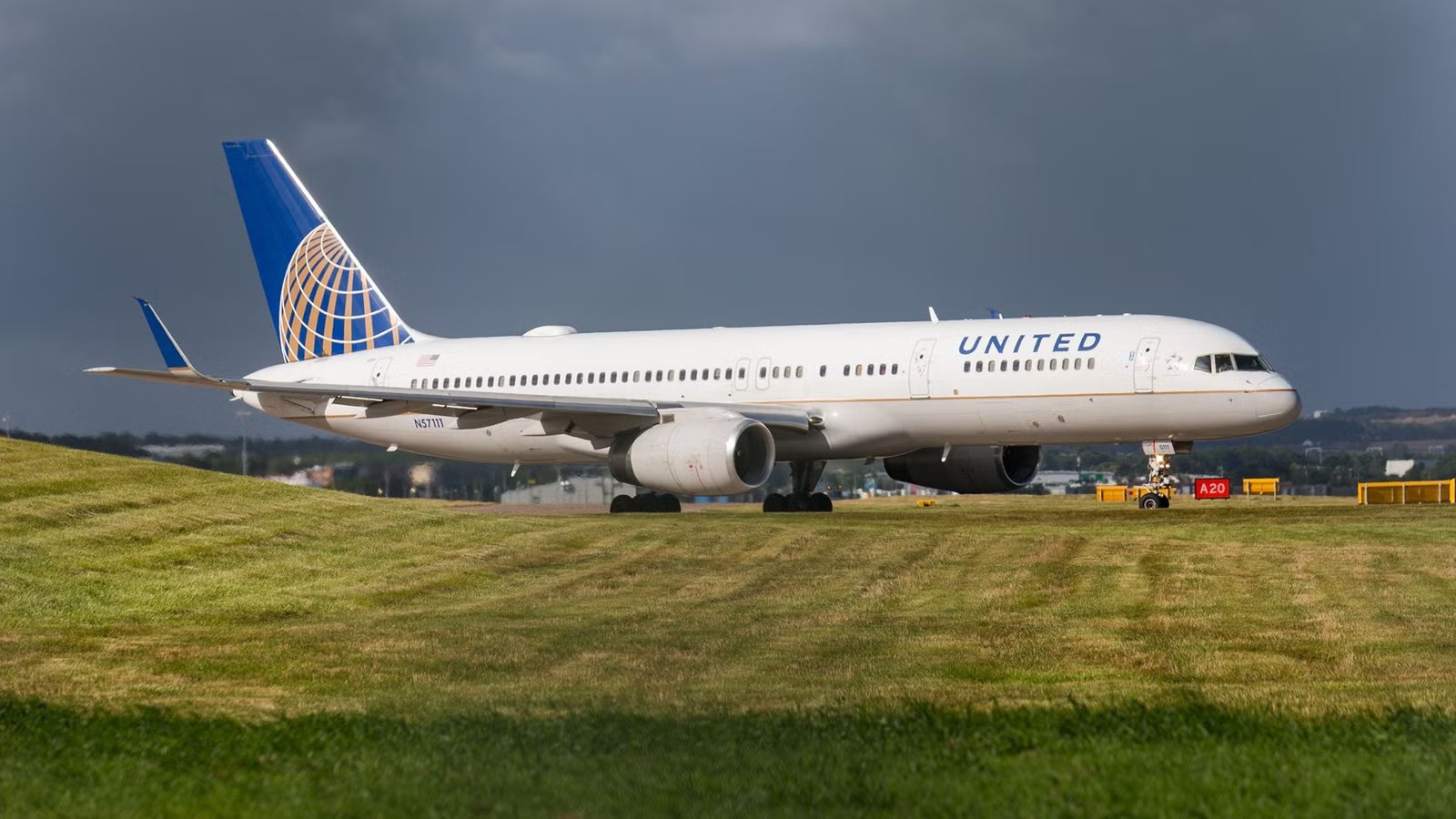
The Boeing 757 stands out as one of the most versatile narrowbody aircraft ever built, with a profile that made it a perfect aircraft for certain transatlantic crossings. Although originally developed as a replacement for the Boeing 727, the 757’s unique combination of range, capacity, and operating economics allowed it to carve out a unique niche unlike any other narrowbody aircraft before it.
Given its smaller size compared to a widebody aircraft like the Boeing 767 or Boeing 777, the 757 opened up routes that otherwise would not have been feasible due to lower demand figures. However, with special twin-engine certification granted just a few years after the 757 was introduced to commercial flying, the 757 quickly filled this gap, opening new opportunities for airlines and helping to redefine what a single-aisle jet could accomplish.
The Boeing 757: A Unique Narrowbody Workhorse

The Boeing 757 emerged from Boeing’s 7N7 development program in the mid-1970s as a replacement for the highly successful, but increasingly inefficient Boeing 727. With rising fuel prices and changing consumer practices across the airline industry, many air carriers demanded a more efficient workhorse aircraft. Boeing’s answer to this problem was a twin-engine narrowbody that retained the 727’s six-abreast cabin while increasing total passenger capacity and delivering lower operating costs.
When the 757 entered service with Eastern Air Lines on January 1, 1983, the aircraft quickly established itself as one of the most versatile commercial airplanes ever built. The 757 featured a unique blend of efficient aerodynamics and extremely powerful engines, allowing it to operate in nearly any environment, even when loaded close to maximum capacity.
By the time production ended in 2004, Boeing had delivered 1,050 examples, split between 913 of the popular Boeing 757-200 variant and 137 of the stretched Boeing 757-300. With capacity for around 200 to 260 passengers depending on the airline and variant, the 757 became a workhorse on many domestic transcontinental routes and even served a crucial role on long-and-thin transatlantic or other long-haul operations. Now, over two decades after production of the 757 ended, the type is quickly fading away, with  Delta Air Linesand
  United Airlines remaining as the only two significant passenger operators left, although both airlines have plans to retire the 757 in the coming years.
The Unique Aerodynamics Of The 757 That Made It Special

One of the most critical parts of the Boeing 757’s design that made the aircraft so versatile was its wing design. To understand the impact, a brief look at what Boeing was trying to accomplish is needed. With the 757 intended to replace the 727 as a workhorse aircraft, the Boeing design team required an airfoil that could generate enough lift to get a heavily loaded aircraft off relatively short runways while still cruising efficiently at high altitudes and speeds to lower operating and fuel costs for airlines. That combination of low-speed and high-speed performance is difficult to achieve in a single design, but was ultimately something Boeing’s engineers were able to accomplish.
The 757 uses a supercritical wing-swept design at 25 degrees, with a five-degree dihedral and a total area of approximately 2,000 square feet (185 sq m) per wing. The supercritical airfoil shape, which features a flat upper surface and a cambered (or slightly upward-arched) aft section, was used to reduce drag at cruise speeds of around Mach 0.80 (610 mph or 980 km/h). Combined with the high sweep angle and relatively high aspect ratio for a narrowbody jet, the 757 is able to burn less fuel per mile than a conventional wing would allow. For low-speed operations, like during takeoff or landing, the 757 features full-span leading-edge slats and double-slotted training-edge flaps, essentially doubling the amount of lift generated at low airspeeds.
For airlines, the aerodynamic advantages of the 757 had direct consequences for the types of routes they could operate. Boeing engineers determined that the 757 could take off with full passenger load using roughly 1,250 feet less runway than the Boeing 727-200 for a flight of the same distance, meaning airlines could now operate to smaller airports that might have shorter runways due to the 757’s improved takeoff performance.
No Regrets: Why United Airlines Has Easily Kept Flying The Boeing 757
United and Delta have kept their aging 757s airworthy for years and years.
The 2 Powerful Engines Giving The 757 Unmatched Flexibility

With the Boeing 757-200 boasting a maximum range of 3,900 nautical miles (7,250 km) and the Boeing 757-300 sitting at 3,500 NM (6,420 km), the 757 family offered a significant amount of range for almost any medium to long-haul mission. However, range is only half of the equation for transatlantic flying. The other half is the ability to climb quickly to efficient cruise altitudes while carrying a heavy fuel load, and to do so in challenging airport environments.
To accomplish this, the Boeing 757 was offered with two different engines, either the Rolls-Royce RB211 series or Pratt & Whitney PW2000 series. Both engines sit in the 36,600 to 43,500-pound-force (163 to 193 kN) thrust class, a size of engine about 1.5 times stronger than what would typically be used on an aircraft sized like the 757.
That surplus of thrust had numerous benefits that helped make the 757 the aircraft it is today. Compared to a Boeing 737-900ER or Airbus A321LR, the 757 could carry about 4,000 more gallons (15,000 liters) while still meeting takeoff performance requirements at constrained airports, ones with either shortened runways, challenging takeoff climb requirements, or high-altitude airports. The extra power meant the 757 could also climb to cruise altitude at faster, steeper angles, and it provided roughly a 45% lower fuel burn rate than the Boeing 727 it replaced.
How ETOPS Certification Made The 757 Even More Valuable

Even with optimized wing aerodynamics and powerful engines, the 757 couldn’t fly transatlantic routes without regulatory approval to operate over water, given the significant distances from diversion airports. When ETOPS (extended-range twin-engine operations performance standards) certification was achieved for the 757, it expanded the aircraft’s mission capabilities even further and allowed it to operate the routes that are now becoming the hardest to replace the aircraft on.
Before 1985, twin-engine aircraft were required to remain within 60 minutes of a diversion airport at all times, making transatlantic crossings very inefficient, if not impossible. In February 1985, however, the FAA updated this rule, granting ETOPS-120 authorization to qualified aircraft, allowing twin-engine planes to fly up to 120 minutes from an alternate airport for the first time, bringing twinjets onto trijet and quadjet-dominated transatlantic routes. After TWA flew the first ETOPS-120 transatlantic service in 1985 with a Boeing 767 from Boston to Paris, the 757 soon followed in April 1986. Rolls-Royce RB211-equipped aircraft received the certification first, followed by Pratt & Whitney-powered airframes.
The timing of ETOPS certification was also critical. During the late 1980s and 1990s, airlines increasingly sought to diversify their route networks and offer more nonstop services. With ETOPS certification, the 757 could now operate routes that didn’t have enough demand for a larger widebody, like the new Boeing 767 or even larger aircraft like the Boeing 727, Boeing 707 or Boeing 747. By the early 2000s, the 757 had become a major player in the transatlantic market, despite being a narrowbody.

The Aircraft Set To Replace The Iconic Boeing 757
There isn’t a single airliner that can replicate all of the Boeing 757’s capabilities, but perhaps the market doesn’t require one.
Why The 757 Was Perfect For “Long & Thin” Routes

The combination of the Boeing 757’s range, payload capability, and strong inflight performance made it perfect for what are known as “long and thin” routes. The 757 quickly carved a niche for itself in the transatlantic market, connecting secondary cities across the Atlantic in a profitable manner. For example, the 757 is a perfect aircraft to operate from major US cities like New York and Boston to destinations like Shannon, Ireland, or Porto, Portugal, which don’t see as much demand as cities like Dublin or Lisbon, respectively.
In 2026, while fewer and fewer 757s are flying than just a few years earlier, the aircraft can still be found operating a substantial number of flights across the pond. The majority of these flights are operated by United Airlines, which bases its 757 transatlantic operations out of Chicago (ORD), Washington DC (IAD), and New York (EWR). Popular pairings include Newark to Porto, Washington to Dublin, Newark to Edinburgh, and Newark to Shannon. Below is a table of the most frequent transatlantic 757 routes in 2026, with all eight routes operated by United.
Origin | Destination | Flights | Available Seats | Average Distance (Miles) |
|---|---|---|---|---|
IAD | DUB | 529 | 93,104 | 3,405 |
EWR | OPO | 407 | 71,632 | 3,340 |
EWR | EDI | 365 | 62,240 | 3,269 |
EWR | DUB | 319 | 56,144 | 3,193 |
IAD | EDI | 280 | 49,280 | 3,478 |
EWR | SNN | 205 | 36,080 | 3,096 |
ORD | EDI | 177 | 31,152 | 3,713 |
EWR | AGP | 146 | 25,696 | 3,677 |
Catch what other flight trackers miss
Emergency squawks, holds, NOTAMs — live signals, no signup.
Open tracker
Catch what other flight trackers miss
Emergency squawks, holds, NOTAMs — live signals, no signup.
Open tracker
Another advantage of the 757 is economics. Operating a 757 on a route with moderate demand allowed airlines to maintain year-round service without the financial risk associated with flying a widebody. As fuel prices fluctuated and passenger demand became increasingly fragmented in the late 20th century and early in the 2000s, the 757’s niche became even more valuable. For many carriers, the aircraft effectively created an entirely new category of transatlantic service, opening routes that previously would not have been viable and bringing nonstop transatlantic connectivity to more cities across the world.
Only The A321XLR Has Slowly Begun To Challenge The 757’s Success

For years after Boeing ended 757 production in 2004, no direct replacement emerged. While newer narrowbody aircraft such as the Boeing 737 Next Generation, including the Boeing 737-800 and Boeing 737-900ER, as well as the Airbus A320 family offered improved efficiency, neither could fully replicate the 757’s combination of range, payload capacity, and takeoff performance.
However, in 2026, the Airbus A321XLR has emerged as the closest replacement for the 757. Designed specifically to serve long-haul narrowbody markets, the A321XLR offers a maximum range of 4,700 nautical miles, significantly exceeding that of most earlier narrowbody aircraft, including the 757. While the capacity of the A321XLR is slightly decreased compared to the 757, it still allows airlines to operate many of the same transatlantic and long-haul routes that once relied on the 757.
Nevertheless, more than two decades after 757 production ceased, airlines are still searching for aircraft capable of filling the same niche the 757 occupied. While modern designs like the A321XLRs have come closer than any previous successor, the 757 remains a benchmark for performance and flexibility. Its unique characteristics helped open many transatlantic crossings that would not have been possible otherwise.


![5,100 Miles: Inside The USA’s 11 New Longest Nonstop Domestic Flights [List & Map]](https://dailynewsnblog.com/wp-content/uploads/2026/09/united-airlines-boeing-767-400er.jpg)