dailynewsnblog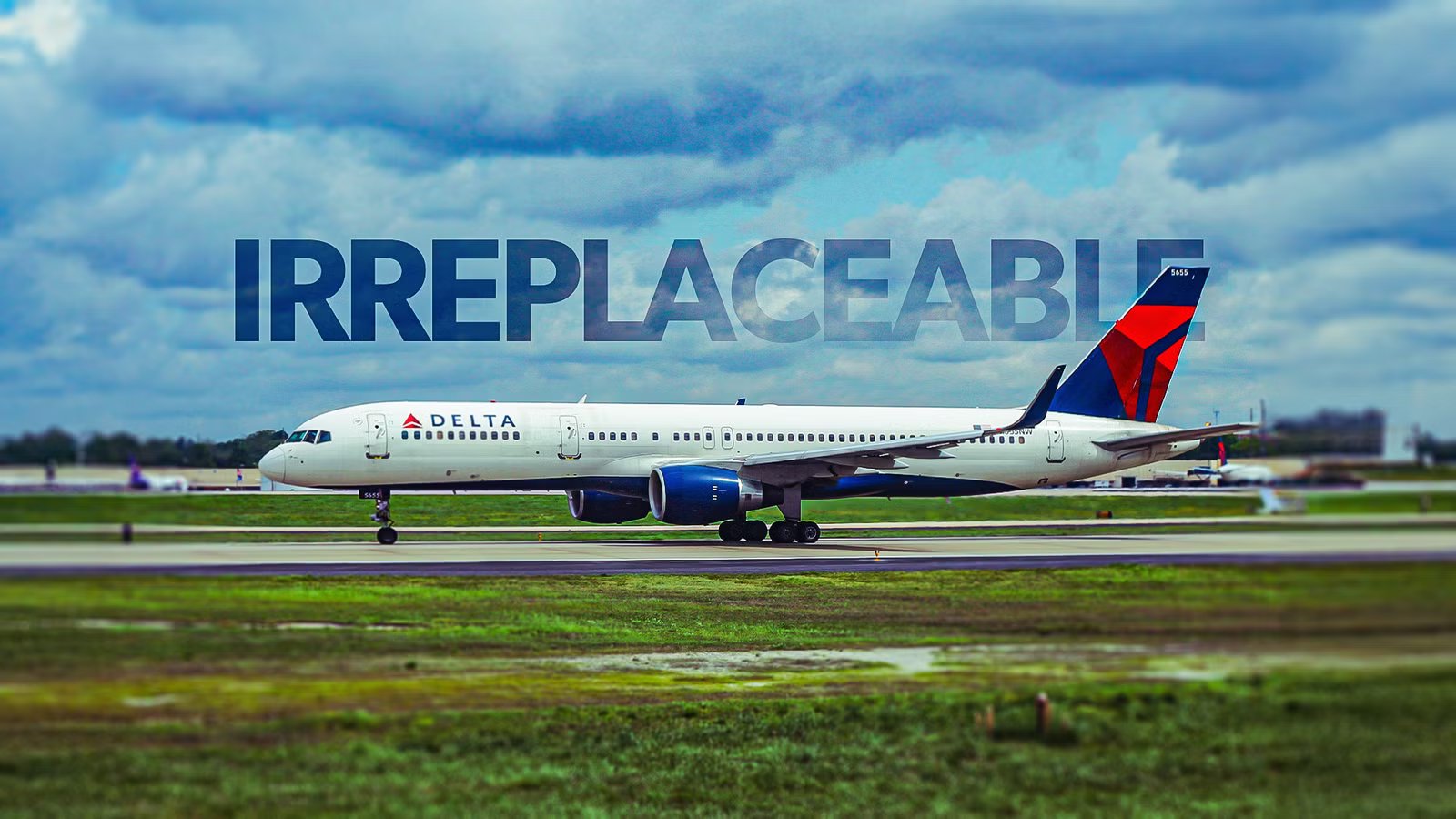
The Boeing 757 is one of the most legendary airliners in history, being beloved by enthusiasts and crews alike for its excellent performance and distinctive engine sound. In its time, the 757 was also exceptionally fuel-efficient, and it has more range than almost any other twin-engine narrowbody to this day.
The 757 was never the most popular airliner when it was on sale, and Boeing ended production back in 2004 due to a lack of orders in favor of concentrating on the 737. Today, however, there still isn’t an aircraft in production that can fully replace it. Boeing offered the 737NG initially, with the 737 MAX serving this role today, but the 737 is too small and lacks the 757’s capability.
Elsewhere, Airbus has long sold the A321, a derivative of its successful A320 family, but this aircraft is also compromised compared to the 757. Of course, the qualities that make an aircraft commercially successful are not necessarily the same as those that make the 757 memorable, and the lack of a true replacement for the 757 indicates that the market might not want one.
What The 757 Was Designed To Do

The 757 debuted in 1983 as the 757-200, which proved by far the most popular model.  Boeing later produced the stretched 757-300, but this debuted much later in response to a decline in sales. Boeing only sold 55 757-300s, and so when discussing a replacement for the aircraft, we’ll be centering on the 757-200 model. In total, Boeing sold just under 1,000 757-200s, and the plane could be equipped with either the Rolls-Royce RB211-535 (the more popular engine choice) or the Pratt & Whitney PW2000.
The 757 was mainly designed to serve two missions. The first was to succeed the 727 as Boeing’s large narrowbody, slotting above the 737. Crucially, one of the 727’s defining attributes during its heyday was excellent short-field performance, and the 757 would need to retain this capability. At the same time, there were also a significant number of first-generation narrowbody quadjets operating longer domestic routes within the US in the early 1980s, and so the 757 was sized up to replace these aircraft.
The 757-200 isn’t much longer than the 727-200, but it has a significantly longer cabin due to its smaller empennage. It has massive wings, while its engines are extraordinarily powerful to improve field performance, and it was designed to use short runways while carrying enough fuel for a transcontinental flight with high payloads. This also gave the aircraft transatlantic range if loaded with fewer passengers, a capability which airlines began to exploit in the 1990s as ETOPS became widespread.
The Early Replacement For The 757

In most layouts, the 757 will seat between 190 and 230 passengers. In the 1990s, Airbus began studying derivatives of its then-new A320-200 medium-size narrowbody, and it stretched the aircraft to create the A321. The original A321-100 was range-limited, as were early A321-200s, but these planes were nearly the same size as the 757. Airlines could fit nearly the same number of passengers onto an A321, an aircraft which had commonality with the A320-200 and was more efficient than the 757.
European airlines quickly adopted the A321, while US Airways was the first US carrier to buy the large Airbus. Apart from the 757-300 (which hardly found any sales), the 757-200 and A321 were the highest-capacity narrowbodies on sale during the 1990s, but the A321 burned less fuel than the 757, making it the more attractive option for airlines needing a short-range high-capacity ‘shuttle’ aircraft. This was how many airlines used 757s, and the A321 began taking market share away from the 757.
US Airlines | Current Transcontinental Narrowbody | Future Transcontinental Narrowbody |
|---|---|---|
American Airlines | Airbus A321-200 | Airbus A321XLR |
Delta Air Lines | Boeing 757-200 | Airbus A321neo |
JetBlue | Airbus A321-200/Airbus A321neo | Airbus A321-200/Airbus A321neo |
United Airlines | Boeing 757-200 | Airbus A321neo |
Later on, Airbus began improving the A321-200 to add range, making it more useful for longer missions such as US transcontinental routes or West Coast-to-Hawaii routes. In 2017, the A321neo entered service, adding range while cutting fuel burn compared to the A321-200, and the aircraft also has a revised exit layout for more useable floor space. Meanwhile, Boeing is working on certifying the 737 MAX 10, which has a higher capacity than prior 737 models while having a range of 3,100 NM (5,740 km).
The 757’s Replacement Over Oceans

While later A321-200s and the A321neo are excellent replacements for the 757 on shorter missions, one of the defining characteristics of the 757 is its transatlantic range. In 2018, Airbus introduced the A321LR, which features a higher gross weight and three auxiliary centre tanks as standard. This gives it a range of roughly 4,000 NM (7,400 km), and the aircraft is already widely used by carriers such as Aer Lingus, Icelandair, and JetBlue for transatlantic flights.
But although the A321LR is transatlantic-capable, it does come with some compromises. As such, Airbus has released the newer A321XLR, which includes another gross weight bump (this time to 101 tons from 97 tons), a new inboard flap design, a stronger structure to support the higher weight, and a new integrated rear centre tank, which has more fuel capacity than three ACTs while taking up less space. With the optional ACT, the A321XLR has a range of 4,700 NM (8,700 km).
Aircraft | Range |
|---|---|
Boeing 737 MAX 10 | 3,100 NM (5,740 km) |
Airbus A321neo | 3,500 NM (6,480 km) |
Boeing 757-200 | 3,915 NM (7,250 km) |
Airbus A321LR | 4,000 NM (7,400 km) |
Airbus A321XLR | 4,700 NM (8,700 km) |
With this, the A321XLR has more range than the 757. It has essentially the same passenger capacity as the large Boeing, while flying farther and burning less fuel. The 757 appears to have been fully replaced, as the A321neo family matches nearly all of its capabilities depending on the model. While the A321XLR is a specialized subvariant of the A321neo designed to operate long flights, it still sips fuel compared to the 757 on any route.
Catch what other flight trackers miss
Emergency squawks, holds, NOTAMs — live signals, no signup.
Open tracker
Catch what other flight trackers miss
Emergency squawks, holds, NOTAMs — live signals, no signup.
Open tracker
Replacing The 757’s Performance

The A321XLR can operate almost any route that the 757 can, but what it lacks is takeoff performance. The same is true of the standard A321neo, as well as the 737 MAX 10. They feature less powerful engines and smaller wings, meaning that they can operate routes like New York to Frankfurt, but they’ll have issues carrying similar payloads out of airfields like John Wayne Airport or St Thomas.
Strikingly, however, there is still no large narrowbody on sale that matches the 757’s short-field capability. Instead, the airliners that match the 757’s performance are the much smaller Airbus A319-100 and Boeing 737-700. They are able to use the same runways and operate the same routes as the 757, but they won’t carry anywhere near the same payload.
However, they were the only solutions for airlines needing short-field performance after the 757 ended production. In the US, American Airlines used to operate the A319-100 out of St Thomas, and United formerly flew the 737-700, while Delta still uses the 757. Airbus and Boeing have both updated these aircraft variants with new engines.
However, the larger A320neo and 737 MAX 8 have improved takeoff performance compared to their predecessors. As such, these planes are often being used out of the same airports where airlines previously flew A319-100s, 737-700s, or 757s. Using St Thomas as an example again, American uses both the A319-100 and 737 MAX 8, whereas United now only schedules the 737 MAX 8.
Why The Market Doesn’t Need A 757 Replacement

The 757 fulfilled a useful role when it was first on sale, and no aircraft in production can match all of its capabilities. However, this isn’t because Boeing and Airbus have failed to address a hole in the market, but rather because there’s no need for a large narrowbody with transatlantic capability that can also take off from challenging airfields.
The large narrowbody market is the only one of these that’s truly large, and the Airbus A321 has been fulfilling the same role with better fuel burn for decades. The A321neo and 737 MAX 10 are more than sufficient today. The transatlantic market has been thoroughly addressed by the A321LR and A321XLR.
After all, they’re the only single-aisle airliners on sale that can operate long-haul routes, and there’s virtually no compromise associated with operating these planes on long-range missions against the 757. Meanwhile, these planes are far more fuel-efficient. But notably, Airbus has sold fewer than 600 A321XLRs (the number of A321LR orders has not been disclosed), showing that it is a niche market.
For short-field performance, the A320neo and 737 MAX 8 are more than sufficient for any airline’s needs, and they fit in with a fleet of A321neos or 737 MAX 10s. As such, while there is no true replacement for the 757, a narrowbody that could do practically everything, this isn’t what airlines want today, and there’s no indication that there’s true demand for a proper replacement.