dailynewsnblog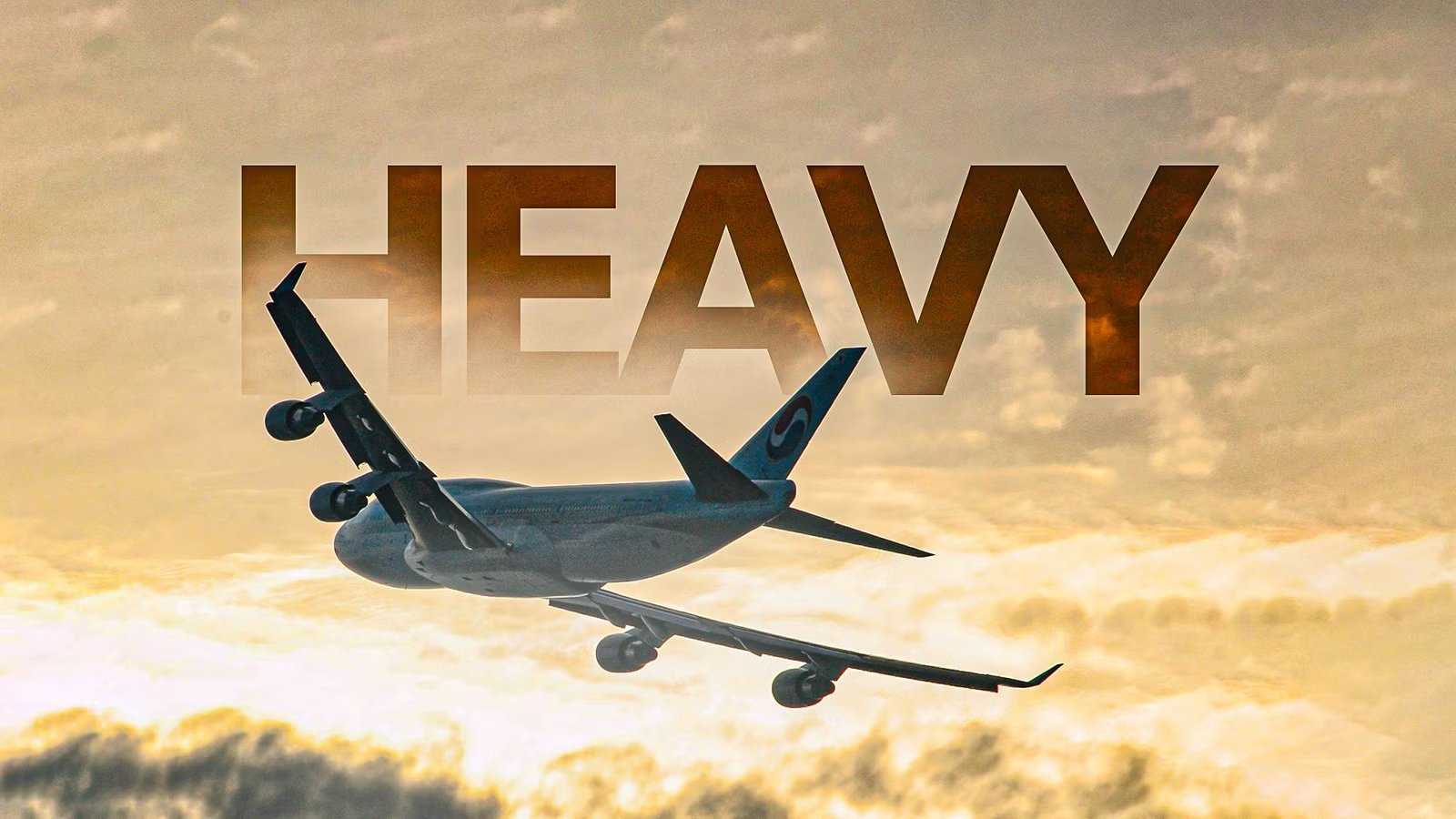
The Boeing 747-400 is almost a textbook example of a “heavy” aircraft. Boasting a maximum takeoff weight (MTOW) of up to 875,000 pounds (396,890 kg), it sits well above the 300,000-pound (136,078 kg) threshold used to differentiate “large” and “heavy” aircraft. This itself offers parameters for air traffic controllers and pilots alike to determine wake levels and, therefore, how much space must be left between aircraft at the point of arrival or departure.
One characteristic notably sticks out when it comes to the -400, though: its service ceiling. Despite being among the heaviest passenger jetliners ever produced, its maximum certified operating altitude looks more like that of a far lighter and more aerodynamically efficient aircraft. In fact, the -400 outdoes almost every other modern jetliner on the service ceiling, which is somewhat unusual on the surface.
A Hefty Service Ceiling

On paper, the 747-400 can reach heights of up to 45,100 feet (13,746 m) and is actually certified to do so.  Lufthansa, which is among the last remaining major operators of Boeing 747 variants, has previously bragged the -400 could reach the highest altitude in its fleet, with the airline’s website listing its maximum altitude at approximately 44,947 feet (13,700 meters).
Though a way off the hefty 60,000-foot (18,300-m) service ceiling Concorde once boasted, the -400’s is indeed a step above most modern commercial jets in the air today. Rival heavy widebodies typically top out at 43,100 (13,137 meters). Examples of aircraft with such maximum altitudes include the Boeing 777, Boeing 787-8, Boeing 787-9, and even the newer Boeing 747-8 – itself a direct descendant of the -400.
Some are not certified to even make it this high, though, with the relatively new Boeing 787-10 only allowed to reach heights of 41,100 feet (12,527 meters). Again, the -10 is a fellow heavy aircraft, having initially been delivered in 2018 and just under 30 years after the first -400. So, why is there such a disparity?
The Boeing 747-400’s New Wing Design

It is no mistake that the -400 came equipped with the ability to reach such highs. Upon designing the fifth variant of the 747 family – after the -100, -200, SP, and -300 –  Boeing actively had high-altitude cruise efficiency in mind. A range of design features made their way onto the -400 as a result, with its wings being the most notable.
In terms of large commercial aircraft, the -400 was the first to host winglets, themselves measuring six feet (1.8 meters). Against earlier versions of the 747, the -400 also had extended wingtips, meaning it spanned an extra 17 feet (5 meters) in width compared to predecessors. This worked to lower induced drag and improve performance while climbing. Importantly, longer wings directly enabled higher cruising altitudes. According to Boeing, the wingtips alone led to a 3% improvement in long-range efficiency at the time.
Aluminum alloys were used to cut 6,000 pounds (2,700 kg) from the wings alone. Combined with the 37-degree sweepback of the wings themselves, alongside the winglets of course, the -400 was simply designed to remain aerodynamically efficient at greater heights, and so in thinner air, than earlier heavy aircraft.

Lufthansa’s 2 Different Boeing 747 Cabins: Compared
The airline will fly its 24-aircraft fleet on 40 routes this month.
Four Engines And Thrust Margin

Another major enabler of higher-altitude flight is engine performance. In the case of the 747-400, four engines from either General Electric, Rolls-Royce, or Pratt & Whitney to this day provide significantly more thrust margin than comparable twinjets. Each engine produces roughly 56,750–62,100 pounds of thrust, depending on variant, meaning total installed takeoff thrust can far exceed 224,000 pounds.
This capability was very deliberately engineered by Boeing, given the huge weights the -400 was designed to operate at. While that thrust was necessary to move a fully loaded jumbo jet, it also created a substantial performance reserve at lighter weights. Against many twin-engine widebodies, the -400 can often retain more spare thrust in real-world operations, particularly later on in flight as fuel burn reduces weight.
General Electric-powered 747-400 performance summary, from Boeing:
|
Specifications |
Basic |
Maximum |
|
Passengers (FC / BC / EC) |
416 (23 / 78 / 315) |
416 (23 / 78 / 315) |
|
Cargo pallets / containers |
5 / 14 |
5 / 14 |
|
Engines |
Four CF6-80C2B1F |
Four CF6-80C2B1F |
|
Engine thrust |
56,500 lb (25,628 kg) |
62,100 lb (28,168 kg) |
|
Maximum taxi weight |
803,000 lb (364,230 kg) |
878,000 lb (398,250 kg) |
|
Maximum takeoff weight |
800,000 lb (362,870 kg) |
875,000 lb (396,890 kg) |
|
Maximum landing weight |
574,000 lb (260,360 kg) |
652,000 lb (295,740 kg) |
|
Maximum zero fuel weight |
535,000 lb (242,670 kg) |
555,000 lb (251,740 kg) |
|
Operating empty weight |
402,300 lb (182,480 kg) |
403,100 lb (182,840 kg) |
|
Fuel capacity |
53,765 U.S. gal (203,520 L) |
57,065 U.S. gal (216,010 L) |
|
Design range |
6,080 nmi (11,260 km) |
7,225 nmi (13,380 km) |
|
Cruise speed |
Mach 0.855 |
Mach 0.855 |
|
Takeoff field length |
9,250 ft (2,815 m) |
9,900 ft (3,015 m) |
|
Initial cruise altitude |
34,700 ft |
32,700 ft |
|
Service ceiling |
45,100 ft (13,700m) |
45,100 ft (13,700m) |
|
Landing field length |
6,250 ft (1,905 m) |
7,150 ft (2,175 m) |
|
Approach speed |
146 kias* (168 mph) |
157 kias (181 mph) |
|
Fuel burn per seat (6,000 nmi) |
657.4 lb (298.2 kg) |
658.4 lb (298.6 kg) |
* Knots-Indicated Air Speed
Combined with its redesigned wing, the four-engine configuration allows the 747-400 to reach and sustain higher altitudes. As altitude increases, air density falls, in turn reducing the amount of thrust engines can generate. All aircraft eventually run out of excess thrust margin for efficient climb and cruise, but that limit tends to arrive sooner for twin jets than for quadjets. In simple terms, the -400 has enough power to keep climbing where many of its peers must level off.
Rare For 747-400 To Fly So High

Despite such an impressive service ceiling, spotting a 747-400 that has actually hit the 45,100-foot mark is pretty unlikely. Generally, the aircraft is packed so heavily – up to 875,000 pounds (396,893 kg) – at takeoff, being able to head straight to its maximum altitude efficiently is out of the question.
Rather, flights featuring the -400 tend to follow a step climb process. Under this, the aircraft will usually sit somewhere in the region of 29,000 and 33,000 feet (8,839 and 10,058 meters) initially, before gradually picking up height over the course of its flight.
Spotting a -400 at its all-out maximum height is most likely on a ferry flight, where no cargo or passengers have been boarded, and the aircraft is simply being relocated. There too, there are a host of factors aircrew have to consider before climbing to their aircraft’s service ceiling. Aside from weight, air temperature, economic factors, and even health issues can play a part. In the case of the latter, stronger radiation over the Arctic, say, may deter pilots from wanting to fly too high for too long. All in all, the -400 can be flown at exceptional altitudes, but most of the time it will not be.

The Aircraft Set To Replace The Iconic Boeing 747
The jumbo jet will certainly leave big shoes to fill!
How Many 747-400s Are Even Left?

As has been briefly mentioned, the 747-400 first began flying commercially way back in 1989. First flown under Northwest Airlines in February of that year, the -400 program was launched four years earlier in 1985.
The aircraft was revolutionary in itself, building on the strong cost-cutting per seat and impressive range the 747 series had already brought to airlines. Of the roughly 1,500 jumbo jets built over the course of 55 years of production by Boeing, some 694 and almost half were -400 variants. Just a handful remain in active service today, unfortunately, and the tough fact of the matter is that the -400’s days are numbered.
Number of airworthy 747-400s still in operation (for passenger services) as of early 2026, from Key Aero:
|
Airline |
Number in fleet |
|
Lufthansa |
8 |
|
Atlas Air |
5 |
|
Rossiya |
3 |
|
Air China |
2 |
|
Mahan Air |
1 |
|
Max Air |
1 |
Per Key Aero, just six airlines still had airworthy passenger -400s within their fleets as of mid-March. These included Lufthansa, Atlas Air, Rossiya,  Air China, Mahan Air, and Max Air. Several more of the aircraft were said to be parked or stored – some permanently – at the time, leaving the task of spotting a -400 outside of cargo operations relatively tough, and one that will only become increasingly difficult as time goes on.
Classic Heavy, But A Standout In Its Own Right

All told, the 747-400 might make for an absolutely classic heavy aircraft given its sheer weight. An argument could even be made that its 875,000-pound MTOW leaves it not all that far off the “super” class of aircraft. Such designation has only been reserved for a select few, like the Airbus A380, given the massive wake turbulence they produce.
But, the -400 sits in a class of its own when it comes to service ceiling. Not much can fly higher and for so long as the -400. So, despite sharing the common designation as so many other widebodies about today, the -400 really is an exception in one major sense.