dailynewsnblog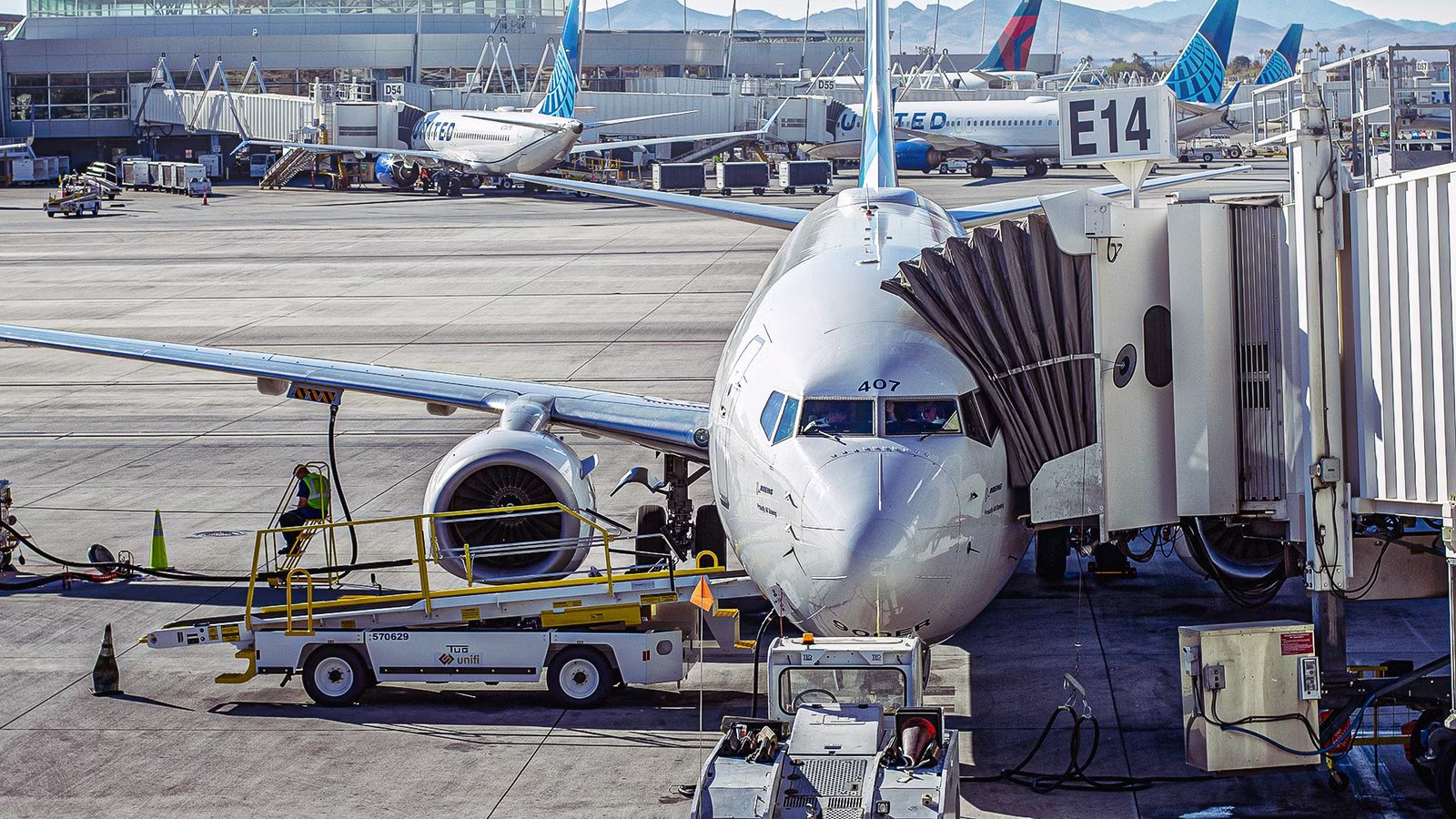
The Boeing 737 is the most successful and longest-running jetliner family produced by Boeing. The planemaker first introduced the type in the late 1960s as a short-to-medium-haul aircraft designed to complement the larger 707 and 727 models. Over the following decades, the 737 evolved through multiple generations, from the Original series to the Classic, Next Generation (NG) and, most recently, the 737 MAX family.
Boeing has continuously refined the aircraft to improve fuel efficiency, operating economics, range and overall performance while maintaining the basic design philosophy. This approach allowed operators to transition between generations with significant levels of commonality, reducing training requirements and making the aircraft easier to integrate into existing fleets. However, developing an aircraft family over such a long period also introduced inherent compromises across many of its variants.
The Stretched 737-900ER Revealed The Platform’s Limits

The Boeing 737-900ER was one of the clearest examples. The extended-range variant was developed to address the shortcomings of the NG family’s longest member, the 737-900. Boeing designed the -900 to solve a specific problem for airlines: creating a narrowbody capable of carrying almost as many passengers as the Boeing 757 while maintaining the operating economics and fleet commonality of the established 737 family. The aircraft extended the fuselage length to 138 feet, two inches, the longest among the NG family.
For comparison, the 737-700 has a fuselage length of 110 feet, four inches, while the 737-800 measures 129 feet, six inches. However, it retained the same emergency exit configuration as the 737-800, with four main exit doors and four overwing exits. This limited the aircraft’s maximum certified passenger capacity to 189 seats, despite its larger fuselage. To overcome this limitation, Boeing introduced the 737-900ER with additional capacity and increased range.
The variant added two Type II doors behind the wing to meet passenger evacuation requirements for the higher seating capacity. The planemaker also installed a redesigned flattened rear pressure bulkhead, which allowed the fuselage to accommodate an additional row of seats. The variant proved commercially successful; according to ch-aviation data, nearly 450 aircraft remain in active service worldwide. Several major carriers, including  Delta Air Lines,
  United Airlines, and
  Alaska Airlines have incorporated the type into their fleets.
However, stretching an aircraft platform that originated in the 1960s inevitably introduced compromises. Undoubtedly, Boeing was able to expand the 737’s capabilities through successive upgrades, but the aircraft continued to operate within the constraints of its original design, which created limitations in areas such as aerodynamics and performance.
The Longer Fuselage Changed 737-900ER’s Balance

Indeed, one of the most visible compromises of the stretched fuselage was the aircraft’s longer take-off run compared with other narrowbody aircraft in the same category. However, the more significant consequence was its increased tendency to become tail-heavy during ground operations. For an aircraft to remain stable on the ground, its center of gravity must remain ahead of the main landing gear, which acts as the aircraft’s pivot point.
Commercial aircraft operate within precisely calculated weight and balance limits. Passengers, baggage, cargo, and fuel are distributed carefully to keep the center of gravity within a defined envelope. However, that balance can shift during ground handling if passengers move towards the rear to disembark while forward cargo has already been removed, or if baggage remains loaded in the aft hold while weight is removed from the front.
Specification | Boeing 737-900ER |
|---|---|
Length | 138 feet, 2 inches (42.1 meters) |
Wingspan | 117 feet, 5 inches (35.8 meters) |
Height | 41 feet, 3 inches (12.5 meters) |
Range | 3,280 nautical miles (6,075 km) |
Passenger Capacity | 215 (one-class configuration); 187 (two-class configuration) |
As a matter of physics, if too much weight is removed from the front while more weight remains towards the rear, the center of gravity can move behind the main landing gear, causing the aircraft to tip onto its tail. The 737-900ER was particularly susceptible to this because of its stretched fuselage. Compared with shorter variants such as the 737-800, a larger proportion of the aircraft’s structure and passenger cabin sits behind the main landing gear, which leaves less margin before the center of gravity moves too far aft during ground operations.
Furthermore, the manufacturer’s modifications to increase the aircraft’s passenger capacity made that margin even tighter. As noted previously, Boeing flattened the aft pressure bulkhead to create additional cabin space and add another row of seats. While this increased the aircraft’s seating capacity, it also shifted more weight towards the rear of the fuselage, leaving the 737-900ER with tighter center-of-gravity limits during loading and unloading.
Real-World Examples Of Aircraft Tipping Backward

Most of us have seen images of an aircraft unexpectedly tipping backward onto its tail while parked at the gate. At first glance, it may seem surprising that an aircraft weighing tens of tonnes can lose its balance while sitting on the ground, but the reason comes down to the weight distribution limits we just discussed. If the center of gravity moves too far aft during loading or unloading, the aircraft can become unstable and tip backward. Over the years, several incidents have highlighted this risk.
Back in 2016, a Ukraine International Airlines 737-900 tilted onto its tail after cargo was removed from the forward section of the aircraft. In 2021, a United Airlines 737-900ER operating a charter flight carrying the USC football team tipped backward during passenger disembarkation after arriving in Lewiston, Idaho, from Los Angeles. The incident quickly went viral; images shared on social media showed passengers leaving through the forward left door while baggage was being unloaded through the forward right cargo door.
No injuries were reported among those still onboard, and the aircraft did not appear to suffer significant damage. More recently, in 2025, a GetJet Airlines Boeing 737-800 operating on behalf of Wizz Air experienced a similar incident after completing flight W6 1749 from Gdańsk, Poland, to Haugesund, Norway. During passenger disembarkation and baggage unloading, the aircraft tipped backward onto its tail. No passengers or ground crew were injured, but the aircraft was removed from service for repairs after sustaining damage to the fuselage.
How Airlines Prevent Aircraft From Tipping Backward

To prevent such situations from happening, ground crews use a specific tool known as a tail stand, also referred to as a pogo stick. The tail stand is typically positioned beneath the aft fuselage, close to the tail cone. Ground crews usually install it shortly after the aircraft arrives at the gate and remove it before departure, prior to pushback. The concept behind the equipment is relatively simple: it acts as an additional support point while the aircraft is being loaded or unloaded, when changes in weight distribution can make it more vulnerable to tipping.
Tail stands are most commonly associated with military and cargo aircraft, particularly those with rear loading doors, where loading and unloading operations can significantly affect the aircraft’s balance. However, some commercial aircraft like the 737-900ER also require the same precaution due to its stretched fuselage and the amount of weight positioned behind the main landing gear. That said, the 737-900ER is not the only commercial aircraft that can require a tail stand.
Other Boeing 737 variants, including the 737-800 and 737 MAX 9, may also require the equipment depending on operating conditions. In addition, aircraft from the Airbus A320 family can also experience similar balance issues and may require the use of a tail stand. In 2023, a JetBlue Airbus A321-200 tipped backward at New York JFK International Airport while passengers were disembarking. Some smaller general aircraft (like Cessna) also need tail stands.
Another Compromise Of Extending The 737 Fuselage

Furthermore, the stretched fuselage affected more than just the aircraft’s balance during ground operations. It also introduced challenges during take-off. As the fuselage became longer, the aircraft’s geometry changed; it reduced the distance between the tail and the runway during rotation, making it more susceptible to tailstrikes.
As we know, a tailstrike occurs when the underside of the rear fuselage contacts the runway, most commonly during take-off or landing. The longer the fuselage, the less tail clearance an aircraft has as the nose is raised, which makes the margin for error progressively smaller. Compared with shorter variants such as the 737-800, the 737-900ER has less clearance between the rear fuselage and the runway during rotation.
So, the pilots need to carefully control the aircraft’s pitch attitude during take-off. They need to raise the nose sufficiently to achieve lift-off while remaining within strict pitch limits to avoid striking the tail. Because the 737-900ER already requires relatively high rotation speeds, there is little margin for error during this phase of flight.
The Limits Of Extending A Classic Design

Overall, the 737-900ER proved to be a commercial success, but it was not without its limitations. Indeed, Boeing successfully expanded the capabilities of the long-running 737 platform, allowing airlines to carry more passengers while retaining the fleet commonality and operating economics that had made the aircraft family so successful.
However, achieving those gains meant working within the constraints of a design that first entered service in the late 1960s. With the 737-900ER, Boeing introduced the longest fuselage of any NG variant to accommodate up to 215 passengers in a one-class configuration. The additional cabin space and passenger capacity made the aircraft more attractive to airlines, but they also introduced new operational challenges.
The longer fuselage placed more of the aircraft’s weight behind the main landing gear, making it more susceptible to becoming tail-heavy during ground operations. As a result, the aircraft is more vulnerable to tipping backward if its weight is not carefully managed during loading and unloading.