dailynewsnblog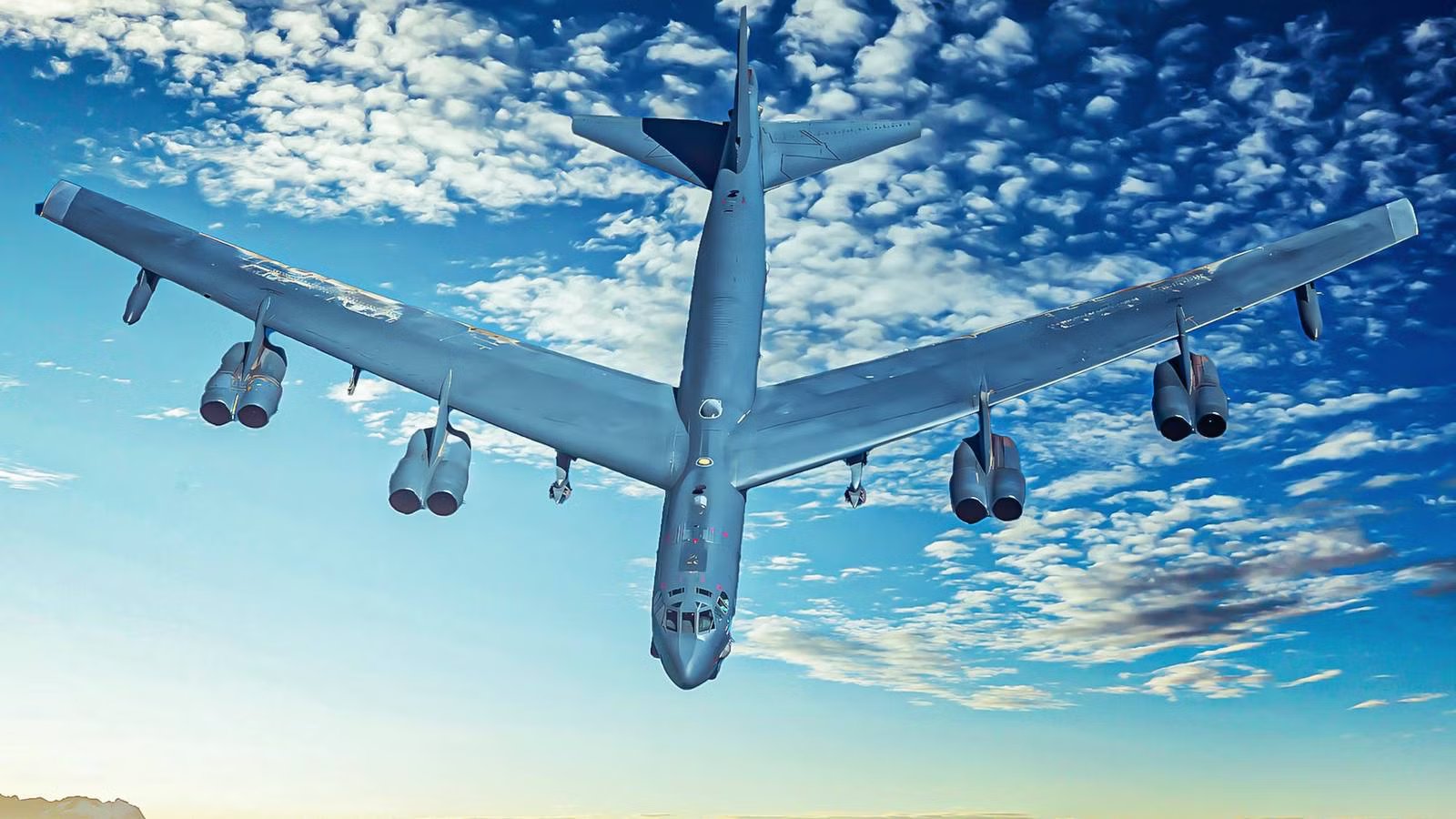
When the United States Air Force replaces the  Boeing B-52’s eight engines under the Commercial Engine Replacement Program, the resulting aircraft, the B-52J, will have 30% better fuel efficiency, a meaningfully extended unrefueled range, and a maintenance burden so reduced that it will cost significantly less per flight hour to operate than the Rockwell B-1 Lancer. The B-1B entered service in 1986, thirty-four years after the B-52 first flew. It was specifically designed to replace the Stratofortress. It is now being retired while the B-52 flies on, and the F-130-powered B-52J will still be flying in the 2050s after the B-1B is long gone. That inversion is entirely the product of one engine swap.
The Pratt & Whitney TF33 turbofan that powers the current B-52H entered service in 1962. It was state-of-the-art in the Eisenhower era and has been in continuous use for over six decades. The Rolls-Royce F130 that will replace it is a modern high-bypass commercial derivative built on an architecture that has accumulated more than 27 million flight hours across military and civil applications. The two engines are in the same thrust class as both produce approximately 17,000 pounds-force (75.6 kN), but the gap in efficiency, reliability, and maintainability between them is not incremental. It is generational. This article explains exactly what that gap looks like in operational terms.
What The TF33 Actually Costs The Air Force — And Why It Has To Go

The Pratt & Whitney TF33-PW-103 is a first-generation turbofan, designed in the late 1950s when bypass ratios were modest and digital controls did not exist. A high-bypass engine like the F130 moves far more air around the hot core, which dramatically reduces fuel consumption at subsonic cruise speeds, cuts noise, and reduces exhaust temperature. The TF33’s low-bypass architecture was not unusual for its era. It is simply obsolete now, and the Air Force has been living with that obsolescence since the production line closed in 1985.
The operational consequences go beyond fuel bills. The TF33 needs scheduled depot-level overhauls every few thousand flight hours, a process that removes the engine from the aircraft, ships it to a specialized facility, and keeps it there for weeks or months. Each overhaul requires parts that are no longer in production, sourced increasingly from dwindling stockpiles or custom-manufactured at premium prices. Moreover, starting a TF33 requires external pneumatic air carts or explosive cartridge starters, specialized support equipment that must accompany the aircraft everywhere it deploys.
According to The War Zone, the TF33’s age has made sustaining it “increasingly costly and time-consuming,” and the engine has been out of production for four decades. Moving a squadron of B-52Hs to a forward operating location has historically required multiple Boeing C-17 transport flights carrying nothing but TF33-specific spare parts, tools, and hydraulic equipment. The F130’s self-contained architecture and commercial supply chain are designed to eliminate every one of those constraints.
The contrast with the B-1B Lancer’s maintenance profile is instructive. As Simple Flying has detailed in its analysis of why the B-52 will outlast the aircraft built to replace it, the B-1B requires between 74 and 150 maintenance hours for every hour it flies, the highest ratio in the USAF bomber fleet. The B-1B’s intensive use in Middle East operations over two decades wore its airframes beyond economical repair, and the aircraft’s swing-wing mechanism and complex low-level-optimized structure proved far more expensive to sustain than an aircraft designed with simplicity in mind. The B-52’s simpler structure and, soon, its modern engines give it a maintainability advantage over a jet it predates by more than three decades.
The F130: A Commercial Engine With A 27-Million-Hour Track Record

The Rolls-Royce F130 is the US military designation for the Rolls-Royce BR700, already in service on the C-37 (the Air Force’s Gulfstream V executive transport) and the E-11 Battlefield Airborne Communications Node, giving the Air Force an existing parts pipeline, trained maintenance workforce, and proven operational history before a single B-52 is re-engined. According to Rolls-Royce, the F130 and its civil fleet have accumulated over 27 million flight hours in operation — a reliability baseline that is orders of magnitude beyond anything the TF33 could offer at the same age in its service life.
At the subsonic cruise speeds the B-52 operates, approximately Mach 0.84, or around 560 miles per hour (901 km per hour), high-bypass turbofans are substantially more efficient per pound of thrust than low-bypass designs. Rolls-Royce invested over $600 million in its Indianapolis manufacturing facility specifically to build the F130 for the B-52 program, establishing a dedicated production line, engineering team, and test infrastructure entirely on US soil. According to Interesting Engineering, the company expects to deliver more than 600 F130 engines for the 76-aircraft fleet — approximately 608 active installations plus a rolling inventory of around 100 spares.
The F130’s design philosophy is captured in one operational commitment that would have been unthinkable with the TF33: it is expected to remain on the aircraft’s wing for the B-52J’s entire remaining service life without a scheduled midlife depot overhaul. An engine installed in the early 2030s may fly on the same airframe until the mid-2050s without coming off the wing for a major shop visit. That is the specification the Air Force wrote into the CERP requirements, and it is achievable specifically because the F130 is derived from a commercial engine architecture that was designed to maximize time on wing as a core business proposition for airline operators. The logic transfers directly to military service.

Why This Long-Range Bomber Will Likely Be The 1st Jet Aircraft To Reach 100 Years Of Continuous Flying
Upgrades, new engines, and modern radar are keeping the B-52 Stratofortress on track to become the first jet aircraft to reach 100 years in the skies.
The 30% Gain: What It Means For Range, Tankers, And Forward Deployment

The published efficiency figure is 30%, the USAF’s stated requirement, and the number confirmed by multiple independent sources as achievable with the F130-to-TF33 replacement. On a platform that already carries a payload of up to 70,000 lb (31,752 kg) over an unrefueled range exceeding 8,800 nautical miles (16,297 km), a 30% reduction in fuel consumption per unit of thrust is not an incremental improvement. It changes what missions the aircraft can perform without aerial refueling, reduces how frequently it needs tanker support in the ones it does and, critically, cuts the fuel cost per sortie by roughly a quarter to a third, depending on mission profile.
The air tanker dependency reduction matters more than it might initially appear. Every aerial refueling the B-52J does not require is a Boeing KC-46 Pegasus or KC-135 that is freed for other duties, a sortie that generates one fewer potential vulnerability as the aircraft is constrained to a predictable rendezvous point, and a planning factor is eliminated from mission routing. According to Army Recognition’s analysis of the CERP CDR milestone, the F130-powered B-52J will “combine more efficient propulsion with AESA radar, digital avionics, Link 16 connectivity, and expanded electronic warfare systems to support future cruise missile and hypersonic strike missions”, with the efficiency gain directly enabling the aircraft to carry those weapons further without tanker support. The F130 also generates significantly more electrical power than the TF33, providing headroom for the energy demands of active electronically scanned array radars, electronic warfare systems, and future directed-energy payloads without requiring dedicated power modifications.
The forward deployment implications of the F130’s electric starters are less glamorous but operationally decisive. As Simple Flying’s analysis of the B-52J’s engine upgrade has documented, the B-52J can shut down and restart its engines at austere runways using basic airfield power or internal systems, eliminating the need to airlift heavy pneumatic carts to every deployment site. Under the Air Force’s Agile Combat Employment doctrine, which requires bomber squadrons to disperse from large bases to forward, non-traditional airfields, the TF33’s starter dependency was a genuine operational constraint. The F130 removes it.
Catch what other flight trackers miss
Emergency squawks, holds, NOTAMs — live signals, no signup.
Open tracker
Catch what other flight trackers miss
Emergency squawks, holds, NOTAMs — live signals, no signup.
Open tracker
Why A 1952 Airframe Outlasts Aircraft Built Specifically To Replace It

The B-52J will fly alongside the B-21 Raider as one of only two aircraft in the USAF’s long-term bomber fleet. The B-1B Lancer, which entered service in 1986, is being retired. The NorthropB-2 Spirit Bomber , which entered service in 1997, is being retired. Both aircraft are significantly newer than the B-52, and both are being sent to the boneyard before it. The B-21 is replacing the B-2’s penetrating stealth mission. No aircraft is specifically replacing the B-1B’s conventional heavy-strike role, because the B-52J can absorb it at far lower operating cost. The core reason the B-52 outlasts aircraft designed decades later is structural simplicity.
The Stratofortress was built with a straight, unswept, thick wing that is aerodynamically simple to maintain and structurally resilient across a wide range of loading conditions. The B-1B’s complex variable-sweep geometry proved expensive to sustain and prone to fatigue after decades of use profiles the designers did not anticipate. The B-2’s proprietary stealth architecture required climate-controlled, specialized hangars and maintenance costs that have consistently exceeded estimates. As we have previously noted in our analysis of the B-52’s trajectory toward 100 years of continuous flying, the aircraft’s over-engineered airframe and straightforward structural design make it uniquely amenable to the kind of progressive system upgrades that have kept it tactically relevant across seven decades, and will continue to do so for three more.
The B-52J’s weapons capability reinforces the operational case. The Stratofortress carries up to 70,000 lb (31,752 kg) of mixed ordnance, and its weapons integration roadmap includes the AGM-181A Long Range Standoff nuclear cruise missile, the AGM-158 JASSM-ER, and eventually hypersonic strike weapons, including successors to the Hypersonic Attack Cruise Missile program. The combination of standoff weapons and the F130’s extended range means the B-52J can hold targets at risk from distances that keep the aircraft outside the most threatening air defense envelopes, a mission profile for which stealth is not required, and for which the B-52J’s unmatched payload capacity is a decisive advantage. No aircraft that currently exists or is planned within the USAF can carry more standoff weapons farther on a single sortie.

7 Reasons Why The US Air Force Still Operates The B-52
From nuclear deterrence to missile truck missions, the B-52 Stratofortress remains essential to US airpower even in 2026.
Where The Program Stands: CDR Cleared, First B-52J Flight Testing Approaching

The B-52 CERP passed its Critical Design Review on May 4, 2026, the formal milestone confirming that the propulsion integration architecture, redesigned nacelles and pylons, electrical generation systems, software interfaces, and airflow characteristics have all been validated to the Air Force’s satisfaction. According to AVweb, the review included technical assessment from the Air Force, Boeing, and Rolls-Royce before clearing the first two B-52H airframes to begin physical modification.
As reported on the Air Force Life Cycle Management Center website, Lt. Col. Tim Cleaver, the Bombers Directorate CERP program manager, described the milestone in the Air Force’s release: This CERP critical design review is the culmination of an enormous amount of engineering and integration work from Boeing, Rolls-Royce, and the Air Force that will enable the B-52J to remain in the fight for future generations. The CDR cleared all 76 aircraft for conversion.
The path to CDR included altitude and operability testing at the US Air Force Arnold Engineering Development Complex (AEDC) in Tullahoma, Tennessee, which validated the F130’s performance at operational flight conditions, including airflow distortion simulations and Integrated Drive Generator testing to confirm stable electrical output under realistic flight loads. Earlier, the twin-pod configuration replicating the B-52’s four dual-engine nacelles was tested at NASA’s Stennis Space Center in Mississippi, the first time F130 engines were operated in that unique grouped arrangement. Boeing was awarded a $2.04 billion task order in December 2025 covering post-CDR integration and aircraft modification activities extending to 2033, according to Breaking Defense. New nacelles are being supplied by Spirit AeroSystems, now part of Boeing, while pylons are redesigned with shorter struts that position the engines closer to the wing to prevent aerodynamic flutter and maintain runway clearance.
The program’s schedule has experienced delays. Initial operational capability originally planned for FY2030 has slipped to FY2033, roughly three years behind the original baseline, driven by integration complexity, cost pressures, and the unique engineering challenge of coupling 1960s mechanical airframes with 2020s digital engine control software. Boeing used advanced 3D scanning to create digital twins of individual B-52 airframes and discovered that each aircraft is dimensionally unique, a consequence of hand-built construction tolerances from the early 1960s that complicated any standardized modification process. The first heavily modified B-52J prototypes are expected to begin flight testing at Edwards Air Force Base in California between 2028 and 2030.
Why Replacing An Engine Makes A 1950s Bomber More Capable Than Its Successors

The B-52J’s F130 engines close the specific gap that made the Stratofortress operationally inferior to the aircraft to its successors: the B-1B was built to address those gaps with more complexity, speed, and reduced radar signature. That approach required a maintenance burden that has consistently run from 74 to 150 hours of work per flight hour, and left the USAF with an aircraft it cannot afford to sustain at scale. The B-52J will enter the 2030s with engines that cost less to operate, require no midlife overhauls, can be restarted from electric power alone, and give the aircraft roughly 30% more range on the same fuel load.
The operational implication is that the B-52J will be a more effective standoff strike platform than the B-1B in the missions that define American strategic airpower in the 2030s and beyond: long-range cruise missile delivery, hypersonic weapons carriage, and nuclear deterrence. It will do those missions with a larger payload, over a longer range, at a lower cost per sortie, from a wider range of airfields. According to Army Recognition’s comprehensive CDR analysis, the B-52J is set to fly alongside the B-21 Raider as the USAF’s two-bomber force through the 2050s — the B-21 penetrating defended airspace, the B-52J launching from range outside it.
This article’s title makes a specific claim: the B-52J will be more capable than jets built 40 years after it. The case for that claim is not that the B-52J is faster, more maneuverable, or lower in radar cross-section. It is that a 30% fuel efficiency improvement on a structurally simple, proven airframe gives the B-52J a longer unrefueled range than the B-1B, lower per-flight-hour costs, and a service life extending two decades past the Lancer’s retirement date. The F130 makes this possible. An engine swap, costing roughly $2.6 billion for an entire fleet, keeps America’s oldest bomber flying when its younger replacements could not afford to stay in service. That is the CERP program’s conclusion — and it is what strategic aviation history will record about both aircraft.