dailynewsnblog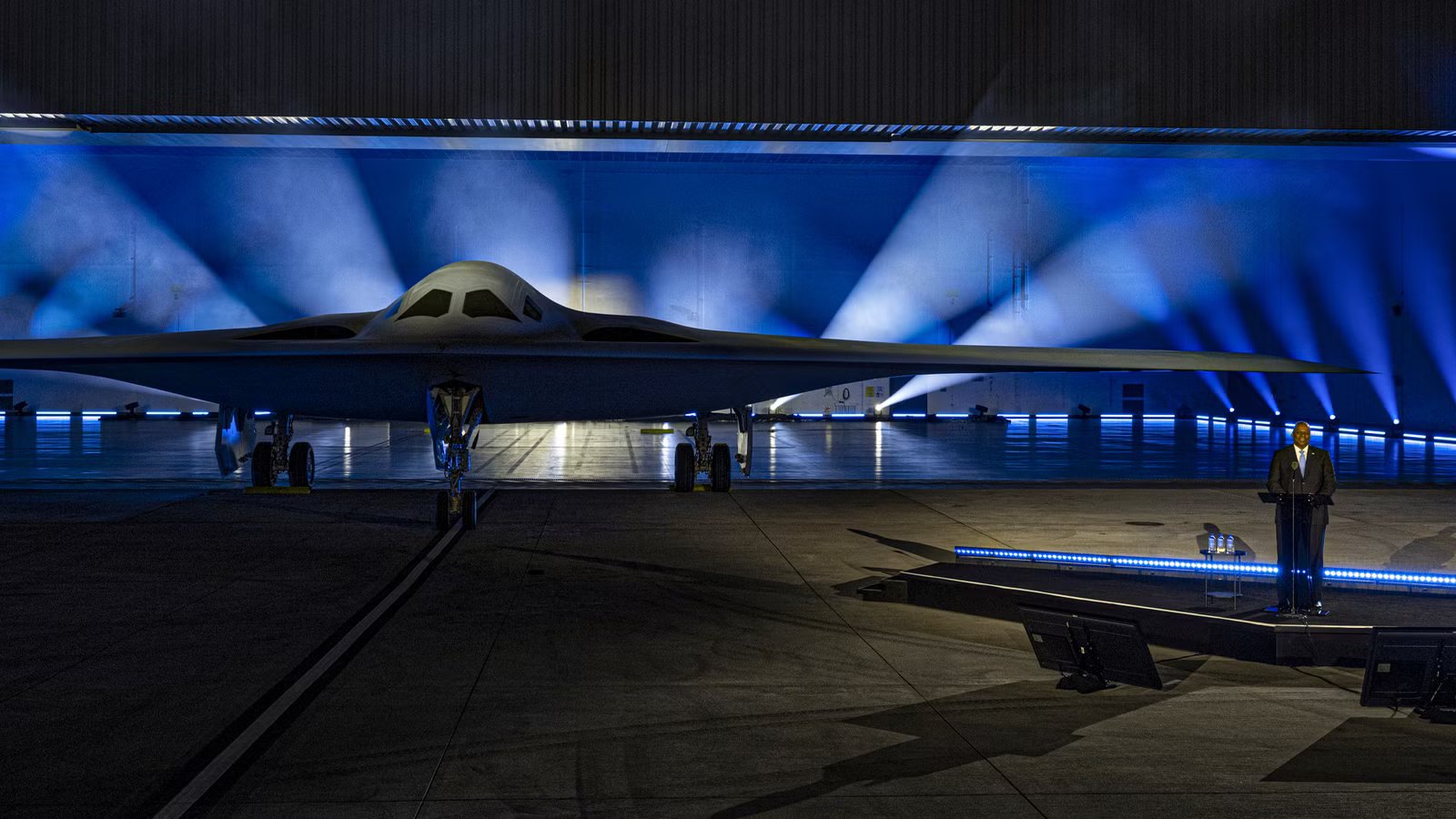
While Trump has called the B-21 Raider an “upgraded B-2”, the aircraft more accurately represents a generational leap over the B-2 Spirit, taking advantage of around four decades of technological improvements. One area where the Northrop Grumman B-21 Raider leap-frogs the B-2 is in its advanced Radar Absorbent Materials (RAM). Not only will these make the aircraft much more difficult to detect, but they will also make the aircraft much easier to maintain and lower its logistical tail.
Some lists provide estimates of the radar cross-section of aircraft. But these are little more than best guesses, as RCS is a heavily classified secret. RCS values depend on the aspect being observed, the frequency at which it is being observed, the type of RAM the aircraft is coated with, and many other factors. One of those RCS factors is its RAM (or “stealth paint”). Some aircraft, like the F-35, have received new-generation RAMs during their lives, changing the values. It also matters how well the RAM is maintained and how deteriorated it is, and this is why the B-2 Spirit is forced to live in an air-conditioned environment as the “hangar queen.”
The Need To Overcome Soviet Air SAMs

Considering its age, it is somewhat ironic that the Northrop B-2 Spirit remains the world’s most advanced strategic bomber (at least until 2027 when the B-21 Raider is expected to enter service). The beginnings of the B-2 program can be traced to the Advanced Technology Bomber (ATB) black project launched in 1979. This was a period when the US was still struggling to come up with a bomber concept that could counter the SAM-infested threat environment.
In the 1950s, the US developed the jet-powered B-52 Stratofortress. In some ways, the B-52 can be thought of as the last of WWII’s series of B-17, B-29, and B-36 bombers. These were built for an environment filled with flak fire and fighters/early jet fighters. They were built to brute force their way through absorbing damage, while also having the numbers to sustain attrition.
This changed with the B-58 Hustler flying high and fast. The USAF sought to capitalize on that concept, developing the XB-70 that flew at Mach 3.1 and over 70,000 feet (21,336 meters). It was to fly higher and faster than threats, but the development of Soviet SAMs made it obsolete before it entered service. This forced the US to return to the B-1A Lancer, which was to fly fast and follow the map of the Earth under the radar.
Canceling The B-1A For The B-2

But before the B-1A entered service, it was already facing problems like the proliferation of lower-tier air defense and look-down radars. Look-down radars made it harder to “fly under the radar.” The advanced capabilities of the Advanced Technology Bomber (ATB) also contributed to the Air Force’s cancellation of the B-1A. However, the project soon proved more expensive than thought and would take longer to develop.
As a result, the Air Force was forced to resurrect the B-1 as the slower B-1B with a dramatically reduced radar cross-section. It purchased 100 of these bombers to serve as a stopgap until the future B-2 could come into service. The first B-2 Spirit flew in 1989 (36 years ago). Unfortunately for the B-2, this was bad timing. The Soviet Union weakened and then ceased to exist in 1992. With the Soviet Union, the main reason for developing and purchasing such an expensive bomber also disappeared.
|
Northrop’s two strategic stealth bombers (per Northrop Grumman) |
B-2 Spirit |
B-21 Raider |
|---|---|---|
|
Period developed |
1980s-1990s |
2010-2020s |
|
First flight |
1989 |
2023 |
|
Entered service |
1997 |
2027 (planned) |
|
Number planned |
21 (19 remaining) |
100-150+ |
|
Unclassified payload (likely understated) |
40,000 lb (18,143 kg) |
30,000 lb (13,607 kg) |
The B-2 program wasn’t canceled, but the purchase was reduced from the original 132 aircraft to just 21, including upgraded prototypes. The bomber entered service in 1997. Put another way, the B-2 Spirit is a 1980s bomber built with 1980s technology and materials. This is particularly important when it comes to its then-cutting-edge stealth coatings.
From 19 B-2 Spirits To 145 B-21 Raiders: How Much Bigger America’s Stealth Bomber Fleet Is About To Get
A $4.5 billion production deal signal the Air Force’s commitment to building its next-generation bomber
The B-2 Spirit’s Old Stealth Coatings

Even though the low-observable F-117 Nighthawk preceded the Spirit, the B-2 can be considered the world’s first stealthy combat aircraft. Its old radar-absorbent materials (RAM) and coatings are highly sensitive. Humidity, moisture, temperature fluctuations, dust, and heat can degrade them and compromise the aircraft’s stealth signature. It’s important to note that they are not so sensitive that they can’t withstand extreme temperatures for short periods. After all, they have flown around the world on combat missions.
B-2 Spirits live in climate-controlled hangars where the temperature and humidity are regulated. They have earned themselves a reputation as “hangar queens.” Air-conditioned hangars are not only for when they are based at Whiteman or their other home bases. The Air Force has also developed portable climate-controlled shelters for when they are deployed at forward operating bases. Naturally, this all adds to the aircraft’s maintenance burden and logistical burden.
When the B-2 was designed, “maximum stealth performance” was prioritized above all else, with sustainment being a secondary concern. This, coupled with old-tech, means they are very labor-intensive to maintain. Subsequent stealth designs have taken advantage of technological improvements and put more emphasis on sustainability.
Stealth Coating Improvements

The Lockheed Martin F-22 Raptor followed the B-2 Spirit about ten years later. It was able to incorporate a large number of improvements in stealth coatings. In 2002 (three years before the F-22 entered service), Lockheed reported Chief Test Pilot Bret Luedke as saying, “While stealth technology has been employed on other aircraft, the stealth technology the F-22 enjoys is superior in at least one major aspect — it is a lot easier to maintain and repair.”
Luedke added, “And, unlike other stealth aircraft, the F-22 doesn’t need special climate-controlled hangers or to be followed around by lab technicians with chemistry sets to keep the low-observable coatings in pristine condition.” The Lockheed Martin F-35 followed the F-22 by another ten years and was able to incorporate lessons learned from the F-22 and more technological improvements. They are also much easier to remove, replace, and upgrade.
The time period from Northrop Grumman B-21’s development and entry into service is also around a decade removed from the F-35. Again, the B-21 can build on the lessons learned, improved technology, and more since the F-35 entered service. It can also learn from secretive ISR aircraft like the RQ-170 and RQ-180. All this is to say, the B-21’s coatings represent 35 years and generations of aircraft’s worth of improvements over those of the B-2 Spirit.

The 4 Largest Bomber Fleets In The US Air Force
A closer look at some of the biggest warbirds in America.
The B-21 Raider’s Superior Coatings

Not only is the B-21 a leap in technology, but it is also a change of doctrine. The B-2 was to be a high-end boutique strategic asset used sparingly. The B-21 is a more workhorse-like, routinely deployable aircraft. It is designed for high sortie generations, lower operating costs, easier field repairs, dispersed operations, and lower logistical footprints.
While the B-21’s radar-absorbent coatings are a closely guarded secret, they appear to be more advanced composite structures, embedded with low-observable materials, and are much more durable. It seems like the B-21’s stealth is built more deeply into the aircraft’s stealth, rather than a somewhat fragile outer coating. Speaking of reports of ‘rust’ seen on naval F-35s, F-35.com says they are the result of “jet blast, airborne debris, oil, and fuel residues in harsh environments.” However, “beneath that worn exterior, low observable (LO) characteristics remain uncompromised.”
All this means that the B-21 will be more rugged and durable and be able to use more basic shelters and simple awnings. It should be stressed that while one particular aspect of expensive support infrastructure has been reduced or eliminated, that doesn’t mean the B-21’s support infrastructure is cheap. Simple Flying has previously reported that the USAF is embarking on a series of air base upgrades worth approximately $1.5-1.7 billion for Ellsworth AFB, $1.6 billion for Dyess AFB, and $600+ million for Whiteman AFB to prepare them for B-21 operations.
Protective Hangars Are Coming Anyway

All this said, history has a habit of coming full circle. Soldiers’ metal armor was useful for thousands of years until the rise of guns able to penetrate it rendered it obsolete. That is, until materials improved enough for personal armor to reappear as ballistic-protection plates and helmets. The advanced B-21 may make climate-control hangars obsolete, but that doesn’t mean hangars will be obsolete.
Ukraine’s continuous drone campaign to target Russian aircraft on the ground has proven that aircraft parked on the ground without hangars are vulnerable. In Operation Spiderweb, Ukraine may have destroyed as much as 20% of Russia’s remaining operational strategic bomber fleet. In 2026, the US lost an E-3 Sentry and KC-135s on the ground to Iranian strikes.
While even hardened hangars may be unable to protect aircraft from direct missile strikes, they do provide a targeting dilemma, with the enemy not knowing which hangars have aircraft in them. Basic hangars may be able to effectively protect an aircraft from a small drone attack. Even a large tarp is enough to confuse a satellite. So, while the B-21 may not need exquisite climate-controlled hangars, it may still need hangars.