dailynewsnblog
The incoming Northrop Grumman B-21 Raider is set to be a generational leap over the B-2 Spirit, providing a massive boost in all-aspect stealth, networking, sensor fusion, and survivability. Whereas the B-2 is something of a bespoke bomber designed to carry out limited, high-value missions, the B-21 is to be a more scalable and sustainable stealth bomber force. In 2025, Trump apparently described the Northrop Grumman B-21 Raider as a “little updated version” of the Northrop B-2 Spirit. While they look superficially similar on the outside, they are significantly different underneath.
The B-2 is known as the “hangar queen” and is a very difficult aircraft to use from forward operating bases. The B-21 Raider seeks to overcome many of the limitations of the B-2, including its extremely difficult logistical footprint. That said, forward maintaining the B-21 will not be easy; “easier” is in comparison to the B-2. Equally important to how an asset is able to carry out effects on the enemy is how able the Air Force is to operate it.
The B-21’s Operational Use Is A Sensitive Topic

The War Zone, Breaking Defense, Mitchell Institute for Aerospace Studies, and Air and Space Forces Magazine have all recently published articles describing how the Raider is designed for easier maintenance than the B-2, that the B-21 will enable Agile Combat Employment (ACE), how its lower maintenance allows for forward operating basing, and that it is the future of global strike. However, many of these articles appear to have been taken down in what would seem to be a coordinated or requested removal.
Interestingly, this includes an official article by the US Air Force, with the hyperlink reading “B-21 Raider first flight test campaign.” These media take-downs highlight the continuing operational secrecy surrounding the B-21 and sensitivities regarding its upcoming operational use. This article will not discuss sensitive information in those taken-down articles, but will highlight how the Raider is expected to be used and only reference insensitive, generalized, open-source information.
The B-21 Raider was first conceived in 2011, and its first flight took place in 2023. It is expected to enter operational service in 2027, meaning it is expected to only spend four years in the flying prototype stage. This is extremely quick for an advanced next-generation bomber and speaks to engineering advances and the urgency with which the USAF wants the aircraft.
US Secrecy Vs Chinese Secrecy

The US and China are taking divergent paths in the secrecy of their next-generation combat aircraft. The US is remarkable for the degree of transparency in select aspects of its military programs, including publicly releasing GAO audit reports, detailed inventories, and budget documents. There is no comparable transparency in China. As China doesn’t release inventory numbers, analysts have to guesstimate based on factors like visible serial numbers and counting aircraft at airbases with satellite imagery.
At the same time, in 2024, 2025, and 2026, China has repeatedly flown its next-generation fighter jet prototypes/demonstrators (e.g., Chengdu J-36 and Shenyang J-50) in public and paraded various unmanned aircraft or allowed them to be captured on satellite imagery. By contrast, the US has not released a single image of the widely reported RQ-180 ISR drone; only one officially released (grainy) photo of the RQ-170 exists, and no images of the F-47 demonstrator predecessor (and Lockheed and Northrop competitors) have surfaced.
Still, the USAF has released multiple images of the B-21, including one from above for the first time in 2026, showing it in air refueling. It is possible some aspects of the aircraft in the image were altered before release, although that’s unclear. It’s suggested that the partial renders of the F-47 may have misdirections (e.g., the canards are suspect). While there are images of the B-21, it is an aircraft that the USAF is extremely secretive about. Its RCS, radar absorbent materials, range, capabilities, payload, etc., are all guarded secrets. Its unclassified 20,000 lbs of payload could likely be a significant understatement.
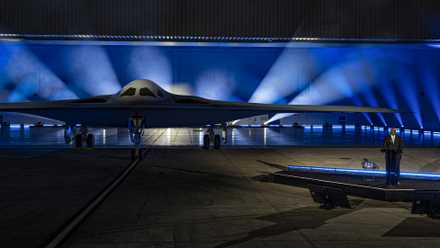
Why The B-21 Raider Doesn’t Need The B-2 Spirit’s Climate-Controlled Hangars
The B-21 is designed to be a next-generation, affordable, and rugged successor to the B-2 Spirit ‘hangar queen.’
The B-21’s Greatly Improved Stealth Coatings

One of the core design requirements of the B-21 is to be easier to maintain than the B-2. The B-2 is known as the “hangar queen” and is incredibly labor-intensive to maintain. The B-2 (and F-117) belong to an early generation of stealthy aircraft that had sensitive radar-absorbing materials (RAM), aka stealth “paint.” The materials deteriorate in adverse climates (e.g., high humidity), and it requires climate controlled hangars. The Air Force even designed portable climate-controlled hangars for the B-2 for its forward bases.
The F-22 Raptor was built on the experience of developing the B-2 and took advantage of another decade’s worth of technological advancement. Its RAM remains labor-intensive, and the aircraft remains maintenance-heavy, but it is much better than the B-2 and doesn’t require climate-controlled hangars. The F-35 was also built on the F-22 and represents another decade of RAM improvements.
United States Air Force strategic bombers | |
|---|---|
Northrop B-2 Spirit | 19 (2 lost to mishaps) |
Northrop Grumman B-21 Raider | 2+ (flight testing) |
B-52 Stratofortress | 76 (including reserve) |
B-1B Lancer | 46 (mandated) |
The F-35’s RAM is easier to remove and upgrade, and is robust enough to withstand the punishing salt air of carrier-based operations. The incoming B-21’s RAM is another decade’s worth of improvements over the F-35 and is expected to be far easier to maintain and much more robust than the B-2. This will be a major factor in the aircraft being able to operate from forward bases and participate in the US Air Force’s Agile Combat Employment (ACE) doctrine.
The Need For A Stealth “Workhorse”

The Northrop B-2 Spirit was designed at a different time, for a different mission set, within a different threat environment. Its primary purpose was to be a survivable platform to deliver US nuclear bombs deep within enemy territory, although it has only been used for conventional strikes. Its small fleet size and high maintenance burden limited the scale and sustainability of operations.
Catch what other flight trackers miss
Emergency squawks, holds, NOTAMs — live signals, no signup.
Open tracker
Catch what other flight trackers miss
Emergency squawks, holds, NOTAMs — live signals, no signup.
Open tracker
In the opening days of Operation Epic Fury over Iran, the B-2 was used to carry out initial high-value strikes before Iran’s air defense had been completely dismembered. However, by far the bulk of the ordnance was dropped by the Air Force’s B-1B and B-52 bombers, which followed after the way had been cleared by platforms like the B-2 and F-35. The Air Force does not assume it can reliably reproduce this model against a peer adversary such as China.
Doctrinal planning is that the USAF will have to rely on the B-21 to conduct high-value precision strikes, while the B-1B and B-52 will have to operate from stand-off ranges with limited exquisite munitions. There is no assumption that air defense can be cleared to the point that B-52s can safely operate with stand-in munitions. This will require the B-21 to do much more of the heavy lifting than the B-2 was ever designed to do. Consequently, it requires the B-21 to be available in greater numbers and to be able to generate a higher sortie rate.
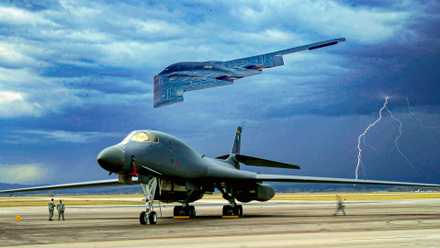
Why America’s Oldest Strategic Bombers Are More Valuable Than Ever
The weary warbirds that continue to defend the skies.
Limits On Forward Basing

There is a major difference between being logistically able to sustain stealth bombers at forward bases and being able to protect them on the ground. While forward basing the B-2 is a logistical headache, the USAF is very much able to do this at Diego Garcia and Guam, and it does so periodically. However, these deployments are generally for exercises, for geopolitical signaling, or when the Air Force is exceptionally confident in its ability to protect the bases during low-end conflicts.
For example, the USAF forward-deployed B-2s in 2025 at Diego Garcia as a warning to Iran. But when it launched Operational Midnight Hammer and Operational Epic Fury, these missions were flown directly from its home bases in the United States. The reason was a mixture of operational secrecy and concern for vulnerability on the ground.
Most of the manned-aircraft losses the US Air Force sustained in Operation Epic Fury were on the ground. Most Russian strategic bomber losses (mostly Operation Spiderweb) have likewise been on the ground. On the ground, the B-21’s stealth and advanced systems are irrelevant; it is just another high-value target. In practice, the Air Force will have a logistically easier-to-forward-deploy bomber, but also one that will be difficult to defend.
The B-21’s Needle To Thread

Paradoxically, the B-21 was designed not to be a hangar queen like the B-2, but in reality, it will likely always hide in hangars when deployed forward in times of conflict. These hangars don’t need to be climate-controlled, and it doesn’t need the extremely specialized infrastructure associated with the Spirit. But the B-21 will need to have some combination of hardened shelters to protect against strikes. Good enough to protect against small drone strikes may be sufficient in many cases, or even just tarps to hide from satellites.
At least, these hangars should provide ambiguity and targeting dilemmas. The B-21 is entering a world where it is much easier to sustain at forward and possibly dispersed bases, but also a world where those bases may not be secure. That said, if it is to fill its intended role of being a high-end penetrator workhorse with a reasonably high sortie rate, it must be forward deployed, at least to some extent.
The B-2 Spirit has demonstrated it can fly 30+ hour combat sorties from the United States to its targets in the Middle East and back again without touching down. The B-21 will undoubtedly be able to do the same. But while this is a remarkable feat, it is terrible for sortie generation and sustainability. This is a needle the Raider will have to thread should a high-end conflict break out in the Asia-Pacific.