dailynewsnblog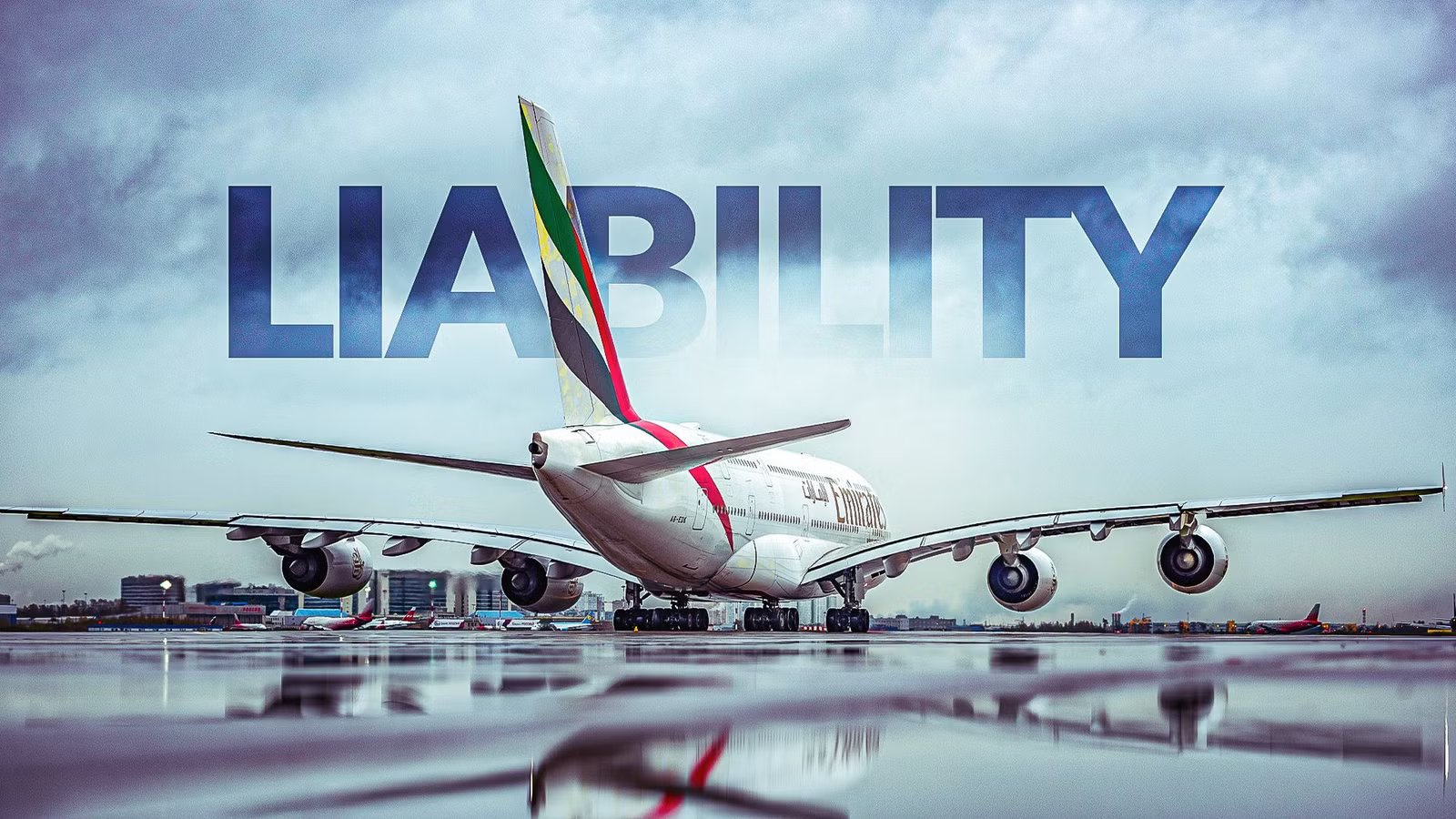
The Airbus A380 entered commercial service in 2007 as the largest passenger airliner ever built, carrying the promise of redefining long-haul travel. With two full passenger decks, unmatched cabin space, and seating for more than 500 passengers in typical configurations, the aircraft symbolized the peak of hub-based global aviation. Airlines initially embraced the superjumbo as a prestige aircraft capable of transporting enormous passenger volumes between the world’s busiest airports. Yet less than two decades later, the same engineering philosophy that once made the A380 revolutionary has become its greatest commercial weakness. Central to that problem is its four-engine layout.
The A380 was not abandoned because it was unsafe, unpopular with passengers, or technologically outdated. In many respects, it remains one of the most sophisticated and comfortable airliners ever produced. Instead, the aircraft became economically misaligned with the realities of modern airline operations. Improvements in twin-engine reliability, changes in route structures, escalating fuel and maintenance expenses, and the post-pandemic restructuring of airline fleets collectively undermined the economic case for four-engine commercial aircraft. Today, the A380 survives primarily in niche circumstances where exceptionally high passenger density can still offset its immense operating costs.
Four Engines Were Necessary At First

When Airbus began developing the A380 during the 1990s, a four-engine configuration was not a stylistic decision. It was a technical requirement. The aircraft was conceived as a massive long-haul transport capable of carrying more passengers farther than any existing commercial jet. To achieve that goal, Airbus designed an aircraft with a maximum takeoff weight of over 1,200,000 pounds (575 tonnes), vastly exceeding aircraft such as the Boeing 777-300ER.
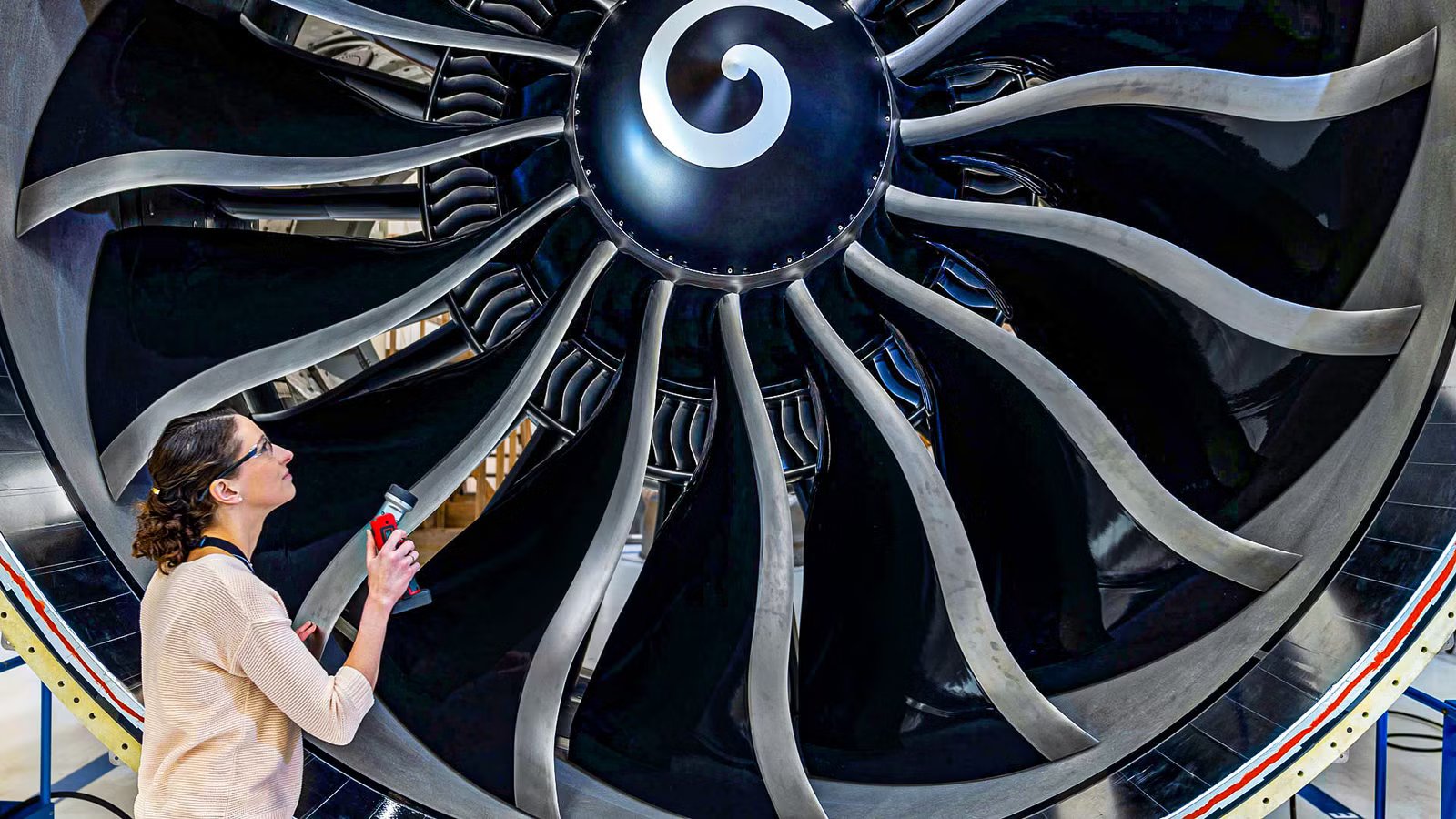
At the time, no twin-engine powerplant combination could safely and efficiently provide the thrust required for an aircraft of that size. The A380 therefore, relied on four high-thrust turbofan engines, either the Rolls-Royce Trent 900 or the Engine Alliance GP7200. Each engine could generate up to 76,000 pounds of thrust, allowing the aircraft to produce more than 307,000 pounds during takeoff. That level of power simply could not be achieved using two engines when the aircraft was designed.
Catch what other flight trackers miss
Emergency squawks, holds, NOTAMs — live signals, no signup.
Open tracker
Catch what other flight trackers miss
Emergency squawks, holds, NOTAMs — live signals, no signup.
Open tracker
Regulatory realities also reinforced the decision. During the 1990s, twin-engine aircraft faced strict ETOPS limitations, which governed how far they could fly from a diversion airport in the event of an engine failure. Four-engine aircraft did not face the same restrictions, giving them greater operational flexibility on ultra-long-haul routes across oceans and remote regions. At the time, this represented a meaningful advantage for airlines seeking maximum route freedom.
Importantly, Airbus designed the A380 around prevailing assumptions about future aviation growth. Industry forecasts predicted increasing congestion at major international hubs such as  London Heathrow Airport (LHR), Singapore Changi Airport (SIN), and
  Tokyo Narita Airport (NRT). Airbus believed airlines would respond by transporting larger numbers of passengers on fewer flights using extremely large aircraft. Under those conditions, the economics of a four-engine superjumbo appeared viable. However, aviation technology evolved far more rapidly than Airbus anticipated. Engine reliability improved dramatically during the 2000s, allowing twin-engine aircraft to become larger, more powerful, and more efficient. As a result, the assumptions underpinning the A380’s design gradually lost relevance.
Operating Cost Penalty Of Four Engines

The primary commercial problem facing the A380 is straightforward: four engines are extraordinarily expensive to operate. Even though the aircraft can spread costs across numerous passengers, the economics only work consistently when airlines can maintain exceptionally high load factors on dense international routes. Fuel consumption represents the largest challenge. The A380 burns approximately 4,600 gallons of jet fuel per hour, translating into almost $18,000 in fuel costs alone with current inflated prices. Total operating costs in 2025 were estimated between $25,000 and $35,000 per flight hour, depending on route structure, fuel prices, and maintenance requirements. By comparison, modern twin-engine aircraft such as the Airbus A350 operate at roughly $10,000 per hour.
Maintenance costs further magnify the disparity. Four engines require four sets of inspections, four overhaul cycles, and four expensive powerplants requiring continual monitoring and replacement parts. Industry estimates place A380 maintenance expenses between $6,000 and $8,000 per flight hour, significantly higher than comparable twin-engine widebodies. Airlines increasingly concluded that the operational advantages of the A380 no longer justified the financial burden associated with maintaining four large turbofan engines. The aircraft’s economics become particularly problematic when passenger demand weakens. Unlike smaller twinjets, the A380 cannot easily remain profitable with partially filled cabins. Airlines frequently need to sell hundreds of seats per flight to justify operating costs. On routes with fluctuating demand, this creates substantial commercial risk.
Qantas reportedly calculated that operating an A380 between Sydney and Los Angeles costs approximately $305,000 per flight. Although the aircraft can transport large passenger volumes, newer twin-engine aircraft can often achieve comparable profitability with lower capacity and substantially lower operating expenses. The industry’s shift toward efficiency therefore, placed the A380 at a structural disadvantage. Airlines increasingly prioritized flexibility, fuel economy, and lower financial exposure over maximum passenger capacity. In that environment, four engines became a liability rather than an advantage.
ETOPS Eliminated The Four-Engine Advantage

One of the strongest historical arguments for four-engine aircraft disappeared almost entirely during the A380’s operational life. ETOPS restrictions, once a major obstacle for twinjets, gradually expanded as engine reliability improved. Historically, twin-engine aircraft could not fly long distances from diversion airports because regulators feared the consequences of an engine failure over remote regions. Four-engine aircraft such as the Boeing 747 and A380 avoided these constraints because they retained greater redundancy. This gave large quadjets a meaningful advantage on transoceanic and polar routes.
By the 2010s, however, modern engines had become exceptionally reliable. Regulators responded by granting extended ETOPS certifications to newer twin-engine aircraft. The A350 eventually achieved ETOPS-370 certification, allowing it to fly as far as six hours and ten minutes from the nearest diversion airport. Boeing’s 787 family received similarly extensive approvals. These certifications effectively unlocked every commercially viable route for twin-engine aircraft. As a result, airlines no longer needed four engines to operate ultra-long-haul services safely or legally. Twinjets could perform the same missions while consuming significantly less fuel and generating lower maintenance costs.
This transition fundamentally altered long-haul fleet planning. Airlines that once depended on large four-engine aircraft increasingly replaced them with advanced twinjets offering comparable range but far superior economics. The 787 and A350 became particularly attractive because they combined long-range capability with lower trip costs and more manageable passenger capacity. The A380, therefore, found itself trapped between two eras of aviation. It was designed according to assumptions rooted in the 1990s, but it entered service just as those assumptions were becoming obsolete.
Timeline of ETOPS Certifications | |
|---|---|
Date | Event |
October 2007 | A380 enters service |
May 2014 | 787 receives 330-minute ETOPS FAA certification |
October 2014 | A350 receives beyond 180-minute ETOPS EASA certification |
Collapse Of The Hub-And-Spoke Assumption

The A380’s commercial struggles cannot be understood solely through fuel burn and engine counts. The aircraft was also built around a specific vision of global air travel that gradually lost dominance. Airbus designed the A380 for the hub-and-spoke model, in which airlines funnel passengers through major international hubs before redistributing them onto connecting flights. Under this system, large aircraft maximize efficiency by transporting enormous passenger volumes between congested airports with limited slots. The A380 excelled in precisely that environment.
However, the 787 and A350 enabled profitable long-haul service between smaller cities that previously lacked sufficient demand for large widebody aircraft. Airlines increasingly shifted toward point-to-point operations that bypassed major hubs altogether. Instead of routing passengers through London, Dubai, or Singapore, airlines could directly connect secondary cities such as Austin to Amsterdam or Brisbane to San Francisco using smaller, fuel-efficient twinjets. This became known as point-to-point operations. Additionally, carriers could add frequencies using smaller aircraft rather than relying on a single large departure, providing flexibility.
Consequently, only a limited number of airlines could fully exploit the A380’s strengths.  Singapore Airlines,
  Lufthansa, Qantas, and
  British Airways deployed the aircraft successfully on selected dense routes, but few carriers found enough profitable applications to justify large fleet commitments. Airbus ultimately delivered only 251 A380s before ending production in 2021, far below original expectations. The aircraft’s four-engine architecture amplified this problem because the high operating costs demanded extraordinary passenger density. Without consistently full cabins, the economics rapidly deteriorated.
Accelerating An Inevitable Decline

The COVID-19 pandemic did not create the A380’s commercial problems, but it accelerated trends that were already undermining the aircraft’s viability. When global passenger demand collapsed in 2020, airlines were forced to make immediate decisions about fleet simplification and cost reduction. Under those conditions, the A380 became an obvious target for retirement. Its massive operating expenses, high maintenance requirements, and dependence on dense international traffic made it difficult to justify during a period of sharply reduced demand.
Several carriers permanently retired their A380 fleets during or shortly after the pandemic.  Air France removed the aircraft entirely in 2020. Other operators, including Malaysia Airlines and Thai Airways, significantly reduced usage or reconsidered long-term plans for the type. By 2025, at least five airlines had fully retired their fleets. Importantly, the pandemic reinforced the industry’s preference for smaller twin-engine aircraft. Airlines discovered they could restore international networks more gradually and economically using A350s and 787s rather than relying on very large aircraft that required huge passenger volumes to remain profitable.
The Exception… Or Is It?

 Emirates. The carrier operates more than 100 A380s and intends to keep them flying into the 2040s. At first glance, this might appear to challenge the argument that four engines are commercially obsolete. In reality, Emirates demonstrates why the A380 only works under extremely specific conditions.
 Dubai International Airport experiences severe slot congestion, limiting the number of flights Emirates can add. Under those circumstances, increasing passenger volume per movement becomes highly valuable. The A380 allows Emirates to maximize throughput on high-demand routes linking Dubai with major global cities. Emirates also built its business model almost entirely around long-haul hub connectivity. Unlike many airlines that shifted aggressively toward point-to-point operations, Emirates continues to funnel huge passenger volumes through a centralized transfer hub. The airline therefore benefits directly from the A380’s enormous seating capacity.
Yet Emirates’ success also highlights the aircraft’s limitations. Very few airlines possess a comparable combination of slot constraints, global transfer traffic, and route density. Most carriers operate in environments where flexibility and efficiency matter more than maximum capacity. For them, the economics of four engines simply do not work.
The A380 ultimately represents a remarkable engineering achievement that arrived at precisely the wrong moment in aviation history. Its four-engine layout solved the technical and regulatory challenges of the 1990s, but rapid advances in twin-engine efficiency erased those advantages within a decade of the aircraft entering service. Rising fuel prices, expensive maintenance obligations, evolving route structures, and the collapse of traditional hub-focused assumptions steadily weakened the superjumbo’s commercial foundation. Today, the A380 remains admired by passengers and aviation enthusiasts alike, but admiration alone cannot overcome economic realities. Four engines once symbolized range, power, and operational freedom. In the modern airline business, they increasingly symbolize inefficiency.