dailynewsnblog
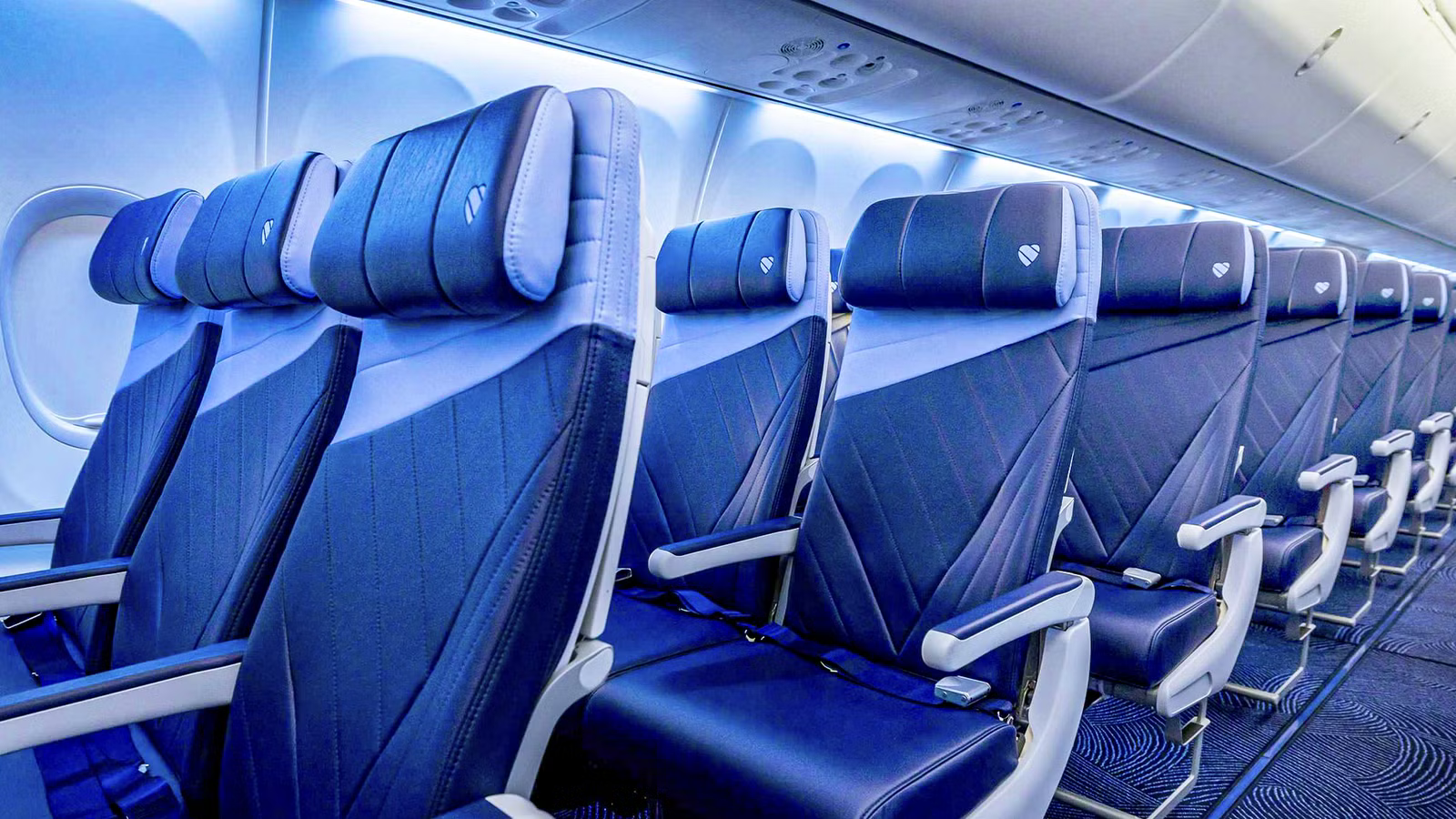
 Southwest Airlines has made a major change to the passenger experience, but one of the most consequential parts of its new seating system isn’t the assigned seat itself. For plus-size travelers who need extra space, the airline‘s Customer of Size policy creates financial uncertainty: passengers may have to buy a second seat to guarantee accommodation, but getting that money back depends on how much space remains when the aircraft departs.
The policy raises an uncomfortable question for an airline whose flights typically operate around 80% full. If a passenger pays for two seats to travel comfortably and safely, why should a refund depend on whether other customers have purchased the remaining seats? Southwest’s shift away from open seating makes this issue especially significant, placing an established accommodation policy within a new commercial system built around assigned seats, fare bundles, and differentiated onboard space.
Why Southwest’s New Seating System Changes The Customer Of Size Policy

Southwest Airlines officially ended its approximately 50-year open-seating tradition on January 27, 2026, replacing it with assigned seating and a group-based boarding process. The change, reported by CNBC, marked a fundamental shift for an airline that had long allowed passengers to select available seats after boarding rather than purchasing a specific location in advance. The new arrangement gives travelers more certainty about where they will sit, but it also makes seat allocation a more explicit part of the booking process.
For passengers who cannot comfortably fit within a single seat’s boundaries, that distinction matters. Southwest’s official Extra Seat Policy addresses travelers who need more room, including those who might occupy the neighboring seat, fully or partially, when the armrests are lowered. The airline’s Customer of Size (CoS) arrangements let these passengers purchase an additional seat, providing space that would otherwise be occupied by another customer. Buying the extra seat in advance is the most straightforward way to secure that accommodation, instead of relying on adjacent space being available at the airport.
The controversy concerns what happens after the journey. Under the policy described in the National Association to Advance Fat Acceptance’s Southwest FAQ, a refund for the additional seat is conditional on the flight departing with at least one open seat, and the customer must request the refund within 90 days of travel. That means the passenger’s final cost can depend on a particular flight’s load, even when the need for extra space hasn’t changed. The crucial question, therefore, is how often Southwest’s aircraft have enough unsold capacity to make those refunds possible.
How An 80% Load Factor Makes The Refund A Financial Gamble

The uncertainty becomes clearer when Southwest’s typical flight occupancy is considered. A detailed report by Marketplace highlighted the airline’s approximately 80% load factor, a measure that compares occupied seats to available seats. At that level, an aircraft has an average of roughly one-fifth of its seats unoccupied, but that does not mean every flight will have sufficient spare capacity to guarantee a refund.
Consider a hypothetical Southwest Boeing 737-800 with 175 seats. At an 80% load factor, approximately 140 seats would be occupied, leaving 35 unoccupied. A passenger purchasing two seats would therefore be unlikely to encounter a capacity problem if this average described every departure. However, the figure represents an average across operations, not a promise about any particular flight. Popular holiday departures, business-heavy routes and flights disrupted by cancellations elsewhere in the network can operate with substantially less spare capacity.
The distinction is important because Southwest’s refund condition is tied to the individual flight’s departure. Under its official extra-seat refund rules, the flight must depart with at least one open seat, both tickets must be purchased in the same fare class, and the request must be submitted within 90 days of travel. The next complication is that an apparently empty seat on a booking screen does not necessarily mean a passenger will qualify for a refund after departure.
Average occupancy is not a forecast for a particular departure. The refund depends on the actual flight’s qualifying conditions. The practical consequence is that customers cannot confidently budget for the lower price of a single seat, even if their chosen route usually has spare capacity. If the aircraft departs full, the passenger may still have to pay for the second seat. That raises another question: what can travelers do to protect their seating arrangements without risking a last-minute problem at the airport?
Why Booking Two Seats In Advance Matters More Than Ever

Southwest’s advice is simple: passengers who need more than one seat should reserve the additional seat in advance. According to the airline’s booking instructions, customers can book the required number of seats through the normal booking process and identify the additional ticket using the designated “XS” name format. The second seat must be booked as an additional passenger, and the airline provides specific instructions for entering the name correctly.
This advance purchase is primarily to secure accommodation. Southwest states that passengers who arrive without reserved adjacent seats may find no suitable pair available. If employees determine a second seat is required, the airline says it can provide a complimentary additional seat when adjacent space is available, which may involve changing to a lower seat category. If the flight is sold out or adjacent seats cannot be provided, the passenger may be rebooked on another flight with suitable space. These provisions are explained in the airline’s airport and boarding guidance.
The distinction between advance planning and refund eligibility is essential. Buying the extra seat reduces the risk of arriving at the airport only to discover that the required space is unavailable, but it does not remove the financial uncertainty attached to the refund. Customers should retain their booking details, verify that both seats are in the same fare class, and submit any eligible refund request within the 90-day window. Even with these precautions, however, the new system leaves passengers exposed to a commercial variable they cannot control: how many other travelers show up for the same flight.
Assigned Seating Adds Another Layer To Southwest’s Commercial Shift

Southwest’s new seating system gives the airline more control over how it sells cabin space. Under the previous open-seating model, passengers generally selected an available seat when boarding, whereas the new system allows customers on most fares to choose a specific seat during booking. The airline also introduced eight boarding groups, replacing its traditional A, B and C groups with numbered positions, and removed the familiar numbered boarding pillars in favor of digital screens and a two-lane process.
The change accompanies four fare bundles: Basic, Choice, Choice Preferred and Choice Extra. According to Southwest’s official seating announcement, these products offer different levels of seat selection, boarding priority, and other benefits. Choice Extra includes an Extra Legroom seat, which offers up to five additional inches of legroom compared with Standard and Preferred seats. Some premium seat assignments also start at around $70 per flight leg, though actual prices vary by route and availability.
For Customers of Size, it is very important to understand what an extra seat actually provides. Additional legroom is not the same as additional seat width, and a premium seat does not automatically replace the need for a second seat when a passenger cannot fit within the boundaries of one. Customers should assess their accommodation needs before choosing a fare, rather than assuming a premium seat will solve every seating concern.
The broader financial context is also changing. Southwest has introduced checked-bag fees for many standard-fare customers, ending the airline’s long-standing universal appeal of two free checked bags. Its current booking information lists fees of $45 for the first checked bag and $55 for the second on applicable US mainland fares, while some higher-tier customers retain baggage benefits. For travelers who already need to budget for two seats, seat charges and other travel expenses could make the total cost less predictable. But the question remains whether the refund arrangement is simply an unavoidable consequence of selling every seat or a policy choice that could be designed differently.
The Difference Between Fair Accommodation And Revenue Management

The central tension is that Southwest’s Customer of Size policy serves two purposes that do not always align. Requiring advance reservations for adjacent seats helps the airline manage its cabin inventory and reduces the chance of leaving a passenger without the space they need. At the same time, conditioning the refund on an open seat means the customer bears some of the financial risk associated with the airline’s ability to sell its inventory.
Southwest’s position is not that customers who need extra space should be denied accommodation. Rather, its published rules establish a mechanism to reserve the space while limiting refunds to qualifying flights. The airline’s extra-seat policy makes the armrest the definitive boundary between seats and recommends purchasing an additional seat in advance when necessary. This gives passengers a clearer standard for determining whether they need two seats, although individual circumstances can still make planning difficult.
For the airline, the system distinguishes between guaranteeing physical space and guaranteeing the final price of that space. A passenger can pay for two seats and secure the required accommodation, yet still face uncertainty over whether the second fare will ultimately be refunded. For a customer on a high-demand route, that difference may be substantial, particularly when buying the additional seat doubles the initial ticket expenditure.
The policy also places a burden on passengers to understand and follow the refund process. The 90-day deadline is not an automatic promise that money will be returned; it is the period in which an eligible request must be made. Customers must satisfy the flight-occupancy and fare-class requirements as well. The unanswered question is whether Southwest will eventually adjust these conditions as it gains more experience with assigned seating and the demand for additional seats.
What Southwest’s Policy Means For Plus-Size Travelers

For passengers who need additional space, the safest approach is to treat the second seat as a necessary travel expense until you confirm a refund. The policy offers a way to recover the cost, but travelers should not assume that an aircraft operating below average capacity will necessarily qualify. The relevant conditions apply to the actual departure, not to the airline’s network-wide load factor or a passenger’s impression of how busy the airport appears.
Before booking, customers should read Southwest’s official Customer of Size policy, purchase adjacent seats in the same fare class, and make sure the reservation follows the airline’s instructions. After the flight, they should check their eligibility and submit the refund request within the deadline. Anyone whose itinerary includes multiple flights should pay close attention to the conditions for each flight rather than assuming eligibility on one leg guarantees eligibility on another.
Southwest’s transition to assigned seating also gives the airline an opportunity to make its rules easier to understand before customers pay. Clear explanations of refund eligibility, how connecting itineraries are treated, and when an extra seat may be provided at the airport would help travelers make better-informed decisions. The airline’s published policy sets the current requirements, but it doesn’t eliminate the uncertainty of paying upfront for a seat that may or may not qualify for a refund.
Southwest’s new seating is more than ending an unconventional boarding tradition. It also aims to monetize seat selection while balancing passenger needs against finite cabin capacity. The Customer of Size refund provision shows what happens when those objectives collide: the passenger can secure the space they need, but the final cost still depends partly on demand. Whether the arrangement proves workable long term will depend on how consistently customers can understand, access, and use the refund process — and whether Southwest eventually decides that accommodation should come with greater price certainty.