dailynewsnblog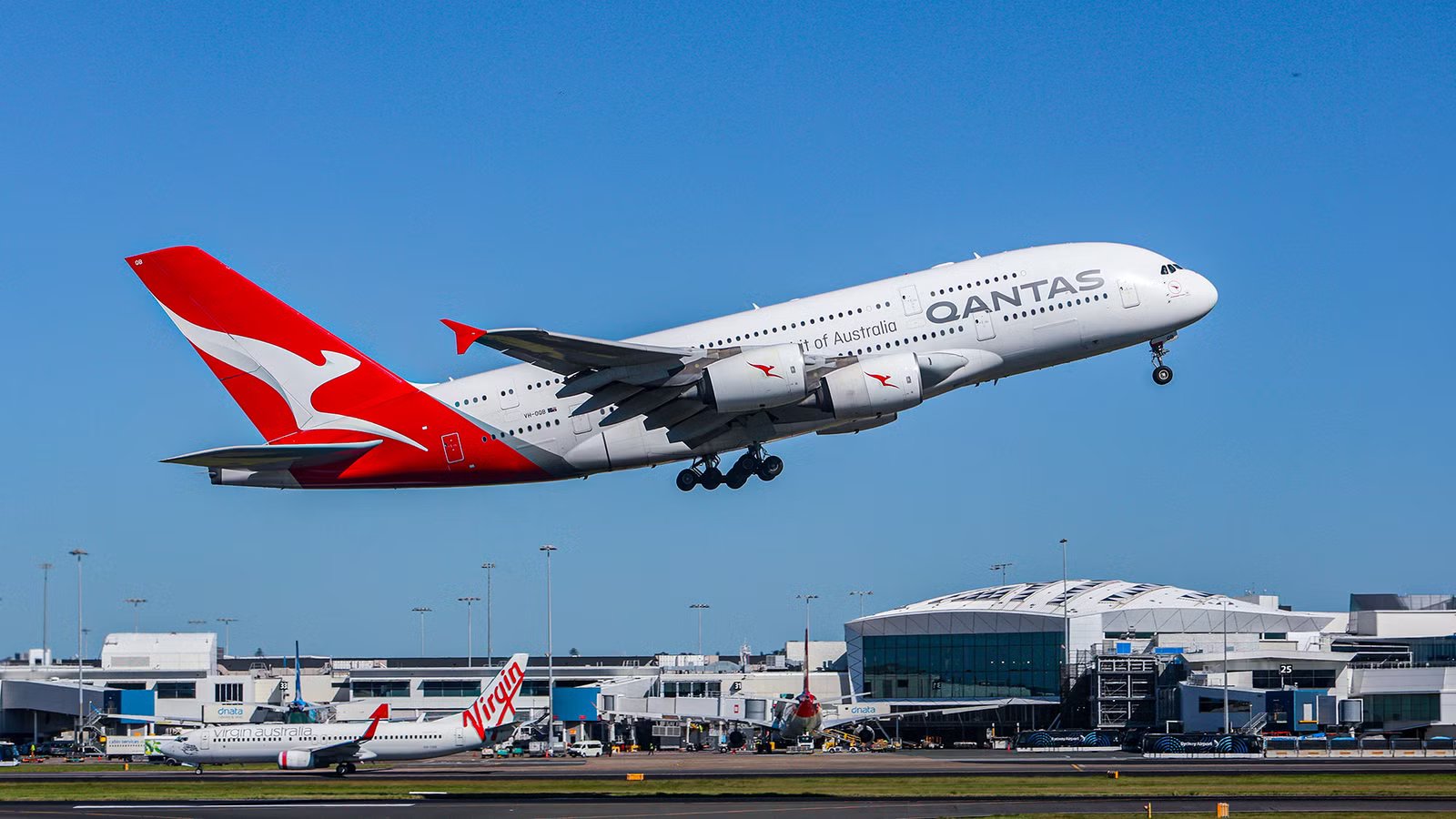
Qantas was not the world’s biggest fan of the Airbus A380. After expressing initial enthusiasm when it ordered the type in 2000, the carrier has since expressed buyer’s remorse regarding the enormous, costly double-decker. Former CEO Alan Joyce remarked in 2014 that he wished he had ‘a time machine‘ so that he could go back to 2000 and order Boeing 777s instead of the A330s, A380s, and 747-400ERs that his airline actually ordered that year. When the COVID-19 pandemic struck, it would have seemed like an excellent opportunity for Qantas to finally dump the whales.
But over six years after the A380s were placed into storage, ten out of the 12 that Qantas had ordered are now back in the skies. Qantas returned its final A380 to the skies in December 2025 and also upgraded the cabins of its A380s. In addition, the Australian flag carrier has not committed to retiring the type until the 2030s, despite its increased focus on opening ultra-long-haul routes with smaller aircraft. Against all odds, the A380 will remain a critical part of the Qantas fleet for years.
Qantas’s Relationship With The Airbus A380

Qantas was one of the earliest customers for the A380, ordering it as the A3XX in 2000 alongside the A330, while also launching the 747-400ER in the same order. At the time, Qantas’s long-haul strategy revolved around a handful of trunk routes using 747-400s, and the A380 was a natural progression. In the 2010s, however, Qantas’s strategy shifted. The carrier began receiving 787-9 Dreamliners in 2017, and subsequently launched new ultra-long-haul flights to Europe from Perth, while also flying to the US. Pre-pandemic, Qantas served New York via Los Angeles with the 747, but it now flies the 787 to the Big Apple via Auckland.
In addition to Joyce’s 2014 comments regarding the carrier’s 2000 order, he also remarked in 2017 that it costs the airline less to fly two 236-seat 787s than to fly a single 485-seat A380. The carrier also declined to order additional A380s after its initial order of 12 examples. With that said, Joyce has also maintained that the carrier still had a place for the aircraft to serve slot-restricted airports, but the carrier has generally favored the 787 for its future growth plans, with the A380 serving as a small flagship fleet.
Crucially, while the carrier has overall expressed lukewarm sentiments regarding the A380, it sent the aircraft into long-term storage at the start of the pandemic rather than retiring them. Qantas had to pay to maintain these planes while they were grounded, indicating that the carrier saw potential in the A380s’ return. In January 2022, Qantas began returning its A380s to service, returning its 10th and final Superjumbo to service in December 2025. It ended up retiring just two A380s, one of the smallest reductions of any A380 fleet worldwide.
Qantas’s Fleet Strategy With The A380

Post pandemic, Qantas not only returned its A380s, but it also invested in refurbishing the interiors of the superjumbos. This included refreshing the plane’s onboard lounge, installing new business class seats, and expanding its premium cabin footprint. Furthermore, in 2023, Qantas placed a large order for 787s and A350-1000s (separate from its earlier order for the A350-1000ULR), but crucially, this order was specifically to replace its A330 fleet, and not the A380.
Qantas holds purchase rights for additional aircraft to replace the A380 in the future, but those aircraft won’t arrive until the 2030s. Until then, the carrier remains committed, with the A380 serving a vital role beyond just being short-term lift until Qantas receives new planes. Many airlines, such as Lufthansa, planned to retire or had retired the A380 during the pandemic, but then returned some of their examples to service after demand rose in the years following, as they were short on widebody capacity.
|
Qantas Widebody Fleet |
In Service |
On Order |
|---|---|---|
|
Airbus A330-200 |
16 |
|
|
Airbus A330-300 |
10 (plus two dry-leased) |
|
|
Airbus A350-1000 |
12 |
|
|
Airbus A350-1000ULR |
12 |
|
|
Airbus A380-800 |
10 |
|
|
Boeing 787-9 Dreamliner |
14 |
4 |
|
Boeing 787-10 Dreamliner |
8 |
Qantas, however, has always maintained a place for the A380, in part because it otherwise lacks a large widebody. Many other airlines also operate the Boeing 777-300ER, an efficient large long-range airliner, but the 747-400 served this role at Qantas until the pandemic. With these aircraft retired at the start of the pandemic, the next-largest planes in its fleet are its modestly sized A330-300s and 787-9s. Without the A380, Qantas would significantly cut capacity at its top destinations.
Qantas Has Ended Airbus A380 Flights On 12 Routes: Full List
Over 60% of flights were on three routes that are no longer served or will end soon. Discover them all here!
Qantas’s Network Strategy With The A380

Currently, Qantas deploys the A380 to Los Angeles, Dallas/Fort Worth, Johannesburg, and London Heathrow via Singapore, as well as on an additional flight to Singapore. While the carrier has been shifting towards serving a higher number of destinations with smaller aircraft, its trunk routes remain high-volume operations, necessitating an aircraft such as the 777-300ER at the very least, but easily supporting the A380 in Qantas’s case. Its primary hub in Sydney Kingsford Smith Airport (SYD) is slot-controlled, as are most of its A380 destinations.
While it may be theoretically cheaper to fly two 787-9s than a single A380, Qantas can’t feasibly add another daily frequency on many of these routes. Dallas/Fort Worth is not slot-constrained, but it is the largest hub of the carrier’s joint venture partner  American Airlines, and Qantas therefore benefits from the huge amount of available feed. Meanwhile, in addition to high demand on the Sydney to Johannesburg route, the carrier also benefits from the A380’s comparatively excellent hot-and-high performance, largely due to its four-engine configuration.
Qantas will begin taking delivery of Airbus A350-1000s in 2028, which will have a much higher seat count than the 238-seat layout on its A350-1000ULRs. The aircraft is also expected to eventually replace the A380, but only through future options. Today, however, Qantas lacks a large widebody apart from the A380, while its trunk routes require an aircraft larger than the 787.
The Qualities Of The Airbus A380

Qantas is one of only a handful of airlines to truly take advantage of the A380’s range. At nearly 8,000 nautical miles (15,000 km), the A380 has one of the longest ranges of any airliner in history, and Qantas takes advantage of this capability on its routes to Los Angeles, Dallas/Fort Worth, and Johannesburg. Given Australia’s remote location, the carrier operates comparatively more 12-to-15-hour routes than an airline like Lufthansa, and some of these routes are close to the limit for the 747 or 777-300ER but are easily flown by the A380.
In addition to pure range, the A380’s size and extraordinary payload-range capabilities made it an excellent aircraft for high-demand long-haul routes. Not only can Qantas operate these long-haul routes with a comfortable margin, but the A380 can operate them with practically every seat filled and a reasonable amount of cargo. Furthermore, in the rare case that an A380 is operated on a route that requires payload restrictions, an airline is still selling hundreds of seats. Blocking 50 seats on a 787 on the other hand, can severely worsen a route’s economics.
|
Qantas A380 Routes |
Distance (nautical miles) |
Distance (km) |
|---|---|---|
|
Sydney-Singapore |
3,395 |
6,288 |
|
Singapore-London |
5,879 |
10,888 |
|
Sydney-Johannesburg |
5,963 |
11,044 |
|
Sydney-Los Angeles |
6,507 |
12,051 |
|
Sydney-Dallas/Fort Worth |
7,454 |
13,804 |
The A380 failed in part because its per-seat costs weren’t compelling enough to justify its use over a 777-300ER or a 787, but it still offers low cost-per-available-seat-mile (CASM) when fully filled, and Qantas is filling these planes on its trunk routes. Compared to the 747, the A380 is a massive improvement, and the aircraft type is actually more fuel efficient than many observers give it credit for. The main issue with the A380 wasn’t its operating costs, but rather that they weren’t low enough to justify the added risk of selling 450 to 500 seats in many cases.
It’s 2025, But Why Do Some Airlines Still Love The Airbus A380?
Popular with passengers but airlines have gradually phased them out.
The Brand Effect Of Flying The A380

To the average traveler, a 787 is essentially the same plane as an A330 or 777. There are very few aircraft types recognized by the public, but the A380 is one of them. Passengers are not only aware of the distinctive aircraft’s size, but also of its smooth ride, spacious cabin, and low noise levels. It’s often the most popular airliner in a carrier’s fleet among passengers, and while this isn’t a compelling enough reason on its own to justify the type’s operation, it does boost an airline’s brand image.
In addition, the A380 is the only aircraft in Qantas’s fleet to offer a first class cabin, and discontinuing its operations would mean discontinuing the cabin. Qantas, however, remains committed to first class, even as other airlines pivot towards business class instead, and it lacks another aircraft type that could easily accommodate large first class seats without sacrificing overall capacity. Qantas will be debuting a new first class product on its A350-1000ULRs, but otherwise, it has to fly the A380 in order to maintain first class.
As a whole, while the A380 is a risky aircraft to operate, it’s popular with passengers while offering more premium seating than any other type. It fits well on Qantas’s trunk routes, and while its economics aren’t excellent today, this speaks more to the innovation of the Boeing 787 and A350, as well as the effectiveness of the 777-300ER. For Qantas, the A380 will remain a strong asset until the type begins to show its age, at which point it will exercise its A350 options.