dailynewsnblog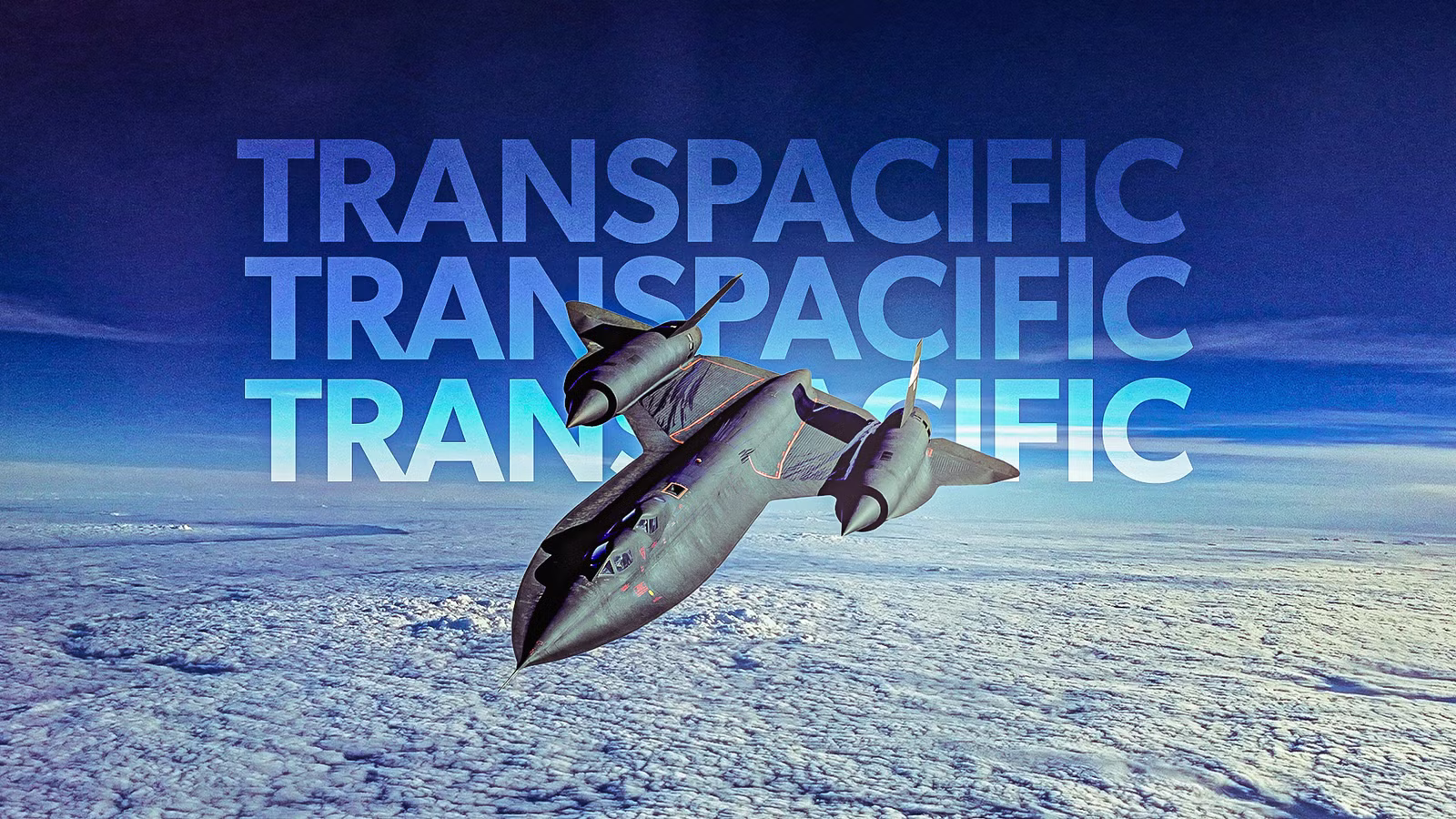
The Lockheed SR-71 Blackbird remains the undisputed speed king of the skies. To this day, its legendary 2,200 mph transpacific speeds have never been equaled, even by the legendary Concorde. Even modern civilian supersonic projects like Boom are likely never to surpass it.
One of the most famous cases was when United States Air Force (USAF) pilot David Peters took off from Kadena Air Base in Okinawa at 10:00 AM on an unspecified date. According to The Aviation Geek Club, his Saturday route in the SR-71 Blackbird cut past the Korean demilitarized zone, over the Sea of Japan and the Aleutian Islands. It ended at Beale Air Force Base in California. By the time the crew stripped off their pressure suits and finished their debrief, they walked into the officers’ club in time for Friday happy hour. However, pulling off this ‘time warp’ takes a massive physical toll on the aircraft. To understand why commercial airlines never adopted this mind-bending speed, consider the staggering maintenance nightmare required to keep the Blackbird operational.
The Blackbird’s Speed Run Across The Pacific

Immediately after climbing out, Peters brought the aircraft up to a subsonic refueling altitude to meet their first shadow. Navigating this initial phase was a heavily choreographed dance. They punched through heavy clouds and rain to locate their first KC-135Q tanker waiting over the Sea of Japan. Hooking up to the tanker’s boom required intense concentration. The engines transformed from standard turbojets into high-speed ramjets as the speed passed Mach 3. Cruising at 80,000 feet, the exterior skin glowed red-hot from atmospheric friction, sealing the fuel tanks tight. Peters directed the nose toward the Korean Demilitarized Zone.
At 2,200 miles per hour, the landscape blurred beneath them. They screamed over the frigid waters of the Sea of Okhotsk and skirted past Russia’s heavily fortified Kamchatka Peninsula. As the fuel gauges began to drop after roughly ninety minutes of Mach 3 flight, Peters pulled the throttles back, letting the aircraft decelerate and descend into the thick, turbulent air over the Aleutian Islands.
Off the coast of Adak, Alaska, a second KC-135Q tanker was waiting. The final supersonic leg took them southeast across the Pacific Ocean. Somewhere in the open ocean, the Blackbird crossed the International Date Line.
As they approached the California coastline, Peters pulled the throttles back for the final time, stepping down through the atmosphere as the titanium skin cooled and contracted. They executed a low approach over the runway, pulled up into a tight, closed visual pattern, and touched down at Beale Air Force Base.
A Commercial Airliner Comparison To Peters’ SR-71

The illusion of time travel on Peters’ flight is also explained by the International Date Line and the fact that the Blackbird could well outpace the rotation of the Earth on its way to California from Japan. First, crossing the date line resets the calendar. When Peters and his reconnaissance systems officer, Ed Bethart, took off from Kadena Air Base, they headed eastbound. That put their aircraft on the same trajectory as Earth’s rotation, giving it a kind of time-dilating speed boost, as the jet stream does for an airliner.
When a standard commercial flight leaves Tokyo at 7:45 PM and lands in Los Angeles at 1:55 PM on the same day, it is not moving faster than time. The plane flies east for ten hours, but crossing the International Date Line automatically winds the calendar back 24 hours. What Peters did was not physically outrun the sun on his flight to California. His aircraft compressed actual flight time so severely that he maxed out a loophole in the time zone system.
An airliner flying a similar itinerary would arrive at its destination with a time on the clock that looks like it’s seven hours before departure. Peter technically arrived at Beale on the Friday afternoon before he departed because his airplane was fast enough to cover almost three times as many time zones as the duration of time he spent in the air.

Because the stress on the aircraft was so severe, the Air Force used the Blackbird’s maximum speed very sparingly to avoid tearing the planes apart. Out of more than 53,000 total flight hours across the history of the program, the fleet spent only about 22% of its time above Mach 3.
Even during the famous 1968 crossing, the jet averaged roughly 1,217 mph (1,958 km/h) over the 6,086 miles (9,794 km) in five hours. That is only about half of its maximum cruise speed because the plane spent so much time on slow segments, high-altitude climbs, and midair refueling. The jet unleashed its full speed only in short bursts, underscoring the staggering cost of keeping it in the air.
Peters was quoted by 19FortyFive on his time-bending journey:
“We arrived with a low approach, pulled up into a closed pattern and landed. Following de-suiting and debrief, we deposited our classified flight documents, jumped in a car and arrived at the officers’ club for Friday night happy hour at 16:30, 17.5 hours before we left Kadena.”
“Try that in any aircraft other than the SR-71… Besides, this is actually a true story.”
Kelly Johnson’s SR-71: The One And Only Habu

This feat was only possible because Kelly Johnson and the Lockheed Skunk Works tossed out the standard aviation rulebook to build the SR-71. It was nicknamed the ‘Habu’ by locals in Okinawa after a black snake found on the islands where it flew from. The sleek black airframe understated the incredible engineering and craftsmanship that made it possible.
To survive the Mach 3 thermal barrier, Johnson’s Skunk Works division at Lockheed manufactured the airframe out of 93% titanium, sourcing the raw metal covertly from the Soviet Union at the height of the Cold War. The Skunk Works team engineered leaky expansion joints that only sealed when the metal grew red-hot from atmospheric friction.
They also designed custom, aluminum-infused tires that wouldn’t explode upon landing. They created the Pratt & Whitney J58 engines, which utilized moving inlet cones to shift from standard turbojets into high-speed ramjets in midair.
The plane consequently poured fuel on the runway until it took off, at which point the heat caused the metal to expand and shut the tanks. The engines also needed a rare triethylborane igniting fluid for its special JP-7 fuel, which had such a high flash point you could throw a lit cigarette into a bucket of it.
The Concorde Tries Its Hand

Commercial aviation tried a milder version of this with Concorde, but the physics were still punishing. The single most famous illustration of this gap occurred on September 1, 1974, when an SR-71 screamed from New York to London in a mind-boggling 1 hour, 54 minutes, and 56 seconds. By comparison, the absolute fastest commercial record the Concorde ever posted on that same route was 2 hours, 52 minutes, and 59 seconds.
Despite the lack of scientific method, that roughly puts the fastest civilian aircraft ever constructed over 1 hour slower than the Blackbird on the same course. The defining physical bottleneck for the Concorde was its metallurgy. The aluminum speed limit held the Concorde back.
While aluminum was cost-effective and easy to manufacture, it possessed a hard thermal barrier. Pushing the Concorde beyond Mach 2.04 would generate atmospheric friction hot enough to soften the aluminum skin, causing the airframe to warp and weaken structurally. The Blackbird overcame this environmental constraint entirely by utilizing its incredible titanium airframe.
Building a civilian airliner with the capabilities of the SR-71 Blackbird is an impossible dream, dead on arrival, simply because of the staggering financial and manufacturing complexity required to keep such a machine operational. Every piece of a Mach 3 aircraft must be custom-engineered to survive extreme environments, driving replacement costs into the stratosphere. And there’s the incredible amount of maintenance, the logistical supply chain, and the fact that it poured fuel on the tarmac from its loosely fitted titanium skin panels before every takeoff.
The Invoice Behind The Skunk Works Legend

A transpacific delivery flight like the one Peters described was as much a logistics exercise as a flight. His route alone called for tanker meetings over the Sea of Japan and near Adak, and 19FortyFive reported that every SR-71 mission required KC-135Q tankers that carried JP-7 and nothing else.
By the late 1980s, the 12 SR-71 aircraft still on the books cost about $260 million a year, which was roughly $20 million per airframe. The Pentagon estimated at the time that a Blackbird’s operating cost was near $85,000 per flight hour. The specialized fuel alone ran about $18,000 an hour. The Air Force argued that the money would instead sustain two entire tactical fighter wings and retired the fleet in 1990.
Congress spent $100 million to bring two Blackbirds back in 1995 and another $30 million in 1997, per 19FortyFive, and the program was shut down again by 1998. The final days of the SR-71 Blackbird program were defined by a bitter, behind-the-scenes war of budgets, politics, and shifting military priorities, proving that the only thing capable of grounding the world’s fastest jet was a politician’s pen.