dailynewsnblog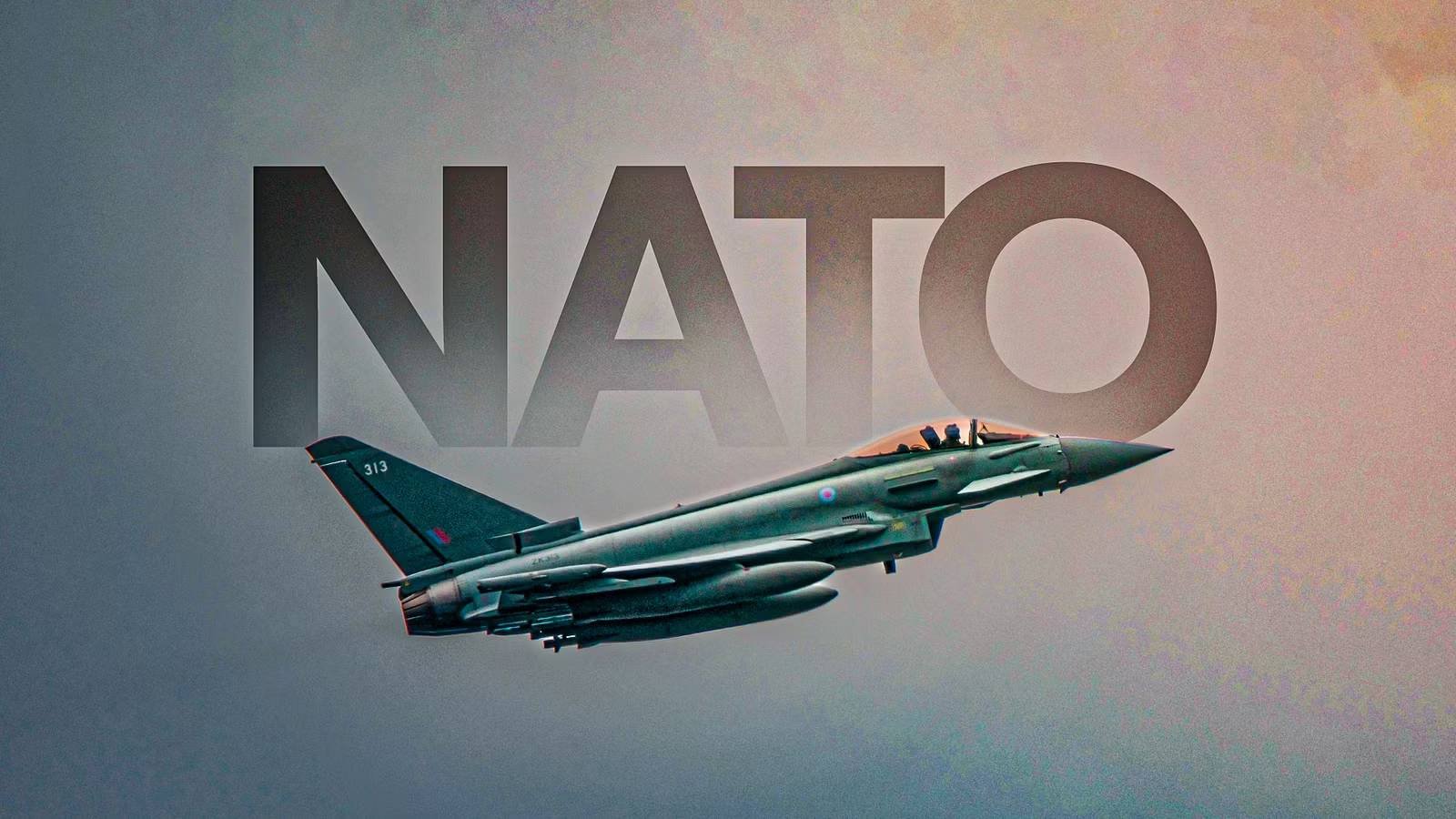
When Russia began its unprovoked assault on Ukraine in 2022, the world was shocked. The 30-member nations of the North Atlantic Treaty Organization immediately began to consider the wider threat to European security. In the four years since the ‘special military operation,’ as Russian President Vladimir Putin described the invasion, two more nations have joined the alliance to consolidate the defense of Continental Europe.
The military analysis of the threat level that the Russian Air Force poses in 2026 varies depending on the source. However, there are some facts that remain true and indisputable about its tactical capabilities. First and foremost, there are fully operational fighters still available via the small cadre of Sukhoi Su-57Felon jets. The second fact that cannot be denied is that Russia is not afraid to lose significant amounts of equipment in order to achieve what many other commanders would consider negligible gains on the battlefield.
The clear advantage of stealth technology, combined with automation and advanced sensors, has given impetus to the nations of Europe to work in concert with America to develop the most advanced aerial warfare systems ever seen. While many legacy aircraft are being modernized to bridge the gap, virtually every military force under the umbrella of NATO is pushing to modernize its air force as rapidly as possible to ensure both adequate defense and deterrence in the face of unprecedented aggression in the 21st century.
United By Shared Defense And Common Values

Finland and Sweden, as the newest members, bring advanced Air Warfare capabilities as part of their overall military contributions. This has been a major improvement to the total defense posture of the alliance, with 14 of the 32 member Air Forces operating or already having ordered the Lockheed Martin F-35 Lightning II stealth fighter. Aside from the United States, six other nations already have at least part of their order fulfilled with operational jets in service.
The unprecedented rift between NATO and the United States under the mercurial, short-sighted leadership of the Donald Trump presidential Administration has alienated many of America’s closest allies but has not yet fractured the alliance. At least some military analysts in Europe still believe that maintaining close ties with the US is in the best interest of all partner nations, as relations are expected to improve in the future when new leadership is installed in America. This is a direct factor that has influenced some of the procurement decisions by European Partners in the F-35 Joint Strike Fighter program.
Some nations, like Denmark, have been very vocal about their concerns over the potential kill switch the US holds over the F-35 program as the leading and controlling party. It is speculated that some nations, like Switzerland, Portugal, and Spain have either completely canceled or significantly reduced their order of the JSF over this concern. At the same time, other parties like Canada, Denmark, and the United Kingdom have proceeded with procurement to bolster their Air Force on the premise that shared defense outweighs short-term political interests.
The JSF Umbrella

The F-35 Lightning II has become the primary driver for NATO’s air power modernization, with roughly 600 jets expected to be stationed across the European continent by 2035. The F-35 program currently has 20 member nations, the vast majority of which are NATO partners. This is directly related to the preceding General Dynamics F-16 Fighting Falcon and McDonnell Douglas F4 Phantom II fighter projects.
Although Fat Amy, as the F-35 is jokingly referred to for its girthy airframe, does not have the same maneuverability and performance as some Legacy airframes like the Eurofighter Typhoon or Dassault Rafale, it makes up for that with standoff engagement and stealth technology. Even more importantly, those two tactical qualities combined with its data link networking, to make it a digital quarterback on the battlefield.
Working in conjunction with older air frames that have higher payloads and better performance, the F-35 can paint targets from deep behind enemy lines, while aircraft loitering outside the engagement zone of the adversary can lob stand-off munitions at targets designated by a JSF from any of the 32 member nation air forces.
This is a truly revolutionary tactical and strategic capability. Not only can every air force communicate through a simple, synchronized system that shares real-time tactical data, but munitions deployed on any platform, from any air force, can be targeted using shared systems within a unified system of systems.
The Tactical Revolution Of The Joint Strike Fighter

Rather than just a fighter, the F-35 acts as a node in a unified network. It can collect data deep in enemy territory and share it instantly with ground troops, naval ships, and other aircraft, enhancing the situational awareness of the entire Alliance. In addition to its conventional strategic role, which makes it a crucial force multiplier, the F-35 is also a vital element of NATO’s nuclear sharing policy.
Member states like the United Kingdom and Germany have specifically procured the JSF in order to fulfill their nuclear deterrence mission because the aircraft is not only certified to carry nuclear arms, but its stealth capability makes it uniquely effective in carrying out this doomsday mission. In terms of deterrence, the F-35 represents a credible threat that is undeniable and present that forces and adversaries like Russia to refrain from using weapons of mass destruction.
In terms of routine missions flown by NATO Air Forces, the F-35 has transitioned all its partner forces from a focus on kinematic dog fighting to data-based warfare. While preceding airframes like the Typhoon, F-16, Tornado, or even Rafale may have the upper hand in a dogfight, the technological capability of the F-35 makes it a far more lethal and survivable asset in a high-end conflict.
The Block Four upgrade continues to enhance the aircraft into a future-ready platform with improved artificial intelligence, computing power, and the ability to integrate next-generation weapons. On top of that, being a universal platform means you can seamlessly operate from any air base in Europe, regardless of the operator, thanks to the shared logistical supply chain and infrastructure that sustains the entire Global Fleet.
The 4.5-Gen Bridge

An important factor in the modernization of the NATO air forces is the upgrade and improvement of legacy airframes which still offer a great deal of tactical capability for a significantly lower investment than new 5th-gen platforms. Specifically, the Typhoon tranche 5 and the Rafale F4 are currently at the cutting-edge technology level of non-stealth fighter jets. Although these aircraft cannot do everything the JSF can, they can fulfill many mission requirements until a superior platform is developed.
Despite the absence of radar-defeating designs, 4.5-Gen fighters offer interfaces with open software architecture and artificial intelligence, as well as unmanned platform support. Using new sensors like advanced radar and electronic warfare suites dramatically improves the survivability and combat effectiveness of legacy airframes that already offer significant performance and capability. Compounding that, new technology that can interface with advanced drones and weapons brings the non-stealthy but high-performance fighters nearly up to the same standard as a 5th-gen fighter like the F-35.
France is currently developing the Rafale F5 variant in order to deliver a Super Rafale by 2030 that will bridge the gap until a 6th-gen platform arrives in the form of the future combat air system being developed in collaboration with Germany and Spain. The F5 is designed as a central hub for collaborative combat, serving as a “quarterback” for autonomous stealth drones like the nEUROn-derived UCAS.
This Advanced variant will also be capable of deploying hypersonic missiles in the mid-2030s, and its Advanced Sensor Fusion will make it capable of passive detection, much like the F-35, which can observe adversary systems without activating its own sensors. Although the Rafale F5 will not be invisible to radar, its survivability on the battlefield is significantly enhanced by detecting hostile equipment without radiating any of its own signals, which can be detected by the adversary.
Similarly, one of the newest members of NATO, Sweden, has invested heavily in high-tech upgrades to its Saab Gripen E/F fighter line to make it a more resilient and effective fighter on the 21st century battlefield, despite being a low-cost airframe designed for rugged and Oster operations. Unlike the F-35, the Gripen is designed for NATO’s dispersed base tactics and can operate from roads and small airfields with minimal ground support. Yet, Saab is testing the Gripen E with AI-assisted decision support, to reduce pilot workload during complex electronic warfare scenarios.
The 6th-Gen Arms Race

While there are many threatening capabilities being developed by Russia and its allies, including China, Iran, and even North Korea, NATO still holds the trump card of a massive fleet of 5th-Gen tactical airframes. Although not every Air Force in Europe has bought into the F-35 program, they are all pursuing stealth airframe projects in one form or another, with some skipping straight to 6th-Gen technology.
A trilateral partnership between the United Kingdom, Japan, and Italy is developing a 6th-generation platform called the Global Combat Air Programme, also known as the Tempest in the UK, to replace their current Eurofighter Typhoon and Mitsubishi F-2 fleets. The Future Combat Air System is a massive trilateral European project led by France, Germany, and Spain that follows the Tempest model but is currently stalled due to political disagreements over industrial sharing.
GCAP is moving forward beyond a political vision to a structured, actionable program. BAE Systems, Leonardo, and Japan Aircraft Industrial Enhancement each hold a share in the Edgewing joint venture that was launched in the UK last year as its central headquarters. The GCAP International Government Organization is now operational in Reading, UK, under its first CEO, Masami Oka, from Japan. In March 2026, India even signaled its desire to join the GCAP after declining Russian and US export offers owing to its stable progress. Saudi Arabia is also reportedly in high-level discussions regarding potential entry.
The FCAS program aims to develop the Next-Generation Weapon System, which includes a manned stealth fighter as its centerpiece, supported by loyal wingman drones connected by a high-speed combat data cloud. The program is currently in a state of high uncertainty due to disagreements between Dassault Aviation in France and Airbus in Germany over leadership, work sharing, and intellectual property.