dailynewsnblog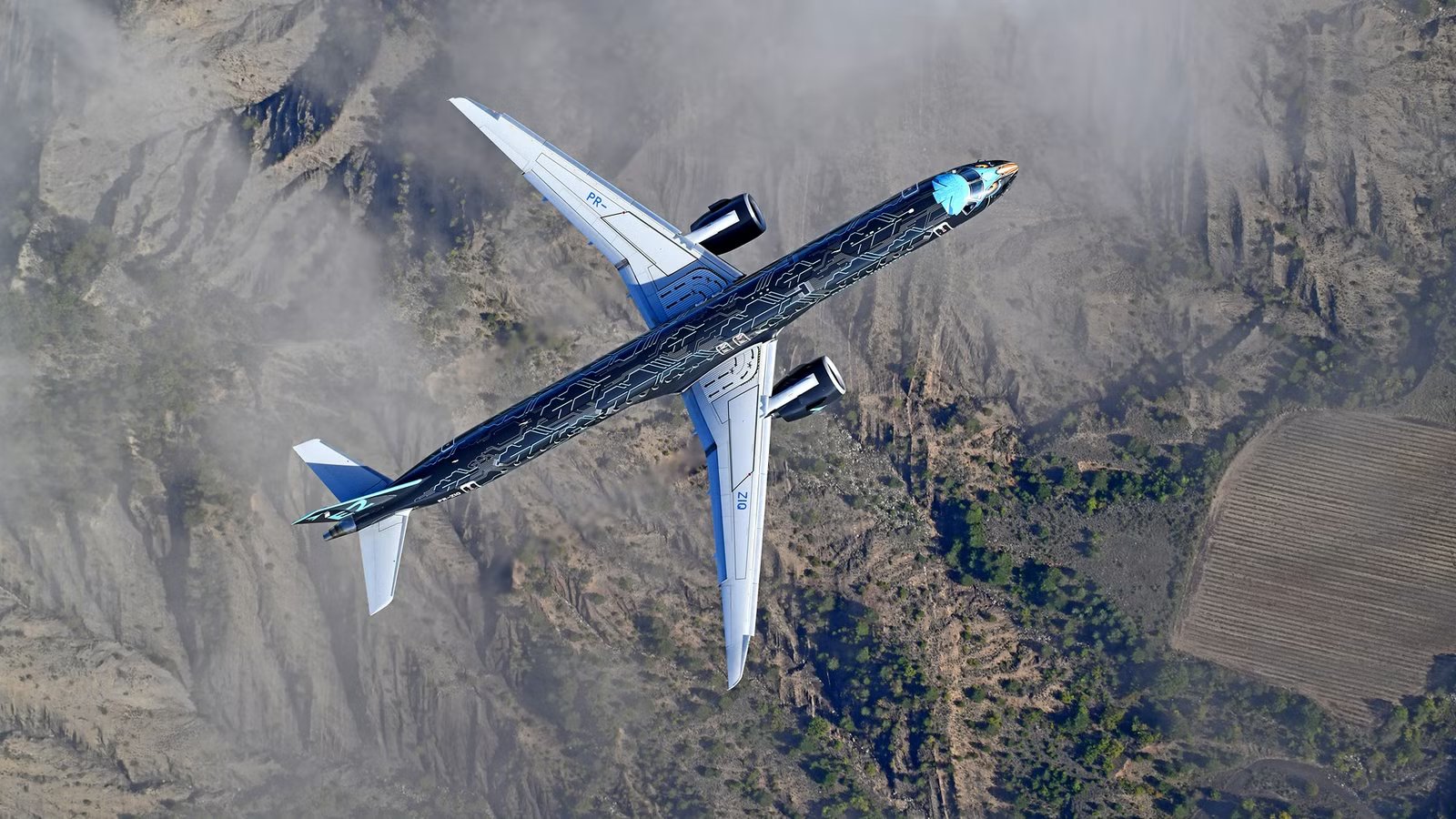
Airbus has seen success in recent years with the introduction of the A220. The aircraft, which Bombardier originally developed as the Bombardier CSeries, was later acquired in July 2018 after Airbus acquired a majority stake in the program. It was later renamed as the A220, becoming a prominent narrowbody aircraft across the world. Currently, over 400 A220s are flying with commercial operators, including  Delta Air Lines, JetBlue Airways, airBaltic,
  Air France, and Breeze Airways.
However, the A220 is not without competition. Embraer, a popular Brazilian aircraft manufacturer, recently introduced the E-Jet E2 series. This is another prominent narrowbody airliner. Initially, the E190-E2 was introduced in 2018, followed by the larger E195-E2 in 2019. Embraer has delivered over 150 airliner variants, with the aircraft flying with Porter Airlines, Mexicana de Aviación, KLM Cityhopper, and Azul Brazilian Airlines, among others. The recent introduction of the E195-E2 has spurred competition in the narrowbody airliner industry, as it directly rivals the Airbus A220. Let’s take a closer look at these two aircraft, as well as how the competition has heated up in recent years.
What Is The History Of The Airbus A220?

In the early 2000s, Bombardier saw significant success with its Canadair Regional Jet (CRJ) series, which was introduced in 1991. The company also introduced the CRJ900, a stretched variant of the CRJ700, in 1999. However, in 2005, Bombardier launched a new commercial aircraft program, called the CSeries, which was meant to compete with other aging regional aircraft, like the Embraer E-Jet, Boeing 717, and other older models. After several delays, Bombardier selected a Pratt & Whitney engine to power the aircraft in 2007, and the company soon began authorizing formal sales proposals the following year.
In 2010, Bombardier had selected many of the aircraft’s major suppliers and was targeting a first flight that year. However, the company soon experienced significant delays, primarily due to supplier issues. The first prototype CS100 conducted its maiden flight in September 2013, kicking off the extensive flight test program. The CS300, a stretched variant of the CSeries, conducted its maiden flight in February 2015. Later that year, the CS100 received its type certification from Transport Canada, with certification coming for the CS300 in July 2016.
This allowed deliveries of both aircraft to begin, with the CS100 beginning commercial service with Swiss Global Air Lines in June 2016. However, throughout the late 2010s, Bombardier faced financial difficulties due to delays in the CSeries program. Because of this, Airbus partnered with Bombardier and later purchased a majority stake in the program. The CSeries was later rebranded as the Airbus A220 in July 2018. Since then, the two companies have produced nearly 450 aircraft, which have been flown by commercial operators around the world.
What Are The Major Design Features And Performance Specifications Of The Airbus A220?

The A220 is a single-aisle narrowbody aircraft, specifically designed for the 100-150-seat market. This aircraft achieves this seating capacity by utilizing a five-seat-wide fuselage. The series features the A220-100 and a stretched variant called the A220-300, although the two aircraft share over 99% commonality. The airframe is mostly made of aluminum-lithium alloys, although the wings and empennage use carbon composites to reduce weight.
Bombardier chose the Pratt & Whitney PW15000G turbofan engines, which are part of the geared turbofan (GTF) series, to power the aircraft. These engines, which are located under each wing, each provide the aircraft with up to 24,400 pounds of thrust, helping the aircraft achieve the following performance specifications:
Aircraft | A220-100 | A220-300 |
|---|---|---|
Length | 114 feet, 10 inches | 127 feet |
Height | 37 feet, 9 inches | 37 feet, 9 inches |
Wingspan | 115 feet, 2 inches | 115 feet, 2 inches |
Maximum takeoff weight (MTOW) | 139,000 pounds | 156,000 pounds |
Cruise speed | 483 knots (556 miles per hour) | 483 knots (556 miles per hour) |
Range | 3,600 nautical miles (4,200 miles) | 3,400 nautical miles (3,900 miles) |
Service ceiling | 41,000 feet | 41,000 feet |
Inside the cabin, the aircraft can be configured to fit a maximum of 135 or 160 passengers, depending on the variant. However, many of these aircraft are configured into two classes. Inside the cockpit, the aircraft utilizes the Rockwell Collins Pro Line Fusion avionics system. This glass cockpit features five displays and can be equipped with a heads-up display. Additionally, both variants share a common cockpit, allowing pilots to fly both with the same type rating.
What Is The History Of The Embraer E2 Series?

Meanwhile, Embraer first began developing a new narrowbody jet in the early 2010s. The company realized that with the introduction of other narrowbody aircraft, such as the A320neo or the 737 MAX, Embraer may lose a competitive edge with its E-Jet family. Because of this, the company announced an upgrade of this popular family at the Dubai Air Show in November 2011, also to rival the Bombardier CSeries.
Embraer first launched the program in June 2013 at the Paris Air Show, officially unveiling the E175-E2, E190-E2, and E195-E2. The first prototype of the series, the E190-E2, conducted its maiden flight in May 2016. The E195-E2 followed suit in March 2017. The aircraft each received its type certification from the National Civil Aviation Agency of Brazil (ANAC), the Federal Aviation Administration (FAA), and the European Union Aviation Safety Agency (EASA) in February 2018 and April 2019, respectively.
Catch what other flight trackers miss
Emergency squawks, holds, NOTAMs — live signals, no signup.
Open tracker
Catch what other flight trackers miss
Emergency squawks, holds, NOTAMs — live signals, no signup.
Open tracker
The E190-E2 was the first variant to enter commercial service, flying with Widerøe in April 2018. The E195-E2 followed suit, launching with Azul Linhas Aéreas in September 2019. Since then, Embraer has delivered over 150 aircraft, split between the two variants, with the aircraft flying for commercial operators worldwide. It has halted production of the shorter variant of the series, the E175-E2, primarily due to weak demand for the aircraft.
What Are The Major Design Features And Performance Specifications Of The Embraer E195-E2?

The E195-E2 is the larger variant in the series. It is approximately 17 feet longer than the E190-E2, and is even longer than the original E195 by about 10 feet. In a dense configuration, the E195-E2 can seat up to 150 passengers. However, in a typical seating configuration, the aircraft seats about 120 passengers.
Embraer chose the Pratt & Whitney PW1900G turbofan engine to power this aircraft. Each of these engines provides the aircraft with around 23,000 pounds of thrust. This helps the aircraft achieve the following performance specifications:
Length | 136 feet, 2 inches |
|---|---|
Height | 35 feet, 10 inches |
Wingspan | 115 feet, 3 inches |
MTOW | 137,800 pounds |
Cruise speed | 450 knots (518 miles per hour) |
Range | 3,000 nautical miles (3,500 miles) |
Service ceiling | 41,000 feet |
The E195-E2 is powered by the Honeywell Primus Epic 2 avionics system. This avionics suite is common to the E1 family, allowing commonality between the two series. Additionally, the aircraft utilizes a closed-loop fly-by-wire flight control system, which provides significant weight savings. Compared to the E-Jet family, the E2 series also features a redesigned wing and upgraded pylons, landing gear, and certain flight controls.
Which Airlines Fly These Narrowbody Aircraft?

Both of these narrowbody aircraft are flown across the world. Specifically, the E195-E2 and A220 have carved out a niche competition in the 100-150-seat market. In general, the E195-E2 is used by regional and hybrid carriers focused on point-to-point or feeder operations. On the other hand, the A220 has been used by global carriers to provide regional connectivity and serve underserved mid-range routes.
The E195-E2 has found success in the global market. Its most prominent operator is Porter Airlines, which flies nearly fifty aircraft. Other prominent aircraft include Air Peace, Mexicana de Aviación, and Helvetic Airways.
On the other hand, the A220 has been adopted by both legacy and low-cost carriers. Delta is the largest operator of the aircraft, although several other major operators have adopted it for short-haul routes. This includes Swiss International Air Lines, Air Canada, Breeze Airways, ITA Airways, and Korean Air.
Why Would The Embraer E195-E2 Have Airbus Worried?

Bombardier and Airbus introduced the A220 just a few years before Embraer introduced the E195-E2. This allowed Airbus to establish a foothold in the market, and the company has steadily grown its stake in the 100-150-seat market. However, the introduction of the E195-E2 poses a credible challenge, as the new aircraft boasts exceptional fuel efficiency, lower operating costs, and a lighter overall airframe than the larger A220. For many airlines looking to prioritize cost per trip, the E195-E2 may be the better option, especially on short- or medium-haul routes.
Even more so, the E195-E2 has proven more accessible to smaller carriers and regional operators. It has a significantly lower purchase cost than the A220 and lower maintenance costs. This makes the E195-E2 more attractive to carriers looking to modernize their fleets without overcommitting financially or operationally.
Airbus has also noticed that the Embraer E2 series is slowly entering markets the company had hoped to dominate exclusively. Operators like Porter Airlines, Azul, and KLM Cityhopper are using the E195-E2 to launch or expand premium regional services. In many of these markets, the Airbus A220 may be considered to be the next step, especially in Europe and Canada. However, the E195-E2 is proving to be a viable alternative in the segment that Airbus once aimed to dominate with its A220.