dailynewsnblog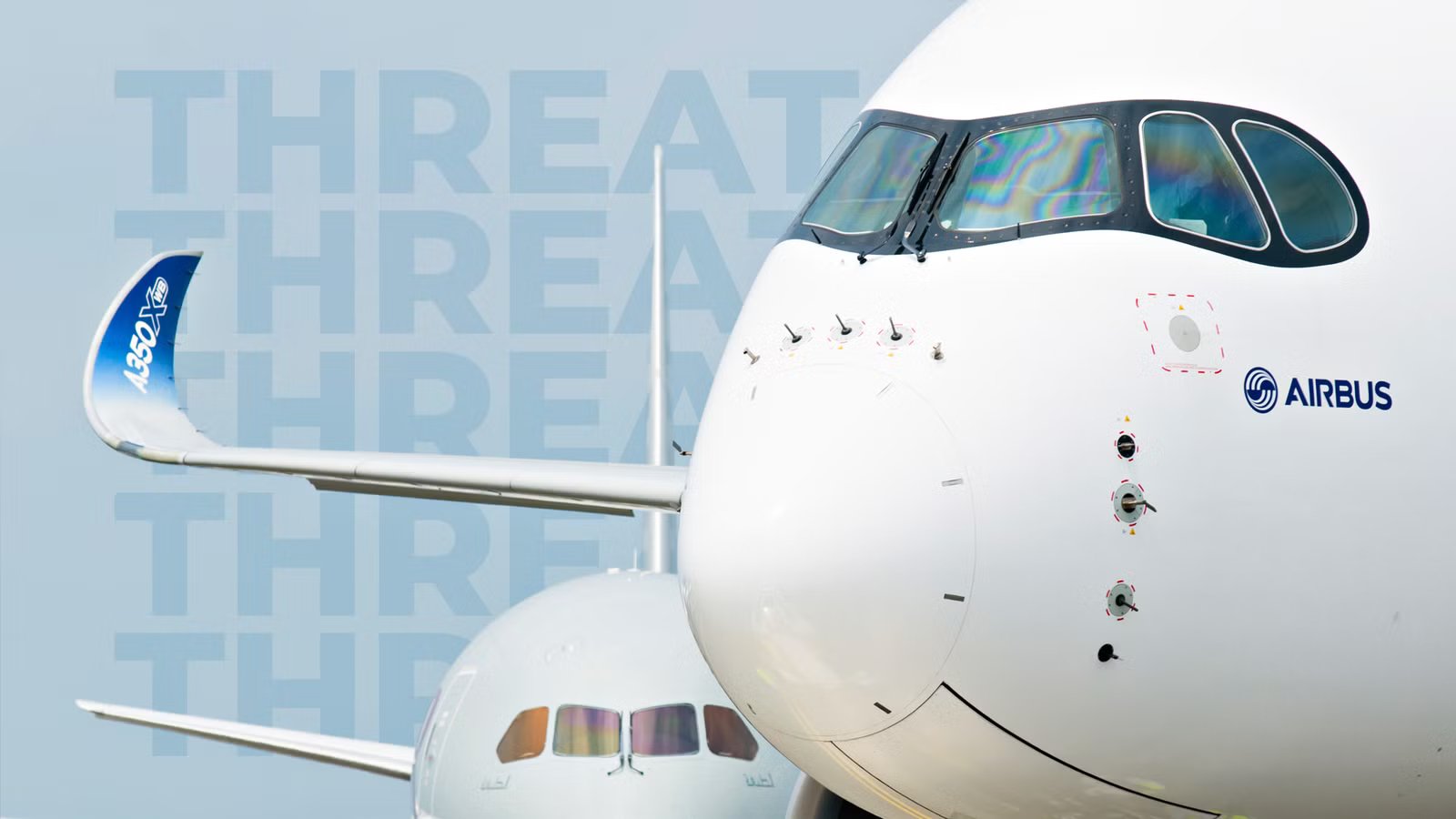
The Boeing 787 has proved to be an immense commercial success for the US manufacturer since it entered commercial service in 2011. Today, some 15 years later, more than one billion people worldwide have flown on a 787, with the aircraft operating over 2,100 flights per day. With such impressive statistics, Airbus may well be asking itself what it needs to do to make its rival aircraft, the A350, as successful.
In this article, we will take a closer look at what has made the Boeing 787 so popular over the past 15 years. We will also examine the aircraft’s closest competitor, the Airbus A350.
All About The Boeing 787

Let’s begin with an overview of the Boeing 787, the best-selling widebody passenger jet in aviation history. The 787 program was first launched in 2004, with the US manufacturer hoping to echo the success of its earlier 777 by creating a widebody aircraft for the next generation. The 787 eventually entered commercial service in October 2011 with All Nippon Airways (ANA) on a flight from Tokyo Narita Airport (NRT) to Hong Kong International Airport (HKG).
Specs (Per Boeing) | Boeing 787-8 | Boeing 787-9 | Boeing 787-10 |
|---|---|---|---|
Length | 186 feet | 206 feet | 224 feet |
Typical Passenger Capacity | 242 | 296 | 318 |
Maximum Passenger Capacity | 296 | 336 | 440 |
Range | 8,400 miles | 8,705 miles | 7,285 miles |
The larger 787-9 had its inaugural passenger flight in August 2014 with Air New Zealand, from Auckland Airport (AKL) to Sydney Airport (SYD). Boeing has produced three variants of the 787 – the 787-8, 787-9, and 787-10. The 787-8 was the first to be launched, followed shortly after by the larger 787-9. The specifications of each variant are outlined in the table above.
More Than One Billion Passengers

The  Boeing 787 recently passed the incredible milestone of carrying more than one billion passengers since the aircraft type entered commercial service 15 years ago. That is an astonishing number of passengers to have traveled on the aircraft, each of whom will have had their own unique experiences onboard, some good, and some not so good.
The global 787 fleet of 1,276 airplanes has flown nearly five million flights, covering more than 30 million flight hours. Boeing 787 Program Vice President and General Manager, Scott Stocker, celebrated the billion-passenger achievement, saying that:
“This milestone would not have been possible without the trust and confidence of our customers in operating the 787, and we are incredibly grateful for each of them. The 787 Dreamliner family was designed to connect people and places like never before. Flying over 1 billion passengers in this relatively short time is a testament to how the airplane has delivered on its promises to transform air travel with operational versatility, efficiency and comfort. This achievement reflects the dedication, talent and innovation of the teammates and partners who have brought the 787 family to life. To every operator flying the 787 and every one of the 1 billion passengers who have flown on a Dreamliner, thank you.”
The Boeing 787’s Closest Competitor

The closest competitor to the Boeing 787 is the Airbus A350. It is one of the latest widebody aircraft from Airbus and features cutting-edge technology, materials, and aerodynamic design to offer improved fuel efficiency, lower emissions, and enhanced passenger comfort. More than 50% of the A350’s structure is made of carbon-fiber-reinforced polymer, reducing weight and improving fuel efficiency.
Compared to older aircraft, the A350 offers a 25% increase in fuel efficiency, and its unique, streamlined fuselage and wing design with adaptive winglets optimizes the aircraft’s performance across various flight conditions. Qatar Airways was the launch customer of the Airbus A350’s first variant, the A350-900, back in January 2015 when it deployed the aircraft on a flight from its hub at Doha Hamad International Airport (DOH) to Frankfurt Airport (FRA).
The oneworld carrier was also the launch customer for the second, larger variant of the A350 – the A350-1000. This inaugural commercial flight took place in February 2018 from Doha Hamad International Airport (DOH) to London Heathrow Airport (LHR).
Why Has The Boeing 787 Been More Popular Than The Airbus A350?

Despite the Airbus A350’s impressive credentials, why has the Boeing 787 been more popular with airlines around the world? The 787 has been in commercial service for around four years longer than the A350, giving airlines more time to buy into the program. Additionally, the 787, in particular the 787-8, is perfectly sized for long-range, thin routes that would be unable to support the higher capacity offered by the larger Airbus A350. The type has also proved popular with low-cost long-haul airlines such as Scoot and Norse Atlantic Airways.
With that being said, although fewer Airbus A350s have been sold to date, the program may have made more money for the European manufacturer. This is possible if you take into account the significant amounts of compensation that Boeing is likely to have had to pay to airlines for lengthy delays to deliveries.
Fast Facts About The Boeing 787

As noted, the 787 has carried more than one billion passengers worldwide on nearly five million flights, operating more than 30 million flight hours. The Boeing 787 is the world’s best-selling widebody aircraft, with more than 2,000 orders from airlines around the globe. So far, 1,276 have been delivered.
The 787 fleet operates at more than 520 airports across 85 countries, including more than 400 new nonstop routes to destinations that were never served previously. Each day, the Boeing 787 operates more than 2,100 flights, carrying over 480,000 passengers. That equates to around 14 million passengers per month, and on average, each 787 is in the air more than 12 hours per day.
The world’s longest route currently flown by the Boeing 787 is between Perth Airport (PER) and  London Heathrow Airport (LHR). Qantas launched this 9,010-mile route in March 2018. Meanwhile, the shortest nonstop route flown by the 787 is TUI’s service between Aruba Queen Beatrix International Airport (AUA) and Curaçao International Airport (CUR), at just 74 miles long.
Safety Concerns About The Boeing 787

Despite the initial fanfare surrounding the Boeing 787 at the time of its launch, the aircraft soon became plagued by many issues, starting with onboard lithium-ion battery fires in 2013. These incidents led to the worldwide fleet being grounded for several months while Boeing developed a solution.
Then, in 2019, Boeing discovered a series of manufacturing defects that affected the way parts of the aircraft were held together. As a result, deliveries were heavily disrupted and subsequently halted altogether from May 2021 to July 2022.
The Boeing 787’s safety record was thrown into question in June 2025, when an Air India 787, operating flight AI171, crashed just after take-off from Ahmedabad Airport (AMD), bound for London Gatwick Airport (LGW). All but one of the 242 passengers and crew members onboard were killed, as well as 19 people on the ground, in what was the first fatal crash of a 787.
Should Airbus Be Worried?

On the surface, the impressive statistics surrounding the Boeing 787 may have Airbus wondering if its A350 will ever match up. However, a deeper dive reveals that the 787’s sales surpass those of the A350 for several reasons, none of which are inherent to the A350 itself. Instead, they stem from current market conditions and the fact that the 787 has been available for purchase longer.
With that in mind, Airbus can sleep easy knowing that its A350 is one of the most technologically advanced, fuel-efficient, and quiet widebody aircraft ever made, offering a superior onboard experience for passengers. In time, as more airlines look to expand or replace their aging widebody fleets, they may well look to the A350 as the ideal solution. Only time will tell…