dailynewsnblog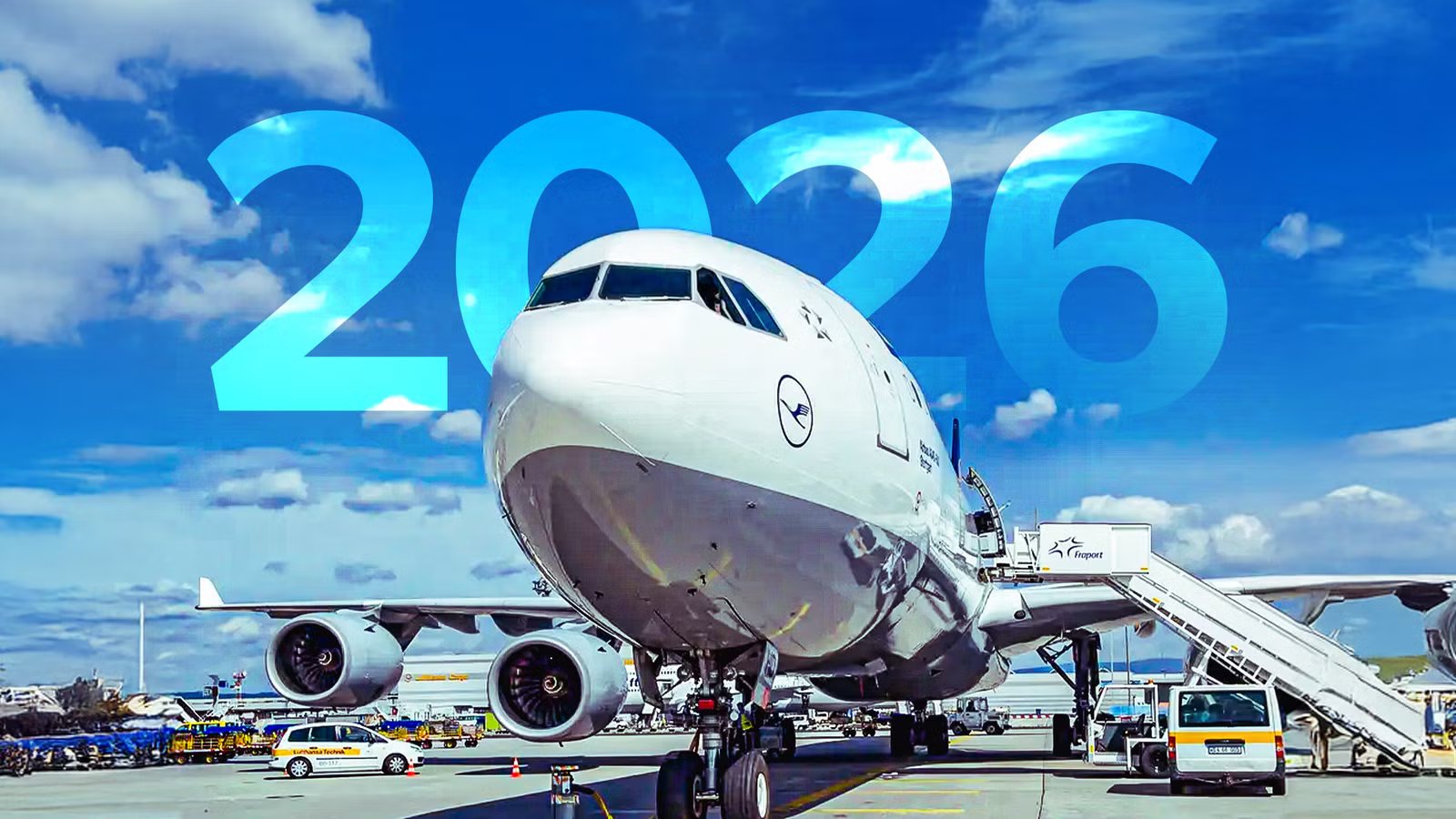
The silhouette of the Airbus A340-600 is unmistakable, a graceful, stretched needle that has served as a fixture of long-haul aviation for two decades. To many, it represents the golden age of four-engine, widebody travel, a time when redundancy was prioritized through brute mechanical force. Yet today, this aircraft finds itself in a precarious position, serving as an essential lifeline for  Lufthansa while simultaneously draining the airline’s bottom line. It is a classic aviation paradox: the A340-600 has become the most vital tool in the fleet precisely because it is the most difficult to justify keeping on the tarmac.
Lufthansa is grappling with the reality of delivery delays for next-generation platforms like the Boeing 777X, which have left a gaping hole in its transcontinental capacity. To narrow this divide, the airline has been forced to retain its remaining quadjets, operating them far past their intended economic shelf life. It is a story of necessity overriding efficiency, documenting the final months of an era where four engines were standard, in a world that has decisively moved toward the leaner, quieter, and significantly cheaper performance of the twin-engine widebody.
Staying Longer Than Expected

The reason the A340-600 is still gracing airport ramps is rooted in a grand miscalculation of fleet modernization timelines. When Boeing’s 777-9 program hit successive certification and delivery hurdles, now pushing the first Lufthansa delivery into the early months of 2027, the German flag carrier found itself with an urgent capacity shortfall. Without the expected influx of high-capacity, high-efficiency twin-engine jets to replace older hardware, the airline had two choices. Either cancel profitable routes or keep the aging A340-600 fleet in the rotation for one final tour of duty.
Lufthansa chose the latter, transforming these four-engine relics into an essential stopgap measure. The A340-600 offers a specific high-density passenger count that many of Lufthansa’s newer, smaller twin-jets cannot match without significant reconfiguration. Squeezing these last four airframes into the schedule, the airline has maintained vital connectivity on primary North American corridors, solidifying that even a technically obsolete aircraft holds immense value when the alternative is empty gates and lost revenue.
The reliance on this fleet is a stark reminder of how fragile airline network planning is. One major manufacturing delay in Seattle or Toulouse could force a global carrier to revert to technology designed in the late 1990s. For the A340-600, this has meant an unexpected extension of service, where every flight cycle is meticulously tracked as the airline counts down to the final retirement date.
A Desperate Wait For The Replacement

Operating a four-engine jet in the current economic climate is, to put it bluntly, a game of diminishing returns. The core issue is fuel burn; the A340-600 utilizes four powerplants that do not have the thermal efficiency of modern engines found on the A350 or the 787. With geopolitical tensions frequently driving fuel price volatility, the cost to keep a single A340-600 in the air is astronomically higher than that of a modern twin-engine aircraft with similar payload capabilities. This is what makes the aircraft financially toxic, because it is essentially a high-capacity liability that consumes capital at an accelerating rate.
The maintenance burden further compounds this toxicity. As airframes reach an average age of nearly 20 years, the requirements for heavy checks, structural inspections, and part procurement become increasingly complex. Supply chains for parts unique to the A340 family have thinned out, making simple repairs more expensive and time-consuming. When you combine high fuel consumption with the rising cost of keeping aging systems airworthy, the operational margin per flight becomes razor-thin, if not negative.
For Lufthansa, the decision to retain these jets was never about long-term financial health. The airline has accepted that it will lose money on the individual operating costs of these flights to ensure that its premium travelers are not forced onto competitors. It is a temporary willingness to bleed cash today to secure the network stability required for the arrival of the 777X in 2027. Once those aircraft arrive, the A340-600 fleet will not be missed by the finance department, as they represent the last vestige of an economic model that the airline is desperate to leave behind.
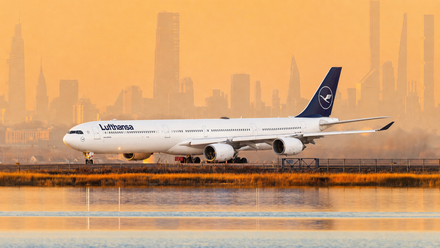
End Of An Era: Lufthansa Confirms Date Of Rare Airbus A340-600’s Final Flight
The final flights close a long-running chapter in premium quadjet travel.
A Flying Time Capsule

In the twilight of their service, the four remaining A340-600s have been tethered to routes where they can pull their weight in premium revenue. Concentrating these aircraft on the  Frankfurt (FRA) to Washington Dulles (IAD) and
  New York (JFK) corridors, Lufthansa is maximizing the aircraft’s unique cabin layout. These routes are high-volume, high-yield markets where business and first class demand remains stubborn, providing the necessary margins to offset the quadjet’s thirsty engines.
Washington and New York serve as critical gateways for diplomatic, corporate, and transatlantic traffic, requiring consistent, high-frequency service. Newer twins have gradually taken over the majority of the carrier’s North American network, but the A340-600’s cabin configuration, specifically its ability to offer eight first class suites, keeps it relevant on these prestige routes. Operating these jets on such well-trodden paths also streamlines ground support; by centralizing the fleet in a few specific hangars and stations, Lufthansa minimizes the logistical nightmare of maintaining specialized spare parts for a legacy airframe that the rest of the world has largely abandoned.
Yet, even on these routes, the aircraft is an outlier. Passengers boarding these flights are stepping onto a platform that feels increasingly like a time capsule. Despite the operational strain, the flight crew and ground engineers have maintained an impeccable standard, ensuring that, for the passenger, the toxicity of the economics is invisible. The jet remains a smooth, quiet performer, and for those who know aviation history, watching one of these giants taxi toward the runway is a poignant reminder of an era of design that is rapidly disappearing from our skies.
Good Enough To Compete With The Newcomers

There is a certain irony in the fact that the A340-600, a financially troubled relic, remains one of the most comfortable ways to cross the Atlantic. These specific aircraft were fitted with high-end interiors during the mid-2010s, so they feature a first class cabin that holds its own against even the newest Boeing 787s or Airbus A350s in Lufthansa’s fleet. The aging airframe is in many ways actually a benefit because the A340’s quieter, lower-frequency cabin acoustics, often attributed to its four-engine dampening, provide a serene environment for long-haul travel.
The A340-600’s cabin density, with 281 total seats, allows Lufthansa to maintain a premium-heavy configuration that is difficult to replicate on some of the smaller twinjets. The presence of those eight first class suites is an anchor for the airline’s loyalty program; it keeps high-value travelers within the network when a switch to a modern, but arguably less exclusive, twin-engine product might otherwise drive them to a competitor. Lufthansa’s goal is to provide a premium experience on an established airframe to ensure travelers return when the 777X finally arrives in 2027.
|
Aircraft Type |
First Class Capacity |
Cabin Experience |
|
Airbus A340-600 |
8 Suites |
Classic, spacious, quiet |
|
Airbus A350-900 |
4 Suites (varying) |
Modern, digital-forward |
|
Boeing 747-8 |
8 Suites |
Iconic, high-end flagship |
The retirement of the A340-600 will mark the quiet departure of a specific style of air travel. These jets were never the most efficient, nor the fastest, but they provided a stable, roomy, and unmistakably grand experience. The extreme efficiency of the 777X and A350-1000 means that we are losing a bit of that brute force elegance that was once the norm.
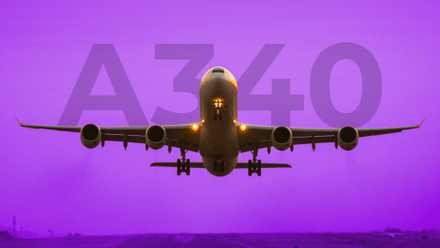
Why Don’t Any US Airlines Fly The Airbus A340?
In the United States, the aircraft never aligned with the market’s priorities.
The End Of The Road

The four remaining A340-600s will be withdrawn from the active fleet soon, effectively ending the type’s two-decade residency at the Frankfurt hub. This is not a soft retirement where the aircraft are kept in long-term storage as a contingency; the airline’s accelerated modernization plan is absolute, designed to eliminate sub-fleet complexity and reduce the sheer number of engine types maintained by its engineering division.
Once the final flight touches down, these aircraft will likely enter a rapid decommissioning process. For a type as specialized as the A340-600, there is no massive second-hand market waiting to snap them up, especially given the current global trend toward retiring quadjets. They will likely be harvested for high-value components, avionics, cabin fittings, and landing gear assemblies, to support any remaining operators of the type, before being ferried to a storage facility for eventual part-out or scrapping.
For Lufthansa, this retirement acts as a reset button. Removing the A340-600s allows the airline to achieve a leaner operational structure, finally unburdening itself from the maintenance and fuel overhead that has defined this transition period. While the loss of such a distinctive airframe is a sentimental blow to the aviation community, the move allows the group to align its long-haul footprint with the fuel-efficient realities of the late 2020s.
A Golden Age, Into The History Books

The departure of the A340-600 is less a story about a specific airplane and more a reflection of the industry’s broader, irreversible evolution. We are witnessing the final chapter of the golden era of widebody design, where engineers countered aerodynamic and weight challenges with extra engines and structural mass. Today’s airline economics are built on digital precision, material science, and the extreme thermal efficiency of modern high-bypass turbofans, the very things that have rendered the quadjet a financial liability.
Lufthansa’s long-haul future is undeniably twin-engine. The upcoming 777X, alongside the A350-1000, will assume the mantle of the carrier’s long-haul workhorses, offering higher range, lower emissions, and superior operating costs. These new platforms offer flexibility that the A340-600 could never provide, enabling the airline to adjust capacity more dynamically based on market demand rather than the fixed, thirsty output of four legacy engines.
The legacy of the A340-600 at Lufthansa will not be defined by its final, fuel-heavy years, but by the two decades of reliable service it provided during the industry’s expansion. It was a tool, an essential, iconic, and increasingly expensive tool, that allowed the airline to navigate a turbulent period of delivery delays and global economic shocks. When the last A340-600 completes its final rotation, it will pass the torch to a new generation of aircraft, marking the definitive close of a chapter where four engines for long haul was the undisputed gold standard.