dailynewsnblog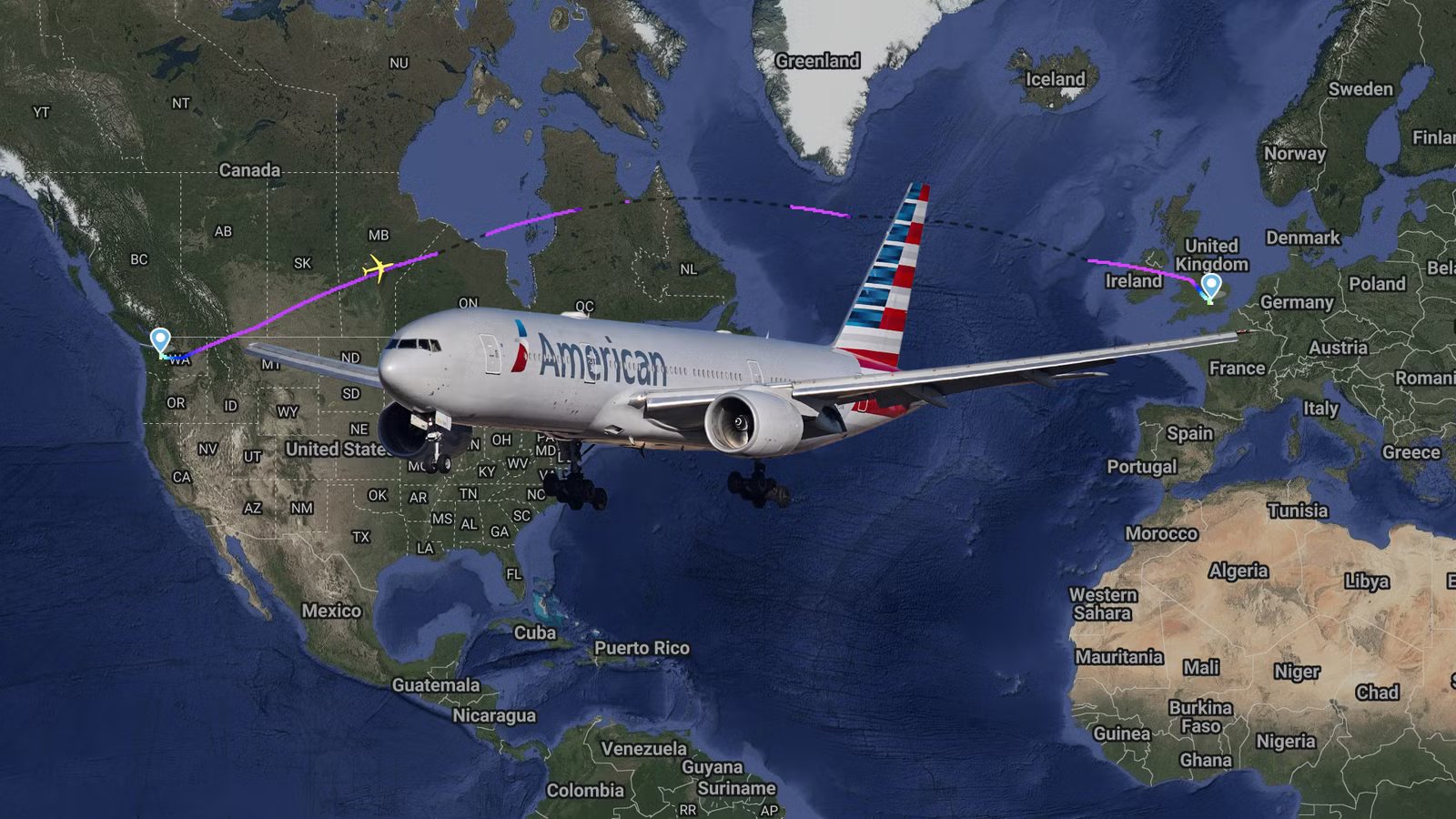
The Short Answer: Strategic Alliance With Alaska Airlines

American Airlines’ decision to operate the SEA-LHR route was primarily driven by its strategic partnership with Alaska Airlines. In 2020, American and Alaska Airlines announced a West Coast International Alliance, aiming to enhance connectivity and offer more international options to customers. This partnership was further solidified when Alaska Airlines joined the oneworld alliance in March 2021.
By launching the Seattle to London route, American intended to tap into Alaska Airlines’ strong presence in the Pacific Northwest, leveraging its extensive domestic network to feed international flights. This move was seen as a way to compete more effectively with Delta Air Lines, which had been expanding its operations in Seattle.
However, the timing coincided with the COVID-19 pandemic, which drastically reduced international travel demand. Despite these challenges, American proceeded with the route, hoping to establish a foothold in the market and capitalize on future demand.
Factors Influencing the Decision

One of the most important factors behind American Airlines’ decision to launch the Seattle–London Heathrow route was its strategic partnership with Alaska Airlines. In 2020, American and Alaska Airlines announced a new West Coast International Alliance, a move that would soon see Alaska Airlines join the oneworld alliance in March 2021. Through this partnership, American was able to tap into Alaska Airlines’ stronghold in the Pacific Northwest, gaining access to an extensive domestic network that fed traffic into Seattle.
Since Alaska Airlines did not operate its own long-haul international routes at this point, the collaboration allowed American to serve as the international arm, linking Alaska Airlines’ passengers to destinations beyond North America. Seattle’s role as a key hub for Alaska Airlines made it a logical launchpad for new transatlantic services under this alliance. At the same time, American’s move was driven by a desire to improve its competitive positioning on the West Coast.
 Delta Air Lines had been investing heavily in Seattle since the early 2010s, transforming the airport into a strategic hub for its transpacific operations. Delta already operated its own Seattle-London service and had built significant brand presence in the region. For American, launching a competing London flight was not just about serving demand. Rather, it was about staying relevant in a market where one of its biggest competitors was quickly gaining ground.
By offering a similar transatlantic option, American could capture a share of premium and corporate traffic while reinforcing its own global reach in the eyes of travelers based in or connecting through Seattle. Lastly, the market potential of Seattle made the route a calculated risk worth taking. The city is home to several multinational corporations, including Amazon, Microsoft, and Boeing, generating high volumes of business travel, particularly to international destinations.
London, as one of the world’s key financial centers and a major hub for Europe, was a natural fit. Moreover, Seattle’s growing population and increasingly global demographic created demand for leisure and visiting friends and relatives travel as well. While American lacked a historical footprint in Seattle, the city’s connectivity needs and economic growth signaled an opportunity to serve a promising long-haul market with strong year-round potential – at least in theory.
Insights From American

American Airlines’ leadership emphasized the importance of partnerships and strategic positioning in their decision-making. In a 2020 press release, Vasu Raja, American’s Chief Revenue Officer, stated:
“For American, every new partnership means future growth opportunities for our airline. We’re going to rely on our hubs’ greatest strengths with our existing international network, and further integrate into our partners’ hubs to provide connectivity that’s been untapped in the past.”
This sentiment highlights the airline’s focus on leveraging partnerships to expand its international reach. However, industry experts noted the challenges of launching new international routes during a global pandemic. The SEA-LHR route faced low demand and operational difficulties, leading to its eventual suspension.
Comparison with Other Routes

American Airlines’ attempt to establish Seattle as an international hub was not limited to the London route. The airline had also planned flights from Seattle to Bangalore and Shanghai. However, these routes faced similar challenges, as detailed below.
|
Route |
Challenge |
|---|---|
|
Seattle to Bangalore |
Originally planned for October 2020, this route was postponed due to border closures and later canceled due to the closure of Russian airspace to U.S. airlines, which made it operationally challenging. |
|
Seattle to Shanghai |
Scheduled to launch in March 2021, this route was indefinitely postponed, likely due to ongoing travel restrictions and low demand. |
In contrast, American’s routes from its traditional hubs, such as Dallas-Fort Worth and Miami, continued to perform better. This is because they benefited from established networks and consistent demand.
Challenges & Drawbacks

While the Seattle–London route may have looked promising on paper, operating such a transatlantic service from a non-core hub like Seattle presented several challenges for American Airlines. Despite its strategic alliance with Alaska Airlines and access to connecting traffic, the route faced stiff competition, operational hurdles, and fluctuating demand.
|
Challenge |
Details |
|---|---|
|
Low Demand |
The COVID-19 pandemic significantly reduced international travel, leading to low passenger numbers on the route. |
|
Operational Difficulties |
Launching a new international route during a global health crisis posed logistical and operational challenges. |
|
Competition |
British Airways, American’s joint venture partner, continued to operate flights between Seattle and London, potentially saturating the market. |
Understanding these drawbacks is essential to grasping why the route was ultimately unsustainable and why it was quietly pulled from the schedule after just over two years. Several challenges contributed to the discontinuation of the SEA-LHR route, as detailed above. These factors made the route unsustainable, leading to its suspension in October 2023.
Why Alaska Airlines Is Moving Toward Hub-Based Operations
More aircraft now means more flights to key markets from the airline’s busiest airports.
Lessons Learned

At first glance, American Airlines’ decision to launch a transatlantic route between Seattle and London may have seemed out of character for a carrier without a major hub in the Pacific Northwest. However, when viewed through the lens of its strategic partnership with Alaska Airlines and the broader oneworld alliance, the move begins to make more sense.
The route was a bold attempt to build a competitive foothold in a city increasingly dominated by Delta Air Lines, while also offering Alaska Airlines’ loyal customer base seamless access to international travel. In many ways, it was a test of whether deep domestic connectivity, even without a traditional hub presence, could support a long-haul flight across the Atlantic.
Despite its ambition, the route ultimately fell victim to several limiting factors. Fierce competition, limited brand presence in Seattle, and changing post-pandemic travel patterns all contributed to the route’s short lifespan. Moreover, while Alaska Airlines’ network could provide feed, it wasn’t the same as having a true American Airlines hub, complete with long-established corporate contracts and loyalty ties.
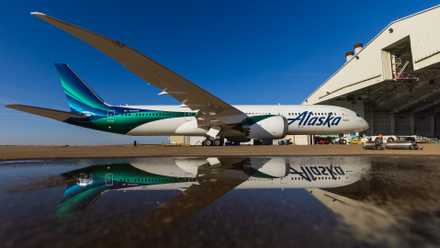
Alaska Airlines Launches 1st-Ever Flight To London Heathrow Today
The debut takes place on May 21, becoming the airline’s second route to Europe.
The Partnership Continues

Looking forward, American’s experience in Seattle offers a valuable lesson in how strategic alliances can be leveraged to expand an airline’s reach. It also highlights the importance of aligning such expansion with market realities, competitive pressures, and long-term sustainability. The idea of launching a transatlantic route from Seattle made sense on paper.
After all, American had access to a loyal Alaska Airlines customer base, increased connectivity along the West Coast, and an opportunity to counter Delta’s growing international presence in the Pacific Northwest. However, in execution, the route proved harder to sustain, especially as post-pandemic travel patterns remained unpredictable and corporate travel recovery lagged behind expectations. With that being said, partnerships like the one with Alaska Airlines still hold immense promise.
The American-Alaska alliance continues to offer passengers enhanced connectivity throughout the West Coast and beyond, and it provides a template for how legacy carriers can work with regional players to offer more seamless global service. As alliance dynamics evolve and new international opportunities emerge, such as increased interest in Asia-Pacific travel or secondary European cities, American may still find ways to tap into Alaska Airlines’ network in creative and mutually beneficial ways.
The airline industry rewards bold experimentation, but it also demands agility when those experiments don’t yield the expected results. American’s short-lived Seattle–London adventure is a textbook example of both. It highlights the necessity of balancing strategic ambition with practical execution, and reminds us that even the most promising routes must continually earn their place in a carrier’s network