dailynewsnblog
For years, discussion surrounding the Boeing 777X program has revolved around delays, certification scrutiny, supplier challenges, and shifting airline delivery schedules. Yet one recent development carries more significance than many headlines have fully explained. On March 17, 2026, the FAA formally approved Phase 4A of the Type Inspection Authorization, or TIA, testing campaign for the Boeing 777-9. That approval marked the first time FAA pilots would directly participate in certification flight testing of the aircraft.
At first glance, the milestone may appear procedural. In reality, it represents one of the most important confidence signals any commercial aircraft program can receive during certification. Up to this point, much of the 777-9’s testing had been conducted primarily by  Boeing pilots and engineers under FAA oversight. Phase 4A changes the relationship entirely. Regulators are no longer reviewing isolated engineering data from the sidelines; FAA pilots are now entering the cockpit themselves to evaluate how the aircraft behaves as a complete operational system under real-world conditions.
That distinction matters enormously in the post-737 MAX certification environment. Modern transport aircraft certification has become increasingly rigorous, particularly for Boeing programs. FAA involvement at this stage indicates that regulators believe the aircraft has matured sufficiently to move from component-level validation toward integrated operational assessment. In practical terms, the 777-9 is transitioning from being treated as a developmental prototype to being evaluated as a near-service-ready commercial airliner. For Boeing, airlines, regulators, suppliers, and passengers, FAA pilots taking control of the 777-9 for the first time signals that the certification campaign has entered a fundamentally different phase.
What Type Inspection Authorization Means

To understand why FAA pilot participation matters so much, it is necessary to examine what Type Inspection Authorization represents within the broader certification process. Under FAA Part 25 regulations, transport-category aircraft certification follows a structured progression of design reviews, systems analysis, ground testing, flight evaluations, and operational validation. Before an aircraft receives a type certificate, regulators must independently verify that it complies with every applicable safety requirement. Type Inspection Authorization serves as a formal approval, allowing FAA personnel to begin conducting official certification evaluations on the aircraft itself.
While manufacturers perform extensive developmental testing beforehand, TIA testing introduces direct regulator participation in validating compliance claims. This distinction is crucial. Boeing’s own pilots can demonstrate that systems appear to function correctly. FAA pilots must independently determine whether those systems satisfy certification standards under operational conditions. Phase 4A specifically marks a transition toward integrated aircraft evaluation. Earlier certification phases tend to focus heavily on discrete systems and engineering verification. Regulators examine individual components, software behavior, structural loads, flight characteristics, and systems architecture. By the time a program reaches Phase 4A, attention increasingly shifts toward how the aircraft performs as a complete transport platform during realistic airline operations.
That is why FAA pilots entering the cockpit represents such a meaningful shift. The regulator is no longer relying solely on Boeing-generated data and demonstrations. FAA crews are now directly experiencing aircraft behavior, system interaction, workload management, cockpit ergonomics, and operational handling firsthand. That level of direct regulator involvement carries substantial weight. Certification standards today emphasize independent validation more heavily than at any point in recent Boeing history. The new level of confidence in the 777-9 does not mean certification is guaranteed or imminent, but it does indicate the program has crossed an important threshold in regulatory confidence.
FAA Pilots Differ From Boeing Test Pilots

Boeing’s test pilots are among the most experienced aviators in commercial aerospace. They possess a deep technical understanding of aircraft systems and are specifically trained to evaluate experimental aircraft behavior. However, their role differs fundamentally from that of FAA certification pilots. Manufacturer test crews are responsible for developmental exploration. They intentionally push aircraft into edge-case scenarios to identify problems, validate engineering assumptions, and gather performance data. Their objective is to help refine and mature the design.
FAA pilots serve a different purpose entirely. Their responsibility is not to improve the aircraft. It is to determine whether the aircraft is safe, compliant, and operationally suitable for commercial service. That distinction changes the nature of evaluation dramatically. When FAA pilots fly the 777-9, they assess the aircraft from the perspective of certification acceptability rather than developmental optimization. They evaluate whether cockpit interfaces are intuitive, whether systems behave predictably under abnormal conditions, whether workload levels remain manageable, and whether the aircraft performs consistently across varied operational environments.
Importantly, FAA pilots are not isolated specialists evaluating only individual components. During Phase 4A, they assess the aircraft as an integrated system where environmental controls, electrical systems, avionics, pressurization, and operational procedures all interact simultaneously. This integrated evaluation reflects one of the central lessons modern regulators have drawn from past certification failures. Complex commercial aircraft cannot be assessed solely through isolated subsystem performance. Safety emerges from how systems interact collectively under real operational conditions.
Congressional investigations, regulatory reforms, and public scrutiny have all increased pressure on the FAA to demonstrate independence and rigor during certification programs. As a result, regulator participation today carries more significance than it might have a decade ago. FAA pilots flying the 777-9 indicates that regulators are sufficiently satisfied with Boeing’s progress to begin direct operational evaluation themselves. Eager observers include  Lufthansa, the launch customer for the 777-9, which is expected to receive the first production-standard aircraft as Boeing continues targeting entry into service in 2027. Airlines closely monitor certification milestones because they influence fleet planning, route scheduling, crew training preparation, and financial forecasting.

FAA Plans Overhaul To Speed Up Certification Of New Airplanes: What Does This Mean For Your Flight?
FAA plans to streamline aircraft certification. Here’s how delays with Boeing’s 777X and 737 MAX may shape the planes you’ll fly soon.
Phase 4A Testing

Phase 4A may not generate dramatic imagery like flutter testing or maximum brake energy demonstrations, but its operational importance is immense. The phase focuses heavily on secondary aircraft systems that passengers rarely notice directly, but which are essential for safe long-haul operations. These systems include cabin controls, cabin pressurization, electrical architecture, and integrated aircraft behavior during specific environmental conditions.
Cabin control systems regulate cabin temperature, airflow, humidity, and air quality throughout the aircraft. On ultra-long-haul flights lasting more than 12 hours, these systems become critical for passenger safety and crew effectiveness. Failures or inconsistencies can create operational complications ranging from discomfort to serious safety concerns. Cabin pressurization testing is equally important. Commercial airliners operate at cruising altitudes where outside atmospheric pressure is insufficient to sustain human life. The aircraft must maintain stable internal pressure while managing structural loads across repeated flight cycles. Electrical systems testing has become increasingly complex in modern aircraft because contemporary widebodies rely heavily on electronic architectures to manage everything from avionics to environmental systems. Evaluators examine redundancy, fault isolation, load management, and recovery behavior during abnormal conditions.
Phase 4A also incorporates environmental testing scenarios, including natural icing evaluations in Alaska. These tests are particularly important because icing conditions can affect aerodynamics, engine performance, sensors, and flight control behavior. Regulators require direct demonstration that aircraft systems perform safely under naturally occurring icing environments rather than relying exclusively on simulated conditions. Successfully completing these evaluations often represents a major logistical accomplishment within certification programs. Regulators are now determining whether the aircraft can reliably support real airline operations across diverse environments and conditions.
The GE9X Engine Issue And Why Testing Continues Anyway

GE Aerospace | Simple Flying
One reason the FAA’s Phase 4A approval attracted attention is that it occurred despite an unresolved issue involving the GE9X engine program. In January 2026, GE Aerospace identified a mid-seal durability issue affecting the GE9X engines powering the 777-9. Normally, engine-related problems discovered during certification can significantly delay testing campaigns, particularly when regulators become concerned about reliability or safety implications. However, Boeing CEO Kelly Ortberg confirmed that the issue is not currently disrupting the certification flight program. Instead, GE Aerospace and Boeing are using periodic inspections to keep the existing test fleet operational while engineering teams finalize a permanent production-standard solution.
The distinction between test fleet management and production certification is also critical. Certification aircraft often operate under controlled maintenance programs and inspection intervals that differ from eventual airline service procedures. Regulators may permit temporary operational workarounds during testing, provided long-term corrective actions are clearly defined before entry into service. That flexibility allows programs to continue progressing through portions of the certification envelope rather than stopping entirely whenever a technical issue emerges. It also helps explain why Phase 4A approval remains meaningful despite unresolved engine durability work. Importantly, there is no indication that the GE9X issue affects fundamental flight safety or core engine architecture.
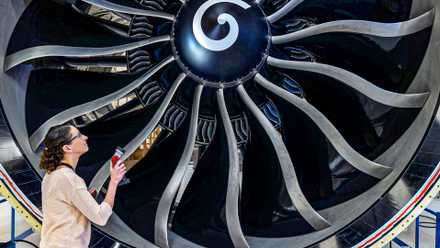
How The GE9X’s 134-Inch Fan Creates Problems No Other Jet Engine Faces
The engine is set to launch on the Boeing 777X in 2027.
The Road Ahead

Although FAA pilots flying the 777-9 marks a major milestone, the aircraft still faces several demanding certification phases before entering commercial service. Following completion of Phase 4A and 4B testing, the aircraft must proceed into Phase 5 evaluations, Functionality and Reliability testing, and Extended-range Twin-engine Operational Performance Standards, commonly known as ETOPS, certification.
Functionality and Reliability testing, often abbreviated as F&R, is particularly important because it evaluates how the aircraft performs during simulated airline-style operations over extended periods. Aircraft conduct repeated flights while crews monitor whether systems perform reliably without excessive maintenance intervention.
Boeing flew the first production-standard Lufthansa-bound 777-9 only a few days ago as part of this transition toward operational certification readiness. Even so, substantial work remains before passengers board the aircraft in regular airline service. FAA pilot involvement is a major milestone, but certification programs are cumulative processes where every subsequent phase builds upon earlier validation work.
Big Takeaway

The FAA’s decision to begin Phase 4A Type Inspection Authorization testing on the 777-9 represents far more than another routine certification update. It marks the moment when the aircraft transitions from being primarily a manufacturer-led development effort into a regulator-evaluated operational platform. This stage moves beyond isolated engineering validation and toward determining whether the 777-9 functions as a complete, commercially viable transport aircraft.
Significant hurdles still remain, including Functionality and Reliability trials and ETOPS certification. Yet FAA pilots flying the 777-9 for the first time represents one of the clearest indicators that the aircraft is moving closer to operational reality rather than remaining trapped in developmental limbo. For airlines awaiting deliveries, suppliers tied to the program, and an industry watching Boeing’s recovery closely, that shift changes everything.
Catch what other trackers miss
Emergency squawks, holds, NOTAMs — live signals, no signup.
Open tracker
Catch what other trackers miss
Emergency squawks, holds, NOTAMs — live signals, no signup.
Open tracker