dailynewsnblog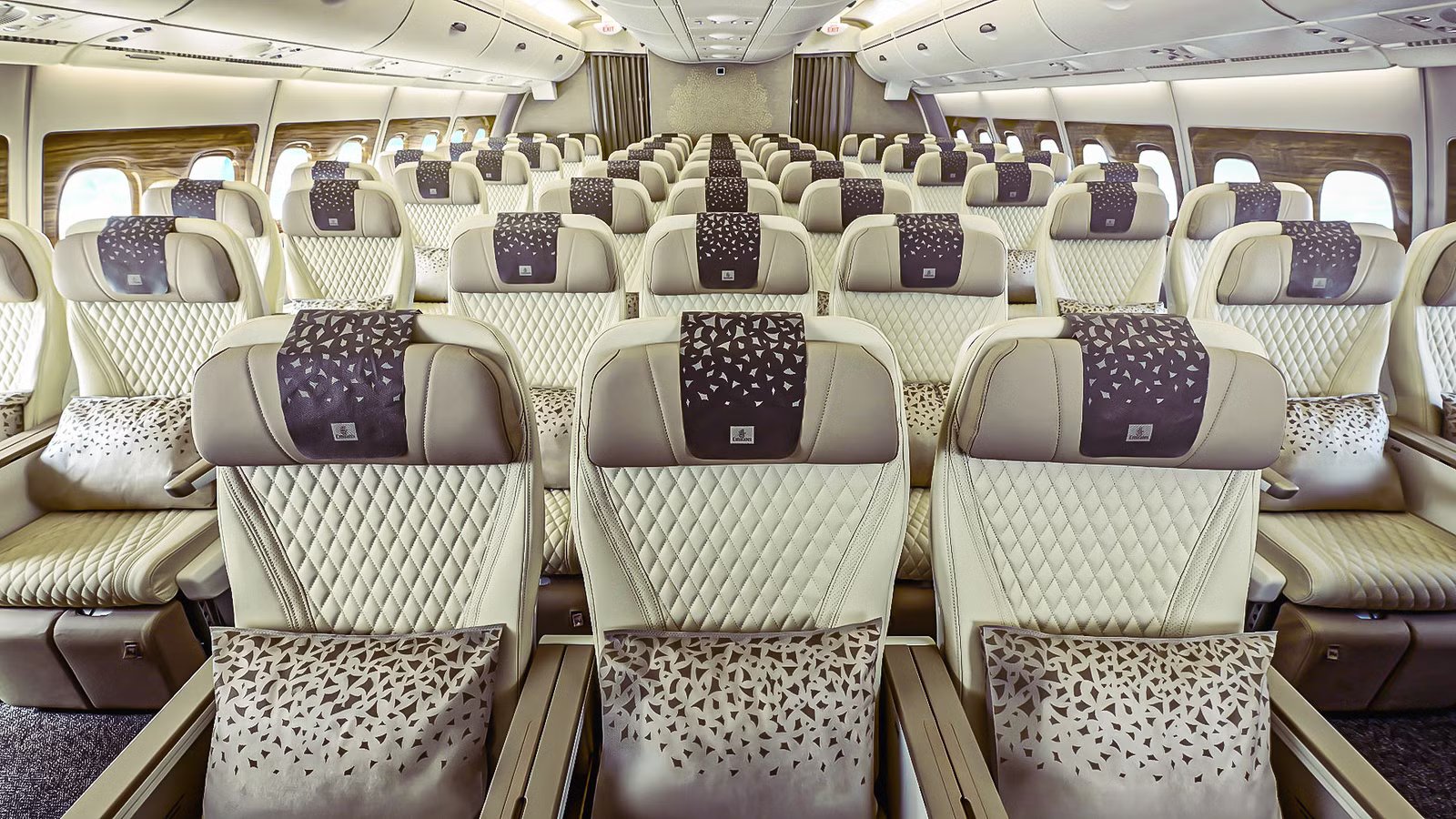
Among the Middle East’s big three carriers,  Emirates is quite notable for offering premium economy, a cabin that’s generally been popular with passengers, but has not been introduced by rivals Etihad Airways and Qatar Airways. Emirates has been rolling out premium economy across its entire fleet, while all new-delivery widebodies are arriving with premium economy.
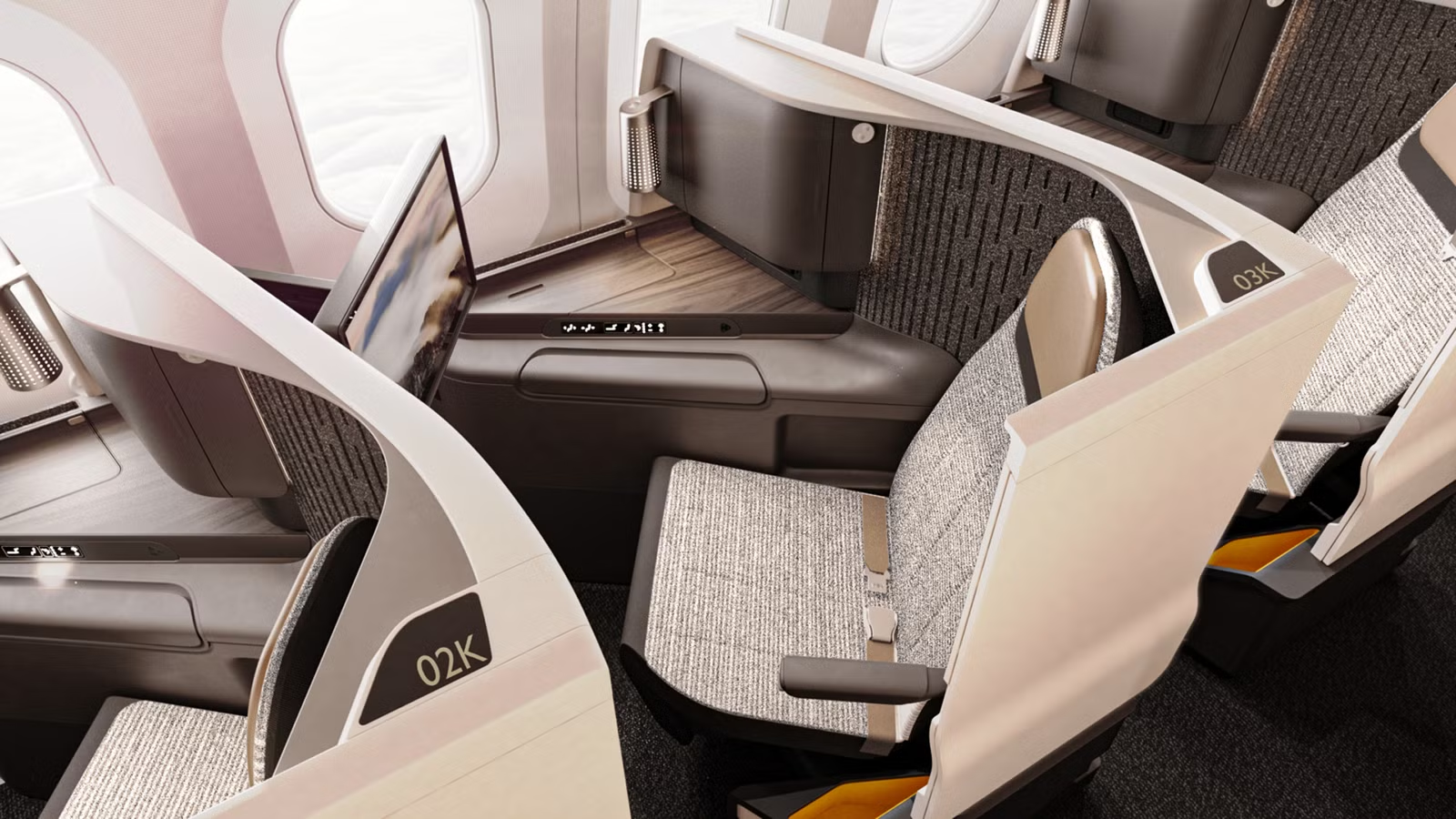
In general, premium cabins are more desirable on longer routes, since the benefits are more impactful, and Emirates has a particularly strong focus on selling premium seats. It has first class on almost all of its planes, and while its business class cabin sizes are average, it flies a huge number of Airbus A380s with 76 business class seats, which substantially boosts system-wide capacity. Now, Emirates is making premium economy a core part of its offering throughout the network.
Where To Find Premium Economy On Emirates

The Airbus A350-900 was the first aircraft type within Emirates’ fleet where all examples feature the new cabin, as they started arriving after the airline debuted premium economy. Meanwhile, Emirates has also finished refurbishing its Boeing 777-200LR fleet. Emirates installs either 21 or 28 premium economy seats on the A350, and it notably configures the cabin seven-abreast (rather than the typical eight-abreast), while installing 24 seats configured eight-abreast on the 777-200LR.
Emirates plans to retrofit 71 of its 777-300ERs with premium economy, and has thus far refurbished 43 examples as of the time of writing. These aircraft feature 24 premium economy seats configured eight-abreast, as on the 777-200LR. The 777-300ER is the backbone of Emirates’ fleet, with the airline operating 117 units. However, it’s the Airbus A380 that’s the carrier’s most famous aircraft, serving major destinations around the world and featuring large premium cabins.
Emirates Passenger Fleet | Number |
|---|---|
Airbus A350-900 | 24 |
Airbus A380-800 | 116 |
Boeing 777-200LR | 10 |
Boeing 777-300ER | 117 |
Total | 267 |
Emirates has retrofitted 51 of its 116 Airbus A380s with premium economy, including 50 of its standard A380s with first class. In addition, one of these aircraft features the airline’s new high-density layout, with fewer seats than before (569 versus 615). The 56 seats are located on the upper deck where first class would otherwise be installed, and the aircraft features 76 business class seats rather than the previous 58. On the remaining A380s, premium economy is located on the main deck.
What Emirates’ Premium Economy Includes

All of Emirates’ planes with premium economy use the Recaro PL3530, a fairly standard seat model for premium economy/short-haul business class. The seat pitch is above average, as Emirates configures the seats with 40 inches (101.6 centimeters) of pitch, and the cabin is configured as either seven-abreast (A350, A380 upper deck) or eight-abreast (777, A380 lower deck). The screen size is roughly the same as in Emirates’ economy seats, but the recline is much greater.
The soft product in premium economy consists of upgraded catering with a rotating seasonal menu inspired by regional themes, and the meals themselves are served on chinaware with metal cutlery. Passengers also receive access to a larger beverage list, including select wines from business class, while being greeted with sustainable pouches containing skincare and travel essentials. The smaller size of the premium economy cabins also results in more attentive service than in economy.
Aircraft | First | Business | Premium Economy | Economy | Total Seats |
|---|---|---|---|---|---|
Airbus A380-800 | 14 seats | 76 seats | 56 seats | 322 seats | 468 seats |
14 seats | 76 seats | 56 seats | 338 seats | 484 seats | |
14 seats | 76 seats | 56 seats | 341 seats | 487 seats | |
14 seats | 76 seats | N/A | 399 seats | 489 seats | |
14 seats | 76 seats | N/A | 401 seats | 491 seats | |
14 seats | 76 seats | N/A | 427 seats | 517 seats | |
14 seats | 76 seats | N/A | 429 seats | 519 seats | |
N/A | 76 seats | 56 seats | 437 seats | 569 seats | |
N/A | 58 seats | N/A | 557 seats | 615 seats |
Emirates has been scheduling the premium economy-equipped A380s on its flagship routes to North America, Asia, and especially Europe. The European routes are particularly important because the region represents a huge chunk of Emirates’ business, given the central location of its hub in Dubai. What’s more, premium economy is generally well liked by passengers for what it offers, but the value of the cabin especially shines on routes from Europe to the Middle East.
The Value Proposition Of Premium Economy

Fundamentally, an economy seat is a basic transportation product, giving passengers the basics needed for long-distance travel, while a business class ticket offers a significantly elevated experience with high-quality dining and individual pods with lie-flat seats. Premium economy is positioned in between the two, but is more closely aligned to economy since the actual seat resembles a sized-up economy seat. It’s upgraded transportation rather than luxury, and this is why it’s so successful.
On a route like London to Dubai, which rarely exceeds seven hours of flight time, most passengers don’t get a ton of benefit from an elaborate business class seat with direct aisle access and might not be able to sleep for long periods of time. Still, economy can be exhausting even on a six-to-seven-hour flight, and this is where premium economy shines the most. Passengers have more personal space with better food, and this is good enough on Emirates’ European services. Business class offers a better experience, but it’s also expensive while being ‘too much’ for some.
Catch what other flight trackers miss
Emergency squawks, holds, NOTAMs — live signals, no signup.
Open tracker
Catch what other flight trackers miss
Emergency squawks, holds, NOTAMs — live signals, no signup.
Open tracker
The added comfort is even more beneficial on true long-haul and ultra-long-haul routes, such as Emirates’ services to the US or Australia, but the distance also makes business class more appealing. Premium economy is still a desirable option, but there’s more value from the lie-flat seat with added privacy. Meanwhile, most of Emirates’ European routes only last about five to seven hours in the air, and the attributes of the premium economy seat are closely aligned with how most passengers want to upgrade their experience on routes of this length.
The Benefit For Emirates

Emirates is successful in large part because of its brand image, pulling away customers from European legacy carriers through its products, as well as its network and schedule. The airline’s premium economy is one of the top products within the segment, and this further boosts Emirates’ image as an airline that offers a genuinely elevated onboard experience. In addition, the margins on the seats are excellent.
A premium economy seat doesn’t take up dramatically more space than economy models, even with Emirates’ slightly more spacious layouts. Meanwhile, the seats sell for significantly more money, with Emirates often charging close to double the economy fares. The catering and amenity kit are also not particularly expensive, leading to significantly greater margins.
Business class has traditionally been an airline’s most profitable cabin, and the fares may be close to 50% higher than premium economy. However, a business class seat takes up significantly more space than either a premium economy or economy seat, with more seat pitch and a four-abreast layout on Emirates’ A380s. While business class earns more revenue overall, many airlines have now reported that premium economy is their most profitable cabin on a square-footage basis.
The Downside Of Premium Economy

Emirates’ premium economy has been called a ‘sweet spot’ for Europe-to-Dubai routes because the product provides material benefits while the advantages of business class are less impactful on flights of this length. However, we previously discussed that premium economy is closer to economy in terms of what it offers passengers, which isn’t a flaw depending on how it’s priced. However, Emirates tends to price its premium economy fares closer to business class.
This creates a value proposition that’s actually somewhat questionable, since tickets are considerably more expensive than economy despite the seats not being dramatically different. In comparison, the business class experience is significantly more differentiated. This is not unique to Emirates, as many airlines set premium economy fares closer to business class, and this is partially because supply is limited. Many airlines have small premium economy cabins, creating scarcity when demand is high.
Emirates, for its part, has dropped premium economy fares on some routes to maintain competitiveness. As a whole, however, premium economy offers an experience that is popular with passengers but is also expensive for what it offers in comparison to the other cabins. Still, pricing is ultimately set based on demand, and as demand rises for premium economy, airlines will continue to charge strong fares.
Outlook On Emirates’ Premium Economy

Premium economy was an experimental idea in the 1990s and 2000s, but today, it’s a mainstream, lucrative product for airlines to offer and is popular with customers. Independent of price, its value truly shines on routes between five and eight hours, since the flight is often too short to fully experience the benefits of business class. However, premium economy is expensive for what it offers, making business the better value for passengers who are willing to spend the extra money.
Ultimately, the most basic measurement of a product’s worth is what the market is willing to pay for it. Emirates’ success with premium economy shows that customers highly value the added space compared to economy, and that the product truly sits at the heart of what the market wants on medium-to-long haul routes.