dailynewsnblog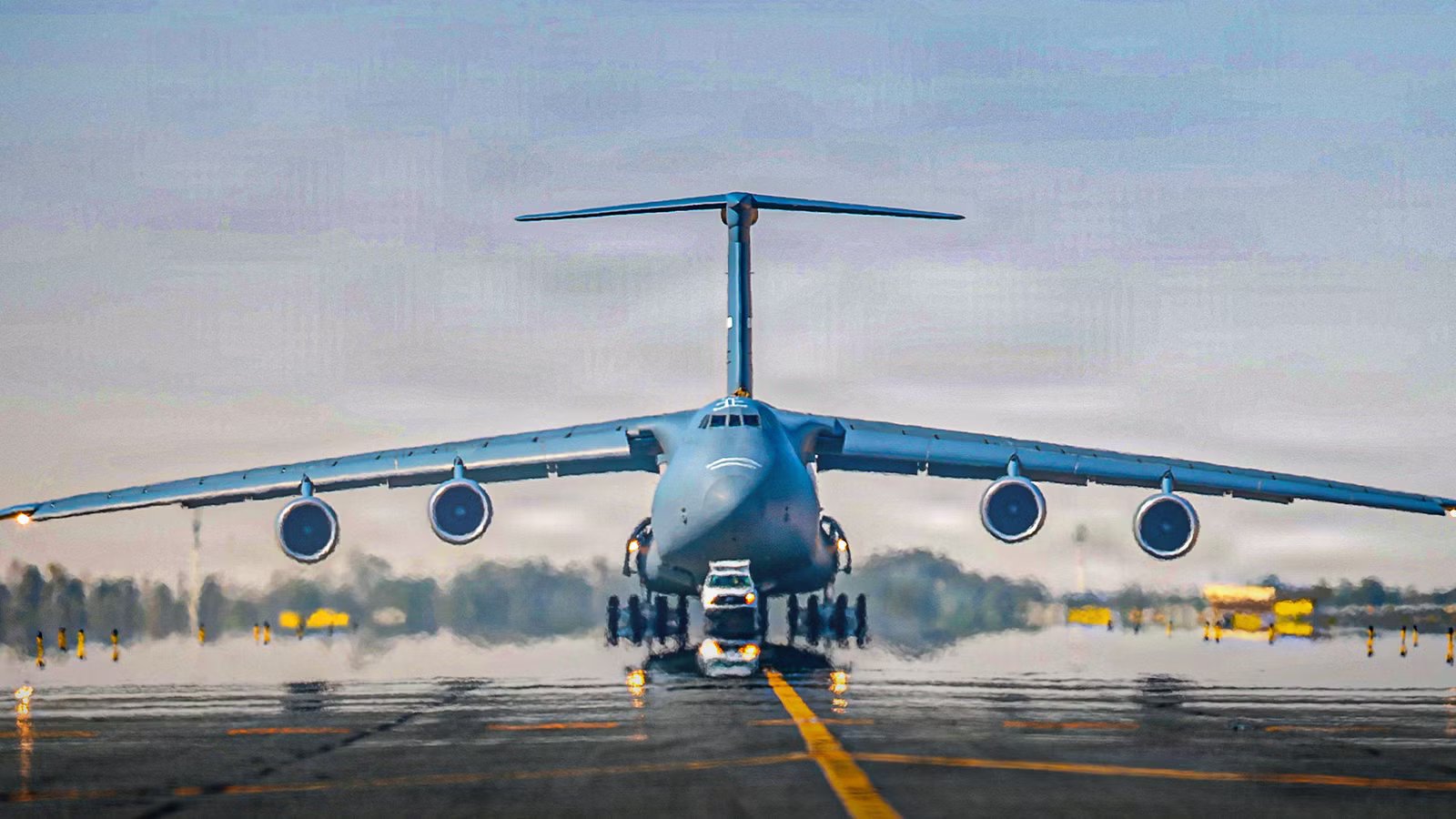
The Lockheed C-5 Galaxy is one of the largest aircraft ever built, with a 222-foot (67.9-meter) wingspan and a first flight dating back to June 30, 1968. Yet, despite multiple upgrades—including the C-5M modernization—it still lacks one feature now common on most modern aircraft: winglets. That absence stands out at a time when wingtip devices are widely used to improve fuel efficiency and aerodynamic performance, both in military and in commercial aviation.
This article examines why the C-5 has never adopted winglets, drawing on NASA research, USAF modernization data, and comparisons with aircraft like the Boeing C-17 Globemaster III. It breaks down key areas: how the aircraft’s original design era shaped its wing, the structural and aerodynamic tradeoffs involved, and how military operating priorities differ from commercial aviation. Together, these factors help explain why a feature common on airliners is still absent from one of the United States Air Force’s most important transport aircraft.
Born In The Wrong Era, Built Too Big To Easily Fix

The most direct explanation is chronological. The C-5 first flew on June 30, 1968, nearly a decade before winglets entered mainstream aeronautical thinking. Richard Whitcomb’s foundational research at NASA Langley did not conclude until the mid-1970s, and it took further years before the technology moved from wind tunnels into production aircraft. The Galaxy was already a mature operational platform by the time winglets appeared on aircraft like the early Boeing 747SP.
When the C-5B models entered service in the late 1980s, and all surviving A-model wings were replaced, engineers assessed whether winglets should be incorporated into the new wing design.
The conclusion was that the marginal aerodynamic benefit was insufficient to justify the structural and weight penalties involved. The wings were rebuilt, but the tip profile remained unchanged, preserving the 1960s design philosophy intact. Even Boeing’s 777X, designed decades later with full modern CFD capability, opted for folding raked wingtips over traditional winglets because its wingspan was already optimized beyond the point where winglets offered a net gain.
The same logic applies to the Galaxy, amplified by its scale. It also matters that commercial aircraft face a strict ICAO 80-meter gate constraint, which prevents designers from simply extending wingspan to reduce induced drag, so they redirect that efficiency upward with winglets instead. The C-5 operates from military airfields with no such restriction. If more span efficiency were ever needed, engineers could extend the wing horizontally. Winglets, in this context, solve a problem the Galaxy does not have.
What Factors Compound The Engineering Decision?

At the core is a structural trade-off that grows more punishing as an aircraft gets larger. A winglet exerts a bending moment at the wingtip that requires heavy internal reinforcement — and on an aircraft whose entire mission is defined by how much cargo it can carry, every pound of added structure is a pound of payload lost. The C-5’s already vast wingspan also reduces the marginal benefit winglets would deliver, since a very long wing naturally generates less induced drag to begin with.
There is also a subtler structural reason: the C-5 is equipped with an Active Load Distribution Control System (ALDCS), which deflects the outboard ailerons symmetrically in response to accelerometers throughout the airframe, shifting wing loads inboard to reduce root bending moments during maneuvers and gusts. This system already manages the very loads that winglets integration would complicate further. Besides increasing bending forces, adding ten-foot winglets would also interact with a sophisticated active controls architecture in ways demanding a full re-analysis of the wing’s entire load envelope.
Mission profile adds another layer. Winglets deliver their greatest benefit at higher angles of attack: during climb, approach, and the repeated cycles of short-haul flying. At the efficient cruise angles of attack typical of long-haul intercontinental flight, their advantage shrinks considerably. The C-5’s operational context also plays a decisive role. Commercial aviation is relentlessly focused on cost-per-ton-mile, making any technology that trims fuel burn attractive even if the payback period is long. The US Air Force, by contrast, prioritizes mission capability, operational reliability, and payload capacity above operating economy, as previously covered by Simple Flying.

Why Did It Take So Long For The World’s Largest Military Cargo Aircraft To Get A Glass Cockpit
Why the C-5 Galaxy lacked a glass cockpit for decades—exploring military priorities, design history, and its eventual digital upgrade to the C-5M.
What Do Operational Realities Tell Us?

It is worth stepping back to ask a question that pure engineering analysis can obscure: why are winglets so ubiquitous on commercial aircraft in the first place? The aerodynamic efficiency gain is real, but it is not the whole story. Commercial jetliners are designed within the parameters of ICAO Aerodrome Reference Code F, which categorizes aircraft with wingspans up to 260 feet (80 meters) to ensure compatibility with airport infrastructure.
That constraint means airlines cannot simply build longer wings to reduce induced drag, so designers redirect that efficiency upward, adding winglets as a workaround for a problem military aircraft simply do not have. The C-5 operates from military airfields where no such gate restriction applies, and engineers could always elect to increase span rather than add wingtip devices if additional efficiency was needed.
There is another commercial benefit of winglets that is entirely invisible in the military context: wake turbulence separation. Wingtip vortices are more than just a drag penalty for the aircraft generating them; they represent a risk for other aircraft following behind. At busy commercial airports, wake turbulence separation rules impose minimum spacing between successive arrivals and departures, directly limiting runway throughput.
Winglets reduce the intensity of these vortices, which is one reason air traffic management authorities have long viewed them favorably beyond simple fuel economics. Military airlifters operating from dedicated bases or austere forward airstrips do not share a runway with dozens of narrowbodies at two-minute intervals. Wake separation simply is not a design driver.
How Does The C-5 Compare To Other Airlifters?

The comparison with the Boeing C-17 Globemaster III helps put the C-5’s design into perspective. Unlike the Galaxy, the C-17 was developed decades later, when winglet technology was already well understood and widely adopted. It was also designed by McDonnell Douglas (later Boeing), a different engineering lineage working with a more modern aerodynamic toolkit.
The key difference is the mission. The C-17 was built to combine long-range transport with tactical flexibility, including operations from short and austere runways. Its supercritical wing, winglets, and high-lift system all support that role, helping it balance efficient cruise with strong low-speed performance. The C-5, by contrast, was designed purely for strategic airlift. As explored by Simple Flying, the C-5 operates from long runways, carries heavier loads, and prioritizes payload over flexibility. That makes the aerodynamic trade-offs very different, reducing the value of winglets in their specific role. In simple terms, the C-17 needs winglets to meet its mission requirements, while the C-5 doesn’t.
|
Aircraft |
First Flight |
Wingspan |
Winglets |
Wing Type |
|
C-5 Galaxy / C-5M Super Galaxy |
1968 / 2006 (upgraded) |
222 feet (67.9 meters) |
No |
Traditional high-lift + ALDCS |
|
C-17 Globemaster III |
1991 |
170 feet (51.8 meters) |
Yes |
Supercritical |
|
C-130J Super Hercules |
1996 |
132 feet (40.4 meters) |
No |
High aspect ratio |
|
Antonov An-124 Ruslan |
1982 |
240 feet (73.3 meters) |
No |
Traditional high-lift |
The Antonov An-124 Ruslan follows precisely the same no-winglets logic as the C-5. Two independent Cold War-era airlifters, designed on opposite sides of the Iron Curtain, arrived at the same aerodynamic conclusion. That convergence underlines that the absence of winglets on these giants is an inevitable outcome of the engineering environment they were born into.

5 Largest Aircraft Fleets Operated By The US Air Force
From F-16 fighters to KC-135 tankers, these five aircraft types make up the largest fleets in the US Air Force in 2026.
What Did Engineering Studies Actually Find — And Why Was It Never Acted On?

The idea of fitting winglets to the C-5 has been studied extensively. Computational fluid dynamics analysis found that ten-foot-tall winglets could improve the range on the C-5M by approximately three percent, which was identified as the single largest available fuel efficiency improvement for the airframe. That figure was taken seriously as part of the broader Reliability Enhancement and Re-engineering Program (RERP) that produced the C-5M Super Galaxy.
Despite being the most impactful single option, winglets were also the most expensive, and no commitment was ever made. The RERP ultimately directed its investment elsewhere: into the GE CF6-80C2 engines, which delivered a 22% thrust increase, a 30% shorter takeoff roll, and a 58% faster climb rate. Engine modernization offered performance and reliability gains that winglets could not replicate, at a far more favorable cost-benefit ratio than the structural work required to attach and reinforce ten-foot winglets on a 1960s-era wing that also carries the ALDCS architecture. Budget reality, in other words, made the choice for the engineers.
It’s also important to keep the 3% figure in context. That estimate reflects a conventional winglet design applied to a very large wing. While some companies have achieved larger gains on smaller aircraft, those results don’t scale directly to something as large and structurally complex as the C-5. In the end, the conclusion wasn’t that winglets wouldn’t work; they simply weren’t worth it.
A Giant Shaped By Its Era, Its Mission, And The Full Weight Of Reality

The Lockheed C-5 Galaxy has no winglets for a combination of reasons, not a single limitation. It was designed in 1968, before winglets were proven technology. Its 222-foot wingspan already delivers much of the efficiency winglets are meant to provide. And adding them today would require structural reinforcement that would reduce payload capacity.
Other factors reinforce that decision. The aircraft’s Active Load Distribution Control System already manages wing bending loads, making winglet integration more complex. Its long-haul mission profile also reduces the benefits winglets typically deliver, especially compared to the short-haul, high-cycle operations where they are most effective. Operational context matters as well. The C-5 flies from military airfields without the gate-size constraints that push commercial aircraft toward winglets.
And when engineers evaluated the numbers, other upgrades, particularly new engines, offered far greater returns for the available budget. The C-5’s design, including its remarkable 28-wheel landing gear, is also a reminder that military and commercial aviation are evolving toward different goals. Airliners are driven by fuel efficiency, turnaround time, and airport compatibility, all of which favor winglets. Strategic airlifters prioritize payload, reliability, and flexibility, which often leads to very different design choices.
About the future, the US Air Force’s Next-Generation Airlift (NGAL) program is exploring concepts including blended-wing-body designs — aircraft in which the fuselage itself becomes a primary lifting surface, potentially rendering the entire winglet debate obsolete for the next generation. Whether the C-5M receives winglets before it retires in the 2040s remains unlikely in the absence of a funded modification program. The Galaxy will almost certainly continue flying as it always has: enormous and indispensable, its clean wingtips slicing through the sky exactly as Lockheed’s engineers left them in 1968.


![Lufthansa Has Ended Airbus A380 Flights On 15 Routes [Updated List]](https://dailynewsnblog.com/wp-content/uploads/2026/04/lufthansa-airbus-a380-taxiing-for-take-off-at-munich.jpg)