dailynewsnblog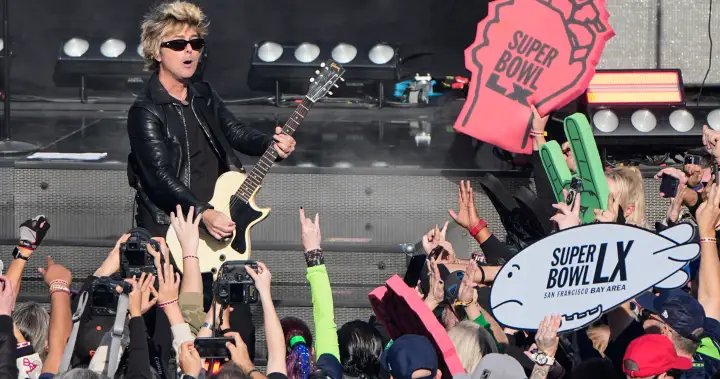
If you’re beyond a certain age — and really, that age can be as low as 25 — you’ve probably muttered to yourself, “Music is no good anymore. It was so much better when I was young.” Welcome to your adult years.

You’re not the first to feel this way. Since antiquity, each generation tends to lament the musical tastes of the generations that follow. Somewhere around 400 BCE, Plato wrote:
“Forms and rhythms in music are never altered without producing changes in the entire fabric of society. It is here that we must be so careful, since these new forms creep in imperceptibly in the form of a seemingly harmless diversion. But little by little, this mischief becomes more and more familiar and spreads into our manners and pursuits. Then, with gathering force, it invades men’s dealings with one another and goes on to attack the laws and the constitution with reckless impudence until it ends by overthrowing the whole structure of public and private life!”
Now consider this: Polite society in England was outraged when a particular type of foreign music crept into the country in 1816. It was called the “waltz.” This is from The London Times:
“It is quite sufficient to cast one’s eyes on the voluptuous intertwining of the limbs and close compressure of the bodies … to see that it is far, indeed, removed from the modest reserve which has hitherto been considered distinctive of English females.
So long as this obscene display was confined to prostitutes and adulteresses, we did not think it deserving of notice; but now that it is … forced on the respectable classes of society by the evil example of their superiors, we feel it a duty to warn every parent against exposing his daughter to so fatal a contagion.”
Later in the century, the operettas of Gilbert and Sullivan were considered by some to be too upbeat, too saucy and lyrically controversial, and therefore not suitable for proper music aficionados. Oddly, it was later recommended that music lovers should avoid the popular dance music (and the devil’s music that was this new American thing called “jazz”) and instead pursue something more respectable, thus leading to The Great English Waltz Revival of the 1920s.

Get breaking National news
Get breaking Canada news delivered to your inbox as it happens so you won’t miss a trending story.
Big band (good!) gave way to bebop (bad!) before rock ‘n’ roll (very, very bad) started destroying young souls. And as rock ‘n’ roll evolved, generational splits were created. Even before the ’60s had a chance to get started, parents were decrying their kids’ love for post-Elvis rock.
Why is music so specific when it comes to generations? Many a cultural studies course has been dedicated to this question. It’s also been investigated by music scholars, psychologists, sociologists and technologists. Why does every generation think that the music of their youth is the greatest ever made?
There’s a sweet spot we all live through, our coming-of-age musical years, that begin in about Grade 9 and continue until we get out into the real world as adults a decade later. Various studies using Spotify data (here’s one) have identified that you can predict a child’s future music tastes by paying attention to what they’re listening to when they’re 13 (for girls) and 14 (for boys), with the years 16 to 18 particularly impactful. Building on that, another study says that the most significant music for adults tends to be what they were listening to in their early 20s.
During this time, the music you love becomes part of your identity. As our brains mature, music helps us figure out complex emotions and who we are as people. Later, we might even use music to project our identity to the world through genre-specific clothing, cosmetics and language. The music that shapes you indelibly becomes part of you.
After that, life intrudes and we no longer have as much time to immerse ourselves in music the way we once did, thanks to jobs, family obligations and the pressures of day-to-day living. By the time we’re 33 (two to three years younger if you have kids who clamour for another play of the Frozen soundtrack from the back seat), we’re pretty much at musical maturity and set in our ways. The music of our teens and very early 20s becomes our security blanket. We go back to it again and again whenever we need a boost.
The only time this changes — and again, I’m speaking generally — is for an 18-month period between the ages of 41 and a half and 43, when many enter a mid-life crisis of sorts, throwing themselves back into the world of new music. “I’m still cool. I’m still young. I’m down with the kids.”
But that’s just a phase. While you may discover some really interesting new stuff, it takes effort, perhaps more than you’re willing to expend. By age 44, you’re back to your usual comfort food and probably a little nostalgic for when life wasn’t nearly as complicated.
Here’s another thing that happens as you get older when it comes to music, which is totally unavoidable and, in fact, is laudable: You evolved into an experienced and knowledgeable consumer of music.
When you’re young, everything is new and interesting, but as you get older, you start to notice cycles and trends. The sounds you hear today become very familiar. Let’s say you stumble on a band like Beauty School Dropout. Nice, but don’t they sound a lot like Blink-182? And wasn’t Blink’s sound descended from Green Day? And isn’t there a lot of Ramones in the Green Day sound? And what were the Ramones but ’60s pop songs played loud and fast?
Mark Hoppus of Blink-182.
Kevin Mazur/Getty Images for iHeartMedia
Your musical knowledge and experience can make things very annoying because it may seem that history is on repeat. Everything old is new again and current music seems like it’s just recycled and rehashed stuff from the past. You find yourself saying things like, “Hey, that new song by [blank] sounds a lot like that song by [blank] from when I was in high school!” And you are not wrong.
Most people are largely unbothered by this, but if you do find yourself wanting something new and different and are uninterested by the current musical environment, I have a suggestion. Instead of trying to follow current trends and sounds, go back to your favourite decade and dig deeper. If, for you’re example, you’re a ’90s kid, you know all the big hits of the era. But underneath that layer are thousands of equally great songs that never got the attention they deserve. It’s not new music, but it’s new to you, and it’s from an era you already understand.
It’s the circle of life. Might as well embrace it.
© 2026 Global News, a division of Corus Entertainment Inc.