dailynewsnblog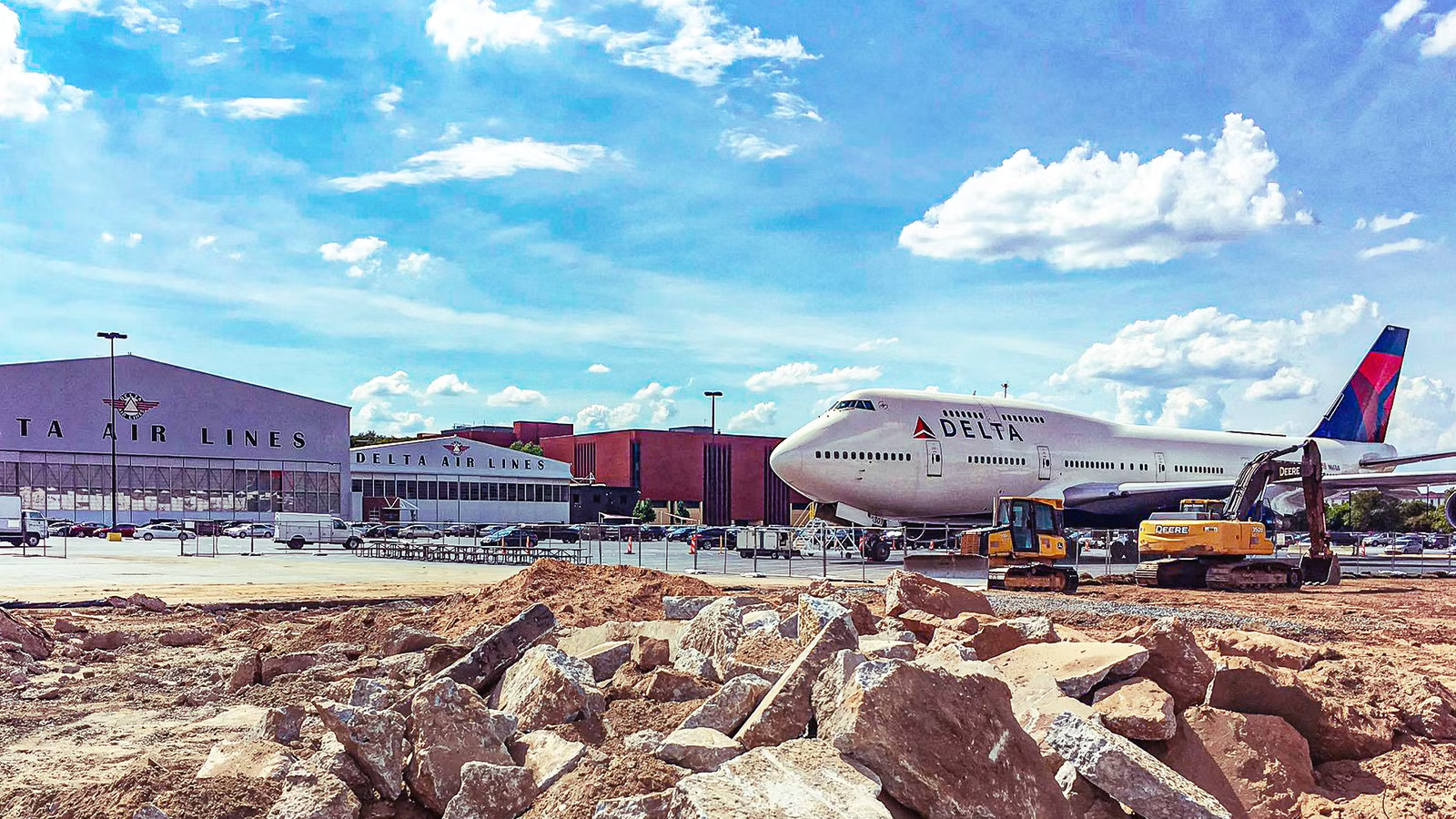
 Delta Air Lines ferried its final Boeing 747-400 to the Arizona desert on January 3, 2018. At that time, aviation media framed the flight as the solemn funeral of American passenger jumbo service. Aircraft registration N674US touched down in the Sonoran Desert after decades of transpacific flying, bringing an end to an era for the type. It seems that the final ferry flight was far from a total retirement. In reality, it activated a vital donor system that continues to power global supply chains today.
Sitting under the desert sun, N674US and its 15 Northwest Airlines-inherited siblings became an indispensable strategic reserve for the world’s largest cargo operators. As global trade demands relentlessly high airframe utilization, dedicated freight carriers like  UPS Airlines and Atlas Air face a continuous struggle to keep aging four-engine freighters airworthy. How did a fleet of decommissioned passenger jumbos parked in a desert boneyard become the primary life-support system keeping global air cargo airborne?
The Final Flight

Delta’s decision to send its 747-400 fleet to the desert was one of necessity, as it was the best option available at the time. Inherited through its 2008 merger with Northwest Airlines, the 16 quad-jets faced an insurmountable economic threat from modern twin-engine widebodies like the Airbus A350-900 and Boeing 787-9. Operating four aging Pratt & Whitney PW4056 engines across long transpacific sectors burned vastly more fuel per seat than twin-jets, and routine maintenance overhauls on four complex engines meant operating margins were affected negatively. After the final scheduled passenger flight landed in  Detroit Metropolitan Wayne County Airport (DTW) from
  Incheon International Airport (ICN) in December 2017, the aircraft’s fate as a passenger carrier was sealed.
On January 3, 2018, a three-hour and 33-minute ferry flight from Atlanta (ATL) to Pinal Airpark (MZJ) in Marana, Arizona was the last journey for the 747, as reported by CNN. Sprawling across 2,080 acres (842 hectares), MZJ offers ideal low-humidity conditions capable of storing over 400 aircraft with minimal structural corrosion, as noted by Ascent MRO. Storage protocols at the facility require technicians to inspect parked airframes every seven days, preserving them so they can theoretically return to flight in three weeks. However, Delta never intended for its final 747 to take to the skies again; the airline had already slated the airframe for teardown.
Stripped of its passenger seats, galleys, and cabin trim, the true commercial value of Delta’s retired fleet was instantly opened up. Rather than decaying into worthless aluminum scrap, these parked airframes became a goldmine of pre-certified, high-value components just as the global air cargo market began facing an unprecedented spare-parts shortage.
The Value A 747 Still Holds

Harvesting parts directly from retired airframes like N674US slashes the astronomical maintenance expenses that plague active 747 freighter operations. For cargo giants operating heavy long-haul fleets, purchasing brand-new replacement components directly from original equipment manufacturers carries eye-watering lead times and inflated list prices. Instead, through acquiring certified, pre-owned parts from boneyard teardown specialists, operators like UPS and Atlas Air can forget these manufacturing delays and get critical flight hardware at a fraction of original factory cost and keep active freighters in the air without multi-month groundings.
The true financial treasure lying inside Delta’s boneyard airframes sits under the wings and behind the flight deck panels. A single high-time Pratt & Whitney PW4056 or General Electric CF6-80C2 turbofan engine harvested from a retired passenger 747-400 can save a cargo carrier massive costs compared to a complete factory overhaul, as noted in Simple Flying analysis. As well as the engines, teardown technicians strip complex flight control actuators, main landing gear assemblies, weather radar units, and flight management computers. The basic airframe architecture of the passenger 747-400 shares identical mechanical and electronic systems with its main-deck cargo sibling, so components swapped from Delta’s passenger frames bolt directly into active freighters with no structural modification needed.
The steady supply of recovered parts extends the operational lifespan of older cargo jets far beyond their original design expectations. Even as modern twin-engine freighters enter service, global cargo operators remain fiercely loyal to four-engine jumbos, relying on a unique structural capability that no twin-engine jet on Earth can replicate, even as these twinjets offer far more benefits economically.
What Makes The 747 Irreplaceable

In the case of modern twin-engine freighters like the Boeing 777F, these aircraft offer impressive fuel economy, but they cannot match the architecture that makes the 747-400 freighter truly irreplaceable: main-deck nose loading. As detailed in Simple Flying analysis, factory 747 freighters feature an upward-swinging nose cone that opens the full width of the fuselage, allowing cargo crews to roll extra-long payloads straight into the main cabin. Heavy equipment like oilfield drill shafts, industrial turbines, and oversized manufacturing machinery do not fit the 90-degree turn required by side-loading cargo doors on twin-jet airframes.
Catch what other flight trackers miss
Emergency squawks, holds, NOTAMs — live signals, no signup.
Open tracker
Catch what other flight trackers miss
Emergency squawks, holds, NOTAMs — live signals, no signup.
Open tracker
On heavy transpacific corridors connecting Anchorage International Airport (ANC), ORD, and ICN, operators like Atlas Air and Kalitta Air depend on this unique volumetric capacity to maximize payload yields. A 747-400F can lift up to 249,000 lb (113,000 kg) of revenue payload across a range of 4,495 nautical miles (8,250 km), filling both its main deck and lower belly holds. The main deck accommodates 30 standard cargo pallets, creating a massive volumetric envelope that allows lightweight, high-cube express packages to be stacked alongside heavy freight without exceeding maximum takeoff weight limits.
The unmatched utility explains why cargo carriers are determined to fly the 747-400 well into the next decade. The trouble is that its manufacturer does not necessarily have the same future vision for the aircraft. As reported by Simple Flying  Boeing permanently closed the 747 production line in late 2022 after delivering the final 747-8F to Atlas Air. With original equipment manufacturers steadily winding down legacy parts lines, the global supply of airworthy 747 components is rapidly shrinking.
The Biggest Source Of Spare Parts

The closure of Boeing’s 747 production line in Everett, Washington, has made a routine maintenance ecosystem become one that has been squeezed of its supply. When the final 747-8F was delivered to Atlas Air in late 2022, Tier 1 aerospace suppliers began sunsetting manufacturing lines dedicated to legacy 747 components. Sub-tier vendors shifted critical precision tooling away from 30-year-old 747-400 designs to support high-rate production for modern widebodies like the 787 and A350. Consequently, newly manufactured OEM replacement parts for old flight systems have seen catalog prices surge while factory lead times stretch beyond two years, leaving cargo operators with virtually no factory supply buffer for emergency line maintenance.
Delta’s retired fleet has, for this reason, become the main source for key components that are no longer produced anywhere on Earth. Specific parts, such as out-of-production flight management computer circuit cards, high-pressure hydraulic manifolds, and main-deck door actuator housings, cannot be sourced through traditional commercial distributor channels. When a cargo carrier experiences an unscheduled grounding, sourcing a certified, overhauled unit from a retired airframe, Delta’s final aircraft at MZJ is often the only way to restore airworthiness within 48 hours. Without these harvested desert reserves, airframe dispatch reliability would crumble across major cargo hubs like ANC and Memphis International Airport (MEM).
As the global inventory of intact, non-flying 747-400 airframes dwindles, the commercial friction between teardown specialists and cargo airlines is intensifying. Every passenger frame completely stripped down to bare aluminum at MZJ reduces the remaining buffer of legacy flight hardware, creating an inevitable expiration date for older cargo jets. As a result, air cargo operators need to make strategic fleet decisions about how much longer four-engine freighters can remain commercially viable before parts scarcity forces their permanent retirement.
Large Fleets With Limited Time Left To Fly

Scavenging boneyard airframes gives heavy cargo operators an excellent short-term fix, but it remains a finite lifeline with a firm expiration date. Harvesting engines, landing gear, and flight management computers keeps active 747-400Fs airborne without multi-million-dollar factory orders, though every frame picked clean in the Sonoran Desert shrinks the global parts reservoir, and that shrinking cannot be undone.
Unfortunately for air cargo operators, the ticking clock is already reshaping long-term fleet strategy. UPS, according to Planespotters, operates a fleet of over 40 747 freighters, combining -400Fs with newer -8Fs, while Atlas Air operates dozens more across global charter operations. The scavenged supply of -400 parts is drying up, and carriers now need to accelerate transitions toward modern twin-engine freighters like the 777-8F and A350F, or accept skyrocketing maintenance overhead on their remaining four-engine jets.
When the last airworthy component is pulled from the desert soil of Marana, will modern twin-engine freighters be able to take on the world’s heaviest volumetric cargo demands, or will the loss of nose-loading four-engine widebodies restrict air freight capabilities? Only time will tell, but what is for sure is that no other aircraft currently available can truly match the capabilities of arguably the most iconic commercial aircraft ever made.
How Long Will The 747 Last?

The legacy of Delta’s passenger 747-400 fleet is being passed on to the busy cargo aprons of global trade hubs, continuing on its service in a new form. These decommissioned airframes have provided the essential flight hardware that kept international supply chains moving through global trade shocks, capacity crunches, and the worst of manufacturing issues.
The bare aluminum hulls of Delta’s final 747 and its siblings will be dismantled at MZJ over the coming years, and rather strikingly, the speed at which these aircraft are stripped can be seen almost like a timer, with each piece of the puzzle removed representing the shortening of the 747’s lifespan in active service. The moment teardown crews run out of viable donor parts in the Arizona desert will mark the exact moment the Queen of the Skies finally leaves the commercial sky for good.