dailynewsnblog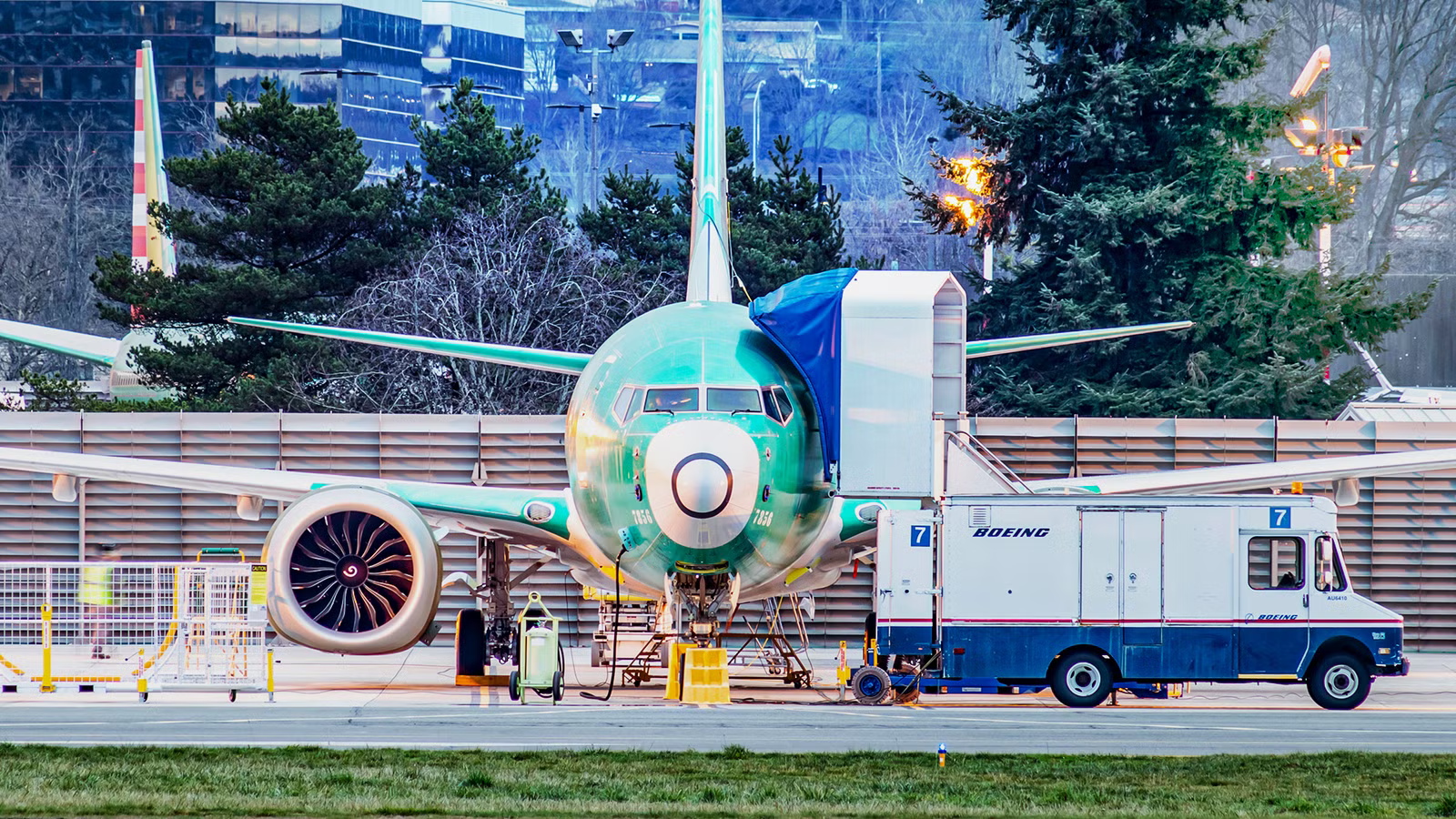
Over six years, Grant County International Airport in Moses Lake, Washington, operated as a sprawling parallel manufacturing hub, rescuing hundreds of grounded airframes through intensive post-production modifications. Pulling a four-figure workforce out of this Eastern Washington facility also pulls  Boeing’s strategy away from reactive repair, where the manufacturer now has to confront a far more dangerous operational reality. Fixing jets after they leave the factory floor costs as much time and money as building them correctly in the first place.
The departure of the final post-grounding Boeing 737 MAX 8 from Moses Lake sees the formal end of an unprecedented shadow factory operation, but it simultaneously exposes a fresh industrial gamble. Boeing is redeploying these technicians back to active production lines in Renton and Everett, attempting to remove out-of-sequence assembly work before new airframes roll off the line. Whether this massive labor transfer can permanently stabilize commercial assembly or simply transfer delay pressures back to primary production facilities depends entirely on how effectively Boeing restructures its daily factory operations.
Taking Lessons Learned To The Future

Boeing is transferring its Moses Lake workforce directly into its Puget Sound assembly facilities to eradicate traveled work, the costly practice of moving incomplete aircraft to the next manufacturing station before preceding assembly steps are finished, as reported by The Seattle Times. When missing parts or assembly delays force mechanics to complete wiring, system installations, or structural fastenings out of order, the resulting quality escapes accumulate exponentially down the line. Moving these 1,000 mechanics back to manufacturing lines in Renton and Everett establishes a labor protection designed to ensure every 737 and 777X airframe meets rigorous quality standards before advancing to the next station.
The financial and operational stakes behind this decision stem from six years of lessons learned at Moses Lake, where Boeing maintained a standalone industrial city. Restoring a single long-stored 737 MAX to airworthy condition routinely needed as many labor hours as initial factory assembly, driving monthly parking and maintenance costs up substantially. At peak, storage held about 250 jets in Moses Lake out of 450 globally; post-production rework consumed millions of engineering hours that should have supported active line production. Stopping the potential for rework on the Renton factory floor aims to prevent future airframes from ever needing that level of secondary overhaul.
However, moving 1,000 rework technicians into active manufacturing bays is an immediate operational challenge for plant managers accustomed to strict station tactics. If active production lines cannot seamlessly integrate this influx of specialized labor without creating new floor congestion, the risk of out-of-sequence work will persist despite the added headcount.
The New Task That Lies Ahead

Integrating these mechanics directly into primary manufacturing bays transforms factory floor dynamics from reactive overhaul to rigid station discipline. At Moses Lake, technicians worked on stationary airframes with open-ended job cards, dismantling cabin interiors to work on wiring bundle separations or system updates. In Renton and Everett, these same mechanics operate within strict station target times on moving assembly lines. Their main task is no longer retrofitting completed jets, but enforcing station integrity so that no airframe advances to the next position with missing components or incomplete job cards.
At Grant County International Airport, mechanics managed long-term preservation protocols on cold-stored airframes, conducting system power cycles every seven days and adding complex Maneuvering Characteristics Augmentation System (MCAS) software modifications inside a massive hangar built in 1956 to hold B-52 bombers. On active production lines in Puget Sound, the work shifts from structural teardown to preventing defects during initial assembly. Embedding 1,000 experienced rework specialists across active assembly stations provides immediate technical depth to resolve component fitment issues or supplier delays before out-of-sequence work can compound.
The issue is that reassigning 1,000 mechanics away from Eastern Washington leaves the remaining Moses Lake facility operating in a radically scaled-back capacity. Fortunately, the post-grounding 737-8 storage backlog is cleared, per ch-aviation reporting, but the airfield is far from empty, as airframes still sit on the tarmac needing the necessary technical oversight before they can ever reach commercial fleets.
Getting The Last MAX Variants Certified

Clearing the post-grounding 737-8 backlog does not mean Grant County International Airport has returned to an empty state. Instead of housing completed jets needing software updates, Moses Lake now serves as a dedicated holding facility for about 35 uncertified MAX 7 and MAX 10 variants, according to The Spokesman-Review. These aircraft together have billions of dollars in tied-up capital, stranded on the tarmac until regulatory authorities issue full type certifications for the shortest and longest members of the 737 MAX family.
Catch what other flight trackers miss
Emergency squawks, holds, NOTAMs — live signals, no signup.
Open tracker
Catch what other flight trackers miss
Emergency squawks, holds, NOTAMs — live signals, no signup.
Open tracker
The delivery timeline for these parked variants remains tied to ongoing regulatory approvals and technical revisions. After a long wait, the Federal Aviation Administration granted type certification to the MAX 7 following design updates to its engine anti-ice system; however, the larger MAX 10 faces fresh certification delays due to a flight-guidance software workload issue currently under FAA review. Until these software resolutions are finalized and deliveries clear regulatory gates, Boeing cannot deliver these airframes to launch customers like  Southwest Airlines and
  United Airlines, leaving the aircraft under active preservation protocols in Eastern Washington.
Leaving these uncertified variants at Moses Lake and moving 1,000 mechanics to Puget Sound, Boeing is drawing a clear operational line between maintaining inventory and building new aircraft. Managing static test jets takes up a far smaller footprint than full-scale post-production modification, allowing the manufacturer to focus primary engineering resources on stabilizing its main assembly lines once and for all.
Ironing Out The Delays

Completing this operational change will see its success blossom through enforcing strict station discipline across active assembly bays in Renton and Everett. Rather than allowing an airframe with missing brackets or uninstalled flight-control wiring to advance to the next station, line managers now halt movement or deploy dedicated rework teams from the 1,000-mechanic pool directly at the point of origin. This lets Boeing close out work packages sequentially, preventing out-of-order jobs from compounding as the fuselage moves toward final assembly.
The technical mechanics of this process target specific assembly friction points across the 737 and 777X lines. Under heightened FAA oversight, Boeing implemented quality gates at key manufacturing milestones, such as wing-to-body joining and systems functional testing. Now that the manufacturer is placing experienced post-production mechanics at these specific stations, supplier delays can be managed more effectively, such as late-arriving interior panels or wiring harnesses, without pushing the aircraft downstream into traveled work status.
Having rigorous quality containment directly impacts Boeing’s financial performance and factory throughput. In particular, removing secondary post-production teardowns drastically reduces overall labor hours per airframe, stabilizing cash flow by shortening the timeframe between initial assembly and final customer delivery.

Eliminating shadow assembly operations in Eastern Washington is great news for Boeing’s balance sheet, as dual-labor expenditures can be eliminated and inventory carrying costs reduced. Maintaining two full-scale assembly environments, where airframes were built once in Puget Sound and then dismantled and rebuilt in Moses Lake, generated immense operational overhead. Moving those 1,000 specialized mechanics back to Renton and Everett collapses this dual-cost structure, directly lowering manufacturing costs per airframe and freeing up working capital previously locked in stalled inventory.
The financial relief extends beyond direct labor efficiency to delivery cadence and customer penalty mitigation. Operating Moses Lake as a massive rework facility contributed to great delivery unpredictability, forcing airlines to adjust fleet planning and triggering millions of dollars in late-delivery penalties, as noted by Reuters. With quality locked down at the primary assembly stations, Boeing is accelerating its delivery cycle, allowing cash flow from completed deliveries to stabilize commercial airplane unit margins.
Stabilizing internal manufacturing dynamics is really just the beginning of a long road to recovery for Boeing. The main assembly lines can only operate at peak efficiency if the broader aerospace supply chain delivers parts on time and without defects. As a result, far more work still needs to be done across all areas of the production line, but importantly, a favorable supply chain environment is also vital to Boeing’s journey.
The Real Road To Recovery

The long-term success of Boeing’s labor consolidation depends heavily on the stability of its tier-1 suppliers, such as Spirit AeroSystems and major engine manufacturers. Integrating 1,000 experienced mechanics onto the Renton and Everett factory floors gives the technical capacity to resolve assembly issues quickly, but it cannot prevent production disruptions if sub-assemblies arrive incomplete or out of spec. Ensuring fuselages and flight control systems arrive at primary assembly bays fully prepped is essential to maintaining strict station task times and preventing the return of traveled work.
Ultimately, pulling 1,000 mechanics out of Moses Lake is a decisive shift from reactive crisis management to proactive industrial discipline. Eastern Washington will continue to host static test platforms and uncertified airframes undergoing flight testing, but at the very least, the era of the shadow factory is finally over. Boeing now aims to prove that operational stability, regulatory compliance, and consistent delivery schedules are built on the factory floor, not recovered in the desert. More importantly, the manufacturer is looking forward to a new era with more positivity, especially given the rough road it has been on in recent years.
From Desert Rework to Factory Control