dailynewsnblog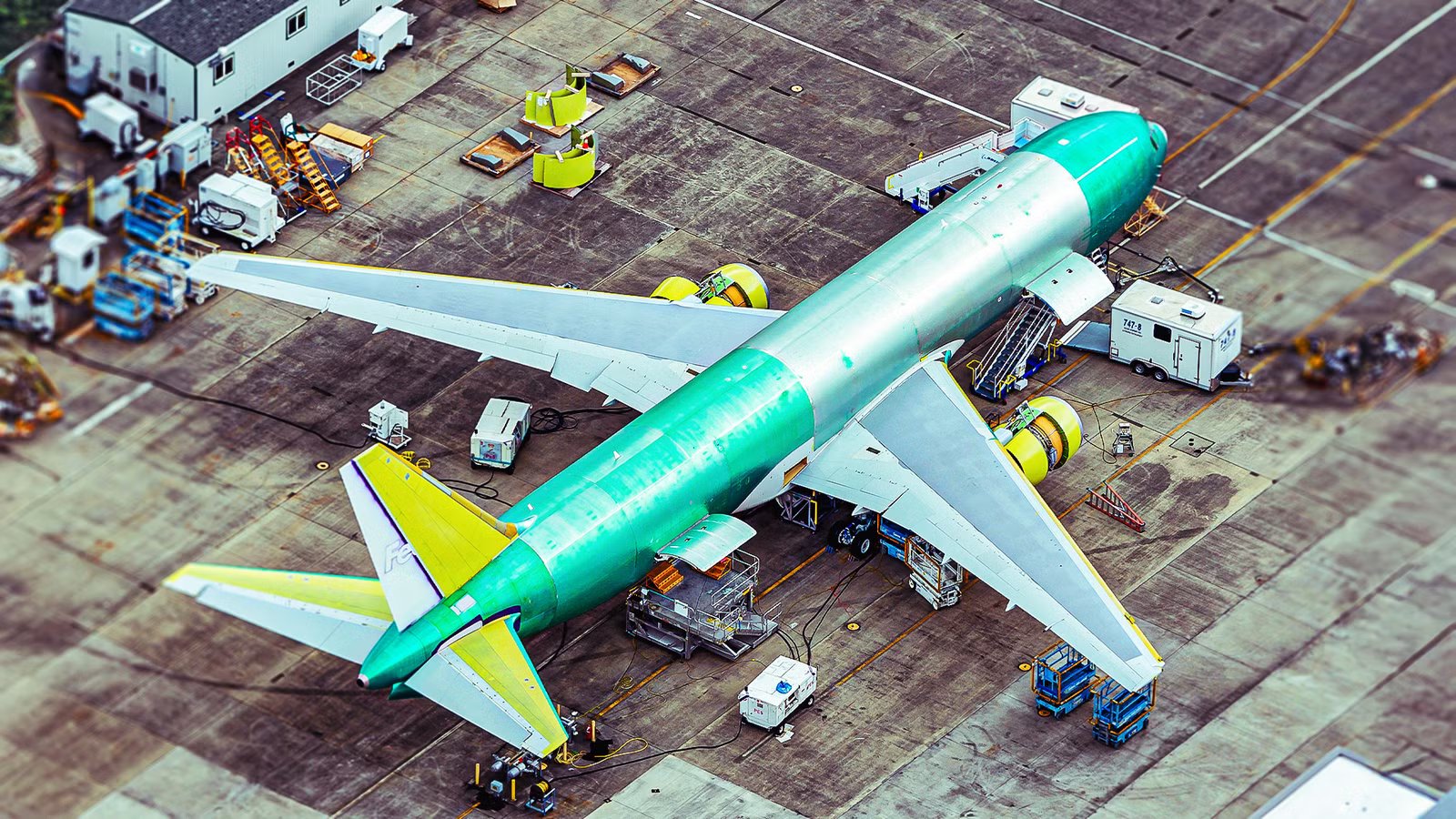
Passenger airlines are all about the latest and greatest in technology, whereas cargo operators are far more for tried-and-tested aircraft. One of the most popular and long-standing of these older platforms is the Boeing 767, a twin-engine aluminum workhorse whose engineering was locked in during the late 1970s. The commercial passenger variant of the 767 met its end more than ten years ago when the final airline order was logged, transitioning transoceanic passenger travel to the carbon fiber Boeing 787.
A passenger carrier needs maximum fuel efficiency to shield razor-thin margins from volatile oil markets, but an express cargo operator prioritizes low acquisition costs, structural simplicity, and specialized fuselage geometry. The ongoing survival of this platform is not an accident of history. Instead, it shows just how far these older platforms are from being past their due dates.
End Of Production For The 767?

The multi-decade operational run of the factory-built commercial freighter is finally at its definitive closing chapter. A major milestone occurred on May 28, 2026, when FedEx Express took delivery of its 152nd and final new-build Boeing 767-300F, registered under the tail number N244FE. Ferrying from Paine Field directly to the cargo line’s major sorting hub in Indianapolis, this specific aircraft brought a historic, multi-year fleet renewal program to a very successful conclusion. Through this aggressive acquisition strategy, the logistics giant solidified its status as the single largest operator of the type, leaning heavily on the widebody to replace its aging, inefficient fleet of three-engine McDonnell Douglas MD-11Fs and Airbus A300-600RFs.
Following this landmark delivery, the remaining order backlog for the commercial cargo variant has shrunk to a final, tightly constrained group of airframes. The factory floor is working through exactly 15 outstanding commercial orders, consisting of seven aircraft earmarked for delivery to  UPS Airlines and eight aircraft bound for an undisclosed commercial freight operator.
 Boeing leadership formally established a hard boundary plan for the industrial footprint in Everett. Prompted by severe corporate headwinds, including a prolonged machinist strike in late 2024 and staggering pre-tax financial charges, Chief Executive Officer Kelly Ortberg announced that commercial production of the 767-300F will completely cease in 2027. Once the remaining 15 commercial freighters are processed through the production line, the civilian chapter of the program will close forever. However, the tooling jigs will not be dismantled, and the infrastructure will be used exclusively to build the military variant, allowing the basic airframe architecture to survive well into the mid-century.
A Life Extension Granted

The primary threat to the assembly line’s longevity was strict environmental regulations. Under international carbon emission rules drafted by ICAO and subsequently adopted by the United States Environmental Protection Agency, a strict global production cutoff was established for January 1, 2028. This mandate dictated that any newly manufactured airframe failing to meet strict modern greenhouse gas limits would be legally banned from delivery. The basic wing aerodynamic design and engine choices of the 767 date back four decades, which unfortunately meant the aircraft could not pass these modern efficiency tests.
Faced with an abrupt halt to an active product line, aerospace manufacturers and major global express operators launched an intense lobbying campaign. This effort achieved a monumental victory when the United States Congress passed the sweeping FAA Reauthorization Act, which was signed into law on May 16, 2024. Hidden within the text of Section 1105 was an explicit five-year regulatory waiver that pushed the domestic production exemption out to January 1, 2033. To grant this life-support measure without explicitly naming any single company, lawmakers had to be careful with their language. The waiver applies strictly to subsonic, purpose-built cargo aircraft that meet two distinct constraints: a maximum takeoff weight between 396,832 pounds (180,000 kilograms) and 529,109 pounds (240,000 kilograms), and an original FAA type design certification issued prior to January 1, 2023.
The Boeing 767-300F, with an operational maximum takeoff weight of 413,000 pounds (187,333 kilograms), was the only commercial transport aircraft in active production worldwide that fit this description. Of course, this domestic loophole gave the program legal breathing room inside the United States, but it did not alter international rules. Foreign aviation authorities lack an equivalent exemption, so any airframe rolling out after 2027 would face severe operational restrictions outside domestic airspace. Recognizing the immense legal friction of selling a widebody restricted primarily to domestic routes, Boeing chose to maintain its 2027 end timeline despite the legislative gift.
Sitting Around All Day, Flying All Night

The enduring commercial appeal of this platform comes from its unique position as a right-sized asset in global logistics. It occupies an indispensable intermediate zone, filling the vast operational void between narrowbody single-aisle freighters like the 737-800BCF and massive, ultra-long-haul heavy widebodies like the 777F. For regional point-to-point delivery networks and hub-and-spoke overnight express systems, the aircraft is an ideal design compromise.
In the express parcel business, flight schedules are dictated entirely by sorting hub deadlines rather than passenger demand curves. These aircraft typically fly only two to three hours per day, parking on the ramp during daylight hours, waiting for packages to be sorted. Utilization rates are incredibly low compared to passenger aircraft that fly 12 hours a day, so the massive upfront capital expense of buying an incredibly expensive new-build composite jet like a theoretical 787 freighter becomes almost impossible to amortize. The mature, aluminum-built 767 offers a significantly lower initial acquisition price, along with a well-established maintenance and parts network that keeps ownership costs highly predictable.
Furthermore, the dimensions of the fuselage are exceptionally well-fitted for freight. The seven-abreast twin-aisle cross-section allows cargo crews to load standard containers side-by-side on the main deck, matching the container management flow used on larger widebody jets to support a maximum main deck capacity of 24 standard cargo pallets. The structural layout enables a payload capability exceeding 115,700 pounds (52,481 kilograms) over an operational range of 3,255 nautical miles (6,028 km). The 767-300F is perfectly aligned with global sorting systems, making the airframe structurally irreplaceable, as loading a massive 777F on short domestic trunk routes results in wasted space and excessive landing fees, while a narrowbody lacks the necessary container volume to justify the flight crew costs.
The Next Stage Of Life

The commercial survival of the 767-300F cannot be evaluated in isolation from its military twin, the KC-46 Pegasusaerial refueling tanker. The strategic defense program is somewhat of a financial backstop for the civilian freighter, stabilizing the entire assembly line ecosystem. Having long-term government procurement contracts, the planemaker continues to have the fixed overhead costs of maintaining a legacy manufacturing footprint fully subsidized.
Built on the structural architecture of the 767-2C provisioned frame, the KC-46 utilizes the exact same basic tooling, structural supply chain, and specialized assembly labor as the commercial cargo variant. The civilian 767-300F faces a firm commercial production end in 2027, but the military line is actively ramping up its industrial output to meet expanding demands of the United States Air Force. In the fiscal year 2027 defense budget proposal, the military service requested $3.9 billion to purchase 15 additional tankers, aiming to boost annual production to 18 aircraft per year between 2028 and 2031 to completely replace its aging fleet of tankers.
Despite enduring more than $7 billion in fixed-price contract losses due to persistent technical deficiencies with its remote vision system, the military program provides the Everett plant with long-term industrial predictability. Due to the National Defense Authorization Act raising the mandatory minimum strategic tanker inventory from 466 to 502 airframes, the Pentagon has locked in the 767 manufacturing line for the next decade, even if the role may have changed once more for the 767.
No Need For A New Freighter?

Where views have started to change slightly on which aircraft is best to use is due to the clear and obvious benefits of operating a composite structure over an aluminum fuselage. Brand-new freighters from both Boeing and Airbus are on the horizon and hundreds of orders are being placed. For an overnight express carrier, the structural longevity of an airframe is measured not by relentless daily flight hours, but by decades of reliable, targeted point-to-point cycles.
Operating a mature platform like the 767 allows carriers to avoid the steep technological learning curves, specialized tooling investments, and unpredictable teething issues that routinely plague newly introduced airframe architectures, especially new freighter variants developed from passenger foundations. The deeply entrenched global maintenance infrastructure for the twin-engine widebody means that spare parts, certified mechanics, and specialized structural repair facilities are readily available worldwide at highly competitive rates. Furthermore, the conventional aluminum skin allows for straightforward, cost-effective structural repairs that can be completed quickly on a standard cargo ramp, avoiding the highly complex, climate-controlled cleanrooms required to patch damaged carbon-fiber composite structures.
The mechanical simplicity translates directly into exceptional fleet dispatch reliability, which represents the single most important metric for express logistics integrators operating tightly synchronized sorting windows. A single delayed arrival at a major overnight sorting hub can trigger millions of dollars in service-guarantee penalties and disrupt downstream delivery networks across an entire continent. Using the 767 makes it easy for operators to prioritize predictable mechanical dispatch reliability and lower capital depreciation over marginal fuel savings.
A Difficult Void To Fill

The focus of the global logistics industry is rapidly shifting toward the complex task of managing the eventual transition to next-generation main-deck cargo haulers, even if, for now, the 767 remains a better option for many cargo airlines. The twilight of the factory-built 767 freighter leaves a significant operational void that cannot be easily filled by existing single-aisle aircraft or ultra-heavy long-haul jets. Consequently, fleet planners now need to carefully balance their immediate capacity requirements against the multi-year development timelines of upcoming factory freighters and complex passenger-to-freighter conversion programs.
With the entry into service of the larger Boeing 777-8F currently projected for 2028, carriers have a temporary gap period to get the most out of the structural life of their existing widebody assets. Operators are increasingly investing in extensive avionics upgrades, flight deck modernizations, and proactive structural life-extension programs to ensure their current 767 fleets can comfortably operate well into the 2030s. Additionally, the market for aftermarket passenger-to-freighter conversions will likely experience sustained demand, as retired passenger airframes are modified to provide regional widebody capacity without requiring a brand-new factory delivery.
The legacy of the twin-engine aluminum icon is its role as a masterclass in industrial longevity and targeted asset optimization. Now, as the final 15 commercial airframes move through the assembly bays in Everett, the program stands as a powerful testament to the enduring value of structural simplicity in a highly complex global economy.

![American Airlines Launches 10 Nonstop Routes From New York-JFK To Europe [List & Map]](https://dailynewsnblog.com/wp-content/uploads/2026/09/aa.png)